Understanding Infrastructure as Code (IaC) for Modern IT Operations

Join our Newsletter!

Featured Posts

Support Is One Click Away

Home

Understanding Infrastructure as Code (IaC) for Modern IT Operations

Understanding Infrastructure as Code (IaC) for Modern IT Operations

What if you could manage your IT infrastructure with the same ease and precision as writing code? Imagine deploying servers, configuring networks, and managing resources through a few lines of code instead of manual processes. Sounds revolutionary, right? This is exactly what Infrastructure as Code (IaC) brings to the table. But how does it work? Why is it transforming the way we handle IT operations? In this blog, let’s explore the fundamentals of IaC, its benefits, and why it’s becoming a cornerstone of modern DevOps practices. So, let’s dive in! 

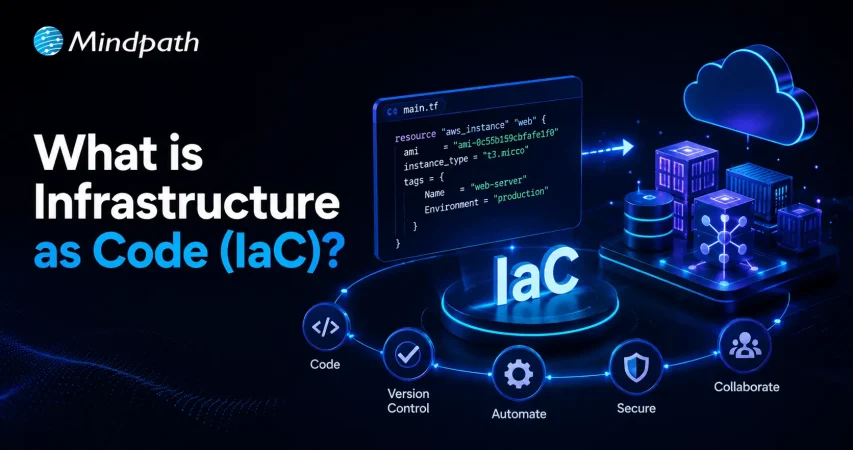
What is Infrastructure as Code (IaC)?

Infrastructure as Code (IaC) is a method of configuring and managing your IT infrastructure, such as servers, databases, and storage, using code rather than doing everything manually. It’s similar to sending directions to a computer so it can complete the setup for you. When creating and running applications, developers use a variety of tools and mechanisms to collaborate. This encompasses operating systems, databases, and storage. Normally, putting things up manually takes a long time and can lead to errors, especially when working on large projects. With IaC, you just create a code file that explains how your system should appear and function. The tools will then create and manage everything for you. This saves time, reduces mistakes, and facilitates rapid updates or fixes. Businesses utilize IaC to save money, prevent risks, and respond quickly to new possibilities.  

Advantages of Infrastructure as Code (IaC)

1. Speedy Deployments

Infrastructure as Code (IaC) makes deployment quicker and easier. Instead of manually configuring systems, you can use a single command to create the full environment in a few minutes. This is especially useful for startups and small enterprises that need to move quickly while staying under budget. 

Fast deployment is also vital for testing and development. Developers can rapidly construct test environments that seem identical to the real system. This allows them to devote more time to essential responsibilities such as detecting and fixing problems, evaluating how the system manages high traffic, and enhancing security. By reducing time and effort, IaC allows teams to focus on developing better apps and delivering them faster. It keeps projects on track, increases productivity, and allows firms to adapt swiftly to changes or new possibilities. Whether you’re creating a small app or managing a massive system, IaC makes it easier and faster to complete tasks.  

2. Reduced Risks

Manually configuring and administering systems can give rise to errors since it depends primarily on human labor. Repeating the same procedure increases the likelihood of mistakes and adds additional workload to engineering teams. It can also make addressing or debugging problems more difficult and time-consuming. 

Infrastructure as Code (IaC) reduces these risks by automating the process and ensuring consistency. Instead of depending on a single person’s knowledge to handle crucial systems, IaC keeps all of the relevant facts in code that is accessible to the whole team. This makes infrastructure easier to understand, share, and administer, even if team members leave the organization. Companies can use IaC to reduce mistakes, boost cooperation, and guarantee their systems are always dependable and secure. This not only saves time and effort, but also instills trust in the infrastructure, making it easier to adapt and develop as needed.  

3. Enhanced Security and Quick Recovery

Infrastructure as Code (IaC) improves system security and recoverability. Security measures can be included directly into the system setup process when utilizing code. This guarantees that every deployment is protected without requiring additional evaluations or permissions. If a company’s security standards are updated, the changes can be immediately deployed across all systems via code, ensuring that everything remains consistent and secure. IaC also helps with recovery planning by making it easier to reconstruct systems in the event of a failure. While this strategy may take somewhat longer than other ways, it assures that systems are rebuilt safely and correctly. Businesses can apply IaC to build a solid security foundation and prepare for situations of crisis, all while lowering risks and saving time. 

4. Boosted Operational Efficiency

Infrastructure as Code (IaC) increases the efficiency and productivity of developers, architects, and administrators. Complex cloud systems can be deployed significantly faster using pre-configured IaC components, reducing total development time. One of the primary advantages of IaC is that it provides uniform conditions across several teams. Multiple teams, including development, security, QA, and user testing, can collaborate in synchronized environments using a simple script. This allows everyone to make progress simultaneously, rather than waiting for one phase to finish before going on to the next.  

IaC also promotes continuous integration and continuous delivery (CI/CD) processes, which enable teams to deploy new features or upgrades more rapidly and efficiently. Additionally, IaC makes it simple to automatically shut down environments that are no longer in use, lowering wasteful expenditures and keeping the cloud infrastructure lean. This enables firms to expand and manage their systems more efficiently, while preserving efficiency and lowering operating costs. Ultimately, IaC simplifies procedures, lowers human mistakes, and allows teams to operate more quickly, intelligently, and cooperatively. 

5. Greater Accountability

In the past, engineering teams had to manually record their work for a long period in order to guarantee seamless communication, prevent delays, and handle issues like errors and staff turnover. With Infrastructure as Code (IaC), this is no longer required. Instead of depending on elaborate documentation, all changes are recorded immediately in the source code repository. 

Every modification is explicitly tracked using version control, which shows who made the change and when. This makes it simple to track changes, identify issues, and comprehend the context around them. If an issue emerges, it is straightforward to identify the cause of the problem and who should be approached for clarification. IaC enhances accountability by making all activities public and traceable, ensuring that everyone on the team is on the same page, and enabling teams to collaborate more effectively. 

How Can Mindpath Help in Infrastructure as Code (IaC)?

At Mindpath, we can assist you with leveraging Infrastructure as Code (IaC) to streamline and protect your IT processes. We use IaC to automate system setup and administration, resulting in a more consistent, dependable, and manageable infrastructure. Our staff can create and manage the code that specifies your infrastructure, eliminating the need for time-consuming manual configurations. With IaC, we ensure that your systems are swiftly installed, updated, and fully protected, while minimizing risks and human error. We help you design environments that are simple to reproduce and scale, allowing your development, security, and testing teams to collaborate effortlessly. 

Wrapping Note!

Infrastructure as Code (IaC) is revolutionizing the way IT infrastructure is managed by automating processes, reducing human errors, and enabling faster, more secure deployments. By adopting IaC, organizations can achieve greater operational efficiency, boost security, and ensure better collaboration among teams, all while minimizing risks. As businesses continue to scale and adapt to new challenges, IaC is becoming an essential practice in modern DevOps strategies. At Mindpath, we are dedicated to helping you implement IaC effectively, making your infrastructure more streamlined, reliable, and scalable. 

Ready to streamline your IT infrastructure with Infrastructure as Code?

Let Mindpath help you optimize efficiency, security, and scalability.

Related Post

Discover why hiring a freelance full-stack developer in 2024 can boost your project’s efficiency, quality, and cost-effectiveness. Learn more with Mindpath!
Discover how low-code/no-code tools are transforming digital development and enabling faster app creation for businesses.

Related Post

full stack nodejs

Companies are now seeking scalable and robust applications, which can meet both years of functional performance and user expectations. That’s when full-stack Node.js development comes into play, uniting the power of frontend and backend within a single environment. It allows developers to build faster and smarter while creating applications to remain adaptable as the business continues to grow.

In this way, constructing end-to-end solutions is more fluid and intelligent. With cohesive databases, APIs, and user interfaces integrating and interfacing, developers can automate some of the hassle proactively. Understanding full-stack Node.js ultimately gives developers an advantage to think forward as technology grows and gives organizations tangible opportunities to grow with applications that perform and scale easily. So, let’s dive in to know how this expertise truly makes a difference.

Want to build an advanced application without compromising performance? At Mindpath, our full-stack development services will help you provide the best solutions, handling both front-end and back-end with efficiency.

Understanding the Fundamentals of Full-Stack Development

Full-stack development means developing on the front end and back end of a web application. The front end refers to all the things that the user responds to and interacts with, such as buttons, layouts, designs, etc. The back end refers to all of the things that run in the background, like databases, servers, etc., and all the logic that makes it run smoothly, working together.

A full-stack developer has the capability to deal with both sides. They are capable of building UX and the technology that serves the app. This gives them agile skills that allow them to build comprehensive applications entirely from front to back.

Understanding the Basics of Node.js

Node.js is a platform that allows you to run JavaScript code in a JavaScript runtime outside of the browser. It is built on Google’s V8 engine, which is extremely fast and built to be efficient. Node.js allows developers to write server-side applications using the same exact language as for the front end, making development and management easier and smoother.

An advantage of Node.js is that it operates asynchronously, which allows tasks to not have to wait for one another to complete, meaning that applications can handle multiple requests at once. Because of this, the use of full-stack Node.js is quickly becoming a good choice when building scalable, real-time, and modern applications.

The success of using Node.js in full-stack development depends on hiring the best developer. Discover the key Factors to Consider while Hiring Node.js Developers.

Why is Node.js Important for Full-Stack Development?

Utilizing Node.js full-stack technology is an impressive approach to developing a complete web application. Here are reasons that Node.js is a valuable technology option in the full-stack.

Importance of Node.js for Full-Stack Development

1. High Performance Delivery

Node.js utilizes a non-blocking I/O hardware model that can handle hundreds or even thousands of requests simultaneously, providing faster response times and greater user-specific.

2. Cross-Platform Power

With the Node.js full stack, developers can write mobile and desktop apps to run on Windows, macOS, Linux, and more. By relying on a single JavaScript code base, developers can save time and effort writing for multiple platforms.

3. Microservice Architecture Made Easy

Full-stack Node allows users to break one larger application down to multiple smaller independent services using infrastructure that is easier to work with. This approach lets developers build faster, stay flexible, and rely on proven solutions.

4. Scalable Solution

Full-stack Node.js is used by major players like Walmart, Uber, and Trello to handle millions of users. It helps to lower load time significantly, and it ensures your applications will scale seamlessly, as your demands increase.

5. Real-Time Advantage

When it comes to applications that leverage chat, live streaming, food delivery, or payments, Node.js full-stack is the way to go. It seamlessly provides real-time updates to keep the user engaged and connected.

Also Read: Full-stack Development for Web Projects

Key Steps to Use Node.js in Full-Stack Development

A full-stack Node.js developer is involved in both the front end and the back end of web application development and will work to build complete web applications. Below is a synopsis of the primary steps to utilize Node.js in full-stack development that is easy and productive.

Key Steps to Use nodejs in full stack development

1. Set Up the Development Environment

To begin your application-building experience, you will need to install Node.js and npm (Node Package Manager). These tools will allow you to execute JavaScript beyond the browser, and they will also help manage libraries with ease. Verify the setup by checking versions with simple commands in your terminal.

2. Initialize the Project

Make a new folder for your app, and use ‘npm init’ to create a ‘package.json’ file. A package.json file holds important information, such as your project name, dependencies, and scripts. It will serve as the basis for managing everything in your project.

3. Build the Server with Express.js

Install Express.js so you’ll be able to set up the backend server and handle all of the different routes. Express.js makes handling requests, responses and APIs supposedly easy. This step will ensure the backend runs appropriately with the frontend.

Must Read: Full-stack development trends

4. Connect to a Database

Based on your needs for this project, select a database like MongoDB or PostgreSQL. This should be paired with a Node.js library like Mongoose or Sequelize, which will allow you to connect to and perform both read and write operations on your data. At this point, you will have the ability for your application to persist and retrieve your data.

5. Design the Front-End

Build the front-end using a library such as React, Angular, or Vue. You can link the front-end through RESTful APIs or GraphQL to your Node.js back end. At this point, players will finish the bridge for a Full-stack Node.js application.

6. Manage Authentication and Security

Use libraries like Passport.js or JWT to add secure login and registration. Secure necessary paths so that any authorized user can get to those routes. You should always consider security in any Full-stack Node.js application.

7. Test and Deploy the Application

Create unit and integration tests to ensure that your application does what you intended. Deploy the application to cloud hosting solutions like Google Cloud, AWS, or Heroku. To utilize your Full-stack Node.js application’s performance tool on different scales, you should monitor its performance!

Looking to integrate AI in your Node.js projects? Explore our Ultimate Guide to Node.js Libraries for AI Integration to discover the most effective libraries for building smart, scalable, and future-ready applications.

Ready to Unlock the Power of Full-Stack Node.js?

Full-stack Node.js has proved to be a smart choice for building scalable, high-performing, and real-time applications. It unites front-end and back-end seamlessly, helping developers create complete solutions with speed and flexibility. With its ability to handle microservices, cross-platform apps, and real-time updates, it has become an essential technology for modern web development.

At Mindpath, we provide expert full-stack development services designed to match your business goals. Our skilled Node.js developers bring deep technical knowledge and practical experience to build secure, scalable, and user-friendly applications. If you are looking to transform your digital ideas into reality, hiring a Node.js expert from our team ensures growth and lasting impact.

Master full-stack development with Node.js! Its scalability, performance, and seamless frontend-backend integration.

Have you ever wondered to yourself what the future of AI is going to look like? AI will affect how people will live and interact with technology. AI is incorporated in all daily activities, whether that is assisting in a task, giving suggestions, or helping create a seamless process. As technology advances and matures, it will change the way people think, the way people work as well as the decisions people make.  

The future with artificial intelligence certainly has the potential to transform everything from how we communicate and learn, to problem-solving and creativity. The benefits of AI are enabling people to make better decisions, manage time, and explore scenarios like never before. So, what does this growing presence of AI mean for how the world operates? And how might the future of artificial intelligence cultivate the future we are heading towards? In this post, we will explore how AI in a whole new way is changing how we operate in the world. 

Curious how AI can revolutionize your business? At Mindpath, we deliver cutting-edge Artificial Intelligence Development Services to help you innovate and grow. 

The Evolution of Artificial Intelligence (AI)

Artificial Intelligence (AI) refers to the work of developing computer systems that can carry out human-like functions that usually require human intelligence, like learning, problem-solving, and decision-making. In the end, it is making machines that work like people. In today’s world, the use of AI has become normal. You can see the impact of artificial intelligence in homes, schools, and workplaces.  

The artificial intelligence story began in the 1950s as a result of Alan Turing and his idea about machine thinking. In the 1960s, research and early AI development continued to evolve with John McCarthy’s work on the LISP programming language, a powerful language that increased early AI research. During the 1970s and 1980s systems were developed based on rules (known as expert systems), which set the stage for the eventual widespread use of AI.  

By the 1990s, AI began data-driven learning instead of following a strict set of rules. This transformation indicated the beginning of machine learning and neural networks made AI accessible to new areas like language processing and robotic applications for personal and industrial use. Therefore, using models such as GPT-3 and GPT-4, people are currently using AI in more creative and practical ways which generates powerful representations of what artificial intelligence means to us. 

Must Read: AI for Customer Services

The Impact of AI on Future

Artificial intelligence is becoming a key part of the future, with its growing role in daily life and global progress. As technology advances, we can already see AI transforming the future through smarter systems, faster decisions, and improved services. Here are some important areas where artificial intelligence is shaping what comes next.

1. Empowering Human Creativity

AI is taking over routine and repetitive tasks, giving people more time to focus on creative thinking and emotional intelligence. This leads to more meaningful jobs and greater fulfillment at work. Generative AI tools now help writers, designers, and developers move faster with fresh ideas. RAG techniques also improve the quality of AI-generated content. This marks a powerful shift in how people work and innovate.

2. Smarter Decision-Making Ahead

AI in decision-making helps process large amounts of information quickly, offering insights that humans might overlook. This leads to better decisions in areas like personal finance, education, and health. AI agents are becoming more advanced, supporting real-time choices with logic and learning. They’re able to adapt and respond in changing environments. This is a glimpse into how artificial intelligence will change the world.

3. Personalized Education Experiences

AI systems can customize educational paths for each student, improving learning outcomes. These platforms offer real-time feedback, progress tracking, and tailored content. With multimodal AI, students can now learn through text, images, audio, and even interactive content. This enhances understanding and makes learning more engaging. These smart tools are clear future of AI examples already reshaping classrooms.

4. Building a More Inclusive World

AI is helping people with disabilities by providing real-time support tools like voice commands and screen readers. Multimodal AI systems enhance accessibility by understanding both speech and visual cues. This leads to more independence and easier access to services. Inclusive tech design is becoming a priority across sectors. These innovations reflect a growing bond between artificial intelligence and future equity.

Ready to stay ahead of your competitors to build a unique identity in the market? Explore how conversational AI is helping businesses to achieve smarter operations, stronger customer engagement, and sustainable growth.

5. Driving Sustainable Innovation

AI in business strategy plays a growing role in protecting the environment by predicting climate patterns and reducing waste. Digital twins are being used to test and simulate sustainability strategies safely. These models help industries make smarter, more eco-friendly decisions. AI systems also support energy efficiency and cleaner production. Technology is becoming a vital part of building a sustainable planet. 

6. Advancing Safety and Security

AI helps monitor public areas, detect threats, and respond to emergencies. In cybersecurity, it can identify unusual behavior and stop attacks in real time. AI-powered tools work constantly to secure data and systems. As digital threats grow, AI’s role in safety becomes more critical. These AI trends will shape safer environments both online and offline. 

7. Making Services Instantly Accessible

AI assistants and chatbots are helping people access answers and services instantly. These tools are improving with better voice understanding and faster responses. AI literacy is becoming important as users interact more with these systems. The trend is helping people become more confident using technology daily. This also marks a major step in the future of AI in business.

8. Redefining Innovation Through Collaboration

AI is evolving into a true partner in creativity and problem-solving. Generative AI and AI agents now work side-by-side with humans on design, research, and product development. This leads to faster innovation and new discoveries. These collaborations go beyond automation; they spark new ideas. This is the heart of innovation powered by smart technology. 

Curious to know how Gen AI is transforming multiple sectors? Explore our blog on generative AI use cases to discover how businesses are evolving, growing, and creating opportunities in the fast-paced world.

Strategic Approaches to an AI-Driven Future

Artificial intelligence is rapidly reshaping the way we live and work. To stay ahead, it’s essential to adopt smart, forward-looking strategies that align with this evolving landscape.

1. Set a Clear AI Vision

Identify where AI can add the most value to your goals, such as customer service or analytics. Create a step-by-step plan, prioritize key areas, and communicate the strategy clearly across teams.

2. Promote Innovation at Every Level

Encourage different teams to work together and explore new AI ideas through small test projects. Support a culture that treats both success and failure as part of learning and progress.

3. Build and Grow AI Skills

Offer training to help your current team understand and work with AI. Hire skilled professionals and promote continuous learning to stay updated with AI trends.

4. Embed Ethics into AI Use

Create clear guidelines to keep your AI systems fair and transparent. Regularly check for bias and support responsible AI use through proper oversight.

5. Evolve with AI Advancements

Keep up with new AI technologies and adjust your strategy as things evolve. Make sure your data is organized, and AI is integrated into key business activities. 

Aiming to leverage the power of artificial intelligence, understanding the technologies that drive it has become a crucial advantage. To dive deeper into the tools and technologies behind AI innovation, explore our detailed guide on the AI programming languages.

Ready to Shape the Future with AI?

Artificial intelligence is not just changing how we work and think; it is shaping the world around us in powerful ways. As AI continues to grow, it brings smarter tools, more creative opportunities, and better decision-making for individuals and businesses. The future will belong to those who embrace these possibilities early.

At Mindpath, we offer expert AI development services to help you harness the power of artificial intelligence in your business. Our team builds smart, scalable, and ethical AI solutions that drive growth and innovation. Whether you’re starting small or scaling big, Mindpath is your trusted technology partner for an AI-ready future. 

Frequently Asked Questions

1. What makes AI a long-term transformative technology rather than just a trend?

AI continuously evolves by learning from data and improving its performance over time. Unlike static technologies, it adapts to new information and use cases. This ability to scale, learn, and integrate across systems makes it a foundational technology shaping long-term global progress.

2. How does AI balance automation with the need for human involvement?

AI handles data-intensive and repetitive processes, while humans provide judgment, context, and ethical oversight. This balance ensures decisions remain accurate yet responsible. The combination strengthens outcomes by merging computational efficiency with human reasoning and accountability.

3. Why is data quality important for the future success of AI systems?

AI systems rely heavily on data to learn and make predictions. Poor or biased data can lead to inaccurate or unfair outcomes. High-quality, well-structured data ensures reliable insights, better performance, and trustworthy results, making it a critical factor in successful AI adoption.

4. How is AI contributing to more sustainable and efficient systems?

AI improves efficiency by optimizing resource use, reducing waste, and predicting outcomes more accurately. It enables better planning and smarter operations, which support sustainability goals while maintaining productivity. This makes AI an important tool for long-term environmental and operational balance.

5. What role does continuous learning play in adapting to AI advancements?

As AI technologies evolve rapidly, continuous learning helps individuals and organizations stay relevant. Keeping up with new tools, methods, and ethical practices ensures better adoption and usage. This approach builds confidence and supports long-term success in an AI-driven environment.

Explore how is AI transforming future, impacting data privacy, job markets, and business automation. Learn about Mindpath’s AI Services.
ReactJS Trends 

If you have any interest in web development, you have likely seen how everything is evolving. Developers are examining better ways of implementing new interfaces that deliver a better experience to their users. As the demand for fast, reliable interfaces is continually increasing, it’s increasingly vital to keep up with the evolving ReactJS trends. By establishing these foundations within yourself, you will be able to develop and apply smarter development choices soon.

With each successive year, ReactJS continues to develop and create outcomes in how modern applications are designed. The updates, tools, and ideas that make up the ReactJS universe are forcing developers to think differently and advance the way they work. These changes aren’t just technical; they also reflect what users expect from digital experiences. Knowing what’s gaining attention and where the focus is shifting can give you an edge, right? So, in this blog, we will look at the best ReactJS trends to watch in 2026. Let’s dig in!

Want to stay ahead with the latest ReactJS trends? Our ReactJS development services can help you create modern, scalable, and future-ready applications, designed as per your business requirements.

Evolution of ReactJS

Since it was first implemented in 2013, React has changed the frontend development space through its component structure and virtual DOM. In earlier versions of React, we had JSX and rendering efficiency, which all led to building scalable user interfaces. Newer versions (React 15 and 16) further refined the usability of the library through performance improvements, error boundaries, and server rendering, and in the process, significantly improved development stability and experience. Meanwhile, React 17 through 19 introduced further original ideas and modern development workflows.

With React 17, we saw improvements to the upgrade paths of React and compliance with the browsers, while React 18 gave us concurrent rendering, new powerful hooks, and React 19 built on React 18 with server components, action-based state management, and support for Web Components. React continues to evolve to meet the needs of web development.

Must Read: ReactJS Web Development 

Upcoming Features in ReactJS

ReactJS 19 is the latest version, bringing fresh improvements to the way developers build user interfaces. With ReactJS’ upcoming features, version 19 focuses on better performance, cleaner code, and easier state handling. These updates mark a big step forward in the future of ReactJS and give a clear view of what’s new in ReactJS in 2026.

Upcoming Feature in ReactJS

1. Enhanced Hooks

One of the React 2026 updates includes powerful new hooks that will make state and effect management even smoother. These enhanced hooks aim to simplify logic and reduce repetitive code in components. They’re designed to give developers more flexibility and control in modern web development.

2. React Compiler

React is introducing a new compiler that optimizes code during build time. It helps reduce manual work by automatically improving performance behind the scenes. Instagram is already using this tool, making it one of the most promising ReactJS features.

3. Server Components

React now supports server components, allowing parts of the UI to render on the server. This feature works well with frameworks like Next.js and helps improve app performance. It reduces the JavaScript sent to the browser, making pages load faster.

4. Web Components Support

React will soon support the direct use of web components inside your code. This opens the door to combining different front-end technologies in one project. It’s a big step forward in creating flexible and reusable UI elements for modern web development.

5. Document Metadata

React 2026 updates will include better control over document metadata like titles and meta tags. This allows developers to manage SEO-related data more efficiently within their components. It saves time and keeps everything organized in one place.

Want to ensure your digital products stay competitive as new react trends shape the future of web development? Discover how the latest React roadmap helps business owners plan smarter, more future-ready tech investments.

What are the Top ReactJS Trends for 2026?

The React ecosystem is going through major improvements that are changing the way developers approach front-end development. ReactJS trends 2026 highlight a shift toward more efficient workflows, faster rendering, and cleaner architecture. With smarter tools and updated features, we can see how ReactJS is evolving in 2026 to meet the growing demands of modern web development.

ReactJS Trends 

1. Server Components in Action

React’s new server components allow parts of the UI to be rendered on the server, reducing the workload on the browser. This makes applications faster and easier to manage, aligning with the latest ReactJS trends. They also allow developers to send less JavaScript to the client, improving performance. This results in faster initial page loads and a smoother user experience.

2. Advanced Concurrent Features

React’s concurrent features, like Suspense and automatic batching, make multitasking smoother and interfaces more responsive. This update improves how React handles rendering without blocking the user experience. It helps manage large-scale applications more efficiently. Developers can build interfaces that stay fast even during heavy updates.

3. Improved Developer Experience

Tools like React DevTools are being enhanced to support more efficient debugging and testing. These improvements help streamline development workflows and reduce troubleshooting time. Developers get better visibility into component behavior and performance bottlenecks. This leads to quicker bug fixes and smoother iterations.

4. TypeScript Integration

The adoption of TypeScript continues to grow as teams seek more scalable and maintainable codebases. This is now a major trend in front-end trends 2026, supporting safer and more reliable coding. TypeScript’s static typing reduces runtime errors and improves code clarity. It also makes collaboration easier across large development teams.

5. Advancing React Native

React Native updates are making it easier to develop high-quality cross-platform apps. It remains a strong choice for teams working across both web and mobile interfaces. New libraries and tools are being introduced to improve development speed. These updates also enhance native-like performance and UI consistency.

Want to be sure that your web application delivers a fast and smooth user experience that keeps customers engaged? Discover how improving React performance can directly enhance satisfaction and boost overall business results.

6. AI-Powered User Interfaces

React is being used to build smarter, AI-driven interfaces that adapt to user behavior in real time. These features support more personalized and predictive user experiences. AI integration helps applications anticipate user actions and deliver relevant content. This enhances engagement and boosts user satisfaction.

7. Enhanced Performance Optimization

Performance remains a top focus, with React adding better support for edge computing and efficient memory handling. These updates are critical to meeting modern speed and scalability demands. They ensure faster content delivery across global networks. Optimizations also help reduce power and data usage on devices.

8. Web3 Integration

React is being adapted to work smoothly with decentralized technologies like blockchain wallets and smart contracts. This is part of the broader movement in JavaScript frameworks 2026 towards Web3-ready solutions. It simplifies the process of building secure and decentralized apps. React’s flexibility supports fast adoption in emerging blockchain-based platforms.

9. Faster and Smarter Toolchains

Modern tools like Vite and frameworks such as Next.js and Gatsby are becoming more powerful. These enhancements reflect improvements seen across React front-end development practices. They reduce build times and make testing and deployment more efficient. Developers benefit from improved hot reloading and modular workflows.

10. Community-Led Progress

The React ecosystem continues to expand thanks to open-source contributors who build tools, libraries, and new practices. These efforts keep ReactJS trends moving forward with fresh ideas and evolving standards. Active community support ensures regular updates and fast issue resolution. It also helps spread knowledge and best practices across the industry.

Want to scale your application seamlessly as your customer base grows? Learn how the benefits of ReactJS development services make large-scale, high-traffic apps easier to maintain and expand.

Are You Looking Forward to Embracing the Future of ReactJS?

ReactJS trends are reshaping the landscape of modern web development. With fresh tools, smarter architecture, and growing support for cutting-edge features, staying current is no longer optional. Developers who stay informed can build faster, smarter, and more scalable applications. Understanding these shifts puts you in control of how you approach digital solutions in 2026 and beyond.

At Mindpath, we offer expert ReactJS development services designed for growth and scalability. Our team stays aligned with the latest ReactJS trends, ensuring your product is future-ready. From concept to deployment, we develop efficient and high-performing applications tailored to your goals. Partner with us to unlock seamless, modern interfaces built with precision and care.