
Home

Top ReactJS Trends to Watch in 2026: What’s Next 

Top ReactJS Trends to Watch in 2026: What’s Next 

Lorem ipsum dolor sit amet, consectetur adipiscing elit. Ut elit tellus, luctus nec ullamcorper mattis, pulvinar dapibus leo.

Join our Newsletter!

ReactJS Trends 

If you have any interest in web development, you have likely seen how everything is evolving. Developers are examining better ways of implementing new interfaces that deliver a better experience to their users. As the demand for fast, reliable interfaces is continually increasing, it’s increasingly vital to keep up with the evolving ReactJS trends. By establishing these foundations within yourself, you will be able to develop and apply smarter development choices soon.

With each successive year, ReactJS continues to develop and create outcomes in how modern applications are designed. The updates, tools, and ideas that make up the ReactJS universe are forcing developers to think differently and advance the way they work. These changes aren’t just technical; they also reflect what users expect from digital experiences. Knowing what’s gaining attention and where the focus is shifting can give you an edge, right? So, in this blog, we will look at the best ReactJS trends to watch in 2026. Let’s dig in!

Want to stay ahead with the latest ReactJS trends? Our ReactJS development services can help you create modern, scalable, and future-ready applications, designed as per your business requirements.

Evolution of ReactJS

Since it was first implemented in 2013, React has changed the frontend development space through its component structure and virtual DOM. In earlier versions of React, we had JSX and rendering efficiency, which all led to building scalable user interfaces. Newer versions (React 15 and 16) further refined the usability of the library through performance improvements, error boundaries, and server rendering, and, in the process, significantly improved development stability and experience. Meanwhile, React 17 through 19 introduced further original ideas and modern development workflows.

With React 17, we saw improvements to the upgrade paths of React and compliance with the browsers, while React 18 gave us concurrent rendering, new powerful hooks, and React 19 built on React 18 with server components, action-based state management, and support for Web Components. React continues to evolve to meet the needs of web development.

Upcoming Features in ReactJS

ReactJS 19 is the latest version, bringing fresh improvements to the way developers build user interfaces. With ReactJS’ upcoming features, version 19 focuses on better performance, cleaner code, and easier state handling. These updates mark a big step forward in the future of ReactJS and give a clear view of what’s new in ReactJS in 2026.
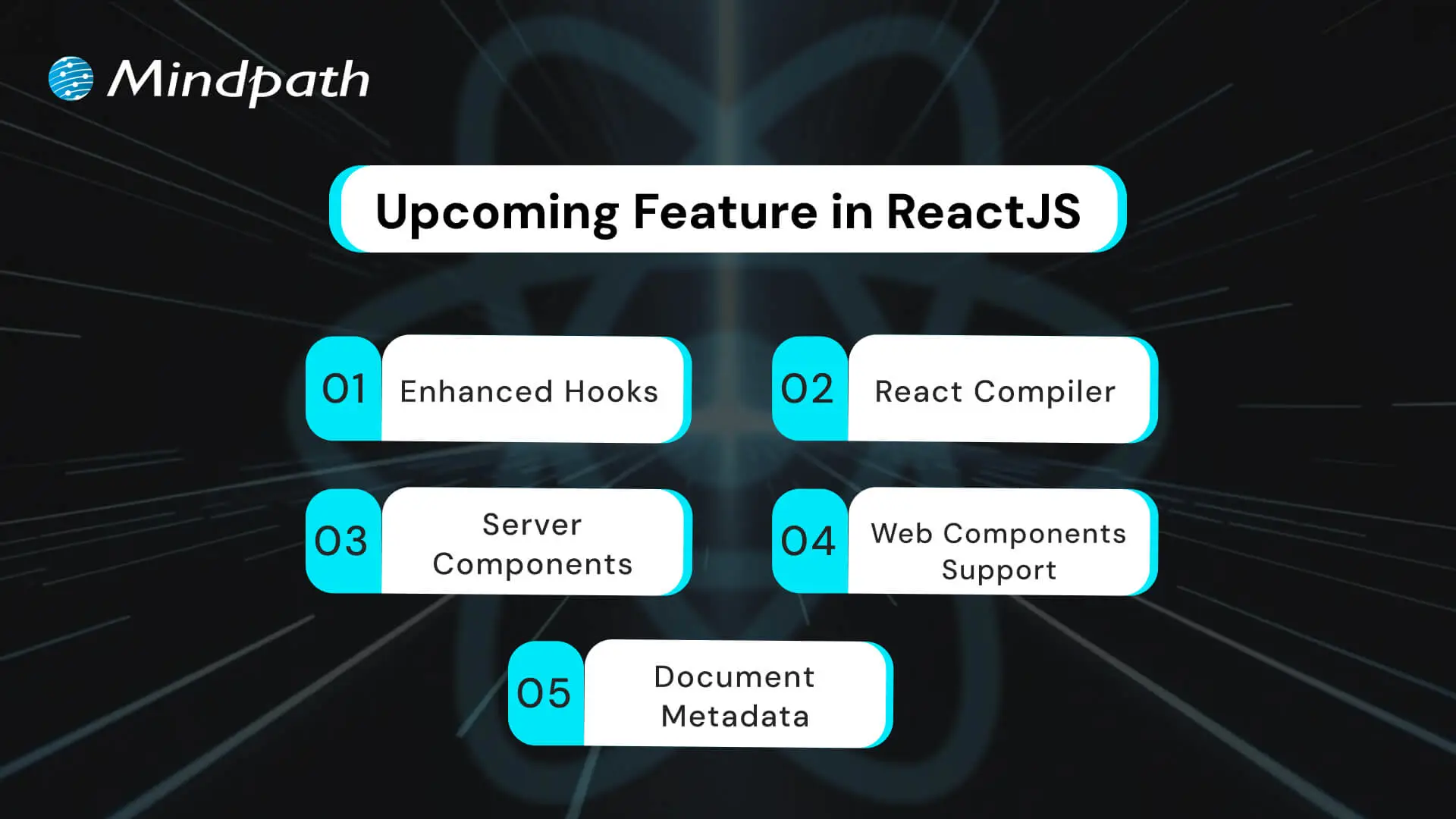
Upcoming Feature in ReactJS

1. Enhanced Hooks

One of the React 2026 updates includes powerful new hooks that will make state and effect management even smoother. These enhanced hooks aim to simplify logic and reduce repetitive code in components. They’re designed to give developers more flexibility and control in modern web development.

2. React Compiler

React is introducing a new compiler that optimizes code during build time. It helps reduce manual work by automatically improving performance behind the scenes. Instagram is already using this tool, making it one of the most promising ReactJS features.

3. Server Components

React now supports server components, allowing parts of the UI to render on the server. This feature works well with frameworks like Next.js and helps improve app performance. It reduces the JavaScript sent to the browser, making pages load faster.

4. Web Components Support

React will soon support the direct use of web components inside your code. This opens the door to combining different front-end technologies in one project. It’s a big step forward in creating flexible and reusable UI elements for modern web development.

5. Document Metadata

React 2026 updates will include better control over document metadata like titles and meta tags. This allows developers to manage SEO-related data more efficiently within their components. It saves time and keeps everything organized in one place.

Want to ensure your digital products stay competitive as new react trends shape the future of web development? Discover how the latest React roadmap helps business owners plan smarter, more future-ready tech investments.

What are the Top ReactJS Trends for 2026?

The React ecosystem is going through major improvements that are changing the way developers approach front-end development. ReactJS trends 2026 highlight a shift toward more efficient workflows, faster rendering, and cleaner architecture. With smarter tools and updated features, we can see how ReactJS is evolving in 2026 to meet the growing demands of modern web development.
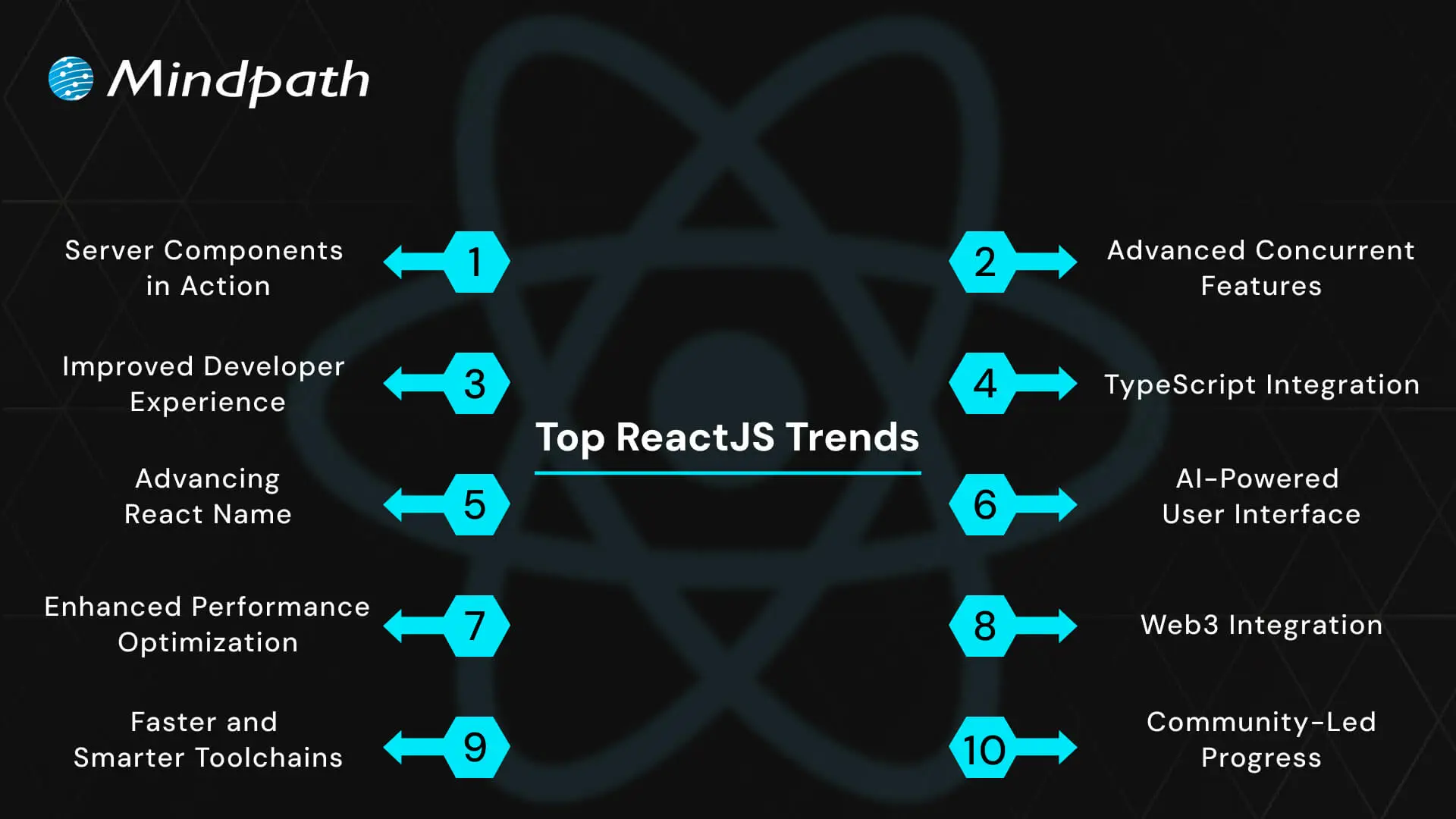
ReactJS Trends 

1. Server Components in Action

React’s new server components allow parts of the UI to be rendered on the server, reducing the workload on the browser. This makes applications faster and easier to manage, aligning with the latest ReactJS trends. They also allow developers to send less JavaScript to the client, improving performance. This results in faster initial page loads and a smoother user experience.

2. Advanced Concurrent Features

React’s concurrent features, like Suspense and automatic batching, make multitasking smoother and interfaces more responsive. This update improves how React handles rendering without blocking the user experience. It helps manage large-scale applications more efficiently. Developers can build interfaces that stay fast even during heavy updates.

3. Improved Developer Experience

Tools like React DevTools are being enhanced to support more efficient debugging and testing. These improvements help streamline development workflows and reduce troubleshooting time. Developers get better visibility into component behavior and performance bottlenecks. This leads to quicker bug fixes and smoother iterations.

4. TypeScript Integration

The adoption of TypeScript continues to grow as teams seek more scalable and maintainable codebases. This is now a major trend in front-end trends 2026, supporting safer and more reliable coding. TypeScript’s static typing reduces runtime errors and improves code clarity. It also makes collaboration easier across large development teams.

5. Advancing React Native

React Native updates are making it easier to develop high-quality cross-platform apps. It remains a strong choice for teams working across both web and mobile interfaces. New libraries and tools are being introduced to improve development speed. These updates also enhance native-like performance and UI consistency.

Want to be sure that your web application delivers a fast and smooth user experience that keeps customers engaged? Discover how improving React performance can directly enhance satisfaction and boost overall business results.

6. AI-Powered User Interfaces

React is being used to build smarter, AI-driven interfaces that adapt to user behavior in real time. These features support more personalized and predictive user experiences. AI integration helps applications anticipate user actions and deliver relevant content. This enhances engagement and boosts user satisfaction.

7. Enhanced Performance Optimization

Performance remains a top focus, with React adding better support for edge computing and efficient memory handling. These updates are critical to meeting modern speed and scalability demands. They ensure faster content delivery across global networks. Optimizations also help reduce power and data usage on devices.

8. Web3 Integration

React is being adapted to work smoothly with decentralized technologies like blockchain wallets and smart contracts. This is part of the broader movement in JavaScript frameworks 2026 towards Web3-ready solutions. It simplifies the process of building secure and decentralized apps. React’s flexibility supports fast adoption in emerging blockchain-based platforms.

9. Faster and Smarter Toolchains

Modern tools like Vite and frameworks such as Next.js and Gatsby are becoming more powerful. These enhancements reflect improvements seen across React front-end development practices. They reduce build times and make testing and deployment more efficient. Developers benefit from improved hot reloading and modular workflows.

10. Community-Led Progress

The React ecosystem continues to expand thanks to open-source contributors who build tools, libraries, and new practices. These efforts keep ReactJS trends moving forward with fresh ideas and evolving standards. Active community support ensures regular updates and fast issue resolution. It also helps spread knowledge and best practices across the industry.

Want to scale your application seamlessly as your customer base grows? Learn how the benefits of ReactJS development services make large-scale, high-traffic apps easier to maintain and expand.

Are You Looking Forward to Embracing the Future of ReactJS?

ReactJS trends are reshaping the landscape of modern web development. With fresh tools, smarter architecture, and growing support for cutting-edge features, staying current is no longer optional. Developers who stay informed can build faster, smarter, and more scalable applications. Understanding these shifts puts you in control of how you approach digital solutions in 2026 and beyond.

At Mindpath, we offer expert ReactJS development services designed for growth and scalability. Our team stays aligned with the latest ReactJS trends, ensuring your product is future-ready. From concept to deployment, we develop efficient and high-performing applications tailored to your goals. Partner with us to unlock seamless, modern interfaces built with precision and care.

Frequently Asked Questions

Server components and TypeScript integration deliver the most immediate practical value. Server components reduce browser workload and improve page load speeds noticeably, while TypeScript adoption reduces runtime errors and improves long-term code maintainability. Teams that implement both together consistently report faster development cycles and significantly fewer production issues across complex applications.
Traditional client-side rendering sends all JavaScript to the browser, which then builds the interface. Server components render parts of the UI on the server before delivery, sending less code to the browser entirely. The result is faster initial page loads, reduced bandwidth consumption, and noticeably improved performance especially on lower-powered devices and slower connections.
For most teams, absolutely. TypeScript catches errors during development rather than at runtime, which prevents costly debugging sessions after deployment. Larger teams benefit especially from improved code readability and collaboration. The initial learning investment typically pays back quickly through fewer bugs, cleaner architecture, and significantly easier onboarding of new developers joining existing projects.
AI integration allows React applications to adapt dynamically to individual user behavior, delivering personalized content and anticipating actions in real time. Beyond user experience improvements, AI-powered development tools are also accelerating the coding process itself. Developers using AI assistance within React workflows report meaningful reductions in repetitive coding tasks and faster overall delivery timelines.
It is gaining momentum but remains specialized for now. Businesses in finance, gaming, and supply chain are actively exploring React-based Web3 applications involving blockchain wallets and smart contracts. For mainstream business applications, adoption will depend heavily on regulatory clarity and user familiarity with decentralized technologies. Developers building familiarity with Web3 tools today will hold a clear competitive advantage tomorrow.

Support Is One Click Away

Featured Posts

Related Post

cloud computing trends

Have you been following the newest cloud computing trends? It seems that every day, there is something new to change how we store, share, and secure data. Perhaps you’ve been wondering if your business is missing out on smarter ways of working, or worried about staying ahead of the game in this digital world. Whatever your thoughts are, there is one thing for sure: cloud technology is not just for tech giants anymore; it is shaping the way we all connect, create, and grow.

As we move to 2026, these cloud trends will continue to open bigger opportunities for businesses, no matter how big or small. With faster, many times AI-driven services, greener cloud solutions, a flexible and secure future is more promising than ever. Being aware of what is next will enable you to make an informed decision about the future and give you a competitive edge. If you’re wanting to find out more about where the cloud is headed, continue reading. In this blog, you will learn what’s coming next.

Looking to build scalable, secure cloud applications that drive business growth? Mindpath offers expert cloud development services to help you design and optimize cloud solutions tailored to your needs

Understanding Cloud Computing

Cloud computing is simply the storing and accessing of data and programs over the internet instead of your computer’s hard drive. It is considered internet-based computing, allowing businesses and individuals to use servers, storage, and software that is also provided by cloud providers. One of the benefits is that maintenance is limited, which means there are lower costs associated with users storing files, documents, images, etc. Cloud computing offers flexibility in keeping important data secure and available.

It works through remote servers hosted online that store, manage, and process data rather than relying on local hardware. Users can access these resources whenever they need and scale them up or down as their needs change. This makes it easy to save money on physical infrastructure, increase efficiency, and keep operations running smoothly with more reliability and speed.

The market for this technology keeps expanding rapidly as more businesses adopt cloud solutions. According to Grand View Research, the global cloud computing market size was around USD 752.44 billion in 2024 and is projected to reach USD 2,390.18 billion by 2030. This growth is mainly driven by the rise of big data, artificial intelligence, and machine learning, which all depend on powerful and scalable cloud infrastructure.

Curious how modern cloud apps run without servers? Explore our blog on Serverless Architecture in Cloud Computing to see how serverless solutions are shaping the future of cloud trends.

What are the Latest Trends in Cloud Computing?

Staying updated with cloud computing trends 2026 can help your business stay competitive and ready for what’s next. Companies everywhere are paying close attention to the current trends in cloud computing to boost efficiency and security. Here are some key developments you should watch for in the coming year.

Latest Cloud Computing Trends in 2025

1. Rise of Multi & Hybrid Cloud

Many companies now use a multi-cloud strategy and hybrid cloud approach to run workloads across different cloud providers and their own data centers. This setup lets them combine the strengths of public and private clouds while keeping sensitive data secure. Using multi and hybrid cloud solutions also gives businesses more flexibility and better control over risks.

2. Automation

One of the latest trends in cloud computing is using automation to make systems work faster and more efficiently. Good automation helps teams deliver better results, reduce downtime, and improve overall quality. With better AI tools and user-friendly platforms, cloud providers are making automation easier for everyone to use.

3. AI/ML Capabilities

Better AI and machine learning are becoming the next big thing in cloud computing. Many providers now offer smart tools that help businesses use advanced analytics and automation. These cloud computing trends make it easier to build intelligent applications and boost efficiency without needing deep technical skills.

4. Cloud Cost Management

Managing expenses is a big part of the future of cloud computing as more businesses move to the cloud. New tools and services help companies track and control their spending more easily. These cost management features make it simple to budget, monitor usage, and find ways to save money.

5. Edge Computing

Edge computing is one of the cloud latest trends bringing data processing closer to where it’s created. This helps reduce delays and cuts down on the amount of data that needs to travel long distances. By doing this, businesses can work faster and use their networks more efficiently.

6. Low-Code and No-Code Services

One of the growing cloud services trends is using low-code and no-code tools to build apps faster. These solutions help people create software without needing advanced programming skills. Such cloud computing trends save time and lower development costs for businesses.

7. Open-Source Cloud Solutions

One of the growing cloud computing trends is the move toward open-source cloud solutions. These solutions give businesses more control and flexibility to adjust their cloud setup as needed. Open-source options can also help companies save money compared to traditional cloud providers.

8. Cloud-Native Applications

Building cloud-native applications is an important part of the future of cloud computing. These apps are made to run smoothly on cloud systems and use all the benefits the cloud offers. More tools are now available to help businesses create and launch these apps quickly and easily.

9. Focus on DevSecOps

DevSecOps brings security into every step of software development instead of adding it later. This approach helps teams find and fix issues early, keeping systems safe. Many cloud providers now offer tools that make it easier for businesses to build secure applications from the start.

10. Green Computing Initiatives

One of the important cloud computing trends is the push for greener solutions. Providers are using renewable energy and building energy-efficient systems to cut down on carbon emissions. These efforts help businesses meet their sustainability goals while using cloud services.

Struggling with speed, collaboration, or automation in DevOps? Our DevOps Challenges and Solutions blog explains how modern businesses address these issues.

Which Industries are Adopting Cloud the Fastest?

Many industries are moving to the cloud to work faster and serve their customers better. Companies see cloud solutions as a way to cut costs and stay flexible in a changing market. Let’s look at which sectors are adopting cloud the fastest right now.

Top Industries Accelerating Cloud Adoption

1. Retail: Real-Time Data Control

Retailers use the cloud to manage sales, stock, and customer data in one system. Real-time updates improve supply chains and marketing campaigns. This boosts profits and keeps work going smoothly.

2. Financial: Stronger Data Security

Banks and financial firms trust the cloud for secure data storage and better protection. They can handle tasks like billing and client help more easily. Better security helps them grow safely.

3. Media: Better Content Delivery

Media companies use the cloud to create, store, and share content worldwide. Teams can work together from different places and finish faster. They handle big audiences without spending more.

4. Telecom: Scalable Network Support

Telecom companies use cloud solutions to manage networks and huge data. This helps them handle changing demands and roll out 5G and IoT services. Cloud computing trends keep people connected and ready for new tech.

5. Insurance: Smarter Risk Insights

Insurance companies use the cloud for flexible data and cost savings. They analyze big data to predict risks and detect fraud early. This helps them stay competitive with better customer service.

6. Education: Better Learning Tools

Schools adopt the cloud to manage tight budgets and get new technology. Teachers and students can share lessons and resources in one secure place. This makes learning flexible and improves teamwork.

Looking for ways to optimize your cloud strategy? Explore our Multi-Cloud Strategy blog to see why businesses are spreading workloads across multiple clouds.

Is Your Business Cloud Ready for 2026?

Staying on top of cloud computing trends can help any business unlock new opportunities, save money, and stay secure. As you’ve seen, trends like automation, AI, green computing, and smart cost management are shaping the way companies grow and compete. Keeping an eye on what’s next means you’re always ready to adapt and make smarter technology decisions.

At Mindpath, we help you stay ahead with trusted cloud computing services designed to match your goals. Our team can support your move to the cloud, help manage costs, and keep your data secure. We focus on delivering solutions that fit your business needs today and tomorrow. Connect with us and see how we can make your cloud journey easier.

Discover the top cloud computing trends for 2025, including AI, quantum computing, and hybrid solutions, and learn how they can shape your business’s future.
nodejs developers hiring tips

In today’s fast-paced digital world, hiring the right backend developers can have a direct effect on how well your product works, how scalable it is, and how successful it will be in the long run. Node.js is the most popular modern backend technology because it has an event-driven architecture, a non-blocking I/O model, and can handle a lot of concurrent workloads quickly.

According to Statista, Node.js is one of the most popular web frameworks because about 42% of developers around the world use it. It’s important to hire NodeJS developers because so many people use it and it’s also a competitive field.

This guide gives you useful, real-world tips on how to hire NodeJS developers that will help you avoid common hiring mistakes and make good decisions.

Looking to simplify your hiring process while ensuring you choose the right developers? Mindpath provides professional services to help you hire expert NodeJS developers with the right skills and experience.

Understanding Why Hiring NodeJS Developers Matters

Why You Should Know Why You Should Hire NodeJS Developers

Before you start looking for a Node.js developer, you should know why they are so important.

Node.js is great for making:

  • Apps that work in real time, like chat apps and notifications that pop up right away
  • Microservices and RESTful APIs
  • Queues of messages in event-driven architectures
  • Backend systems that can handle thousands of users at once and grow as needed

You can use JavaScript on both the front end and the back end. This makes development faster and the team more productive.

Start With Clear Project Requirements

One of the most important but often overlooked steps in the guide to hiring NodeJS developers is to be clear about what you need.

You should ask the following before hiring someone:

  • Do you need a developer who is just starting out, in the middle of their career, or at the top of their game?
  • Are APIs, real-time data, or microservices the building blocks of your project?
  • What frameworks do you need, like Express and NestJS?

You will waste time and hire the wrong people if you don’t set these. One of the most common reasons why hiring processes don’t work is that the expectations aren’t clear.

Also, being clear about the scope of your project makes sure that everyone, including candidates, is on the same page.

Identify Core Technical Skills

When hiring expert NodeJS developers, you should look for more than just basic skills.

Must-Have Skills Checklist

A good Node.js developer should have:

  • A lot of experience using JavaScript (ES6+)
  • Understanding the main ideas behind Node.js and the event loop
  • Knowing how to use promises and async/await in code that runs at the same time as other code
  • Knowing how to create RESTful APIs
  • Connecting to databases such as PostgreSQL and MongoDB
  • Authentication systems (JWT, OAuth) 
  • Git for keeping track of versions

Knowing how to set up the backend and deploy to the cloud is also very useful.

Evaluate Real-World Problem-Solving Skills

One of the best ways to find NodeJS developers is to look for people who can do the job instead of people who know a lot about it.

Instead of asking syntax-based questions:

  • Assign real-world coding tasks (under 2 hours)
  • Test API development or debugging scenarios
  • Evaluate error handling and async logic

Top developers demonstrate:

  • Clean code structure
  • Efficient async handling
  • Scalability thinking 

This method helps you tell the difference between regular developers and real backend engineers.

Don’t Confuse Full-Stack With Backend Expertise

A lot of people think that all JavaScript developers are also experts at Node.js, which is not true.

In the real world:

  • Full-stack developers often use simple APIs.
  • Backend Node.js engineers are experts in performance, architecture, and scalability.

If you don’t get this right, you might make bad decisions about how to design your system later.

Choose the Right Hiring Model

The engagement model is another important thing to think about when hiring NodeJS developers.

Options for Hiring

  • Freelancers (affordable and adaptable)
  • Developers who work in-house (for long-term stability)
  • Agencies (for full service and faster hiring)

There are pros and cons to each model when it comes to cost, control, and scalability.

People are hiring people from farther away because:

  • They can hire people from anywhere in the world
  • Hiring cycles that go by faster
  • Cost-effectiveness

Build an Effective Hiring Process

If you have a well-organized hiring process, you are much more likely to succeed.

Standard Hiring Workflow

  1. Define job requirements
  2. Create a compelling job description
  3. Source candidates (LinkedIn, GitHub, job boards)
  4. Conduct technical assessments
  5. Evaluate soft skills and cultural fit 

Structured hiring phases make it less likely that a company will hire the wrong person, and their teams work better.

Focus on Both Technical and Soft Skills

You need more than just technical skills.

When you hire Node.js developers, you should also think about the following:

  • The ability to speak to people
  • The ability to understand things
  • Being able to work with others
  • Being able to adapt quickly in fast-paced situations

A developer who knows how to talk to people can make a big difference in how well a project goes and how well the team works together.

Assess DevOps and Scalability Knowledge

Developers who know how to deploy and scale modern backend systems are needed.

Look for someone who has worked with:

  • Balancing the load
  • Putting in more servers
  • Environments in the cloud 
  • CI/CD pipelines

Developers who have been trained in DevOps can fix problems in production more quickly.

Define Budget and Salary Expectations

The cost changes depending on:

  • How long you’ve been doing it
  • Where it is
  • How hard the project is

For instance:

  • Developers with a middle level of experience make between $62,000 and $113,000 a year.
  • Senior developers make more money because they know a lot about how to build things.

If you clearly say how much money you have, it will be easier to find and hire the right people.

Create a Strong Developer Evaluation Checklist

Make a good list of things to look for when judging developers.

Here are a few quick things to think about when hiring NodeJS developers:

1. Technical Checklist

  • The main ideas behind Nodejs
  • Learning how to do asynchronous programming well
  • Knowing how to create APIs
  • Being able to use a database
  • Skills for finding and fixing problems

2. Practical Checklist

  • Being able to solve problems in the real world
  • Knowing how systems can grow
  • Knowing how to set up the cloud

3. Behavioral Checklist

  • The ability to talk to people
  • Being able to work well with others
  • Being a good fit for the culture

A structured checklist makes sure that everyone is judged in the same way.

Avoid Common Hiring Mistakes

Even companies that have been around for a while still make mistakes when they hire Node.js developers.

  • Job descriptions that aren’t clear
  • Not paying attention to async programming skills
  • Not doing tests in real life
  • Hiring someone too quickly without doing a thorough background check

If you don’t make these mistakes, you’ll have a better chance of hiring the right people.

Take the Next Step: Hire Smarter, Build Better

When you hire Node.js developers, you’re not just filling a job; you’re building a backend team that can grow with your business and do a great job. To make sure everything goes smoothly, it’s very important to do every step of the process, from figuring out what you need to testing your skills in the real world.

You can do the following by following these best practices for hiring NodeJS developers:

  • Make hiring less risky
  • Make it easier for products to grow
  • Build a development team that is ready for what comes next

In a market where there is a lot of competition, the companies that hire smarter, not faster, do better. Contact us

If you’re ready to take the next step in hiring Node.js developers or have any questions, feel free to reach out to us. Our team is here to assist you in finding the right talent that fits your project needs.

FAQs

1. What are the key things to consider before hiring a NodeJS developer?

You should evaluate technical skills (JavaScript, async programming), experience level, project requirements, and communication abilities before hiring.

2. How do I test a Node.js developer’s skills?

Use real-world coding tasks like API development or debugging exercises instead of theoretical questions to assess practical ability.

3. Should I hire a freelance or full-time Node.js developer?

It depends on your project. Freelancers are ideal for short-term tasks, while full-time developers are better for long-term projects.

4. What skills should a Node.js developer have?

Core skills include Node.js fundamentals, API development, database management, and asynchronous programming expertise.

5. Why is Node.js popular for backend development?

Node.js is fast, scalable, and efficient for handling real-time applications due to its event-driven, non-blocking architecture.

reactjs developer skills

The advantages of ReactJS have made every business owner think about its utility in developing web projects. It is the most powerful and commonly used JavaScript library for creating intuitive interfaces. If you want React developers in your team, then you must know the ReactJS developer skills that you should look for in candidates.

The declarative approach and component-based architecture of ReactJS have revolutionized front-end development completely. Knowing what skills to look for saves time and hiring costs. The right developer brings structure, speed, and scalability to your project. In this article, we break down the core ReactJS developer skills every successful web project depends on.

Want to hire ReactJS developers for your next web project? Explore more on Mindpath’s React JS development services to get expertise in developing a web application aligned with your business goals.

Discovering the Skillset of Expert ReactJS Developers

The general assumption about the skillset of ReactJS developers is that they know how to work with React. However, fluency in React itself is not the only addition in the React skill set for any developer. React developers must have a broader skillset beyond the library to craft impactful web projects. The following skills can help business owners identify the best React developers for their next web project.

1. HTML and CSS

The foremost addition in a list of ReactJS skills is the combination of HTML and CSS, which play a crucial role in organizing the styling of the web experience. React developers must know the concepts of semantic HTML and how to use the right HTML tags for better SEO and accessibility. ReactJS developers should have an in-depth understanding of the fundamentals of CSS, such as selectors, CSS Grid, responsive design principles, and the box model.

Apart from CSS fundamentals, the essential React skills for developers also include knowledge of CSS preprocessors and frameworks. Developers can use the pre-processors to streamline styling workflows and improve ease of maintenance in larger projects.

2. JavaScript ES6

JavaScript ES6 or ECMAScript 2015 brought many interesting features to the domain of modern web development. When you hire React developer for the next web project, you should check their level of fluency in JavaScript ES6. The distinctive features of JavaScript ES6, such as arrow functions, template literals, and ES6 classes, make React web development more efficient. For instance, arrow functions can ensure simpler syntax for functions and intuitive management of the context.

ReactJS developers must know how to leverage ES6 classes for a more structured use of JavaScript along the lines of component-based architecture. Developers can also use features like template literals to embed expressions in strings, thereby creating cleaner code.

3. Event Handling and DOM Manipulation

The virtual DOM in React is one of its distinctive features. All the listings for React JS developer jobs showcase the necessity of learning about DOM manipulation. At the same time, you must know that direct DOM manipulation is not required in React. On the other hand, developers must know the process through which the browser renders and interacts with the Document Object Model. DOM manipulation is required in scenarios where you want to build interactive and dynamic user interfaces.

Another crucial addition among skills required for ReactJS developer is event handling. It focuses on responding to different user events through event listeners and callback functions. Therefore, React developers must know the fundamentals of event delegation, capturing, and bubbling.

4. Git

You cannot think about hiring React developers who don’t know how to work with Git, the most popular version control system. Git helps in promoting team collaboration and source code revision management to ensure efficiency in the development lifecycle. ReactJS developers must know the fundamental concepts, such as commits, repositories, branches and merges. On top of it, developers must also know how to work with branching strategies, hosting platforms of Git and conflict management.

Git is a promising tool for frontend development with React as it provides the ideal foundation for collaborative development. Developers who know how to work with platforms like GitLab and GitHub can ensure better efficiency in team collaboration, project management and code reviews.

5. Redux

The list of technical skills you should search in the profiles of ReactJS developers also includes Redux. It is a specialized library used for state management in larger and more complex React applications. The cost of hiring ReactJS developers is justified when you notice how fluency in Redux can offer credible benefits to your web projects. The most promising features of Redux include centralized state management, application scalability and predictable state updates.

Redux works with a single storage for all states of an application, thereby ensuring consistency in management of state transition. Efficient state management also serves as a catalyst for easier scalability and managing increasing complexity without vulnerability to bugs. Centralized state management with Redux also ensures predictability in the behavior of your web applications, thereby facilitating easier maintenance and debugging.

6. JavaScript XML or JSX

Every ReactJS developer must know how to work with JavaScript XML or JSX. It is also one of the notable additions among react developer must-have skills as it serves a critical role in ensuring simpler development and management of UI components. JSX helps developers write HTML-like structures in JavaScript, offering a seamless blend of markup and JavaScript logic. JSX also provides an easier solution for creating and managing the user interface components of their web applications.

The other notable applications of JSX include data and logic integration. JSX can help in injecting data and logic directly into the UI, thereby ensuring dynamic content rendering, required for modern web applications. On top of it, the declarative nature of JSX ensures that the code is easily readable and accessible for debugging.

7. React Hooks

Professional ReactJS developers must also have strong command on React Hooks, a revolutionary feature for state management. Hooks have introduced new perspectives on managing React features in functional components. It is one of the essential ReactJS developer job skills and aspiring developers must know about the important hooks they must learn to create web applications.

The notable React Hooks that a developer must know include ‘useState’, ‘useEffect’, ‘useRef’ and ‘useContext’. Each hook serves a distinct function such as providing direct access to DOM elements or managing component-specific state. On top of it, ReactJS developers must know how to create reusable logic through custom hooks.

8. Testing, Debugging and Performance Optimization

The most important skill that you can find in expert React developers is testing and debugging skills. You can find answers to “why hire React developers?” in their skillsets that focus on comprehensive testing to create robust apps. The notable testing methods include unit testing, that involves testing the individual components independently or integration testing. React developers must also know how to work with debugging tools and browser developer tools to inspect the code.

Apart from testing and debugging, React developers must also know the best practices for performance optimization. Skilled ReactJS developers can use different techniques such as virtualization, code splitting and bundle size optimization to craft responsive applications.

Want to improve your application’s speed without increasing development time or infrastructure costs? Discover how optimizing React performance benefits business owners looking for efficiency and ROI.

Mandatory Soft Skills

Most of the discussions about skills of ReactJS developers focus only on the technical skills. Choosing a React JS development service for capitalizing on the expertise of skilled developers also requires attention to soft skills. You need developers who have the capabilities for critical thinking and problem-solving with efficient solutions. React developers must have skills for clear and concise communication that empowers them to work in collaboration with other teams.

React developers should also have attention to detail for crafting intuitive user experiences and writing code without bugs. Most important of all, ReactJS developers should strive to learn continuously and improve their skills to stay updated with emerging technologies and recent ReactJS trends.

Are You Hiring the Right ReactJS Developer for Your Project?

Choosing the wrong developer costs more than just time. The right ReactJS skills decide whether your web project scales or struggles long term. Businesses that hire with clarity build faster, iterate smarter, and deliver better user experiences consistently. Knowing exactly what to look for puts you ahead from day one.

The thought of hiring a developer from a reputed ReactJS development company might seem like a challenge. Interestingly, you can find the best ReactJS developers at Mindpath for your next web project; they help you build modern web solutions. The notable technical skills of React developers include knowledge of HTML and CSS, JSX, JavaScript ES6, React Hooks and direct DOM manipulation. On top of it, ReactJS developers must also have soft skills such as communication, adaptability, critical thinking and problem-solving. Learn how to pick the best ReactJS developers for your web projects now.

Frequently Asked Questions

1. How many years of experience should a ReactJS developer have before hiring?

Experience years alone do not define a good ReactJS developer. A developer with two years of focused React JS developer skills and strong project exposure often outperforms someone with five years of scattered experience. Always prioritize skill depth over tenure.

2. What is the difference between a ReactJS developer and a full-stack developer?

A ReactJS developer specializes in building front-end interfaces using the React library. A full-stack developer handles both front-end and back-end development. For projects that demand high-quality UI performance and speed, hiring a dedicated React specialist usually delivers better and more focused results.

3. How do ReactJS developer skills impact the overall cost of a web project?

Developers with stronger ReactJS developer skills write cleaner, more efficient code from the start. This reduces bug fixes, rework, and long-term maintenance costs significantly. Investing in skilled developers upfront is always cheaper than correcting poor development decisions midway through a project.

4. Is ReactJS still relevant for web development in 2026?

ReactJS remains one of the most widely used and actively maintained JavaScript libraries in 2026. Its component-based architecture, strong community support, and compatibility with modern tools keep it highly relevant. Businesses building scalable, fast, and interactive web applications still rely on React heavily.

5. Can a ReactJS developer work on mobile app projects as well?

Yes, ReactJS developers can transition into mobile development using React Native, which shares similar principles. However, mobile and web development require different performance considerations and design approaches. Businesses should clarify project scope upfront to ensure the developer has the right experience for both platforms.

Find out what makes a great ReactJS developer! Explore core skills like component-based architecture, hooks, state management, and more.