Reshaping the Tech Industry with IT Staff Augmentation Trends: A Look into the Future

Join our Newsletter!

Featured Posts

Support Is One Click Away

Home

Reshaping the Tech Industry with IT Staff Augmentation Trends: A Look into the Future

IT Staff Augmentation Trends

Reshaping the Tech Industry with IT Staff Augmentation Trends: A Look into the Future

What if you could instantly tap into top-tier tech talent whenever your project demands it? IT staff augmentation is quickly becoming the go-to solution. But what trends are driving this change? Could these trends be reshaping the future of work as we know it? Let’s explore how IT staff augmentation is revolutionizing the tech industry and why it’s becoming essential for companies aiming to stay ahead. 

 Staff augmentation refers to the process by which companies hire highly skilled workers on a temporary basis to complement their workforce on information technology-based projects. This model gives businesses an avenue through which to outsource extra talents as and when necessary while still staying in control of the team and the projects. Compared to project outsourcing, whereby a company hires another business to handle an entire project, staff augmentation involves the hiring of individual experts to work with the in-house team on projects. This approach is particularly helpful for businesses with projects that change frequently, thus enabling them to adapt quickly to various needs by hiring temporary experts. Staff augmentation provides flexibility in that a business can manage its temporary workers directly while meeting the demands of the projects efficiently. 

So, now let’s look after the IT Staff Augmentation trends reshaping the future! 

IT Staff Augmentation Trends Reshaping the Tech Industry

1. Demand for Cybersecurity Experts

As cyber risks grow, businesses are under growing pressure to safeguard their most valuable information and systems. From huge organizations to small businesses, the demand for cybersecurity expertise is greater than ever. These professionals have vital roles in network security, data breach prevention, and preventing cyberattacks before they occur. Without adequate protection, businesses risk losing consumer data, harming their brand, and incurring legal consequences. 

To meet these issues, organizations are turning to staff augmentation to bring in cybersecurity professionals with up-to-date skills and expertise. These specialists work to safeguard the security of all digital platforms, including websites and internal systems. Hiring cybersecurity specialists allows businesses to focus on development and innovation without worrying about the protection of their data. As cyber dangers evolve, the requirement for this expertise will only grow. 

2. Growth of Agile and DevOps

Agile and DevOps approaches are becoming more common in the computer industry, making these skills increasingly valuable. Many IT organizations are increasingly adopting these strategies in order to operate more effectively and adapt faster to market developments. Teams can apply Agile to break down projects into smaller, more manageable tasks, allowing them to give updates more often and alter their plans in response to feedback. 

Meanwhile, DevOps focusses on enhancing cooperation between development and operations teams, hence reducing inefficiencies and boosting communication. Organizations can improve workflows and accelerate project delivery by hiring Agile and DevOps specialists. This approach not only improves team collaboration, but it also helps them to deploy goods and features more quickly, resulting in speedier responsiveness to customer preferences and market demand. 

3. Need for AI and ML Experts

AI and machine learning are transforming industries, resulting in a high need for specialized knowledge in these domains. As more organizations see the value of AI in improving their operations, they are searching for expertise to adopt and manage these technologies. Businesses that integrate AI capabilities into their operations can boost efficiency, generate innovation, and gain a competitive advantage. 

To address this increased need, many businesses are resorting to staff augmentation, recruiting trained experts to help them realise the benefits of AI and machine learning. These experts not only understand technology, but also know how to use it successfully to address real-world challenges. As firms attempt to keep up with AI breakthroughs, investing in talented workers becomes increasingly important for staying competitive. The emphasis on AI and machine learning is expected to transform numerous sectors, making it essential for organizations to adapt and react to this trend. 

4. Rise of Blockchain Developers

Blockchain technology is becoming increasingly relevant outside cryptocurrencies, with applications spanning several sectors. As organizations understand the benefits of blockchain, such as increased security and transparency, the need for qualified blockchain engineers grows. 

Many businesses are increasingly turning to staff augmentation to gain the skills required to properly use blockchain technology. By hiring specialized developers, businesses can develop secure systems that increase data integrity and streamline procedures. This transition not only helps firms remain competitive, but it also creates new chances for creativity. As the interest in blockchain grows, investing in talented developers will be crucial to effectively navigate this changing terrain. 

5. Expanding AR and VR Skills

AR and VR technology are rapidly evolving, opening up fascinating new opportunities for enterprises. Companies are rapidly recognizing the importance of these technologies for improving customer experiences and building immersive apps. To keep up with this expansion, there is an increasing demand for qualified people who understand how to design and deploy AR and VR solutions. 

Many organizations are resorting to staff augmentation to identify professionals who can put these skills into action. Companies can improve customer engagement and product innovation by recruiting exceptional personnel with AR and VR skills. This development reflects the changing demands of the IT sector, where specialized skills are required to stay competitive. 

Also Read: IT Staff Augmentation Transforming Project Scalability

IT Staff Augmentation Services at Mindpath

At Mindpath, we deliver the best IT staff augmentation solutions in the USA, allowing companies to scale and succeed. It is indeed our mission to integrate skilled professionals seamlessly into your team in ways that increase your capability and ensure that you can effectively deliver your project goals. Be it lending a helping hand for a specific project, having the right expertise on modernizing your technology, or being on the lookout for ways to design robust software systems, Mindpath has the right solutions for you. Here are some of our services:     

1. Dedicated Development Teams

We can provide you with experienced developers, integral parts of your team, to help with supplementary expertise and faster projects’ timeframes. Our developers blend in perfectly, ensuring smooth collaboration and delivery of results.     

2. Legacy Modernization

We can upgrade and modernize your old technology so that it can work with the best standards of today. We provide services such as an assessment of your existing systems, technology upgrade, data migration, and performance enhancements.    

3. Architectural Consultation

We consult on the design of robust and scalable software systems. Whether you are kicking off a new project or looking to better existing systems, we will help you build a solid ground and choose the best-suited technology for your needs.    

Final Thought!

As the technology sector evolves, IT staff augmentation is proven to be an important strategy for businesses seeking to remain competitive. Businesses can react quickly and efficiently to changing project demands by embracing the newest trends, such as increased need for cybersecurity expertise, the expansion of Agile and DevOps processes, and the growing relevance of AI, machine learning, and blockchain capabilities. At Mindpath, we are committed to offering high-quality IT staff augmentation services that enable businesses to grow and innovate. Whether you require specialized development teams, legacy modernization, or architectural consultancy, we have the competence to guide you through the future of your work. 

Ready to harness the power of IT staff augmentation? 

Let Mindpath connect you with top talent to elevate your projects and drive success.

Related Post

Discover how to choose the right ReactJS development company with our step-by-step guide and learn about Mindpath’s expert services.
Discover how education software transforms learning with benefits like content management, student tracking, and cost savings. Revolutionize education with Mindpath!
Learn how combining React and AI enhances front-end development, offering smarter, personalized user experiences and dynamic features.

Related Post

ReactJS For Startups

Are you wondering how startups are achieving rapid growth and efficiency in their tech development? Curious about what makes ReactJS a top choice for modern startups? In this blog, we’ll uncover why ReactJS is becoming the go-to framework for startups.  

ReactJS is a free tool developed by Facebook that makes it easier to create user interfaces for websites and apps. It makes it easier for developers to construct interactive and dynamic features by dividing them down into smaller, more manageable components. These components can be reused and changed individually, which makes the development process more efficient and organized. React.js is intended to simplify the creation and maintenance of user interfaces, hence boosting performance and user experience. 

Startups are increasingly using React.js for their development requirements. This popular tool helps design contemporary, engaging user interfaces, making it an excellent choice for startups. Its increasing popularity among entrepreneurs indicates its capacity to support innovative projects while keeping up with the fast-paced technological sector. 

Want to know more? Let’s dig in to explore why ReactJS might be the perfect match for your startup’s needs.

Benefits of ReactJS for Startups

1. Cost-Effective

Budget management is crucial for businesses, and minimizing development expenditures is essential.


Hiring React.js developers is cost-effective since they provide excellent work at lower prices. This technique not only lowers app development costs but also saves crucial time, allowing companies to get their products to market more quickly. React.js solely adds to cost reductions since its reusable components and simple upkeep make development easier. This combination of price and effectiveness makes React.js
a great choice for entrepreneurs trying to maximize their resources.
 

2. Improved User Experience

User experience is critical for every application, especially after it is released. React.js enables entrepreneurs to design apps that appear to be excellent for customers. It has several built-in features and components that make the app seem seamless and responsive, much like native applications. With React.js, entrepreneurs can create user-friendly interfaces that function across several devices, keeping consumers engaged and happy. This makes React.js an excellent option when it comes to startups looking to give a high-quality experience to their customers. 

3. Shorter Time to Market

For start-ups, releasing an app swiftly is essential. React.js accelerates the whole development process, from the creation of a basic version (MVP) to the final release. React.js allows developers to reuse most of the code for iOS and Android, saving a lot of time and work. This implies that the initial version of the program may be completed quickly, and new features or upgrades can be simply added later on. With React.js, entrepreneurs can swiftly get their apps into customers’ hands, giving them a strong start in the market. 

4. Cost to Build React.JS Web Applications

The cost of developing a React.js web application can vary depending on several aspects, including the complexity of the project, the features required, and the rates charged by developers or development organizations. Generally, the pricing will vary based on where the developers are situated. Startups may better manage their budgets and lower total development costs by hiring the right developers, particularly those from cost-effective countries. Understanding these costs and investigating employment possibilities might help firms maximize their investment in React.js development. 

5. Large Community

React.js is backed by a large community of developers and corporations, including Meta (previously Facebook). This means there are plenty of tools, lessons, and assistance accessible if you encounter any problems. The official documentation is also quite extensive and straightforward to read, making it easy for developers to learn and use React.js. This large community and excellent documentation enable startups to rapidly find answers, receive assistance, and simply modify React.js to their specific needs, allowing them to build and expand their projects effectively. 

6. Developer Tools

React.js provides some of the greatest tools for planning, building, and debugging apps, making the development process faster and more efficient. Meta provides “React Developer Tools,” which are accessible as extensions for common browsers such as Firefox and Chrome. These tools enable developers to investigate and explore the structure of React components, understand how everything is interconnected, and rapidly discover problems. This helps to speed up the debugging process and guarantees that the app functions properly. For start-ups, having access to such sophisticated and user-friendly technologies allows their development team to work quicker, solve problems more easily, and offer high-quality products that satisfy customer expectations. These tools not only simplify the development process, but also increase the team’s overall productivity. 

Want to unlock the potential of your app with React.js?

 Let Mindpath’s skilled developers create a seamless, engaging experience for your users.

ReactJS Services for Startups at Mindpath

Mindpath understands the particular issues that startups encounter, which is why we provide customized React.js development services to help you build, launch, and expand your apps quickly. Our skilled React.js developers have the necessary abilities and expertise to construct contemporary, engaging user interfaces that increase user engagement and satisfaction. Whether you want to create a web application from scratch, upgrade an existing one, or quickly get your product to market, Mindpath is here to help with cost-effective solutions, quick development timeframes, and dependable support. Here’s a review of the services we offer: 

 1. ReactJS Front-End Development

We are involved in creating responsive and dynamic user interfaces to improve user experience and interaction with your website. 

 2. React Native App Development

Our team develops cross-platform mobile apps with React Native and gives them the native look and feel across iOS and Android devices. 

3. ReactJS Consulting

We expertly guide you on the usage of ReactJS in your projects so that the development strategy and architecture may be better optimized for the projects. 

4. ReactJS API Integration

We will integrate your ReactJS applications easily with external APIs and connect them seamlessly for smooth data and functionality exchange. 

5. ReactJS Enterprise App Development

We develop scalable and reliable applications that large organizations can use to take up complex requirements with high performance and efficiency. 

6. ReactJS Maintenance & Support

Continuous maintenance and support services that keep your ReactJS applications in motion, fixing any issues fast. 

7. React Web Design

We design engaging and user-friendly web interfaces that provide an impressive user experience through a focus on aesthetics and functionality using ReactJS. 

8. Custom React JS App Development

Build customized ReactJS applications that meet your business requirements, providing personalized solutions to all your needs. 

9. ReactJS Upgradation

Upgrade your existing ReactJS applications to their latest versions, offering you brand new features and improved performance. 

10. ReactJS Product Development

We develop innovative products with ReactJS; high quality and performance-driven applications that fulfill your business needs. 

11. ReactJS Ecommerce Development

We will build robust, interactive e-commerce platforms using ReactJS to ensure a great online shopping experience. 

12. ReactJS Migration

We help migrate your existing applications to ReactJS while ensuring smooth transitioning and improved performance. 

13. ReactJS Plugin Development

Developing custom plugins for ReactJS that extend functionality and fit in perfectly with other tools and systems. 

14. ReactJS Social Media & Interactive Apps

Let us help you create engaging social media and interactive applications using ReactJS that improve user interaction and their experiences. 

15. ReactJS Customization Services

We will customize ReactJS components and applications according to your needs and wishes. 

Wrapping Note

React.js has shown itself to be a successful ally for startups, providing the ideal balance of flexibility, speed, and cost-effectiveness that modern startups need to thrive. Its component-based design, robust community support, and powerful developer tools make it an excellent choice for developing engaging, high-performance apps. Startups can swiftly bring their creative ideas to the market by employing React.js, while also providing exceptional user experiences that set them apart from competitors. 

Mindpath is dedicated to assisting entrepreneurs with the complexity of app development with our tailored React.js development services. Whether you’re just starting out or seeking to grow your current app, our skilled staff is here to help you every step of the way.  

Ready to elevate your startup with React.js?

Partner with Mindpath for expert development and innovative solutions that drive success.

Staff Augmentation or Managed Services

Are you trying to figure out whether staff augmentation or managed services is the best fit for your business? Both options offer unique advantages but choosing the right one can be tricky. Want to know how each could impact your team and goals? In this blog, we will explore the difference between staff augmentation and managed services and help you make the best decision. So, let’s dig in! 

What is Staff Augmentation?

Staff Augmentation refers to the process by which companies hire highly skilled workers on a temporary basis to complement their workforce on information technology-based projects. This model gives businesses an avenue through which to outsource extra talents as and when necessary while still staying in control of the team and the projects. Compared to project outsourcing, whereby a company hires another business to handle an entire project, staff augmentation involves the hiring of individual experts to work with the in-house team on projects. This approach is particularly helpful for businesses with projects that change frequently, thus enabling them to adapt quickly to various needs by hiring temporary experts. Staff augmentation provides flexibility in that a business can manage its temporary workers directly while meeting the demands of the projects efficiently. 

Benefits of Staff Augmentation

1. Bridging Workforce Gaps

IT staff augmentation has multiple benefits, mainly when there are gaps that need to be filled within the team because of more or different skills. More talent can be tapped where and when required. If your IT staff is lacking in some skill or needs more numbers to invest productively for a mission, then this augmentation will let you scale super-fast by engaging the right talent on prioritized missions. Depending on what you require in terms of high productivity, advanced tech professionals from all over the world can be added to your in-house team. You get resources, hence flexibility, to work on all projects.  

2. Cost Effective

Staff augmentation in IT is a cost-effective model that helps an organization save money in the long term. Instead of hiring full-time workers, which is expensive, this model provides the opportunity to bring in temporary workers to meet your specific needs. You will only pay for exactly what skills and resources you require with staff augmentation, for as long as you need them. It means that you can still have better control over your budget but have the expertise at your service to help in the completion of projects.  

3. Saving Time

IT Staff augmentation can save time for the business because it eliminates the process of developing job postings and interviewing, together with the so-called paperwork that occurs while hiring full-time staff. The time a required or needed position may take to be filled in is particularly faster through staff augmentation, and this can quickly let your team fill in those gaps with highly skilled personnel. This lets your business heads get involved in other critical activities rather than wasting their time recruiting, and thus, your company can adapt rapidly to project needs or changing market demands.  

4. Control Over Staff

IT staff augmentation gives you full control over your current team, which is one of the major benefits associated with IT staff augmentation. Unlike project outsourcing, whereby you turn over work to a third party, staff augmentation allows you to choose temporary professionals to work directly with your staff in-house. You can determine who runs the project and what the priorities are. Apart from this, staff augmentation will help you evade geographical problems. With outsourcing, you might end up dealing with teams in different time zones or areas, which may be a pain. 

5. Flexibility and Scalability

Staff augmentation allows firms to easily manage IT projects as their needs change. It enables businesses to swiftly add or remove team members based on the necessity at the moment. For example, if a project requires additional talents, they may bring in specialists for a short amount of time, and if production slows, they can adjust by cutting the team size. This flexibility enables businesses to keep projects on pace, minimize expenses, and hire the right personnel when they need it, without long-term commitments. 

What are Managed Services?

Managed services are when a firm contracts another company, known as a managed services provider (MSP), to complete specific tasks or projects. Businesses can outsource activities such as cybersecurity, software development, data management, and IT support to these professionals rather than hiring in-house workers. The managed services provider operates independently and does not join the company’s staff. They provide a plan with costs and deadlines, and if approved, they handle the task while communicating with the customer frequently. This technique saves organizations money on employing and managing people, allowing them to focus on other vital business duties while the MSP performs the outsourced job. 

Benefits of Managed Services

1. Scalability

Managed services enable businesses to expand and develop without paying the high expenses of employing and training new IT experts. Managed service providers (MSPs) manage everything, so you don’t have to worry about hiring new employees, paying for training, or purchasing a lot of new equipment. They can easily grow or modify your systems as needed, allowing your organisation to remain flexible and adaptable. Furthermore, MSPs handle all the details, letting your staff focus on more critical duties without feeling overwhelmed. 

2. Low Cost

Managed services can help reduce expenses and make IT more predictable. Instead of dealing with unplanned expenditures such as repair and new equipment, you pay a certain amount monthly or annually. This way, you’ll know precisely what to expect within your budget. Managed service providers (MSPs) incorporate maintenance and repairs in their services, eliminating the need to pay extra for items that may cost thousands of dollars. This helps to keep your business expenditures regular and eliminates surprises, making it easier to manage your budget. 

3. Reliability

Managed service providers (MSPs) are more than simply IT assistants; they are vital business partners. They establish a solid, continuous connection with your firm, serving as a link between your staff and technology providers. MSPs get to know your business well, allowing them to provide appropriate assistance and recommendations. They are committed to keeping your systems functioning properly and assisting your organization in growing, making them reliable collaborators rather than just someone to contact when anything goes wrong. 

4. Access to New Technology

One of the most significant advantages of managed services is the ability to obtain cutting-edge technology without paying heavy expenditures. Managed services ensure that you always have up-to-date systems, eliminating the need to worry about outdated or sluggish technology. You also don’t have to worry about purchasing equipment that might not meet your demands. Managed service companies manage all updates, and the expenses are included in your monthly subscription, making it easier and less expensive to keep your equipment updated and operating properly for your business. 

5. Reduced Risks

Managed services reduce business risks by keeping your IT systems safe and up to date with all rules and regulations. They understand the security concerns in your business and can help safeguard your organization from cyberattacks, which can result in significant losses such as money and customers. MSPs can also ensure that your company adheres to essential privacy rules, avoiding legal consequences. They work proactively, identifying and addressing gaps before they become issues, ensuring the security of your systems and encouraging consumer trust. 

Looking to elevate your team’s performance?

Mindpath’s expert staff augmentation is here to help. 

Staff Augmentation vs. Managed Services: A Comparison Table

Staff Augmentation Services at Mindpath

At Mindpath, we deliver the best IT staff augmentation solutions in the USA, allowing companies to scale and succeed. It is indeed our mission to integrate skilled professionals seamlessly into your team in ways that increase your capability and ensure that you can effectively deliver your project goals. Be it lending a helping hand for a specific project, having the right expertise on modernizing your technology, or being on the lookout for ways to design robust software systems, Mindpath has the right solutions for you. Here are some of our services:  

1. Dedicated Development Teams

We can provide you with experienced developers, integral parts of your team, to help with supplementary expertise and faster projects’ timeframes. Our developers blend in perfectly, ensuring smooth collaboration and delivery of results.  

2. Legacy Modernization

We can upgrade and modernize your old technology so that it can work with the best standards of today. We provide services such as an assessment of your existing systems, technology upgrade, data migration, and performance enhancements.  

3. Architectural Consultation

We consult on the design of robust and scalable software systems. Whether you are kicking off a new project or looking to better existing systems, we will help you build a solid ground and choose the best-suited technology for your needs. 

Wrapping Up!

When deciding between staff augmentation and managed services, you must first consider your company’s needs and goals. Staff augmentation provides flexibility, control, and cost-efficiency, making it suitable for changing projects and short-term requirements. In contrast, managed services offer scalability, cost predictability, and access to cutting-edge technology, making them ideal for long-term, complete IT administration. Mindpath specializes in both approaches, so whether you need to supplement your in-house staff or collaborate with specialists to manage your IT infrastructure, we have the right solution for you. 

Ready to boost your IT capabilities? 

Discover how Mindpath’s staff augmentation can supercharge your projects. 

Decide between staff augmentation or managed services for your business. Explore their benefits and find out which is best for your IT needs.
DevOps Trends

Have you been paying attention to the speed at which DevOps trends are changing and how they are affecting businesses? If you’re managing a tech team or are just about to scale up your operations, you may already be thinking about the implications of these trends on your success. As more companies adapt to smarter workflows and quicker ways of delivering value, being up to date is critical. So, how can you stay on top of it without falling behind?

Finding the answer to this question involves understanding the trends that affect how we run businesses in the real world. DevOps best practices today are designed to bring automation, cloud-native tools, or security-first approaches to solve the problems we face in modern situations. Being aware of what’s meaningful and useful can help your team be more effective while accelerating time to market. In this blog, we will examine key trends and look at how they can create real results for your organization.

As businesses embrace DevOps in 2026, the need for expert guidance becomes crucial. At Mindpath, our DevOps services ensure organizations can adopt the right strategies and technologies to stay competitive.

Understanding DevOps: A Quick Dive-in

DevOps is a development approach in which software developers and IT teams collaborate on software and business processes. By working together, they share responsibilities and use tools to speed things up and facilitate the flow of work. DevOps is centered around good communication, collaboration, and automation. In essence, DevOps can deliver near-instant software, identify issues sooner, and get a better and quicker flow between building and deploying applications. As a result, many organizations leverage DevOps for business strategy and agility since it can enhance both speed and efficiency.

In this approach, one team often takes care of everything, including coding, testing, releasing, and maintaining the software. This removes delays and improves software quality. Teams use automation tools to speed up tasks and reduce errors. DevOps also brings security into the process right from the beginning, so it becomes part of every step. This working method helps businesses launch better software faster while keeping systems stable and secure.

Here are some of the benefits that DevOps can offer:

Benefits of Devops

1. Creates a Stable Work Environment

DevOps helps teams handle changes easily without stress. It brings a better balance to daily work and keeps operations running smoothly.

2. Speeds Up Deployment

DevOps allows faster software releases with fewer delays. This helps businesses deliver new features quickly and stay ahead in the market.

3. Improves Software Quality

With regular testing and feedback, DevOps helps catch bugs early. Teams can focus on creating better products with fewer errors.

4. Solve Problems Quickly

DevOps uses monitoring tools to spot issues fast. Smaller and frequent updates make fixing problems easier and more reliable.

5. Supports Flexibility and Quick Changes

DevOps builds a flexible work style where teams can respond to change easily. It helps businesses adapt to market needs faster.

6. Boosts Innovation Through Automation

By reducing manual tasks, DevOps gives teams more time for new ideas. This leads to faster improvements and better products.

7. Reduces Overall Costs

DevOps combines tasks and reduces the need for rework. This saves time, uses resources better, and cuts down project costs.

8. Improves Team Collaboration

DevOps encourages better teamwork and shared goals. Clear communication between teams leads to faster decisions and stronger results.

Aiming to enhance operational efficiency and reduce development risks? Check out our blog on DevOps Challenges and Solutions to discover proven approaches that improve performance, stability, and cross-team cooperation.

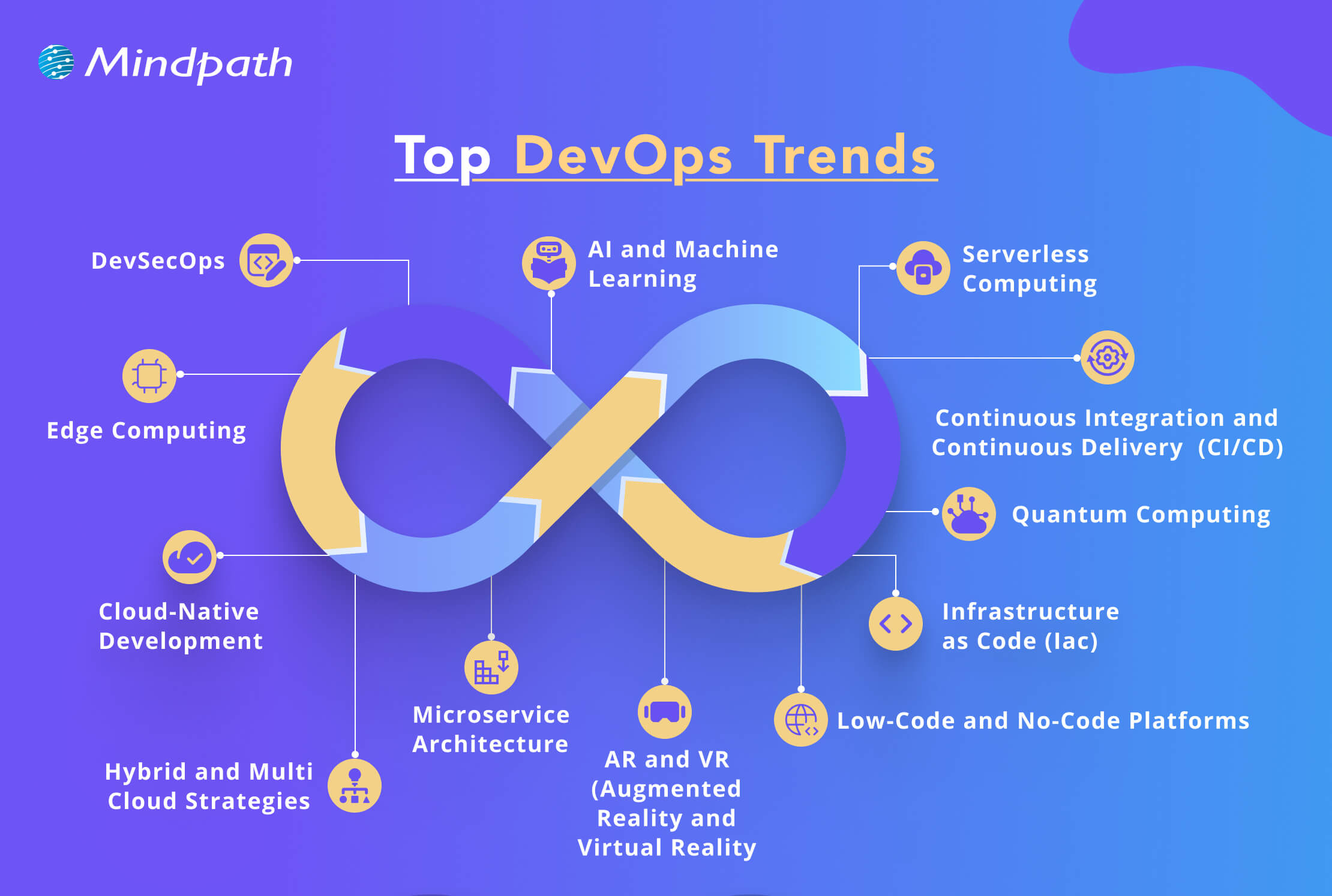
Top DevOps Trends 2026

As technology continues to evolve, companies are rethinking how they build, test, and deliver software. DevOps trends for businesses in 2026 show a clear shift toward smarter tools, stronger collaboration, and faster delivery. By following the latest DevOps transformation strategies, organizations can stay ahead and build systems that are both efficient and future-ready.

top devops trends


1. DevSecOps

DevSecOps is becoming a key part of DevOps innovation, where security is built into every stage of the development process. Instead of adding security at the end, teams now include it early to catch risks before they grow. This trend helps businesses create safer applications by using automated testing and continuous monitoring within the DevOps workflow.

2. AI and Machine Learning

AI and machine learning is one of the latest DevOps trends, helping teams work faster and smarter. These technologies support intelligent monitoring, find unusual behavior in systems, and give early warnings before issues grow. By using data to guide decisions, DevOps teams can improve system performance and reduce downtime.

3. Serverless Computing

Serverless computing is becoming a popular trend in DevOps for business success because it removes the need to manage servers. It allows teams to focus only on writing code, which speeds up development and reduces overhead. This approach also helps businesses save costs by using resources only when needed, making operations more efficient.

4. Continuous Integration and Continuous Delivery (CI/CD)

Continuous Integration and Continuous Delivery (CI/CD) is a key DevOps trend that helps teams deliver software faster and with fewer errors. It allows developers to regularly merge code changes, test them automatically, and deploy updates smoothly. This approach improves software quality and supports a steady flow of new features to users.

5. Infrastructure as Code (IaC)

Infrastructure as Code is a growing trend that helps teams manage infrastructure through written code instead of manual steps. It ensures consistency across development, testing, and production, reducing errors and saving time. As one of the leading DevOps tools and technologies, it allows automated setup and easy tracking of changes in infrastructure.

6. Microservices Architecture

Microservices architecture is a DevOps approach where an application is built using many small, separate services. Each service handles a specific function and can be updated or scaled on its own without affecting the rest of the system. This makes the software more flexible, easier to manage, and better at handling changes or failures.

Must Read: DevOps for Business

7. Cloud-Native Development

Cloud-native development is a modern way of building applications that fully uses the power of cloud computing. It is one of the key DevOps trends helping businesses create software that can easily grow, move, and adapt to changing needs. By using containers and microservices, teams can build flexible and efficient systems that are ready for fast updates and smooth scaling.

8. Edge Computing

Edge computing is a growing part of modern DevOps trends that focuses on processing data close to where it is created. This reduces delays and improves the speed of applications by handling data locally instead of in a central server. It also helps save bandwidth and supports real-time decision-making, making systems faster and more efficient.

9. Hybrid and Multi-Cloud Strategies

Hybrid and multi-cloud strategies are important DevOps trends that give businesses more flexibility and control over their cloud usage. By using services from different cloud providers, teams can choose the best tools and features for each task. This approach improves performance, reduces risk, and avoids being tied to one provider.

10. Low-Code and No-Code Platforms

Low-code and no-code platforms are shaping the future of DevOps by making application development easier and faster. These tools allow non-developers to build and launch apps with simple interfaces, helping teams save time. By handling basic tasks through these platforms, developers can focus on more complex work and boost overall productivity.

11. Quantum Computing

Quantum computing is an emerging part of DevOps trends with the potential to solve complex problems much faster than traditional systems. Although still in the early stages, it may one day help teams handle advanced computing tasks more efficiently. As the technology grows, it could bring powerful new capabilities to DevOps in areas like testing, simulation, and optimization.

12. AR and VR (Augmented Reality and Virtual Reality)

Augmented Reality and Virtual Reality are becoming new DevOps trends that support better training, simulation, and team collaboration. These technologies create realistic, hands-on experiences that help teams learn and solve problems more effectively. AR and VR also improve remote teamwork by making interactions more engaging and productive.

Looking to combine fast DevOps practices with automated security checks? Check out our blog on DevOps vs DevSecOps to understand how DevSecOps adds proactive, automated safeguards to every stage of your pipeline.

Is Your Business Ready to Benefit from the Latest DevOps Trends?

DevOps trends continue to shape how businesses grow through faster delivery, better collaboration, and smarter tools. Staying updated helps teams move quickly, improve software quality, and remain competitive in a rapidly changing market. By understanding and applying these trends, companies can build stronger systems and create real value with every software release.

At Mindpath, we offer expert DevOps services that help businesses streamline processes, boost collaboration, and deliver software faster. Our team uses modern tools and proven strategies to support automation, cloud-native development, and continuous delivery. Contact us and we’ll guide you through each stage with clear planning, smooth implementation, and reliable support tailored to your business goals.

Discover the latest DevOps trends to enhance collaboration, streamline processes, and drive business success.