

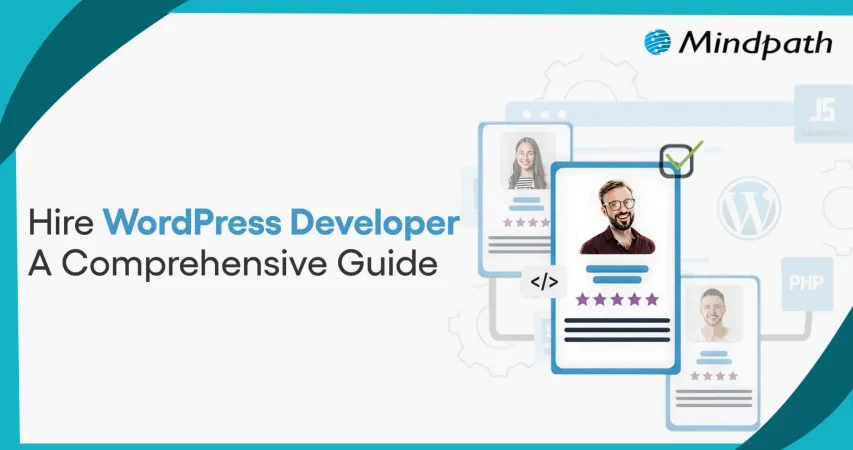
A Comprehensive Guide to Hire WordPress Developer

Join our Newsletter!

Featured Posts

Support Is One Click Away

Home

A Comprehensive Guide to Hire WordPress Developer

Hire wordpress developer

A Comprehensive Guide to Hire WordPress Developer

You have a great business idea and you just discovered that WordPress can help you build high-quality websites from scratch. Would you go for the DIY approach or choose an expert for the job? Many would choose to hire WordPress developer with the skills required to take up your project. With a large pool of WordPress developers in the world, it is difficult to navigate the hiring process.

The right WordPress developer can change the course of your web project with their skills to utilize available resources in the most efficient way. You may be launching a new site or switching your existing site to WordPress and in every case, you will need skilled developers to do the job. This guide will help you understand the hiring process for bringing a skilled WordPress developer to your team.

Ready to transform your online presence with a website designed to grow your business? At Mindpath, we offer expert WordPress development services to customize high-performing websites that drive your growth.

Unraveling the Reasons to Hire a WordPress Developer

The first thought that might come to your mind when conceptualizing a web project is the availability of website builders. You can use the ‘drag-and-drop’ features of website builders to create a website from scratch with preset themes. Why should you hire dedicated WordPress developers when you can do it on your own? When your website grows, you will need more features, specific design elements or better performance. Therefore, you cannot ignore the importance of a WordPress developer in the modern digital landscape.

You can rely on a professional developer to tailor the design of your website in a way that reflects your brand identity. Developers can add new features without relying solely on plugins and scale up your website as your business grows. Experienced developers also ensure that your website design is optimize for mobile devices and search engines. With the intervention of custom  WordPress development experts, you can create websites that work seamlessly on all types of devices and are more visible on search engines.

The next prominent advantage of WordPress experts for hire in any region is the assurance of security. Developers can take care of the security best practices, such as cleaning the code, using secure plugins and creating custom login URLs. In addition, you can rely on WordPress development professionals for ongoing maintenance and support services to keep your website running according to your expectations.

Also Read: Safeguarding WordPress Vulnerabilities

How Many Types of WordPress Developers are there?

Hiring professionals for WordPress development is quite difficult as you have to identify the right person for the role. Depending on the requirements of your project, you will have to hire the type of developer who will be the right fit for the project. While looking for expert WordPress developers, you must know that there are five distinct types of WordPress development experts.

The frontend developers work on user interface and design of websites with the help of JavaScript, HTML and CSS. Backend developers are responsible for creating the server-side logic, functionalities and managing database of the website with PHP and MySQL. If you need someone who can do both, then you should hire a full-stack developer.

The other notable types of WordPress development experts you will come across are WordPress theme developers and plugin developers. WordPress theme developers specialize in creating and customizing WordPress themes that you can use for your website. Similarly, WordPress plugin developers help in creating custom plugins that can help you add new features in a website.

What Does a WordPress Developer Do?

Anyone with general knowledge about WordPress would know that creating websites with WordPress doesn’t require coding. However, businesses want to hire WordPress programmers with design skills who can take care of their web projects. As a WordPress developer, you will have to fulfill various responsibilities that require programming skills. For instance, WordPress developer writes the code required to customize core WordPress files.

The WordPress developer is also responsible for testing and debugging the core WordPress software. In addition, developers have to update WordPress websites on a regular basis while working with different stakeholders. Another crucial responsibility of a WordPress developer revolves around creating WordPress themes and plugins according to client requirements.

Curious if your WordPress site is using the right PHP version for best performance and security? Our WordPress PHP Compatibility Guide will help you stay aligned with best practices and avoid technical issues.

Which Skills Should You Look for In a WordPress Developer?

The common thing about every business looking for a WordPress developer is that everyone wants the best professionals. How can you identify a WordPress expert from the crowd of applicants? Recruiters should have a candidate profile that helps them identify the essential skills required from a WordPress developer for their web projects.
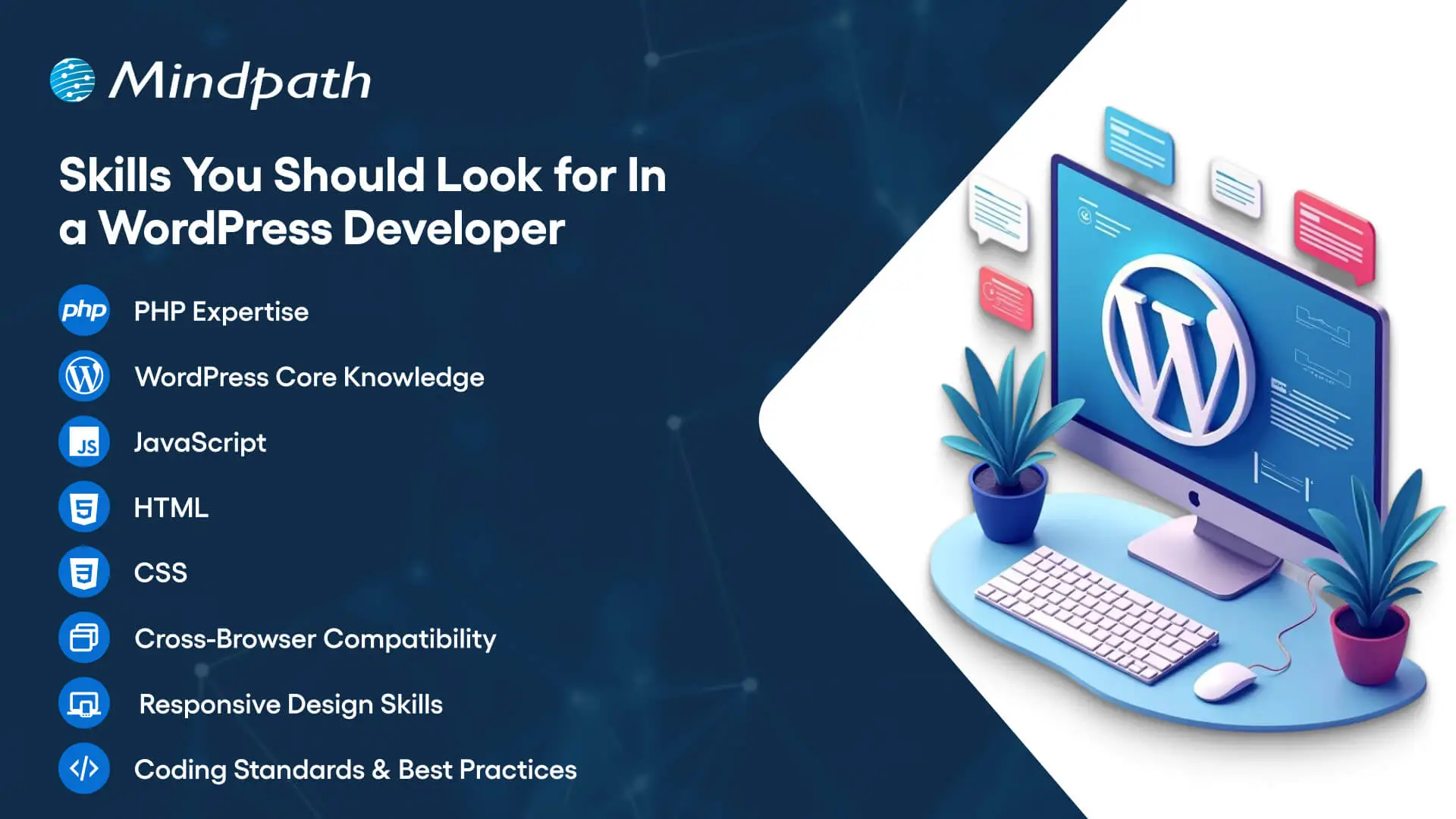
Skills You Should Look for In a WordPress Developer

You should focus on the core competencies first to identify professionals who are capable of leveraging the capabilities of WordPress.

1. A skilled WordPress developer must be fluent in PHP, WordPress core, JavaScript, HTML and CSS.

2. The wordpress developer should have in-depth understanding and practical experience in building WordPress themes and plugins.

3. The core competencies of WordPress development experts also revolve around skills for ensuring cross-browser compatibility and responsive design.

4. A WordPress developer is expected to know the coding standards and best practices for WordPress development.

Ready to make your hiring process smooth and avoid picking the wrong developer? Our WordPress Developer Checklist gives you a clear, step-by-step framework to evaluate every candidate.

Are Core Competencies Enough for a WordPress Developer?

The core skills required from a WordPress developer showcase only one half of the picture. Recruiters must also look for candidates with additional skills that can bring more value to web projects. Business can hire remote WordPress developers or dedicated in-house experts after checking their capability to go beyond the norm. Candidates who know more than the core skills of a WordPress developer can take care of different aspects of web projects with minimal assistance.

You should look for candidates with experience in version control and performance optimization. On top of it, a WordPress developer who has in-depth understanding of SEO principles can be a valuable asset. The other additional skills that you can look for in a WordPress developer include familiarity with SQL and database management. Candidates with knowledge of working with WordPress REST API and RESTful APIs will definitely elevate the chances of creating better web projects.

While technical skills are a must-have for WordPress developers, it is impossible to ignore the importance of business acumen and soft skills. Any WordPress developer with business acumen can understand the vision and goals of a web project. In addition, they also need soft skills like communication and time management to work in a team and deliver their best performance.

Unsure if your WordPress site meets accessibility standards for all users? Explore our article on how to improve WordPress web accessibility and ensure your site is usable by everyone.

Which Hiring Model Should You Choose?

Diving straight into the hiring process without choosing a hiring option can lead recruiters into many roadblocks in future. Business owners and hiring managers must know the strengths and setbacks of each hiring model to figure out the ideal option for their web project. You can hire freelance developers or opt for an in-house developer and capitalize on different advantages. For instance, freelance developers are the best picks for web projects of small companies or startups. Freelance developers can work on tight budgets and serve as the most efficient assets for one-time web development projects.

The freelance hiring model may seem appealing due to the lower costs than hiring a dedicated in-house developer. However, many people don’t pay attention to the limitations that come with freelance developers. It is difficult to manage freelancers as they may be working with multiple clients and could not deliver your project on time. The alternative to a WordPress freelancer is an in-house developer who will work in your office. In-house developers understand your business goals and customer expectations more closely, which helps them create effective products.

You may have assumed that an in-house WordPress developer will be the ideal choice for your next web project. The problem with in-house developers is the cost and time required to welcome them into your team. Apart from the costs of salary and infrastructure, you will have to bear the burden of time required for onboarding an in-house developer.

Interestingly, you can find a solution to this setback in professional WordPress development agencies. Professional agencies offer access to a team of developers with full-stack development expertise and the assurance of project management. With a professional agency, you don’t have to worry about overheads or continuous maintenance and support.

Looking to scale your web project without long-term commitments? Check out our guide to hire a freelance full-stack developer and discover how to find skilled freelancers who meet your needs.

What are the Costs of Hiring WordPress Developers?

The type of hiring model you choose to hire expert WordPress developers for your web project will have a significant impact on the hiring costs. On top of it, you must also consider the location and experience of the developer to determine the hiring costs. It is also important to note that businesses can choose between hourly pricing and fixed pricing for different hiring models. For instance, a freelancer will charge around $20 to $100 per hour for their services or take a salary of $65,000 to $70,000 per year for different projects.

The location where a WordPress developer will work also has a significant influence on the hiring costs. The average WordPress developer salary in the United States varies between $42,000 and $103,000. On the other hand, the salary of a WordPress developer in Australia can be somewhere between $91,000 and $179,000. It is also important to note that the salary of WordPress developers may vary with changes in demand for talent and complexity of projects. Awareness of salary ranges can help you ensure that you make the right offers to skilled candidates.

Must Read: WordPress vs Drupal Guide

Roadmap for Hiring an Expert WordPress Developer

Once you know what you are looking for, the search for a skilled WordPress developer becomes a lot easier. You can follow a few simple steps to establish a solid hiring process for WordPress development projects.

1. Know Your Business Goals

The first step in the hiring process involves understanding that you are not listing WordPress jobs to follow a trend. You must identify the problems you want to solve with the help of a WordPress developer. Understanding your problems and business goals will help you identify developers with the skills required to solve them.

2. Establish a Clear Budget

Another area where you should be very clear while hiring WordPress development experts is the budget. As a matter of fact, your budget will determine the type of hiring model that will suit your project. The important factors that help you define a budget for web projects include the scope of the project and its complexity. On top of it, the experience of developers will also come into play as you will have to pay more to senior developers.

3. Rigorous Testing and Interview Process

The most common mistake recruiters make while hiring a WordPress developer is the lack of attention to the testing and interview process. You should use different types of tests to evaluate the proficiency of candidates in PHP, HTML, JavaScript and SQL. The best way to test the technical proficiency of candidates involves providing hands-on assignments. Furthermore, the interview process should be more sophisticated with questions to evaluate the business knowledge and soft skills of candidates.

4. Finalize the Hiring Process

After identifying the right candidate for your WordPress project, you can complete the hiring process. It is important to create verified contracts that include comprehensive details about the project scope, terms of payment and timeline of the project. The hiring contract must also specify the clauses of confidentiality, ownership rights and terms of contract termination. With both parties agreeing to the contract, you can finalize the hiring process and welcome the developer into your team.

Ready to upgrade your HTML site to something more powerful and manageable? Explore why converting HTML to WordPress can streamline updates and improve your online presence.

Ready to Hire the Right WordPress Developer for Your Project?

The benefits of working with a professional WordPress developer can elevate your web project. You can hire offshore WordPress developers or choose an in-house developer for your team, depending on your requirements. However, the process to choose the ideal candidate for WordPress development projects remains the same in almost every case.

Mindpath is a trusted WordPress development company that has been helping businesses discover new solutions to a better digital presence. Our experience in working on different types of WordPress development projects has empowered us with the skills and confidence to deliver the best results. We offer WordPress development services tailored to the needs and vision of each business, thereby ensuring that you get desired outcomes from your web projects. Consult with us and make the most of WordPress for web development projects now.

Related Post

Discover the ultimate guide to hiring Node.js developers in London. Learn about the skills, benefits, and cost factors involved in finding the right talent for your project.

Related Post

Hiring a Node.js developer in California necessitates assessing their technical skills and abilities to operate in a fast-paced development environment. An experienced Node.js developer should be well-versed in JavaScript, capable of asynchronous programming, and have firsthand knowledge with Node.js frameworks, databases, and API development. Furthermore, experience with version control and optimal coding standards allows easy communication. Here are the main abilities to look for when hiring a Node.js developer for your company.

1. Strong JavaScript Fundamentals

A Node.js developer must be well-versed in JavaScript, which serves as the foundation for Node.js applications. Proficiency with ES6+ features, closures, prototypes, event handling, and object-oriented programming is required. Since JavaScript is essential for backend development with Node.js, excellent coding abilities ensure developers can create efficient, maintainable, and scalable apps. A thorough understanding of error handling, debugging, and performance optimization also contributes to application dependability.

2. Experience with Asynchronous Programming

Since Node.js is based on a non-blocking, event-driven design, developers must be familiar with asynchronous programming. Mastery of callbacks, Promises, and async/await is required to handle concurrent requests efficiently. Asynchronous operations are properly implemented to provide smooth performance, decrease latency, and avoid difficulties such as callback hell. Understanding event loops and dealing with tools like Bluebird or RxJS can help improve speed in Node.js apps.

3. Proficiency with NodeJS Frameworks

A skilled Node.js developer should be conversant with popular frameworks such as Express.js, NestJS, and Koa in order to quickly construct online applications. These frameworks make routing, middleware management, and API creation easier, allowing developers to build strong apps faster. A thorough grasp of middleware, authentication mechanisms, and scaling approaches inside these frameworks leads to improved speed and security in Node.js applications.

4. Database Management Skills

A Node.js developer must be capable of dealing with both SQL (MySQL, PostgreSQL) and NoSQL (MongoDB, Firebase) databases. Understanding database design, performing optimized queries, and managing data effectively are critical to application performance. Knowledge of ORMs (Sequelize, TypeORM) and ODMs (Mongoose) facilitates database interfaces and increases development efficiency. Developers should also be able to use database indexing, caching, and security best practices.

5. API Development and Integration

Building and integrating RESTful APIs is an important skill for Node.js developers. They should be able to create safe, scalable, and well-organized APIs with Node.js and Express.js. Knowledge of GraphQL, WebSockets, and API authentication techniques (OAuth, JWT) is also useful. Strong API development abilities guarantee that frontend apps and third-party services integrate seamlessly, allowing for effective cross-platform data transmission.

Looking for expert Node.js developers to build high-performance applications? Mindpath connects you with top Node.js talent skilled in JavaScript, API development, databases, and scalable backend solutions. Whether you need a custom web application, API integration, or real-time features, our experienced developers ensure seamless project execution.
Boost your development team with the best Node.js experts! Contact Mindpath today to find the right developer for your project.

Discover the ultimate guide to hiring Node.js developers in London. Learn about the skills, benefits, and cost factors involved in finding the right talent for your project.
outsourcing web development

In the present world, maintaining a strong online presence has become a necessity for any business. That’s where outsourcing web development can help you. As a matter of fact, this can be your most strategic growth accelerator. It is currently being used by organizations of both large and small scale to get access to global talent and unlock innovation, which keeps them on the competitive edge.

If you want to update your current website or introduce a new one, outsourcing can help you facilitate smooth management of this process, giving you time to work on other crucial issues. This post will help you know what outsourcing web development truly means and explore the 10 amazing benefits of the same.

Struggling to keep up with rising development costs, talent shortages, and faster digital demands in 2026? Mindpath’s web development services help you outsource with confidence, delivering scalable solutions that accelerate business growth.

Web Development Outsourcing- A Short Brief

In simple words, outsourcing web development is a practice of hiring an external team of professionals to handle a development project. Instead of investing in creating an in-house team, some businesses prefer to opt for outsourced web development services. The major factors that have caused this are minimized costs, shorter project durations, and the availability of specialized skills.

This will enable the businesses to concentrate on the major operations without the need to worry about web development and maintenance. It has become a norm amongst companies. Over 76 percent of the enterprises outsource their IT functions (Source: Deloitte). This is useful for startups and enterprises. 

Should You Outsource Web Development?

Still not sure if you should outsource web development? Here are some questions that can help you make a decision: 

1. Do you require any specialized skills not available in-house? 

2. Is scalability important to your business growth?

3. Do you want to speed up time-to-market and lower costs? 

If your answer is yes, you can prefer to outsource web development projects. This will offer you a perfect combination of expertise, innovation, as well as efficiency. If you are looking for some more reasons, check out the selections below, where we have covered some impressive benefits of outsourcing web development. 

Want to build a tailored digital solution that perfectly aligns with your business goals and user needs? Check out our guide on custom web development services to discover how personalized solutions can give you a competitive edge.

10 Key Advantages of Outsourcing Your Web Development

Outsourcing web development is not just about reducing costs; it’s also about working smarter without compromising quality. Read on to know the major advantages of outsourcing web development and the reasons why several businesses are drawn towards it. 

1. Access to Global and Top Talent

Outsourcing opens the door to highly experienced and skilled UX/UI designers, programmers, creative experts, project managers, and more. You are not limited by location anymore. The outsourced companies use advanced technologies such as blockchain and AI, and have skilled experts in frontend and backend development.

Based on your budget and requirements, you can outsource projects to regions well known for their tech expertise, such as Poland, Europe, or the United States. It allows you to leverage top-tier talent at competitive hourly rates.  

2. Reduced Development Cost

The most obvious advantage of outsourcing is lower web development costs. When you hire an in-house team, you will have to deal with multiple expenses. For instance, salaries, office space, software, benefits, employee training, and more.

You don’t have to worry about full-time salaries when you outsource. You only have to pay for the services you need. Besides, most outsource web development companies follow a flexible pricing structure. That can help startups and SMEs scale quickly. 

3. Fast Development Time

An experienced outsourced development team can start working on your project instantly. They have access to all web development tools and web development technologies to complete the task on time. 

Besides, they always follow streamlined workflows and agile methodologies to ensure faster prototyping and deployment. This gives you a chance to launch your website or web app faster to stay ahead of your competitors. 

4. Scale Up or Down Conveniently

The fact is, your web development needs are not constant. When you need to launch a new product, you may need a large team. And for maintenance, a few developers will be enough. Outsourcing lets you adjust your team as per your needs. 

Furthermore, scaling will be more predictable. You can plan ahead, understanding your requirements and adjusting team skills and size quickly. This is useful for seasonal companies and startups moving through a rapid growth stage. 

5. Access to The Latest Tech

Everyone is aware that technology is dynamic. It may not be easy to keep abreast with new security measures, web development trends, web development frameworks and web programming languages. However, outsourcing companies usually invest in the state-of-the-art tools and platforms.

They also assure you of working with best practices and current security features in developing your web apps. With chatbots, AI, and other high-level cybersecurity solutions, they transform your site into a masterpiece.

Curious how AI is transforming the way modern websites are built and optimized for better performance? Discover our in-depth guide on AI in web development to learn how it can enhance efficiency, personalization, and scalability.

6. Risk Mitigation

Creating a website comes with various risks, including security issues, non-compliance, and unexpected costs. These factors can easily derail your project. If you don’t want to deal with all these risks, partnering with an outsourcing company would be an ideal option. 

Trusted web development outsourcing companies practice the best security, compliance, and coding standards. In addition, their special QA teams constantly ensure your new website complies with the accessibility guidelines and performance. In addition, their SLAs or service-level agreements can be of benefit to you.

7. 24/7 Technical Support and Maintenance

A website needs to be updated as well as optimized regularly after it is developed. The majority of businesses fail to maintain their websites through their in-house team. Outsourcing provides continuous maintenance and technical support.

They keep an eye on your website, fixing things and making sure your site is equipped with the most recent laments to run without any hassle.

8. Reduced Burn Rate

You may find developing an in-house team appealing. However, it comes with major overhead. For instance, recruitment expenses, equipment leases, back-office operations, team onboarding, and more. 

For early-stage businesses or startups without consistent revenue, these expenses can inflate the burn rate. Well, outsourcing web development provides you with a leaner alternative. Pay only when you opt for their services, and you can stay financially agile. 

9. More Time for Core Operations

Web development is a process that should be carefully monitored, and it needs much of your attention. That means when done in-house, you may not get enough time for core business operations. 

By handing over the task to an external team, you can dedicate your time to other crucial things, such as sales, marketing, customer acquisition, strategic partnerships, etc. As a result, when your web app is fully developed, you will be in a good position to execute a successful launch. 

10. Enhanced Transparency and Project Management

Reputed outsourcing companies utilize modern project tracking tools, agile methodologies, and focus on transparent communication. They ensure you get regular updates and reports about your project. 

Furthermore, they ensure a smooth collaboration between you, designers, developers, and the project manager. With such facilities, you can ensure your web development aligns with the company’s vision. 

Looking to improve collaboration and speed up your web development process with a more flexible approach? Explore our detailed guide on agile methodology in web development to discover how it helps deliver faster and more efficient results.

Common Web Development Services to Outsource

You can assign the entire project or specific parts to your outsourced web development company. Here are some of the common services that are usually outsourced:

1. UI/UX Design

To develop interesting and user-friendly interfaces.

2. Web Consulting

Assists in idea validation and making web development easy.

3. Tailored Web Development

This includes both backend and frontend coding.

Must Read: Frontend Development Trends

4. E-Commerce Development

Creating a superior online store. 

5. API Development and Integration

To create custom APIs for enhanced user experience and functionality.

6. Database Management

To design as well as manage databases in a secure manner. 

To achieve desired outcomes, outsourcing web development to an experienced and reliable company is important. 

Planning to build a successful digital product but unsure about the right steps and timeline to follow? Discover our complete web development roadmap to understand each phase and make smarter outsourcing decisions.

Ready to Kick Start Your Business Growth by Outsourcing Web Development?

Outsourcing web development is more than a cost-saving strategy. It allows businesses to access global talent, adopt the latest technologies, scale efficiently, and focus on core operations. Smart outsourcing ensures faster project delivery, improved quality, and long-term business growth.

At Mindpath, we offer end-to-end web development services tailored to your unique needs. From UI/UX design and web apps to maintenance and support, our expert team ensures seamless execution, timely delivery, and innovative solutions that help your business scale confidently and achieve measurable results.

full stack development trends

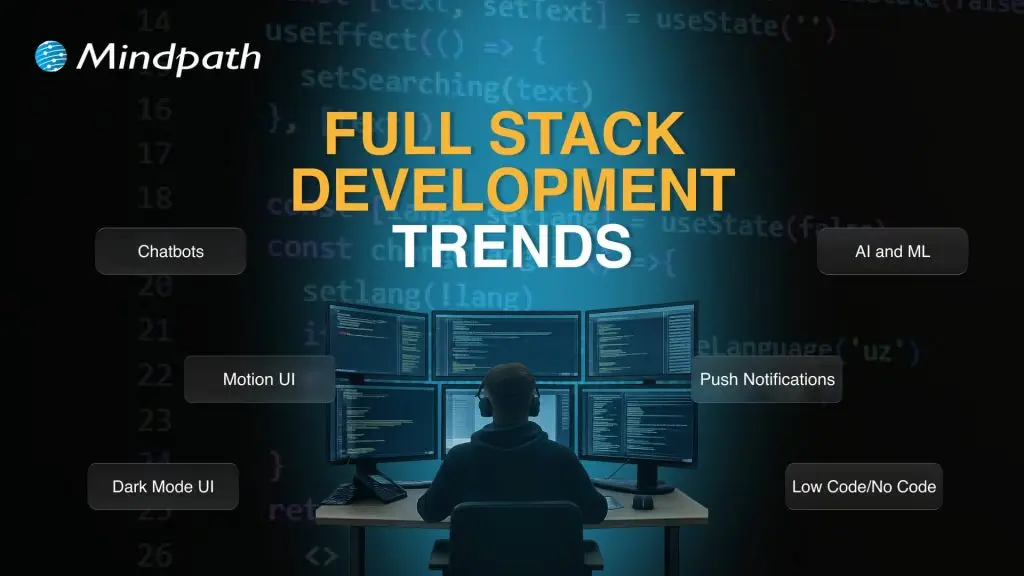
The full-stack development landscape is changing rapidly, and 2026 is already showing great possibilities for new ideas and better tools. Getting familiar with the newest full-stack development trends can help developers, startups, and businesses create smarter solutions. User needs are increasing, along with the requirement for flexible and efficient development solutions, which means teams are taking a fresh look at how they build, test, and scale applications. Knowing how to navigate these changes can have a significant impact next time whenever you develop a new item or launch a new product.

With speed, scalability, and seamless user experience as the new focus, developers are integrating advanced front-end technologies with back-end solutions to develop modern digital products. With cloud platforms available everywhere and low-code solutions evolving more rapidly, full-stack development is moving to a whole new level.  These solutions are transforming processes that not only save time but also improve quality and naturally foster greater teamwork. In this blog, we will provide further insight into the most important trends shaping full-stack development in 2026.

Looking to implement the advantages of full-stack development in your next project? Take a look at our full-stack development services, where our team will support and guide you to bring those benefits to the real world.

Understanding Full-Stack Development

Full-stack development refers to building both the front-end and back-end of a software application. Let’s dive in to understand! Every application has two main sections. The front-end is what users see and interact with, like buttons, images, and forms. The backend encompasses all the activities that take place in the background – saving data, running logic, interacting with other systems, etc.

Each side requires different skill sets and tool sets. Full-stack development combines both sides into one process. Full-stack development enables developers to create complete applications and allows us to develop the application seamlessly from the user interface through the server and database. This means that the application includes both of those components as one shared system, which makes development more efficient and organized.

Some advantages of full-stack development include:

  1. A full-stack developer saves money by doing both front-end and back-end work, minimizing the need for multiple specialists.
  2. They speed-up the development process by working across the entire tech stack, ensuring faster delivery and smooth collaboration.
  3. With strong knowledge of current tools and trends, they support modern full-stack development by integrating advanced features like AI and responsive design.
  4. Full-stack developers take full ownership of the codebase, simplifying responsibility and streamlining debugging.
  5. They deliver well-rounded, quality solutions by working across the UI, backend logic and business processes, database activities and data expansion, and testing.
  6. They even provide ongoing support and maintenance, which ensures long-term stability, security, and enhancement.

Read in detail: Full-stack development benefits.

Full-Stack Development Trends 2026

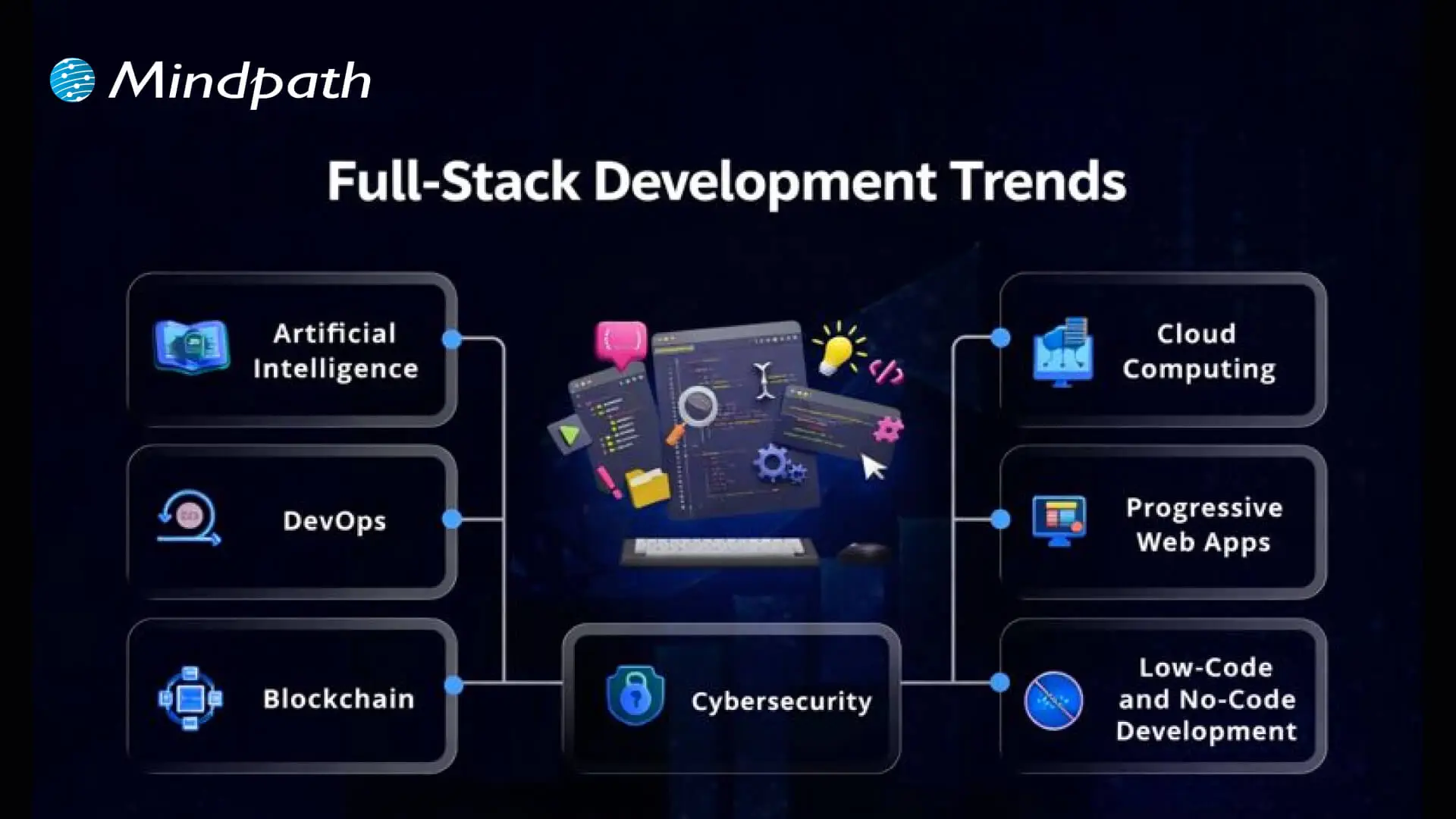
As technology continues to grow, developers are embracing smarter tools and faster methods to build complete applications. The emerging trends in full-stack development are shaping how teams work, improve performance, and deliver better user experiences in 2026. Here are the top trends to watch:

full-stack development trends

1. Artificial Intelligence

Artificial Intelligence is one of the key full-stack development trends shaping how modern applications are built. It helps solve complex problems faster and allows systems to work without human interruption. Full-stack developers are well-suited for AI roles because they understand both design and logic, making it easier to build intelligent solutions. As the future of full-stack development evolves, AI will play a major role in improving performance and user experience.

2. Cloud Computing

Cloud computing is a fast-growing technology that allows access to data storage, processing power, and other resources over the internet. It supports the future tech stack for developers by offering flexibility, easy scaling, and pay-as-you-go pricing. Full-stack cloud developers are in demand to build and manage cloud-based applications that support collaboration and performance. To grow in this area, developers should understand IaaS, PaaS, SaaS and gain hands-on experience with platforms like AWS, Azure, and Google Cloud.

Also Read: Cloud Computing Trends

3. DevOps

DevOps is a practice that combines development and operations to improve how software is built, tested, and deployed. It helps teams work better together and use tools like continuous integration and delivery to release updates faster. DevOps plays an important role in improving application speed, quality, and reliability. As part of full-stack development trends, it supports the demand for efficient workflows and strong collaboration in building modern applications.

4. Progressive Web Apps

Progressive Web Apps (PWAs) are web applications that offer an app-like experience using modern browser features. They work offline, load quickly, send push notifications, and can be installed on devices without using much storage. As part of web development trends 2026, PWAs help businesses reach more users, especially on mobile, while keeping development simple and cost-effective. Their flexibility and performance make them a smart choice for companies looking to improve user experience.

5. Blockchain

Blockchain is a secure and transparent technology that stores data across a network of computers, making it difficult to change or hack. It is widely used in industries like finance and healthcare to protect transactions and manage decentralized systems. As part of full-stack development trends and the latest trends in web development, blockchain allows developers to build safer and more reliable applications. To work in this area, full-stack developers need skills in decentralized tools, enterprise systems, and Web3 architecture.

Must Read: AI in Cybersecurity

6. Cybersecurity

Cybersecurity is the practice of protecting systems, networks, and applications from online threats like malware, phishing, and DDoS attacks. It has become a key part of full-stack development trends as developers need to build secure applications from the ground up. Companies are now including cybersecurity in their future tech stack for developers to keep data and systems safe. Full-stack developers aiming to work in this field should learn network security, web application security, cryptography, and secure coding practices.

7. Low-Code and No-Code Development

Low-code and no-code development platforms allow users to build websites and apps with minimal or no programming skills. These tools are growing as part of full-stack development trends because they save time, reduce costs, and make development accessible to more people. While they are great for simple projects, they may not be suitable for complex or large-scale solutions. As part of the trends in software development, LCNC tools offer fast results and full-stack capabilities for quick product launches.

Looking for the best way to scale your digital growth? Discover why full stack development for web projects is becoming the smart choice for businesses.

Ready to Leverage Full-Stack Development Trends for Your Next Project?

Full-stack development trends are shaping how modern applications are built, improved, and maintained. With advancements like AI, cloud, DevOps, and PWAs, developers and businesses can achieve faster, smarter, and more secure results. Staying updated with these trends will help you build stronger digital products that meet the growing demands of users in 2026 and beyond.

At Mindpath, we offer expert full-stack development services tailored to your business goals. Our skilled developers handle everything from front-end design to back-end logic, delivering complete, scalable solutions. If you’re looking to hire full-stack developers who understand the latest tools and technologies, our team is here to help you build your web and mobile applications with confidence and efficiency.

Frequently Asked Questions

1. How can developers stay updated with fast-changing full-stack development trends?

Staying updated requires continuous learning through official documentation, developer communities, and hands-on practice. Following trusted tech sources, experimenting with new tools, and working on real projects helps developers understand trends practically and apply them effectively in modern application development.

2. Why is adaptability becoming important for full-stack developers in 2026?

Technology is evolving quickly, and tools or frameworks can change within a short time. Developers who can adapt to new technologies, learn different stacks, and adjust to changing project needs are better positioned to build scalable and future-ready applications.

3. How do modern full-stack trends improve collaboration within development teams?

New approaches like integrated workflows and shared tools allow frontend and backend processes to work more closely. This reduces communication gaps, improves coordination, and ensures that teams can deliver consistent and high-quality applications more efficiently.

4. What role does performance optimization play in modern full-stack development?

Performance is critical as users expect fast and seamless experiences. Modern trends focus on optimizing load times, reducing server response delays, and improving overall efficiency. This ensures applications remain responsive, scalable, and capable of handling growing user demands.

5. How should businesses approach adopting new full-stack development trends?

Businesses should evaluate trends based on their specific goals and project requirements rather than adopting everything at once. Starting with scalable and practical technologies, testing them in smaller implementations, and gradually expanding ensures better results and reduces unnecessary risks.