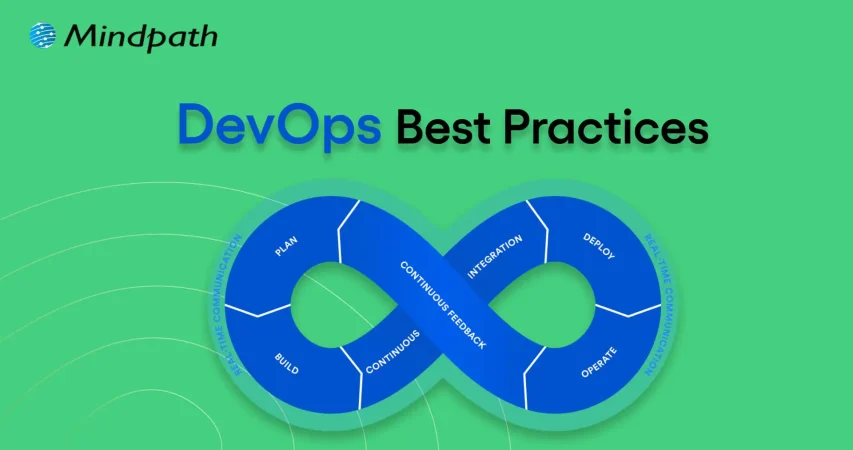
DevOps Best Practices for Business in 2026

Join our Newsletter!

Featured Posts

Support Is One Click Away

Home

DevOps Best Practices for Business in 2026

devops best practices

DevOps Best Practices for Business in 2026

Does your team prepare itself well enough to handle the fast pace of software development in 2026? As there are so many changes happening in the way businesses build and deliver products, it is very important to pause and think about what’s working and what’s not, isn’t it? The perfect solution for this lies in following DevOps best practices, so that you can keep your software development processes smooth and your teams connected.  

Well, DevOps can help your business improve teamwork, speed up release, and even reduce errors. Its goal is to create a robust process supporting development and operations. If you are asking what the best practices for DevOps are, and how they may help your business improve on delivery, performance, and collaborate between teams, then this blog can serve you better. 

Before delving into the main topic, let us first understand the fundamentals of DevOps. 

Want to reduce downtime and accelerate software delivery? Mindpath offers expert DevOps services, which help streamline your workflows, automate deployments, and improve overall efficiency.

What is DevOps?

DevOps is a proactive approach to linking development and IT operations teams to collaboratively work in a way that transforms the software development process. With DevOps, both teams can share responsibilities in building, testing, and releasing software. The main purpose of it is to improve speed, reduce errors, and deliver better results.

DevOps also improves communication across teams, which reduces delays and results in fewer disruptions. Automating repetitive tasks gives teams more time to focus on solving problems. It also allows for faster feedback loops, meaning teams can address problems quickly and improve product quality over time. This approach allows teams to adapt to change more easily while also scaling systems and keeping up with customer demand. 

Looking to elevate your business with smarter workflows? Check out our Benefits of DevOps blog to learn how it accelerates innovation while fostering collaboration across teams.

What are the 7 Key Principles of DevOps?

There are several main principles that define how teams work and deliver software. These principles provide an underpinning to enhance collaboration, automation, and improvement across a work ecosystem. Now, let’s explore the 7 key principles of DevOps: 

1. Strong Team Collaboration

DevOps brings developers and operations teams together to work as one. This helps solve problems faster and build better software. 

2. Customer-Centric Approach

Every decision is made by keeping the customer in mind. Teams collect feedback and use real-time tools to improve the user experience. 

3. Data-Driven Decisions

DevOps teams rely on real data-driven decisions before making changes. This helps them choose the right tools and improve their results with confidence. 

4. Automation Across the Workflow

Tasks like testing, deployment, and setup are automated to save time. This lets teams focus on planning, solving problems, and improving the product. 

5. Continuous Improvement

DevOps supports small and frequent updates instead of waiting for one big release. This helps teams meet user needs quickly and make steady progress. 

6. Embracing Failure as Learning

If something goes wrong, teams treat it as a chance to learn. This mindset helps them improve and make smarter decisions in the future. 

7. Shared Responsibility

In DevOps, the entire team takes responsibility for the software from beginning to end. Developers and operations work closely at every stage to build, test, and fix issues together. 

Struggling with speed, collaboration, or automation in DevOps? Our DevOps Challenges and Solutions blog explains how modern businesses address these issues.

What are the DevOps Best Practices?

To get the most out of DevOps, teams follow a set of proven methods that support faster delivery, better quality, and stronger teamwork. These top DevOps practices help create smooth workflows and make it easier to manage changes and fix problems quickly. Let’s explore the most effective DevOps methods that can drive real results. 

1. Continuous Integration/Continuous Deployment (CI/CD)

One helpful way to speed up your CI/CD pipeline is by using a smart testing platform that runs tests faster and more efficiently. It allows teams to run large sets of tests in parallel, get faster feedback, and use resources wisely to lower costs. A key benefit is that it keeps your tests stable across different environments, which helps improve software quality and delivery speed. 

2. Use Infrastructure as Code (IaC) for Better Control

Infrastructure as Code lets teams manage and set up their infrastructure using code instead of doing it manually. This makes deployments faster and keeps environments consistent across all stages of software delivery. Using IaC also helps track changes easily and improves teamwork by allowing developers to handle infrastructure in a clear and organized way. 

3. Integrate Security into Your DevOps Process

Adding security checks early in the development pipeline helps find and fix vulnerabilities before they cause problems. This approach keeps your software safe and ensures it meets important security rules. Using automated security tools makes it easier for teams to maintain strong protection without slowing down delivery. 

4. Leverage Configuration Management Tools

Configuration Management tools help automate system setup and updates to keep environments consistent across teams. They work well with CI/CD pipelines to speed up deployments and make collaboration easier. By using these tools, teams can also enforce security rules and track changes to meet compliance requirements. 

5. Adopt Shift-Left Testing for Faster Issue Detection

Starting to test early in the development process helps find problems before they grow bigger. Using automated and AI-driven testing tools makes it easier to catch errors quickly and improve the quality of the code. This approach also speeds up delivery by reducing the time spent fixing issues later on. 

Must Read: DevOps Trends

6. Automate Testing for Reliable Software

Automated testing is a key DevOps best practice that helps check code quality quickly and consistently. By using automated test tools in your DevOps pipeline, teams can find and fix problems early. This ensures every change is tested before going live, making software more reliable and ready for continuous delivery.  

7. Use Cloud Services for Flexibility and Speed

Cloud services make it easy to quickly set up and scale resources as needed while automating many tasks. They support key DevOps practices like automated pipelines, security integration, and managing infrastructure with code. Using cloud platforms helps teams deliver software faster and maintain smooth, reliable operations. 

8. Adopt Containerization

Using containerization is a smart DevOps best practice that helps keep software running the same way in development, testing, and production. Containers make it easier to scale applications and use resources more efficiently. This approach reduces errors and speeds up delivery by ensuring consistency across all stages. 

9. Implement Microservices Architecture

Microservices break down applications into smaller, independent parts that can be updated and scaled down on their own. This makes it easier for teams to manage and improve specific services without affecting the whole system. To make this work well, strong monitoring, testing, and automation are important to keep everything running smoothly. 

10. Focus on Continuous Improvement

Continuous improvement means always looking for ways to do things better by learning from past experiences. Teams can use the Plan-Do-Check-Act cycle to test small changes, check results, and keep improving. This helps them build better software faster and fix issues more quickly. 

Wondering how DevOps can accelerate growth and efficiency in your organization? Read our blog on DevOps for Businesses to discover strategies that streamline operations, enhance collaboration, and improve software delivery.

Want to Transform Your Software Delivery with DevOps Best Practices?

Following DevOps best practices helps teams build software faster, reduce errors, and work better together. By using automation, cloud tools, and early testing, your team can improve software quality and speed up delivery. These practices make workflows smoother and help your business keep up with fast-changing demands with time. 

At Mindpath, we apply proven DevOps practices like CI/CD, containerization, and infrastructure as code to streamline software delivery. Our expert teams focus on collaboration, automation, and continuous improvement to ensure secure, high-quality releases. With our DevOps-centric approach, your business can achieve better performance and faster results. 

Frequently Asked Questions

1. What are the main benefits of following DevOps best practices for a business?

Implementing DevOps best practices improves collaboration between development and operations teams, speeds up software delivery, reduces errors, and enhances system reliability. It also allows businesses to respond faster to market changes while maintaining consistent quality and security across applications.

2. How can DevOps best practices improve software delivery speed?

By automating repetitive tasks, integrating CI/CD pipelines, and using containerization and infrastructure as code, DevOps practices streamline workflows. Early testing and continuous feedback loops help teams detect and fix issues faster, reducing bottlenecks and enabling quicker, reliable releases.

3. Why is security integration important in DevOps workflows?

Integrating security early in the DevOps pipeline ensures vulnerabilities are identified and resolved before software goes live. Automated security checks maintain compliance, prevent data breaches, and protect user information without slowing down development or delivery processes.

4. How do microservices and containerization contribute to DevOps efficiency?

Microservices break applications into independent modules, allowing updates or scaling without affecting the entire system. Containerization ensures consistent environments across development, testing, and production. Together, they reduce errors, improve scalability, and make deployment faster and more reliable.

5. Can small businesses adopt DevOps best practices effectively?

Yes, DevOps practices are scalable for businesses of all sizes. Even small teams can leverage automation, cloud infrastructure, and CI/CD pipelines to improve collaboration, speed up releases, and maintain software quality. Early adoption supports growth while keeping operational costs efficient.

Related Post

Related Post

how generative AI is transforming business

The generative AI revolution is changing the business landscape. From design automation to optimized operations and improved client experience,  GenAI is enabling new opportunities across the spectrum of industries. Companies now leverage this technology to not only save uptime, but to innovate more rapidly, customize and provide service to their consumers more favorably, and remain competitive in an ever-expanding digital world.

Generative AI allows machines to learn patterns and create new output in a number of ways. Businesses are now adapting to this change and thinking about how they can move forward in a new way. It is gradually becoming a key part of business innovation and digital evolution. In this blog we will discuss the growing influence of GenAI and its role in transforming the modern business environment. To begin with, let us have an understanding of GenAI.

Looking for ideas to reshape your business with generative AI? Unlock smarter growth, faster innovation, and personalized customer experiences with our robuts and scalable AI development services.

What is Generative AI?

Generative AI is a form of artificial intelligence that can generate new things, such as text, images, music, or video, by learning from existing data. For example, if you give 1,000s of product descriptions from an online store, it will generate completely new and unique product descriptions for similar products, all by itself. GenAI does this by looking at patterns and learning about how things can be constructed so it can produce something new that looks very realistic.

This type of technology is spreading and evolving rapidly across the globe. A research from Statista shares that the market size of generative AI is expected to be US$66.89 billion in 2025, with annual growth of 36.99% every year, reaching a market size of US$442.07 billion by the year 2031. Among all countries, the United States is estimated to have the largest market size in 2025 at US$21.65 billion.

How Does Generative AI Work?

Generative AI uses neural networks to examine existing data to identify patterns and create new data that appears to be real. Most generative AI models utilize an unsupervised or semi-supervised learning process that is less of a hurdle, because it tends to require a broad array of unlabeled data. Consequently, it becomes much simpler for organizations to develop more powerful AI systems.

Generative AI examples can be seen in all businesses today. For example, Jasper is a tool that helps marketers create blog posts or advertising copy, and DALL·E creates images based on simple text descriptions. These foundation models make it possible to perform tasks like writing, designing, or summarizing in seconds, improving speed and creativity.

Want to stay ahead in the rapidly evolving world of GenAI? Explore the top Generative AI Trends shaping the future of development and strategy.

How is Generative AI Transforming Business?

The generative AI revolution is changing the way companies operate, innovate, and treat their customers. With generative AI in business, tasks which took hours can now be completed in minutes, increasing speed and creativity for teams. Here’s the way it is changing the business world:

generative ai for business

1. Boost Creativity for Marketing and Innovation

GenAI is changing creative industries by bringing ideas to life faster by offering design concepts and fresh content ideas. This supports quicker campaign launches and product development. It also gives teams more time to focus on refining ideas or exploring new ones. As a result, human creativity grows while the creative process becomes faster and more effective.

2. Enhance Customer Support

The GenAI revolution is helping businesses improve customer service like never before. Instead of making customers wait for answers, generative AI can quickly find the right solution by pulling information from many sources. It also creates clear post-call summaries, making support faster, more accurate, and more personalized, leading to better customer satisfaction and trust.

3. Improve Sales Communication with Smart Insights

The economic potential of generative AI is clear in sales. It can write call summaries and follow-up emails, helping reps spend more time with customers. Sales managers can track how well AI-generated messages perform, like whether they speed up deals or increase order values. This leads to better sales processes and stronger customer communication.

Wondering how GenAI for business can be your key to success? Generative AI for business enhances innovation, and streamlines operations—thus empowers companies to stay competitive and get future-ready.

4. Boost Content Creation for Better Productivity

Generative AI helps businesses create high-quality content quickly by providing first drafts in just a few seconds. This allows teams to produce more sales messages, marketing content, and product documents in less time. As a result, companies can respond faster to customer needs while giving employees more time to focus on building stronger customer connections.

5. Create Personalized Customer Experiences

The role of AI in business growth and human empowerment is very clear when we think of how it can assist businesses in creating personalized customer journeys. By understanding their customer data, likes/dislikes, and behaviors, GenAI makes it easy for businesses to create personalized suggestions and relevant content. AI personalized customer experiences can truly bring better connections, embed customer loyalty, and create a better experience for everyone involved.

6. Speed Up Development with Smarter Coding

Generative AI applications can help developers save time by writing routine code and automating common tasks. The role of GenAI in app development brings unexpected benefits such as boosts productivity, reduces errors, and keeps projects on track. It also supports non-technical teams through no-code and low-code tools, making app creation easier for everyone, not just engineers, and allowing more people to contribute to digital solutions.

Also Read: Generative AI Use Cases across Industries 

Ready to Embrace the Generative AI Revolution in Your Business?

The generative AI revolution is creating exciting new possibilities across industries by helping businesses work faster, smarter, and more creatively. From personalized customer experiences to automated content and improved development, generative AI is no longer a future trend; it’s the present opportunity. Now is the time to explore how it can redefine the way your business operates and grows.

At Mindpath, we offer smart and scalable GenAI solutions that help businesses unlock real value. From custom AI applications to intelligent automation and personalized customer engagement tools, our AI development services help businesses fuel innovation, boost productivity, and empower teams. Let us help you stay ahead in this fast-changing digital world with cutting-edge generative AI services.

Frequently Asked Questions

1. How can businesses start using the generative AI revolution without major risks?

Businesses can begin with small pilot projects like content generation or customer support automation. This allows teams to test outcomes, understand value, and make improvements before scaling. Starting small helps reduce risks while building confidence in adopting generative AI solutions effectively.

2. What makes the generative AI revolution different from earlier AI technologies?

The generative AI revolution focuses on creating new content rather than just analyzing data. It can produce text, images, and code, making it more interactive and creative. This shift allows businesses to automate tasks while also improving innovation and decision-making processes.

3. How does generative AI support faster decision-making in businesses?

Generative AI can quickly analyze large volumes of data and generate useful insights or summaries. This helps decision-makers understand trends, identify opportunities, and respond faster. With quicker access to relevant information, businesses can act confidently and stay competitive in dynamic markets.

4. Can generative AI replace human creativity completely?

Generative AI supports creativity but does not replace human thinking. It helps generate ideas, drafts, and suggestions, but human input is still needed for refinement and strategy. The best results come when businesses combine AI capabilities with human creativity and expertise.

5. What challenges should businesses be aware of when adopting generative AI?

Businesses should consider data quality, security, and ethical concerns when using generative AI. Proper planning, monitoring, and clear guidelines are important to avoid risks. Understanding limitations and maintaining human oversight ensures that AI is used responsibly and effectively.

Are you looking to build a fast and scalable web application? Do you need expert NodeJS developers in New York to bring your ideas to life? Finding the right developers can be challenging, but with the right team, you can create high-performance applications that drive business success. But where can you find the best talent? Hiring Node.js developers in New York is essential for businesses seeking scalable and high-performance applications. With its event-driven architecture and non-blocking I/O, Node.js enables fast and efficient development, making it a preferred choice for real-time applications, APIs, and enterprise solutions. New York’s dynamic tech ecosystem offers access to highly skilled Node.js developers with expertise in modern frameworks and development best practices. Whether you’re building a startup or expanding an existing platform, choosing the right developers ensures seamless execution, optimized performance, and long-term success. Let’s explore how you can hire top NodeJS developers to take your project to the next level!

Steps to Hire Node.js Developers in New York

1. Define the Role

Begin by writing a comprehensive job description that outlines the responsibilities, requisite abilities, and credentials for the Node.js developer position. Indicate your proficiency in JavaScript, Express.js, databases (MongoDB, PostgreSQL), and cloud services. Mention your experience with API development, real-time data management, and performance optimization. Clearly identify soft skills such as problem-solving, teamwork, and communication to ensure alignment with the business culture. To attract the best candidates, mention if the position is onsite, remote, or hybrid, as well as the project requirements. A clearly defined position guarantees that only the most qualified and relevant Node.js engineers in New York apply.

2. Build a Hiring Process

Create a systematic hiring funnel to evaluate prospects efficiently. Begin with scanning resumes to identify competent individuals, followed by technical examinations to evaluate coding abilities. Next, conduct behavioral and cultural fit interviews to evaluate collaborative abilities. Include a test project to evaluate real-world problem-solving ability. Ensure that the process is in accordance with the business’s needs, timetables, and project scope. A well-planned recruitment strategy makes recruitment easier, allowing firms to find the top Node.js developers in New York who meet both technical and cultural requirements.

3. Find Candidates

Finding the appropriate Node.js developers are essential. Post job openings on LinkedIn, Indeed, Glassdoor, and the local NYC tech employment boards. Use networking events, hackathons, and developer meetings to connect with talent. Alternatively, work with a Node.js development agency in New York to have access to pre-vetted professionals. Agencies manage the vetting process, saving time while assuring high-quality personnel. Whether you’re recruiting freelancers, in-house developers, or outsourcing to an agency, using different sourcing channels will help you identify the most competent and experienced Node.js individuals for your project.

4. Assess Candidates

Review portfolios and GitHub repositories to assess technical and problem-solving skills. Check past projects to see experience in Node.js frameworks, databases, and cloud deployment. Ask candidates about coding methodologies, debugging strategies, and security best practices. Consider administering a practical coding test to determine efficiency in handling real-world scenarios. Pay attention to soft skills such as communication, adaptability, and teamwork to ensure compatibility with your current team. A thorough examination assures you choose professional and skilled Node.js developers in New York who can produce high-quality apps.

5. Interview Candidates

Prepare an organized interview procedure that includes technical and behavioral questions. Begin with a screening interview to examine experience, previous projects, and technical expertise. Follow up with a detailed code interview that covers Node.js architecture, performance optimization, and database administration. Include a live coding session or case study to put your real-time problem-solving abilities to the test. Conduct team interviews to evaluate collaboration and cultural fit. In New York’s competitive tech industry, a rigorous but fast interview process is required to obtain top personnel while assuring alignment with your company’s vision and goals.

6. Hire candidates

After conducting interviews, choose the finest Node.js engineers based on technical knowledge, problem-solving skills, and cultural fit. Check references to confirm previous performance and professionalism. To recruit excellent people, provide competitive compensation that is in line with New York’s technology market requirements. Prior to onboarding, clearly describe job expectations, team structure, and project goals. Integrating new personnel into your development workflow and introducing them to the team can help to ensure a pleasant onboarding experience. Hiring the best Node.js engineers in New York guarantees the success of your online and software development projects.

Ready to Hire the Best Node.js Developers in New York?

At Mindpath we provide top-tier Node.js development services to help businesses build scalable, high-performance applications. Whether you need a dedicated developer or a full-scale development team, our experts are ready to bring your vision to life.
Contact Mindpath today and get the right Node.js developers for your project.

Discover the ultimate guide to hiring Node.js developers in London. Learn about the skills, benefits, and cost factors involved in finding the right talent for your project.
AI Tech Stack Guide

A solid and consistent AI tech stack is crucial to building powerful AI applications that actually operate. It merges the right data tools, machine learning frameworks, cloud environments, and deployment platforms to ensure your app absorbs data, learns from it, and improves over time. Smart decisions made at each layer will create a smoother development cycle, giving you a more powerful and scalable final product.

Every component of an AI tech stack combines to enable your application to be precise, quick, and able to handle real-world obstacles. Understanding how each piece is put together will enable you to sidestep potential obstacles and build smarter solutions. In this blog, you will see how to combine all of these pieces to build AI-powered applications that pass the real-world test.

Want to enhance your product with intelligent features? From recommendation engines to predictive analytics, Mindpath’s AI development services bring advanced capabilities to your applications.

What is a Tech Stack?

A tech stack is the group of tools and technologies used to build and run a software application. It includes everything from the AI programming languages and frameworks to the databases, servers, and APIs that help different parts work together. Every choice you make for your tech stack shapes how your product works, how easily it can grow, and what skills your team will need to keep it running smoothly.

A good tech stack also makes it easier to track how people use your product and see where you can improve. For any company building software, investing in the right tech stack is an important step. It gives your team what they need to create, maintain, and improve your product, so it keeps meeting customer needs as you grow.

What Does AI Tech Stack Mean?

An AI tech stack encompasses all of the required tools, frameworks, libraries, and systems for the full development, deployment, and management of an AI-powered application. It covers the whole journey of an AI application from when you find and clean data, to training your model, to getting it in action. Whether it is a chatbot, image analysis, or a predictor, the right tech stack will seamlessly work in the background to optimize the performance of your solution while it learns.

Finding the right combination of tools can keep your team organized and the project prepared to scale. Having a clear tech stack allows you to spend less time fixing a glitch and more time creating a smart feature that provides value. Preparing a clear tech stack can also provide you with a solid foundation to better manage more users, test new ideas and iterate on the AI solution, while adapting to the changing requirements of the technology.

Looking to align your AI tech stack with the most impactful advancements in the industry? Discover the top AI trends shaping the next generation of intelligent solutions.

Types of AI Tech Stack

There are different types of Artificial Intelligence tech stacks, each designed to handle specific tasks and goals. Understanding these categories helps you choose the right tools for your project’s needs.

Types of AI Tech Stack

1. Generative AI

The GenAI tech stack provides the means to build intelligent systems that can produce new products like text, images, or audio. It blends together the powerful models available, the right data, and the handiest tools to streamline and improve development.

2. Domain-Specific AI

Some sectors require targeted stacks to accommodate specialized needs and regulations, such as healthcare, finance, and retail, that engage with trusted AI outcomes.

3. Enterprise AI

This works with large organizations and allows them to develop their own AI capabilities with respect to their internal processes and suitability for their growth. It integrates bespoke development, optimal operations, and seamless integration, providing an organized approach to their more complex requirements.

4. Consumer AI

It focuses on delivering users top-level, helpful, simple, and fast AI experiences they can engage with every day. Consumer AI taps into models, smart apps, and solid cloud or edge connections to produce a seamless experience for users.

Curious about where AI is headed? Head to our blog The Future of AI: How AI is Transforming the World to learn more!

Layers of an AI Tech Stack

Building an effective AI system means understanding how each layer supports the next. These layers work together to turn raw data into smart, reliable applications.

layer of an AI tech stack

1. Infrastructure Layer

This layer forms the base of a modern AI stack, giving you the hardware and software needed to build and run AI systems. It covers everything from powerful processors to storage and operating systems that keep everything running smoothly. Without a strong foundation here, AI development would be slow and unreliable.

2. Data Layer

Good data is the heart of AI application development. This layer handles how data is collected, stored, cleaned, and prepared for use. Clean, well-organized data helps models learn accurately and perform better.

3. Model Layer

This layer is where you build and train the brains of your AI. It includes frameworks and tools that make it easier to design, test, and deploy models. A well-managed model layer speeds up AI app development and boosts results.

Must Read: AI for Customer Service

4. Application Layer

Here, all your hard work connects directly with users. This AI tech stack layer includes the user interface, APIs, and logic that bring your AI features to life. A clear application layer ensures people get real value from your AI.

5. Observability and Governance Layers

These layers help you keep an eye on how well your AI works and that it stays secure and fair. They cover monitoring, performance checks, and rules for data protection. Together, they build trust and long-term success.

6. Orchestration Layer

This part keeps every piece of your AI system working together smoothly. It manages workflows and automates tasks to save time. Proper orchestration means you spend less effort fixing things and more time improving them.

7. Generative Model Layer

This layer focuses on models that can create new content like text or images. It uses strong foundation models and customizes them for what your project needs. A good setup here drives innovation for creative AI solutions.

Struggling to choose the right AI model to power your AI-driven application? Explore our detailed guide on the top AI models to understand their capabilities, strengths, and real-world applications

Best Practices for Building an AI Technology Stack

Building an effective AI tech stack takes careful planning and the right approach for your goals. Following best practices helps you make smart choices and get the most out of your AI development tools and resources.

1. Define Your AI Goals Clearly

Start by knowing exactly what you want your AI tech stack to do. Clear goals help you choose the right tools and avoid wasting time on things you don’t need. It could be improving customer service, automating tasks, or predicting trends. When everyone understands the goal, the project runs smoother and stays focused.

2. Prioritize Good Data Early

Good AI starts with good data that’s clean, organized, and reliable. Make sure you have a strong system to collect and manage your data from day one. Accurate data helps your models learn better and make smarter decisions. Invest time in setting up clear data processes to get the best results.

3. Keep It Flexible and Automated

A flexible setup makes it easier to update or add new tools as your needs change. Modular systems let you swap parts without starting over, saving time and money. Use automation to handle boring, repetitive tasks, so your team can focus on important work. This approach helps you scale and stay ready for growth.

Wondering which generative AI tools are transforming modern AI application development? Learn more about the top GenAI tools for the future of AI development to strengthen your AI tech stack.

4. Ensure Security and Teamwork 

Keeping your AI secure should always be a top priority, especially when handling private data. Follow all rules and regulations to stay compliant and avoid risks. Make sure your team works well together by setting clear roles and sharing information. Strong teamwork and security build trust in your AI system.

5. Keep Improving Your Models

Your AI models should never stand still. Create a process to check how they perform and update them with fresh data. This helps your system stay smart and relevant as things change. Regular updates mean better results and a competitive edge.

6. Plan for Easy Growth

Think ahead so your system can handle more users, bigger data, and new features as you grow. A scalable setup saves you from costly rebuilds later. Make sure your tools and infrastructure can expand without any problems. This way, your AI stays strong no matter how much your business grows.

Not sure how to strategically implement AI beyond just the technical stack? Explore our detailed guide on AI in business strategy to understand how to turn AI capabilities into measurable business value.

Looking to Power Your Business with Smart AI Tech Stack?

A clear and well-structured AI tech stack makes it easier to turn complex ideas into reliable AI applications. By choosing the right tools and following smart practices, you can handle data better, keep your systems secure, and scale with confidence. A good foundation now means your solutions will adapt smoothly as your needs and goals grow.

At Mindpath, we offer trusted AI development services to help you build and maintain AI solutions that work in real business scenarios. Our team combines the best tools and strategies to design applications that learn, perform, and deliver results. Let us help you leverage AI to achieve your goals and maximize the value of your investment.