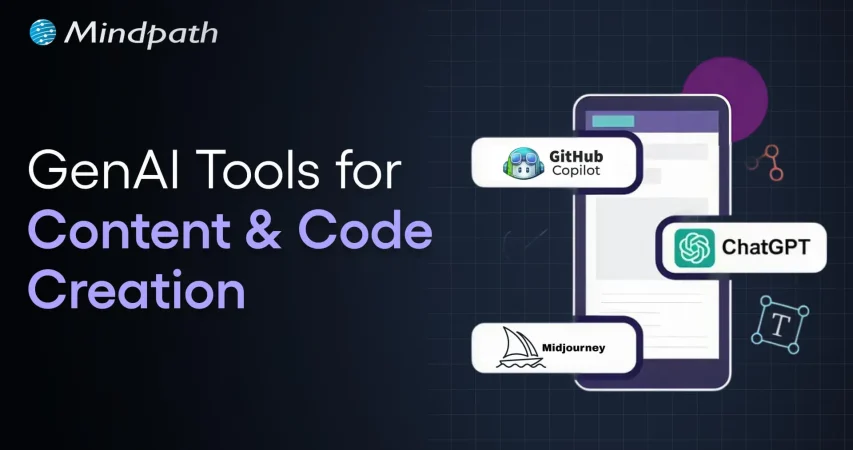
Generative AI Tools for Content & Code Creation

Join our Newsletter!

Featured Posts

Support Is One Click Away

Home

Generative AI Tools for Content & Code Creation

generative ai tools for content creation

Generative AI Tools for Content & Code Creation

Did you ever wish you could brainstorm new concepts, create beautiful visuals, or write codes without any creative personnel or technical expertise? Now that there are well-developed generative AI tools for content creation and code generation, this is not a dream anymore. These smart tools are enabling users to develop quality content and working code in a matter of minutes. Whether it is writing blogs or coming up with generative code snippets, these tools are aiding productivity and creativity in industries.

All you need is the right tool to witness the magic. Here, in this blog, you will learn about generative AI for code generation and content development. In addition to that, we will discuss some of the most essential aspects that will allow you to select a generative AI tool without any confusion.

Want to improve your business content creation and coding capabilities without increasing the workforce? Mindpath’s AI development services build custom GenAI solutions that deliver consistency and measurable results.

What are Generative AI Tools?

Generative AI tools refer to AI-based software programs that generate content such as audio, code, images, or text depending on the inputs of the users. Gen AI is changing creative work and to automate a number of repetitive processes. They are trained on a huge amount of data and generate content based on the context, which can be beneficial to teachers, marketers, developers, and designers.

Here is how generative AI can help in code and content creation.

1. Produce beautiful marketing images.

2. Write social posts, emails and articles.

3. Computerize routine development processes.

4. Write code using various languages.

Whether you are a marketer who wants to optimize the content or a developer who needs to quickly get the code finished, generative AI can serve as your creative partner.

Wondering where generative AI is making the biggest impact? Discover generative AI use cases to explore real-world applications across industries.

Let’s now learn about the most popular generative AI tools for content creation and code generation and know how to select the appropriate one for your business. 

Generative AI Tools for Content Creation

Generative AI has enabled more scalable, faster, and smarter content creation processes across industries. Here are some popular tools assisting with ideation, editing, and drafting. 

1. Copy.ai

It generally focuses on generating short-form content. Businesses can use it to generate taglines, headlines, and relevant email subject lines. Copy.ai is an ideal option for quick ideation and A/B testing across multiple campaigns. 

2. Jasper

This AI-based tool is an advanced writing assistant that is developed for sales teams, marketers, and brands in need of conversion-driven and persuasive content. It comes with built-in templates as well as SEO integration. Jasper can assist you with the social media posts, landing pages, and advertising.

3. Hypotenuse AI

This tool specializes in generating e-commerce-focused content and product descriptions. It is also able to develop SEO-friendly blogs depending on the nature of your brand so that you can gain organic traffic. Using this, you can maintain a consistent brand tone for your marketing content.

4. ChatGPT

This versatile tool is an excellent option for long-form writing, conversational content, and brainstorming. It is flexible in style and tone, and is therefore excellent for emails, product description, and blogging.

Wondering how tools like ChatGPT generate human-like responses? Explore the Large Language Models (LLM) guide to understand the technology powering content and code creation.

Wondering which AI tool is best for content creation? Well, that entirely depends on your requirement. You should choose generative AI tools for content creation considering your audience base, content format, workflow requirement, and platform. 

Top Generative AI Tools For Code Generation

AI coding tools are not here to replace developers; they are here to enhance their efficiency and capabilities. Well, if you want to experience it, here are some of the best generative AI tools for code generation that you can try. 

1. Tabnine

It is a deep-learning code assistant and can easily adapt to every developer’s style. The platform supports IDEs and multiple languages. Besides, it offers privacy-first deployment along with team-based training. With this tool, you can ensure context-aware code generation. 

2. Qodo

It is an AI-based code quality platform, which provides comprehensive test cover, compliance, and code integrity. It can easily be incorporated into CI pipelines, JetBrains, VS Code, and IDEs. Qodo also promotes features like code explanation, SDLC coverage, and automated test development.

3. GitHub Copilot

This tool is built in with Visual Studio Code and provides smart code completion, automatic snippet generation and real-time suggestions. It supports several programming languages and assists programmers to code more quickly and with minimum errors.

4. Replit

It is a browser-based coding platform that offers AI-powered contextual code generation and auto-completion. In addition, it is also capable of detecting errors and breaks down complicated code snippets efficiently with a reasonable explanation. Replit also supports real-time collaboration and rapid prototyping.

Interested in AI-powered image and media generation? Explore our Stability AI guide to see how Stability AI tools support creative workflows.

Tips to Choose the Right Generative AI Tools

Selecting the best generative AI tools for your needs requires a strategic approach. After all, not all the tools are the same, and one tool can’t fulfil all your wishes. However, you don’t have to worry at all, as here we have listed down some useful tips that will help you make an informed decision. 

1. Know Your Goals

Always begin by learning about the core objectives. Understand whether you need a tool for editing multimedia, writing SEO-optimized content, or generating code. With a clear goal, it will be easier for you to match tools to particular tasks. 

2. Pilot Various Tools

Extensively test multiple AI tools and compare their output quality, feature alignment, and usability. Piloting can help you find out which tools perfectly fit your existing workflows and adapt to your technical and creative style. 

3. Customization and Training

Opt for generative AI tools that allow quick tuning, model training, and brand voice adaptation. Flexibility in customization ensures the results are consistent and relevant.

4. Integration Compatibility

While searching for generative AI tools for content creation, you should ensure that they will integrate with your existing tools, like IDEs, CMS, etc. A seamless integration will reduce friction and increase productivity while supporting your future scalability. 

5. Support and Community

Some tools can be a little challenging to get started with. However, a tool with strong documentation and active forums will be easy to use. A growing community will accelerate learning and help you troubleshoot different issues. 

Keep these points in mind and align your organizational goals with the tool’s capabilities to find the best solutions. Only the right one can help enhance creativity as well as productivity. 

Want to stay ahead of emerging AI innovations? Check out generative AI trends to learn what’s shaping the future of AI tools.

Challenges and Considerations in Gen AI

As generative AI platforms become essential to code and content creation, many ethical considerations and challenges demand attention. Read to know more about this.

1. Ownership Conflict

One of the major concerns is ownership. Who truly owns AI-generated outputs- the developer, the platform, or the users? We all know that the current legal frameworks are not designed for technological innovation. This has created confusion around licensing, distribution rights, and copyright. Every organization should establish transparent internal policies that clearly state ownership. 

2. Ethical Grey Zones

Generative AI tools are trained on massive datasets, and that data may carry bias, cultural blind spots, and misinformation. Without proper oversight, those flaws can be seen in outputs. Organizations should consider ethical AI and focus more on fairness, transparency, and, of course, accountability. Speaking about the responsible use of models, it includes proper auditing models, flagging problematic content, and aligning outputs with societal values. 

3. Human Judgment Still Matters

Undoubtedly, generative AI tools have impressive capabilities. However, they are not infallible. These tools can misinterpret prompts, offer irrelevant content, and hallucinate facts. That’s why human oversight will remain essential for quality checks. Editorial review, domain expertise, and critical thinking are irreplaceable. 

4. Access Gaps

Powerful AI tools often need significant resources such as financial investment, computing power, and technical expertise. This may create obstacles for small creators and teams. Eliminating such issues is important for equitable innovation. Affordable pricing, inclusive design, and open-source models can lead to vast adaptation. 

Addressing these issues will ensure that generative AI tools evolve responsibly and can benefit various users. 

Wondering how businesses can adopt generative AI responsibly? Discover generative AI for business to learn strategies that balance innovation, cost, and accessibility.

Generative AI Tools – What’s There in the Future?

The future of generative AI tools for content and code creation is evolving rapidly. The trends indicate more accessible, intelligent, as well as collaborative experiences.  In the future we shall be able to observe:

  • Stunning multimodality features combining images, audio, code, and text generation.
  • More developed and elaborate fine-tuning of industry-specific code standards and writing.
  • The risk of errors will be reduced as AI will be able to comprehend context on a profound level.
  • AI will function as a technical and creative partner, helping businesses boost productivity. 
  • AI-powered content and code creation will become more accessible to small businesses, startups, and non-technical users. 

Curious how generative AI is reshaping business operations? Explore our generative AI revolution blog to see how it is transforming content creation and the future.

Generative AI Tools- Driving Innovation in Code and Content

Generative AI tools for content creation and code generation are transforming the way developers and businesses operate. These tools are driving high-speed innovation, increasing the power of creativity, and improving quality. Whether you need to write interesting marketing copy or just want to automate some of your coding tasks, these tools can help you with this seamlessly.

Mindpath’s AI development services have been leading this revolution and assisting businesses in embracing the potential of generative AI. Using our experience in offering tailored AI solutions and fine-tuning, you can have your AI tools aligned per your specific needs. With us, you can strategically select the best generative AI tools for content creation or code generation. Shine out in this changing online scenario with us!
Related Post

Discover the ultimate guide to hiring Node.js developers in London. Learn about the skills, benefits, and cost factors involved in finding the right talent for your project.
Learn how automating model deployment with MLOps strategies improves efficiency, security and performance for machine learning models.

Related Post

energy efficient computing

In every digital action and decision we make, from storing information to running software, energy is consumed. The more companies leverage technology, the more they are transitioning to energy-efficient computing to lower their power usage, while reducing their environmental impact. This approach is looking at technology used in business from an energy usage standpoint but still achieving the same performance. This will help companies save money and become more responsible corporate citizens.

With pressure mounting for organizations to meet their sustainability commitments, companies are becoming greener within their technology strategies. Whether utilizing data center migrations to improve performance or selecting devices with lower energy usage, every decision counts toward a more sustainable future. This blog is going to detail how energy-efficient computing allows for long-term business success and creates technology solutions for both the environment and performance.

Ready to make your business more sustainable and cost-effective? Partner with Mindpath today to explore how our energy-efficient solutions can transform your operations!

What is Energy Efficiency in Computing?

Energy efficiency in computing is when technology is used in a way that lowers power consumption while continuing to offer good performance. Energy efficiency is often used interchangeably with the term green computing, which refers to the design and use of systems that can perform a task with less energy to lower overall electrical consumption.

In a way, energy efficiency improves the management and use of IT resources. Energy efficiency supports sustainable development through the mitigation of energy waste, reduced operating costs, and reduced environmental impact of digital systems. Green computing has a significant role in building more sustainable and responsible technology ecosystems for the future.

Principles of Energy-Efficient Computing

To build sustainable IT solutions, it’s important to follow key principles that reduce energy use without affecting performance. These principles guide the design and management of systems that are both powerful and smart.

1. Algorithm Optimization

Writing efficient code helps computers do tasks faster using less power. When algorithms are simple and well-structured, they reduce processing time and save energy naturally.

2. Efficient Hardware Design

Using devices that need less power but still work well is a big part of saving energy. This includes better-designed chips, improved memory, and smarter storage systems.

3. Power Management

Smart systems can lower energy use by adjusting power based on what the computer is doing. For example, they slow down the processor or turn off parts when they’re not needed.

4. Sustainable Practices

Using eco-friendly materials and cleaner processes helps reduce the impact of making devices. Recycling old equipment, working from home, and checking energy use regularly also support energy-efficient goals.

Curious how small businesses can leverage technology to boost efficiency and sustainability? Check out emerging technologies for small businesses to discover tools and strategies that can transform your IT operations.

Benefits of Energy-Efficient Computing

Energy efficiency in computing is becoming a key focus as digital systems continue to grow. It supports a smarter approach to technology by encouraging responsible energy use in everyday operations. Here are some of the key benefits it can offer:

1. Reduces Energy Use and Power Bills

Sustainable computing helps lower the amount of electricity used across devices and systems. By using energy-efficient computing systems and optimized processes, businesses can cut down on unnecessary energy waste. This directly leads to lower electricity bills over time. It also supports a more sustainable and cost-aware IT environment.

2. Supports a Healthier Environment

When technology uses less energy, it puts less pressure on natural resources. Responsible device use helps reduce carbon emissions and limit electronic waste. These practices also help conserve fuel and raw materials needed for power. As a result, green computing has become a key step toward protecting the planet.

3. Builds a Responsible Brand Image

Companies that follow green practices show their commitment to sustainability. Using energy-efficient computing systems sends a positive message to customers and employees. It shows the company cares about the environment and long-term impact. This can improve brand loyalty and attract people who value responsible businesses.

4. Saves Money with Smarter Solutions

Choosing energy-efficient solutions means spending less on electricity and cooling. Using energy-efficient algorithms and virtual systems helps reduce the need for extra hardware. Over time, this leads to fewer devices, lower maintenance costs, and less electronic waste. All of this adds up to significant long-term savings for companies.

5. Helps Meet Environmental Rules

Governments are putting strict rules in place to reduce energy waste and pollution. By using energy-efficient data centers and low-energy devices, companies stay in line with environmental laws. This helps them avoid fines and builds a more trustworthy business. Following energy efficiency practices also prepares companies for future regulations.

Want to stay ahead in optimizing IT infrastructure while reducing energy consumption? Explore cloud computing trends to learn how the latest cloud innovations are driving efficiency and sustainability in enterprise computing.

Want to Make Your Technology Smarter and Greener?

Energy-efficient computing is becoming essential for companies that want to grow responsibly. It helps reduce power use, cut costs, and lessen the environmental impact of digital systems. By improving how we design and manage technology, companies can still achieve high performance while using fewer resources. This shift supports long-term success and builds a stronger foundation for growth. As more organizations focus on sustainability, energy-efficient computing becomes a smart and necessary step toward a cleaner and more efficient future for everyone.

At Mindpath, we specialize in sustainable software development that helps businesses reduce energy use while keeping systems fast and reliable. We create sustainable IT solutions by using efficient coding practices, smart architecture choices, and scalable technologies that use fewer resources. Our approach helps clients lower operating costs, reduce their carbon footprint, and meet environmental goals with ease.

Whether you’re upgrading systems or starting from scratch, we design digital solutions that support both your business growth and the planet. Let us help you build software that’s future-ready and environmentally responsible.

Frequently Asked Questions

1. How can energy-efficient computing improve long-term business performance?

Energy-efficient computing helps businesses run systems smoothly while using less power. This leads to lower operating costs, better system performance, and reduced downtime. Over time, it supports consistent growth by making IT operations more reliable, cost-effective, and aligned with sustainability goals.

2. What are some simple ways to start energy-efficient computing in daily operations?

Energy-efficient computing can start with small steps like using energy-saving devices, optimizing software, and turning off unused systems. Moving to cloud-based solutions and monitoring power usage regularly also helps businesses gradually reduce energy consumption without affecting daily performance.

3. Does energy-efficient computing affect system speed or performance?

Energy-efficient computing is designed to maintain or even improve performance while reducing energy usage. Optimized algorithms, smart hardware, and better power management ensure systems run efficiently without slowing down, making it possible to achieve both sustainability and high performance together.

4. How can businesses measure the impact of energy-efficient computing?

Businesses can measure impact by tracking energy usage, system performance, and cost savings over time. Tools that monitor power consumption and efficiency levels provide clear insights. These metrics help companies understand improvements and make better decisions for future technology investments.

5. Why is energy-efficient computing important for future-ready businesses?

Energy-efficient computing supports long-term sustainability by reducing environmental impact and operational costs. As regulations and awareness grow, businesses that adopt efficient practices stay ahead. It helps build a responsible image while ensuring systems are prepared for future technological and environmental challenges.

Discover how energy-efficient computing can reduce costs, helping businesses create a sustainable, future-ready infrastructure.

Looking to hire skilled NodeJS developers in California for your next project? Whether you’re building a real-time application, optimizing backend performance, or scaling your system, finding the right talent is crucial. But how do you navigate the hiring process, evaluate candidates, and ensure you’re making the best investment?

This guide covers everything you need to know—step-by-step hiring strategies, key skills to look for, important factors to consider, and a breakdown of hiring costs in California. By the end, you’ll have a clear roadmap to hiring top NodeJS developers in California who can bring your vision to life. Let’s dive in!

Why Hire NodeJS Developers in California?

California is home to some of the best tech talent in the world. If you need skilled NodeJS developers, this is one of the best places to find them. Here’s why hiring NodeJS developers in California is a great choice:

1. Top Talent Availability – California has a strong tech industry, with many experienced NodeJS developers who have worked on high-level projects.

2. Latest Technology & Trends – Developers here stay updated with the latest tools, frameworks, and best practices, ensuring high-quality development.

3. Strong Tech Community – With many tech events, meetups, and networking opportunities, California developers continuously improve their skills.

4. Fast & Scalable Development – NodeJS is known for its speed and efficiency, and hiring experts in California ensures smooth and scalable backend solutions.

5. Access to Innovation – Being in a tech hub, California developers bring innovative ideas and problem-solving skills to your project.

Hiring NodeJS developers in California means working with experts who can build high-performance, future-ready applications for your business.

How to Hire NodeJS Developers in California: A Simple Guide

Finding the right NodeJS developer in California can help your business build fast and scalable applications. With the state’s thriving tech scene, you can access top talent, but hiring the right developer requires a structured approach. Follow these six simple steps to ensure you hire the best NodeJS developer for your project.

1. Know What You Need

Start by clearly defining your project requirements. Identify the skills your NodeJS developer should have, such as expertise in JavaScript, Node.js frameworks (like Express.js), databases (MongoDB, PostgreSQL), and cloud platforms (AWS, Azure). Decide if you need a junior, mid-level, or senior developer and whether you want a full-time employee, a freelancer, or a contract-based hire. Having a clear job role makes hiring easier and ensures you attract the right candidates.

2. Write a Clear Job Description

A well-written job description helps you find the right talent faster. Include the developer’s responsibilities, required skills, experience level, and any preferred tools or frameworks. Post your job on platforms like LinkedIn, Indeed, and tech-specific job boards like Toptal or Stack Overflow Jobs. If you prefer local candidates, attend California-based tech meetups or networking events to connect with skilled NodeJS developers.

3. Screen Resumes and Portfolios

Once you receive applications, carefully review resumes and portfolios to shortlist the most suitable candidates. Look for experience in NodeJS development, past projects, and problem-solving skills. Conduct an initial phone or video interview to assess their communication skills, technical knowledge, and ability to work with your team. A well-planned screening process saves time and ensures you focus on top candidates.

4. Test Technical Skills

Before making a decision, evaluate the developer’s coding skills through technical tests or live coding challenges. Use platforms like HackerRank or LeetCode to test their problem-solving abilities. Consider giving them a small project, such as building an API or optimizing a database query, to see their practical approach. Check their understanding of asynchronous programming, RESTful APIs, and error handling, as these are key skills for NodeJS development.

5. Conduct the Final Interview

The final interview should focus on both technical and soft skills. Discuss real-world challenges like handling high-traffic applications, debugging complex issues, and working with cloud platforms. Assess their teamwork, adaptability, and ability to handle feedback. A developer with strong communication and collaboration skills will fit well into your team and contribute effectively.

6. Make the Offer and Onboard Smoothly

Once you’ve chosen the right developer, finalize salary negotiations, contract terms, and project expectations. Ensure a smooth onboarding process by providing access to necessary tools, setting clear communication channels, and outlining project goals. A well-organized onboarding process helps the developer integrate quickly and start contributing to your project.

Key Considerations for Hiring ReactJS Developers in California

Finding the right ReactJS developer in California requires more than just checking coding skills. With the state’s booming tech industry, competition for top talent is high. A skilled ReactJS developer should have strong technical expertise, problem-solving abilities, and the ability to work in a team. Additionally, understanding California’s hiring trends can help you attract the best candidates. Here are five key factors to consider while hiring ReactJS developers in California.

1. Look for Strong JavaScript and React Skills

A ReactJS developer should have a deep understanding of JavaScript, React fundamentals, and modern frontend development techniques. Knowledge of React hooks, Redux, and component-based architecture is essential for building efficient applications. Experience with UI frameworks like Material-UI, Tailwind CSS, and Next.js can be an added advantage.

2. Evaluate Problem-Solving Abilities

Beyond technical skills, a great ReactJS developer should be able to tackle complex UI challenges and optimize application performance. Look for candidates who can debug issues, improve website speed, and create scalable solutions. Real-world experience in handling large-scale applications can be a good indicator of their capabilities.

3. Assess Communication and Teamwork Skills

A ReactJS developer needs to work closely with designers, backend developers, and product managers. Clear communication and teamwork are essential for ensuring a smooth development process. Candidates who can explain technical concepts, participate in discussions, and provide constructive feedback will contribute to a stronger development team.

4. Understand California’s Competitive Hiring Market

California’s demand for ReactJS developers is high, making it essential to offer competitive salaries and benefits. Tech hubs like San Francisco and Los Angeles attract top-tier talent with perks such as remote work options, flexible hours, and learning opportunities. Being aware of industry standards can help you create attractive job offers.

5. Structure a Well-Planned Hiring Process

To hire the best ReactJS developer, create a streamlined hiring process that includes technical tests, coding challenges, and live coding interviews. Reviewing a candidate’s GitHub contributions and past projects can provide insights into their expertise. A structured approach helps ensure you find a developer who aligns with your company’s goals.

By focusing on these key factors, you can successfully hire ReactJS developers in California who bring both technical excellence and teamwork to your projects.

Essential Skills to Look for When Hiring a NodeJS Developer in California

Hiring a skilled NodeJS developer in California requires evaluating their technical expertise and ability to work efficiently in a fast-paced development environment. A strong candidate should have a deep knowledge of JavaScript, experience with backend frameworks, and the ability to optimize performance. Additionally, familiarity with databases, API development, and security best practices ensures smooth project execution. Here are the top skills to look for when hiring a NodeJS developer in California.

1. Expertise in JavaScript and Modern ES6+ Features

A NodeJS developer must have a solid foundation in JavaScript, including ES6+ syntax, closures, promises, and event-driven programming. Mastery of these concepts ensures that they can write clean, efficient, and scalable code. Strong debugging skills and knowledge of performance optimization techniques further enhance application stability.

2. Strong Understanding of Backend Frameworks

Frameworks like Express.js, NestJS, and Koa help developers build scalable and maintainable applications. A skilled NodeJS developer should know how to implement middleware, manage authentication, and create optimized APIs using these frameworks. Familiarity with microservices architecture and serverless computing can also be beneficial.

3. Proficiency in Database Management

Effective data handling is crucial for any application. A NodeJS developer should be comfortable working with both SQL databases (PostgreSQL, MySQL) and NoSQL databases (MongoDB, Firebase). Knowledge of query optimization, indexing, and ORM tools like Sequelize or Mongoose improves database performance and efficiency.

4. Ability to Develop and Secure APIs

NodeJS developers should be proficient in building RESTful APIs and working with GraphQL for efficient data communication. They should also understand authentication mechanisms like JWT and OAuth to enhance security. Experience with WebSockets for real-time applications is an added advantage.

5. Familiarity with DevOps and Deployment Strategies

A great NodeJS developer should have experience with cloud platforms like AWS, Azure, or Google Cloud. Understanding CI/CD pipelines, Docker, and Kubernetes ensures smooth deployment and maintenance of applications. Knowledge of monitoring tools and performance tuning techniques helps maintain application reliability.
Breaking Down the Cost of Hiring NodeJS Developers in California Hiring a NodeJS developer in California comes with significant costs due to the state’s booming tech industry and high cost of living. Salaries and hourly rates depend on experience, location, technical expertise, and the hiring model. Businesses must carefully analyze these factors to ensure cost-effective hiring while securing skilled developers. Here are five key cost considerations when hiring a NodeJS developer in California.

1. Developer Experience and Salary Expectations

A developer’s experience level significantly impacts their salary. Junior NodeJS developers (0-2 years) typically charge $60-$80 per hour, while mid-level developers (3-5 years) demand $80-$120 per hour. Senior professionals with expertise in backend architecture and system scalability can charge $120-$150+ per hour. Investing in an experienced developer often leads to better project efficiency and long-term savings.

2. Location-Based Salary Variations

The cost of hiring NodeJS developers in California varies based on location. Developers in tech hubs like San Francisco, San Jose, and Los Angeles often command $100-$150 per hour due to high demand and living expenses. In contrast, hiring in cities like Sacramento or Fresno can reduce costs to $80-$120 per hour. Businesses should evaluate whether hiring remotely from lower-cost regions is a viable alternative.

3. Specialized Skills and Premium Pricing

Developers with expertise in microservices, cloud computing (AWS, GCP), and real-time applications using WebSockets or GraphQL tend to charge premium rates of $120-$160 per hour. Similarly, expertise in DevOps, AI integration, and cybersecurity can increase costs. While hiring a specialized developer is more expensive, it ensures better scalability, performance, and security for complex projects.

4. Comparing Freelance, In-House, and Agency Hiring

The hiring model affects overall costs. Freelancers charge around $60-$120 per hour and are suitable for short-term projects. In-house developers require a full-time salary, benefits, and workspace, costing $150,000-$200,000 annually for senior roles. Hiring a development agency provides access to a team of experts but comes at a higher hourly rate of $100-$180. Businesses must choose based on project scope and long-term needs.

5. Additional Costs: Tools, Training, and Benefits

Beyond salaries, hiring NodeJS developers involves costs for software tools, cloud services, training, and employee benefits. In-house developers may require ongoing training and healthcare benefits, adding to expenses. Freelancers and agencies may include these costs in their pricing, affecting overall budgets. Factoring in these additional costs ensures better financial planning for hiring decisions.
Hiring the right NodeJS developer in California is essential for building high-performance, scalable applications. With access to top-tier talent, cutting-edge technology, and a thriving tech ecosystem, California offers the ideal environment for finding skilled developers. By following a structured hiring approach—defining project needs, screening candidates, assessing technical skills, and considering cost factors—you can secure the best NodeJS professionals for your business. Whether you choose freelancers, in-house developers, or agencies, the right hire will ensure smooth development and long-term success.

Looking for expert NodeJS developers in California? Mindpath offers top-tier development services, ensuring scalable, high-performance applications tailored to your business needs. Our experienced developers bring innovation, efficiency, and expertise to every project.

Let’s build something great together! Contact us today.

Discover the ultimate guide to hiring Node.js developers in London. Learn about the skills, benefits, and cost factors involved in finding the right talent for your project.
Low-code No-code Development

The app development arena has been undergoing constant evolution. One of the major developments that has captured the attention of one and all is the Low-Code/ No-Code modular approach. It is a must for modern businesses as well as individual app developers to familiarize themselves with low-code no-code development. It certainly holds the potential to revolutionize the application development process. 

According to the recent report by Future Business Insights, the low-code development platform is expected to grow from $ 37.39 billion in 2025 to $ 264.40 billion by the year 2032. This major jump automatically highlights the growing popularity of low-code platforms. In order to leverage this application development model, it is imperative for businesses to have a clear understanding of what is low-code or no-code development.

Want to take your business to the next level with the use of low-code development services? Contact us and get full guidance and support on how you can implement low code/ no code innovation for your organization.

An Insight into Low-code or No-code Development

In the dynamic digital space, low-code no-code have certainly emerged as a transformative force. It can be defined as the app development process that involves minimal coding. It serves as a visual approach in the app development setting. By adopting such an approach, it is possible for businesses or individuals with minimal coding skills to develop applications. 

The key difference between low-code and no-code development lies in the degree of coding that is necessary.  Low-code platforms act as highly effective tools that can help in creating apps. However, one must possess knowledge relating to coding to a certain degree. No-code platforms act as drag-and-drop platforms that entirely eliminate the need for coding. By leveraging top low-code no-code development services, businesses can develop high-performing applications.

Must Read: Low-Code vs. No-Code Development

Mechanism of Low-Code No-Code Development

In the traditional app development process, app developers or programmers had to engage in highly complex coding processes. Such processes were essential to create the features as well as the functions of the intended apps. As a result, app developers were expected to possess solid skills and expertise relating to coding and computer programming languages. 

However, by using the Low-code No-code Development approach, it is possible to visually choose and connect reusable components. By doing so, app developers and businesses can identify the specific components that represent specific capabilities. Then they can link them together in order to develop the desired workflow. 

Low-code and No-code tools undoubtedly simplify how developers create apps. By using such tools, they can easily develop applications as if they were drafting a flowchart instead of writing code in a detailed manner. Moreover, such platforms come with several features that allow developers to experiment during the app development process. The simple drag-and-drop interfaces of low-code and no-code tools streamline the entire application development process. 

As low-code and no-code solutions continue to grow, it’s helpful to see where they fit among the top web development trends in 2026, shaping the industry.

Benefits of Low-Code No-Code

In the past, the development of software applications was quite time-consuming. Businesses would have to deploy teams that would be responsible for app development. However, today the situation is very different as they have the option to use low-code/no-code tools.  These tools have the potential to simplify how applications are developed. Now that you know the low-code no-code meaning it is time to explore its benefits. 

1. Faster app development process

One of the fundamental benefits of low-code and no-code revolves around a faster development process. By using the best low-code no-code platforms, businesses can certainly speed up their app development process. Such tools create the opportunity for app developers to design apps efficiently without having to do complex coding from scratch. 

2. Lower app development cost

The cost relating to app development can give rise to financial constraints for businesses. In fact, conventional app development processes were quite costly. However, by adopting the low-code no-code model, businesses can develop top-performing apps in an affordable manner. By choosing top tools, the need for high-cost development resources can be reduced considerably.  

3. Ideal tool for non-developers

Non-developers who have limited insight into software development can capitalize on low-code and no-code tools to venture into the development space. These tools can act as the perfect partners that can aid in designing a diverse range of applications. Businesses can utilize the model to democratize app development. As a result, the reliance on IT teams for app development can be reduced considerably. 

4. Higher agility

In the prevailing digital context, the low-code no-code approach enables businesses to undertake diverse processes relating to prototyping and testing. By using low-code or no-code platforms, businesses can modify the workflow, data sources, and user interfaces. Moreover, such modifications can be done in a quick and agile way. 

While low-code/no-code tools offer speed, traditional approaches still have value; learn more about optimising development with Custom Web Development Services.

Drawbacks of the Low-Code No-Code Model

To get a comprehensive insight into low-code and no-code development, it is essential to understand the associated drawbacks. Only by being aware of the shortcomings can businesses decide how they can optimally use low-code or no-code. Some of the major drawbacks of low-code and no-code include:

1. Restricted degree of flexibility

One of the main drawbacks of the low-code no-code approach is that it diminishes flexibility for app developers. This is because their ability to customize their app is reduced to a considerable extent. As low-code and no-code frameworks rely on pre-built components, businesses that wish to develop highly tailored apps may not be happy with the outcome. 

2. Issues relating to performance

Another major drawback of low-code and no-code that businesses need to be aware of revolves around performance concerns. Sometimes, the apps that are developed using low-code or no-code tools may struggle to handle a large volume of data. Similarly, concerns relating to scalability may also arise in case there is a surge in user load. Such concerns may have an adverse impact on the overall satisfaction and experience of users. It may even impact the reputation of businesses. 

3. Challenges relating to integration

A common concern that may arise for businesses centers around integration challenges. It might not be easy to integrate the apps that have been developed using low-code or no-code platforms with the existing systems. Thus, app developers and businesses may require extra time as well as resources to address these integration concerns. 

4. Security issues

The use of no-code platforms may give rise to serious security concerns for businesses. This is because such platforms typically have limited security features. In the highly unpredictable and uncertain digital environment, this drawback has the potential to compromise the quality of an app. Moreover, security-related concerns may give rise to severe consequences for not only businesses but also their customers.   

Final Words

In the technology-driven business world, app development is a must for most businesses. Thus, it is crucial for businesses to broaden their insight relating to low-code and no-code development. By capitalizing on this app development model, businesses can certainly develop top-quality apps in an efficient manner. Before applying the specific model, businesses can surely refer to some real-life low-code no-code development examples.

To make the most of the low-code and no-code approach, it is essential to consider the associated advantages and drawbacks as well. The comprehensive insight can definitely guide modern businesses to develop novel apps with the help of low-code and no-code tools. Mindpath‘s low-code development services help you make the strategic use of such tools can empower businesses and shape the experiences of their target audience.  

Discover how low-code/no-code tools are transforming digital development and enabling faster app creation for businesses.