
How Conversational AI Chatbots Transform Business Operations?

Join our Newsletter!

Featured Posts

Support Is One Click Away

Home

How Conversational AI Chatbots Transform Business Operations?

conversational AI chatbots

How Conversational AI Chatbots Transform Business Operations?

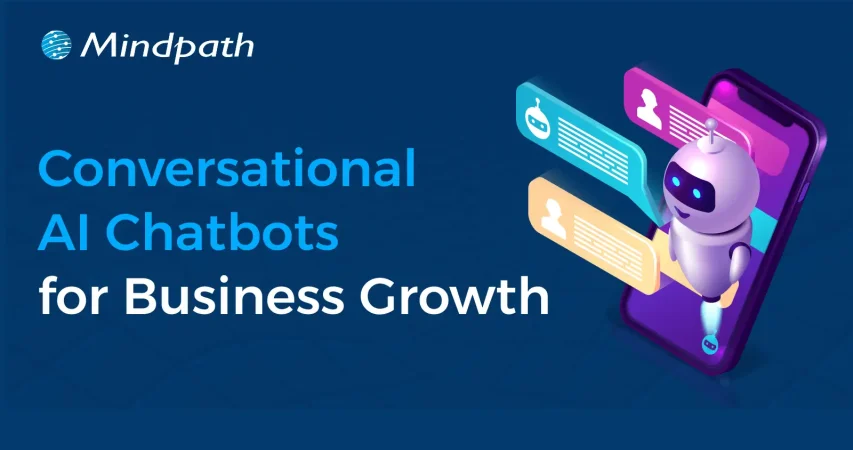
Ever thought about how firms can respond to thousands of customer requests every day? Or how can they give customers 24/7 support without interruption? The answer is conversational AI chatbots. These smart virtual assistants change how organizations handle customer inquiries, as well as starting a new trend to assist with sales, without downtime or human effort. The way vendor chatbots can integrate with pre-existing systems is quickly making Chatbots an efficient driver for the future of business. 

These AI chatbots are fast becoming a staple in today’s business toolset. Many organizations are beginning to use them, supplementing their customer interaction and task management processes. Chatbots can fit conveniently into many different areas of an organization. As usage continues to expand, understanding their value is important. This blog will detail how these AI chatbots are increasing the effectiveness of business operations in simple ways. 

Looking to enhance customer engagement with a personalized AI solution? Our custom chatbot development services specialize in building conversational AI chatbots tailored to your business needs and goals.

What is a Conversational AI Chatbot?

A conversational AI chatbot is an intelligent computer program that interacts with individuals using natural language. It understands an accurate interpretation of what its users are saying/writing, processes that input, and responds accordingly in the way a real human would.

Conversational bots are found in websites, applications, and messaging interfaces to assist users who have questions, information, support, or simple tasks and processes. They can exist on a 24/7 basis with no waiting and provide instant and consistent information without the need for the user experience to include human staff.

Conversational chatbots use advanced technologies like natural language processing (NLP), machine learning (ML), and large language models (LLM) to understand and improve conversations. They don’t just follow pre-written scripts but can learn and adapt based on new information.

From helping customers with online shopping to guiding employees through internal systems, these chatbots are becoming a useful part of modern business communication. 

Curious to know how AI can enhance your e-commerce strategy and give your business a competitive edge? Read our detailed blog on how AI in e-commerce is transforming the future.

Types of Conversational AI Chatbots

Conversational chatbots come in different types, each designed to handle specific kinds of interactions. Understanding these types helps in choosing the right chatbot for your business needs.

1. NLP Chatbots

Natural Language Processing (NLP) chatbots can understand user intent and context, making them capable of handling complex or varied language inputs. Unlike rule-based bots, they interpret full sentences to deliver more relevant and precise answers.

2. Menu-Based Chatbots

Menu-based chatbots use decision tree-type logic and offer users a set of predefined buttons or options to choose from, guiding them through a structured conversation. These bots are ideal for handling simple FAQs like tracking orders or checking pricing but can be limited in handling complex queries.

3. Machine Learning Bots

Machine learning chatbots learn from past user interactions and improve over time, allowing for highly personalized and context-aware conversations. They can remember user preferences and reuse information in future chats, enhancing the customer experience.

4. Hybrid Chatbots

Hybrid chatbots combine rule-based systems with AI capabilities to deliver both structured and intelligent responses. They can escalate complex issues to human agents, allowing seamless integration between automation and live support.

5. Rule-Based Chatbots

Rule-based chatbots operate using if-then logic and keyword recognition, providing answers based on specific triggers set by the developer. They work best when queries are predictable and can be mapped to predefined responses using keywords or phrases.

All these chatbot types can be integrated into a powerful conversational AI platform to provide comprehensive and intelligent customer support solutions.

According to a study by Tidio, the conversation rate of chatbots in some industries has been observed to reach up to 70%.

Also Read: Benefits of AI

Benefits of Conversational AI Chatbots For Business Growth

Conversational AI chatbots are becoming a powerful tool for businesses looking to improve how they work and grow faster. Here are some of the key benefits they offer for driving business growth:

1. Get Useful Customer Feedback Easily

Chatbots can ask for feedback right after a chat session by sending a quick question or rating option. To encourage responses, they can offer discounts or small rewards. Businesses can then check feedback and chat logs to discover common issues and improve services. It’s a smart way to collect insights without bothering the customer.

2. Understand Customer Needs

AI chatbots can figure out what the customer wants and how they feel by reading their words and tone. They understand if a message is urgent or if a customer is upset. When needed, they pass this helpful info to an agent. This gives the agent better context to respond more personally and calmly. 

3. Support Your Sales Team with Smart Help

AI chatbots help with sales by chatting with website visitors, gathering lead details, and booking demos. They answer common product questions and encourage customers to stay longer and learn more. This reduces cart abandonment, increases conversion rates, and supports upselling, all with minimal effort. 

4. Handle Repetitive Questions Automatically

One of the best AI chatbot features is the ability to answer common questions instantly. They manage simple tasks like order tracking, returns, and payment issues without needing a support agent. This saves time for both the customer and your team. It also reduces the number of tickets and keeps agents free from more serious problems.

If you’re exploring smarter ways to deliver customer support. Read our blog on AI for Customer Service, where we highlight how chatbots and virtual assistants can improve customer satisfaction and drive measurable business growth.

5. Increase Lead Generation

Instead of filling out forms, customers can chat naturally with AI bots to share their needs. Chatbots collect useful data like preferred products, location, and language. This data is shared with the marketing team, helping them create personalized campaigns and understand customer behavior better.

6. Keep Customers Engaged with Timely Updates

Chatbots can send helpful messages like order updates, appointment reminders, or payment alerts. They also follow up with feedback requests and help continue conversations across different platforms. With custom branding and fun elements like emojis or images, they make every interaction feel friendly and engaging. 

7. Lower Business Costs

Every business wants to reduce costs while improving service quality. Chatbots help by managing simple tasks, answering frequent questions, and routing chats to the right place. This reduces the need to hire additional agents. Some chatbot platforms are easy to set up without coding, saving time and helping businesses see value faster.

8. Scaling Customer Support Efficiently

Chatbots act like additional support agents by handling many customer questions at once. They manage simple requests efficiently, which helps your team focus on more complex issues. This makes it easier to serve a growing number of customers without increasing staff size, saving time, and reducing pressure on your support team. 

Wondering how to turn AI concepts into actionable business solutions? Check out our AI Consulting Services guide for insights on planning, deploying, and scaling AI effectively.

Want to Transform Your Business with Conversational AI Chatbots?

Conversational AI chatbots are changing how businesses talk to customers, manage support, and grow. From smart replies to handling repetitive tasks, these chatbots are now a valuable part of any modern business setup. They simplify operations, improve customer experience, and help teams work more efficiently without adding extra load. 

We at Mindpath are custom chatbot development company, we help businesses build custom conversational chatbots that fit their goals. Whether it’s for customer support, lead generation, or sales, our expert solutions make chatbot integration easy and impactful. Let us help you scale faster and connect better with your customers using the best AI chatbot tools.  

Frequently Asked Questions

1. How do conversational AI chatbots improve customer response time?

Conversational AI chatbots respond instantly to customer queries without any waiting time. They can handle multiple conversations at once, ensuring users get quick answers. This helps reduce delays, improves satisfaction, and keeps customers engaged without depending on human availability.

2. Are conversational AI chatbots difficult to integrate with existing systems?

Conversational AI chatbots are designed to work smoothly with existing business tools like CRM systems, websites, and mobile apps. With proper setup and planning, integration is usually simple, allowing businesses to automate workflows and improve operations without major technical disruptions.

3. Can chatbots handle complex customer queries effectively?

Modern chatbots powered by AI can understand context and intent, making them capable of handling more than just basic questions. For complex issues, they can gather details and pass the conversation to a human agent, ensuring customers still receive accurate and helpful support.

4. Can AI chatbots support both customer service and sales activities at the same time?

Yes, AI chatbots can handle both support and sales tasks together. They can answer questions, guide users through products or services, collect lead information, and even suggest relevant options, helping businesses improve engagement while supporting conversions in a seamless and efficient way.

5. How do chatbots help businesses maintain consistent customer communication?

Chatbots provide consistent responses by following defined logic and learning from interactions. They ensure that every customer receives accurate information regardless of time or volume. This consistency builds trust, improves brand experience, and helps businesses maintain clear and reliable communication.

Related Post

Discover how Agile methodology transforms web and app development with flexibility, collaboration, and faster delivery.

Related Post

ai agents

Just think if there was a digital assistant that not only obeyed commands, but was able to understand goals, make decisions and learn from experience? Sounds exciting, right? What if we told you this already exists? Yes, you heard correctly. This is where AI Agent comes in, which is a smart system that is intelligent enough to work independently and get the job done without having to check in with a human often, truly showcasing how AI is transforming future possibilities.

These days, companies are turning to automation and intelligence-based tools, which would make artificial intelligence agents important, no matter where you are in business. They can assist organizations in their own endeavors. They can make a company’s operations more efficient, provide real-time personalization for customers, and provide companies with less effort or worry, especially when dealing with complex operations. Do you want to know more? Well, we have you covered. This blog will guide you through everything you need to know about AI agents. 

To start with, let’s understand the meaning of AI agent!

Want to turn AI agent concepts into real, high-performing applications? Mindpath offers AI development services, where we design and deliver intelligent systems tailored for future-ready organizations.

What is an AI Agent?

AI agents are smart computer programs that can think and act on their own. They look at everything around them and understand what is going on and then decide what they should do next in order to accomplish a specific objective. These agents gather input from their environment through sensors or data feeds and respond by carrying out actions through digital systems or physical devices. They are like good digital employees that don’t require someone to keep an eye on them at all times.

What is unique about artificial intelligence agents is that they can learn and make decisions on their own. They act according to rules, operate on data, and in some cases, learn from experience so that they become more efficient in what they do. You will encounter them in numerous fields such as business, science, and technology where they assist in accomplishing things quicker and more efficiently. These agents are increasingly becoming a significant aspect of how we utilize technology today. 

Also Read: Agentic AI

Types of AI Agents 

AI agents come in different types, each designed to handle tasks in unique ways depending on their abilities. Understanding these types helps us see how they solve problems and make decisions in various situations. Below are some common kinds of AI agents and examples of how they work in real life:

1. Model-Based Agents

These use an internal idea, or model, of their environment to make smarter choices. They can remember what happened and plan ahead based on how things are connected. A GPS navigation system is a good example as it uses traffic and map data to suggest the best route in real time, showing how AI agent architecture works with memory and planning.

2. Goal-Based Agents

This type of agents are mainly focused on reaching a goal and making decisions by thinking about what might happen next. They pick actions that move them closer to what they want to achieve. For example, a self-driving car makes choices like stopping or changing lanes based on the goal of getting passengers to their destination safely.

3. Reactive Agents

These are the simplest kind that respond only to what’s happening right now. They don’t remember anything from the past and follow basic “if this happens, then do that” rules. A common AI agent example for this is a thermostat that turns heating or cooling on based on the current room temperature.

4. Utility-Based Agents

These take it a step further by not only pursuing goals but considering what choice provides the best outcome. They opt for actions based on what is most useful or gratifying. For example, a delivery drone can take a longer route to escape adverse weather while ensuring it reaches its destination on time and securely.

5. Learning Agents

These get better over time by learning from what they do and how well it worked. They have different parts that help them act, learn, and explore new options. A Netflix-style recommendation system is one such AI agent platform, improving suggestions as it learns what users like.

Curious about how AI agents deliver faster, smarter real-time responses? Our in-depth blog on Conversational AI explains how these systems understand users, learn from interactions, and continuously improve.

As we now have a basic idea about artificial intelligence agents, here are some benefits it can offer. 

Understanding the Benefits of AI Agents

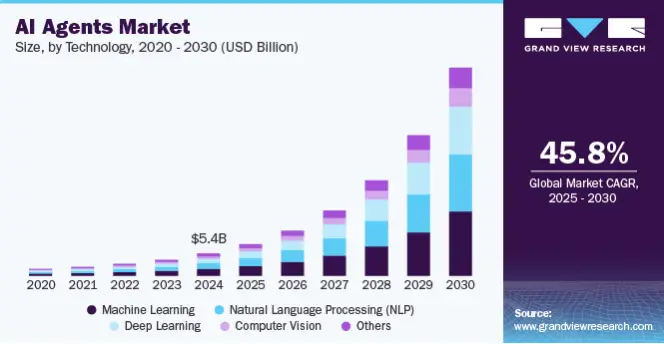
According to Grand View Research, the global AI agents market size was estimated at USD 5.40 billion in 2024 and is expected to grow at a CAGR of 45.8% from 2026 to 2030. This rapid growth is driven by the increasing adoption of open-source AI agents that offer flexibility and innovation across industries. These intelligent systems bring numerous benefits such as: 

AI Agents Market Size & Trends

1. Ensure Accuracy

These tools can check their own work, find missing details, and fix mistakes. This helps keep results more accurate, even when things move quickly. It’s a smart way to keep quality high without slowing down. 

2. Cut Operational Costs

Automation helps cut down the cost of manual work and mistakes. It also reduces the need for constant back-and-forth between teams. That means more money saved on everyday business tasks. making AI in business strategy a valuable investment for long-term growth.

3. Build Custom Applications

Companies can develop tailored tools trained on their specific data and requirements. These solutions are designed to perform tasks according to the organization’s unique workflows and preferences. This makes AI for developers more effective and aligned with individual business goals. 

4. 24/7 Availability

AI tools can keep working in the background, even after work hours. They help with projects or answer customer questions at any time. This makes support and progress continue non-stop. 

5. Free Up Team Responsibilities

By handling repetitive tasks, these tools give team members more time to focus on creative ideas and big projects. It eases the load of daily tasks. This opens space for planning, strategy, and innovation. 

6. Boost Efficiency

Agentic AI tools help teams save time by handling many small decisions in complex tasks. This means people don’t need to step in every time, which makes work faster. With the right AI agent frameworks, teams can finish more in less time. 

Curious about which technologies are truly driving the next era of AI innovation? Explore our blog on GenAI tools to discover the most powerful solutions shaping the future of AI development.

Let us next learn how to create an AI agent:

Steps to Build an Artificial Intelligence Agent

Building an artificial intelligence agent involves a clear and structured process to ensure it performs effectively. Here’s a simple overview of the essential steps involved in creating a reliable and intelligent AI agent: 

1. Set Clear Goals and Purpose

Begin by clearly defining the specific tasks and functions the artificial intelligence agent will perform. Identify the problems it should solve and the target users it will serve, ensuring its goals match your business needs. Consider real-world use cases to determine the features and capabilities required. 

2. Gather and Prepare the Right Data

Gather data that reflects the type of interactions the artificial intelligence agent will handle, such as chat transcripts, voice recordings, or past user activity logs. Clean the data by removing errors and inconsistencies, then label it to help the agent understand user intent and context. Proper preparation of high-quality data is essential for accurate learning. 

3. Pick the Right Machine – Learning Model

Select a machine learning model suitable for your AI agent’s task, like neural networks for understanding language or reinforcement learning for decision-making. With your data in mind, determine if you can use a pre-trained model, or if you need to train a model from scratch instead. Fine-tuning pre-trained models can help calibrate them to your needs. and this is an area where the role of AI consultant becomes crucial in guiding the right model selection.

4. Train Your AI Agent to Learn

You will now configure your training environment and load the cleaned/labeled data you have. In the same way as traditional essential machine learning, the data has to be separated into training and testing data. The parameters need to be set like learning rate, epochs, and start training. Be aware of the performance metrics, the training metrics to make sure the model is learning as expected and when adjustments are needed. 

5. Test It to Make Sure It Works Well

Evaluate the artificial intelligence agent by running the AI agent through designated tasks, measuring accuracy, response time, and quality interaction with the user. You will use different testing methods like unit testing, user testing, and A/B testing to figure out its relative strengths and weaknesses. Lastly, you will also informally call out any open issues about the experience such as overfitting and refining the training or changing data as required. 

6. Launch and Keep Monitoring

Launch the AI agent on a dedicated platform, website, app, or voice interface and make sure that the integration is seamless. Monitor its usability using real-time analytics and user feedback to have a clear understanding of its performance and any analytics issues as soon as they arrive. To sustain systems and achieve the original intended purpose of engagement, systems should be routinely maintained, updated and improved. 

Wondering if your business is prepared to adopt AI and harness its full potential? Check out is your business ready for AI to assess readiness and start building a smart, future-proof strategy.

Are You Looking to Experience the Power of AI Agents?

AI agents have changed the way we interact with machines by letting systems do things on their own, learn on their own, and achieve more results in a shorter time. They provide freedom from manual effort, support better decisions, and improve efficiency in most industries and business functions. 

At Mindpath, we offer AI development services that fit your business needs. Our AI agents automate the routine tasks, improve the customer engagement experience, and support smarter ways of working, so that you can do things better in an increasingly competitive and tech-driven landscape. 

Frequently Asked Questions

1. How do AI agents fit into existing business systems without disrupting current workflows?

AI agents are designed to integrate with existing tools through APIs and automation layers. They can work alongside current systems without replacing them entirely. This allows businesses to improve efficiency gradually while maintaining stability and avoiding major operational disruptions during implementation.

2. What kind of tasks are best suited for AI agents in a business environment?

AI agents perform best in tasks that involve repetitive decision-making, data analysis, or real-time responses. Examples include customer support, workflow automation, data monitoring, and recommendations. Their ability to process large data quickly makes them valuable for improving speed and accuracy in operations.

3. How secure are AI agents when handling sensitive business or customer data?

AI agents can be highly secure when built with proper safeguards such as encryption, access controls, and compliance with data protection standards. Regular monitoring and updates are essential to maintain security. A well-designed system ensures that sensitive data is handled responsibly and protected from potential risks.

4. Do AI agents require continuous human supervision to perform effectively?

AI agents are built to operate with a level of independence, but they still require periodic monitoring and updates. Human oversight ensures that the system stays aligned with business goals, adapts to changes, and continues delivering accurate and relevant outcomes over time.

5. How can businesses measure the real impact of AI agents after implementation?

The impact of AI agents can be measured through key performance indicators such as reduced operational time, improved accuracy, cost savings, and better customer response rates. Tracking these metrics helps businesses understand how effectively the agents are contributing to overall performance and efficiency.

AI in healthcare

Can you imagine a scenario of walking into a hospital where doctors are assisted by intelligent machines which can predict diseases, suggest treatments and even monitor your health in real time? Sounds futuristic, doesn’t it? Have you ever pondered how artificial intelligence is transforming the future of healthcare? Well, that’s precisely where AI in healthcare stands out! Interested to know more about this unique combination of AI and healthcare? Let us learn more about it! 

Want to deploy AI solutions that drive smarter medical decisions and improve patient experiences? At Mindpath Tech, we provide healthcare software development services designed to make technology work seamlessly for your organization.

Role of AI in Healthcare

AI in healthcare refers to the use of artificial intelligence to assist doctors and nurses in hospitals and clinics. These programs look at a lot of medical data such as test results and scans and find patterns which can help in detecting health problems of patients early. They can even help in suggesting the best treatments based on each patient’s health history. Not only this, but AI is also used to carry out routine tasks like setting appointments or checking records, so that staffs can get more time to care for patients. 

The benefits of AI are being used in many parts of healthcare. It is helping doctors to read X-rays and scans so that health problems can be spotted earlier. Intelligent robots will assist doctors to perform surgery with ease. AI assists researchers in discovering new drugs at a quicker rate by analyzing vast amounts of information. Even patients can use AI-based apps to monitor their health and receive reminders about taking medications or adhering to treatment regimens. 

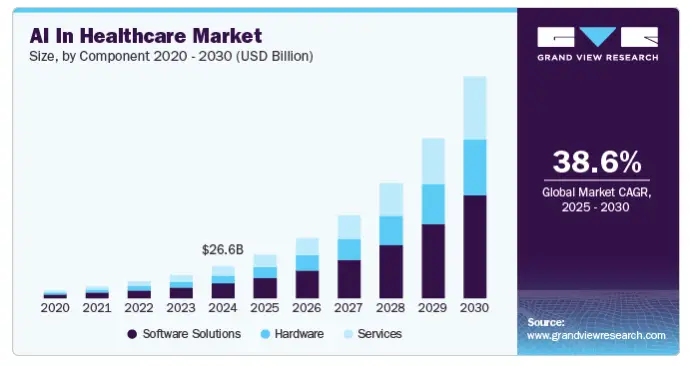
According to a Grandview’s Market Research Survey, the worldwide AI in healthcare market was valued at more than 26 billion dollars in 2024, and it’s expanding very quickly. Experts predict that it can expand by as much as 39% annually until 2030. Why? Because more clinics and hospitals want to work faster, make fewer errors, and help patients feel better sooner. 

AI in Healthcare - Market
Source: www.grandviewresearch.com

Benefits of AI in Healthcare

Hospitals nowadays are challenged with providing quicker and improved care with fewer resources. Technologies such as AI are assisting them in doing it more effectively. following are some advantages of AI in Healthcare that is important to know: 

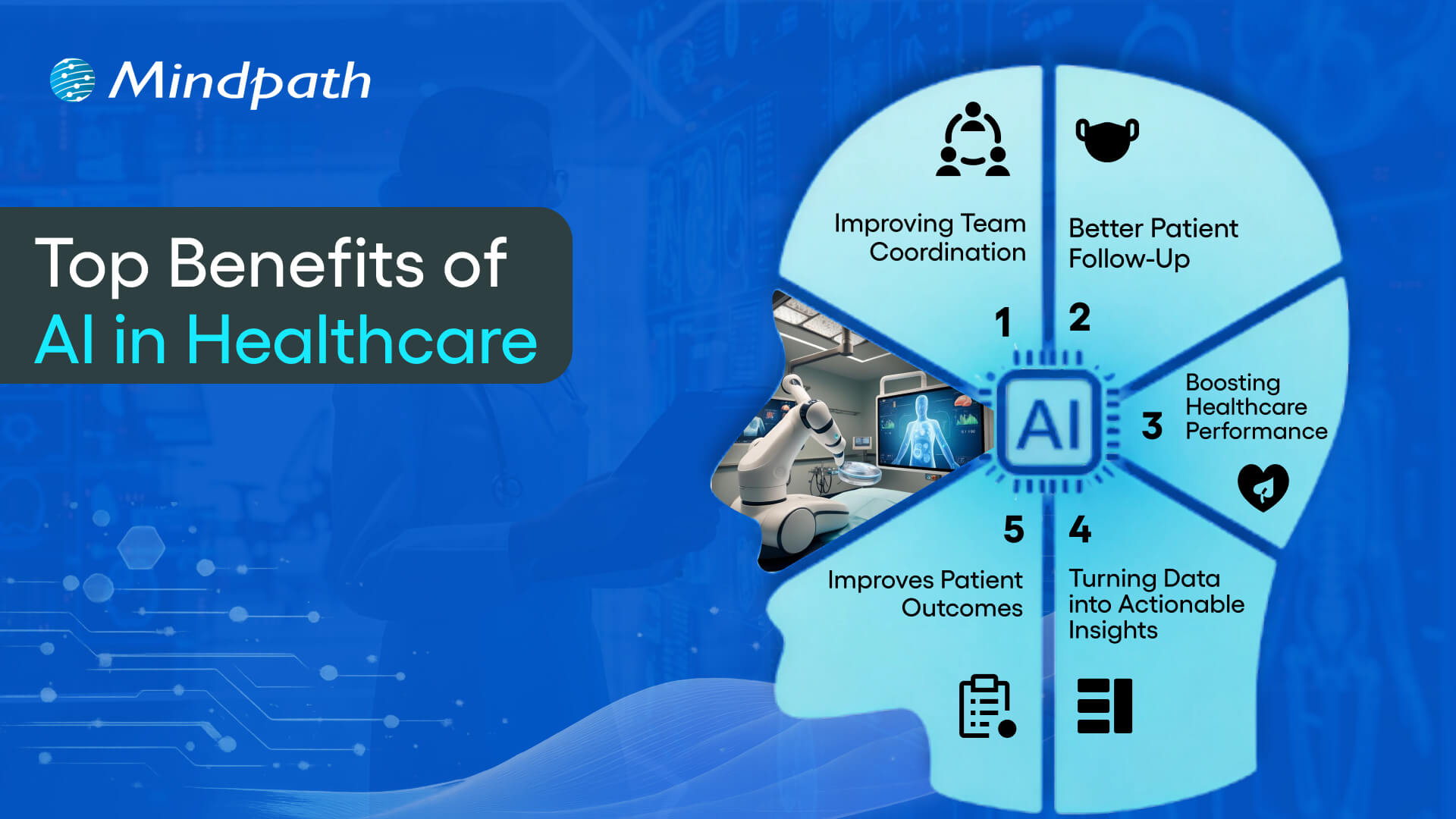
Top Benefits of AI in Healthcare

1. Improving Team Coordination

AI for healthcare facilitates easier sharing of critical patient information among doctors and nurses. It consolidates everything into a single place to enable teams to communicate with each other easily and quickly. This translates to quicker decisions, improved treatments, and more efficient teamwork. AI for hospitals enables various departments to communicate with one another, which is crucial during emergencies. When everybody has the proper information at the right moment, patients receive their care on time without confusion or delays. 

2. Better Patient Follow-Up

AI assists hospitals in tracking patients and ensuring that they do not miss any important check-ups. By identifying potential health problems early, AI facilitates doctors to act early and administer the appropriate care. This ensures that patients are treated on time and follow-ups are handled more efficiently. Hospitals can track patients more efficiently with AI, resulting in improved long-term care and healthier patients. AI consulting services can guide hospitals in selecting the right tools and workflows for patient monitoring.

4. Boosting Healthcare Performance

AI in medical field enables healthcare systems to achieve significant objectives, referred to as the quadruple aim. The aims prioritize better patient care, low healthcare expenses, facilitation of medical staff, and enhanced overall health. Thanks to AI, hospitals can individualize care, minimize waiting times, and optimize the entire process. This results in improved patient outcomes, reduced expenses, and a healthier, less stressful medical team.  

5. Turning Data into Actionable Insights

Hospitals can use AI to gather and organize a lot of data from various sources. This enables doctors and nurses to make quick and easy decisions. By making all that information useful, medical teams are able to provide patients with more accurate and timely care. This streamlines the process, eliminates errors, and ensures that patients receive the proper treatment based on current information available. 

6. Improves Patient Outcomes

Patients receive faster and more precise treatment with the use of AI in healthcare. It assists doctors in identifying health issues earlier and making the correct decision on treatment without wasting time. This results in quicker admissions, reduced hospital stays, and improved recovery. Everything goes more smoothly, and patients are more comfortable. By making the care process more efficient, this technology promotes improved health outcomes and allows hospital staff to spend more time in taking care of patients. 

Looking to understand which programming languages are best for developing AI solutions? Explore our blog on AI Programming Languages to gain practical insights to get started.

Let us now look at some of the real-world AI in healthcare examples that show how this technology is being used to improve patient care, speed up diagnosis, and support medical teams in everyday hospital tasks: 

Real World AI in Healthcare Examples

These artificial intelligence examples in healthcare highlight how hospitals are using AI to improve diagnosis, speed up treatment, and support better decisions. Each example shows the positive impact of AI in daily medical practice: 

1. Faster MR Scans

AI accelerates MRI image acquisition, allowing radiology departments to manage more patients more effectively. AI enhances image quality, reduces scanning time, and increases patient comfort, particularly for patients who are anxious or experience pain during the test. 

2. Smarter CT scans 

AI helps ensure patients are correctly positioned for CT scans, reducing errors and improving image quality. It also enhances image reconstruction, supporting better diagnostics while helping radiology teams work more efficiently with consistent and clear results. 

3. Assist in Image Reading for Radiologists

AI assists radiologists by highlighting areas of interest in medical images and supporting segmentation tasks. This allows them to focus on deeper analysis and make quicker, more confident decisions, ultimately improving both workflow and patient care. 

4. Better Teamwork in Cancer Care

AI brings together data from radiology, pathology, genomics, and health records to give a clear view of a patient’s condition. This helps care teams make faster, more informed decisions to guide personalized treatment and improve outcomes. 

5. Guiding Doctors in Surgery

AI helps doctors during minimally invasive procedures by quickly analyzing CT images and sharing results across teams. It supports accurate planning and guidance, helping physicians work more efficiently and make timely decisions for better patient care. 

6. Simplifying Ultrasound Measurements

AI streamlines ultrasound by automating measurements, reducing manual effort and variability. It ensures fast, consistent results, allowing healthcare professionals to focus on clinical judgment while enhancing diagnostic accuracy and improving the experience for both patients and staff. 

7. Remote Cardiac Patient Monitoring

AI-powered analysis of remote ECG recordings enables early detection of heart rhythm disturbances like atrial fibrillation. This allows clinicians to provide faster, more efficient care, enhancing patient outcomes by offering timely and proactive cardiac treatment outside the hospital setting. 

Wondering how healthcare organizations can implement AI effectively and achieve better patient outcomes? Read our blog on the role of AI consultant explains how expert AI consulting can guide healthcare providers in overcoming challenges, and unlocking the full potential of advanced technologies.

Ready to Embrace the Future of Healthcare with AI?

AI is revolutionizing healthcare by simplifying operations, enhancing diagnosis accuracy, and facilitating quicker, more tailored treatment. By automating mundane tasks, AI enables healthcare workers to spend more time on patient care, leading to better overall outcomes. With its ability to process large volumes of data, AI also facilitates proactive interventions, minimizing errors and enhancing efficiency in hospitals globally.  

At Mindpath, we offer healthcare software development services with expertise in using the latest AI technology to develop innovative solutions for medical facilities. Our tailored AI-powered platforms enhance hospital efficiency, provide smooth patient care, and enable medical staff to make informed decisions with ease. Learn how Mindpath can assist in revolutionizing your healthcare practice with innovative solutions designed specifically for you. 

Frequently Asked Questions

1. Is AI in healthcare safe and reliable for patient treatment?

AI in healthcare is designed to support medical professionals, not replace them. When properly implemented and monitored, AI systems improve accuracy and reduce human errors. However, final medical decisions are always made by qualified doctors to ensure patient safety and ethical care standards.

2. How can small clinics benefit from AI in healthcare?

AI in healthcare is not limited to large hospitals. Small clinics can use AI for appointment scheduling, patient monitoring, medical record management, and diagnostic support. These tools help reduce administrative workload, improve efficiency, and deliver faster, more personalized care without requiring large infrastructure investments.

3. Does AI increase the cost of healthcare services?

While initial implementation may require investment, AI often reduces long-term operational costs. By automating routine tasks, minimizing diagnostic errors, and improving efficiency, healthcare providers can save resources. Over time, this can make services more affordable while maintaining high-quality patient care.

4. Can AI help in preventing diseases before they become serious?

Yes, AI systems can analyze patient history, lifestyle data, and test results to detect early warning signs. This enables doctors to take preventive measures sooner. Early detection reduces complications, supports proactive treatment, and improves overall health outcomes for patients.

5. How does AI impact patient privacy and data security?

Healthcare organizations use strict data protection measures when implementing AI systems. Advanced encryption, secure servers, and compliance with healthcare regulations help safeguard patient information. Proper governance and monitoring ensure that sensitive medical data remains confidential and protected from unauthorized access.

Cloud computing attacks

Cloud computing has certainly revolutionized how business entities leverage technology to carry out their operations. In recent times, many businesses across diverse industries have already migrated to the cloud. These cloud computing trends have gained momentum so that businesses can take advantage of cloud computing technology. However, such a trend has also given rise to a broad range of attacks on cloud.

In the prevailing times, business entities need to know that Cloud computing attacks encompass different types of attacks by malicious actors. These malicious actors could be internal or external. However, they can cause significant damage to businesses in the highly volatile environment. Now is the perfect time to expand your knowledge relating to cloud computing attacks.

Want to strengthen your cloud security without increasing operational complexity? Mindpath’s managed cloud services provide the expertise and tools needed to secure your cloud operations

What are Cloud Computing Attacks?

A cloud computing attack refers to a malicious activity that can exploit vulnerabilities in the cloud infrastructure, applications, or services. The purpose of such attacks is to steal data, gain unauthorized access, or disrupt the usual services.  The rising instances of cloud attacks have become a major concern for businesses operating in diverse industries or sectors. 

Cloud attacks may be of various types. Businesses need to be able to answer: What are the security risks of cloud computing? They need to have an answer to this question before moving to the cloud. The knowledge in this area is vital to being prepared to face such risks in an effective and efficient manner. 

Want to strengthen your defences against cloud computing attacks? Discover cloud security tools that help identify threats and secure your workloads effectively.

Top Cloud Computing Attacks that Businesses Need to Be Aware of

The attacks on cloud that target cloud computing resources as well as infrastructure may vary considerably. It is essential for modern businesses to have a holistic insight into these threats as they have the potential to compromise the business operations and sustenance. Some of the key cloud security threats that you need to be familiar with include:

1. Denial-of-Service Attacks

The Denial-of-Service Attack is a cloud attack that intends to make a network or computer resource unavailable to the actual users. It basically floods a cloud server or service with fraudulent traffic. You need to bear in mind that a DoS attack involves a single source. On the other hand, a distributed denial of service attack may involve several compromised sources. 

As cloud environments are vulnerable, such types of attacks may lead to costly repercussions. Such attacks may lead to the disruption of service or loss of revenue for a business. Moreover, it may also cause serious damage to the reputation of a business. Understanding cloud computing vulnerabilities is essential to prevent such risks and protect cloud infrastructure.

2. Insider Threats

Insider threats refer to the cloud security threats that arise because of employees, former employees, partners, etc. They continue to affect the security in the cloud computing environment.  This threat may occur when an insider either intentionally or unintentionally does harm to the cloud security of an organization. 

The key issue that an entity needs to address is striking a balance between the privacy of employees and the security measures that have been adopted. This cloud cyber attack may be quite difficult to detect and prevent since it typically involves individuals who have the authority to access cloud assets.

3. Man-in-the-Middle Attacks

The Man in the Middle Attack takes place on the cloud when a malicious actor is able to intercept the interaction between the cloud user and the cloud service. This attack may also arise when an attacker intercepts the communication between two cloud services. The attacker basically positions themselves in the middle position in order to eavesdrop or steal sensitive information. 

These types of issues relating to cybersecurity in cloud computing need to be addressed as a priority. This is because such attacks can take advantage of cloud services that are misconfigured. They can also exploit the vulnerabilities that exist in SSL/TLS protocols. 

4. Account Hacking

Account hacking in the cloud environment refers to the unauthorized access or control of a cloud computing account by a malicious actor, such as a hacker. This can certainly allow the hacker to make use of related resources for their malicious purposes. Account hacking can also enable hackers to manipulate or steal the data that is stored on the cloud. 

Such cloud computing hacks may give rise to detrimental consequences for business entities. For instance, hackers or attackers may use password cracking techniques for the purpose of guessing or stealing the login credentials of others. Organizations need to prevent cyber attacks as they may lead to financial loss, and they can also tarnish the reputation of an organization. 

Struggling to manage infrastructure while scaling applications efficiently? Check out serverless architecture in cloud computing to learn how it lets you build and deploy apps without worrying about servers.

5. Cloud Malware Injection Attacks

Cloud Malware Injection refers to a type of cyber attack that involves the injection of malicious software, such as a virus or ransomware, into cloud resources or cloud infrastructure. Such types of attacks are gradually becoming common as more businesses are moving to the cloud. Such attacks can enable cybercriminals to compromise the infected or affected resources.  

Attackers may even steal or destroy data for their own malicious purposes. There exist numerous ways in which attackers may inject malware into the cloud infrastructure, such as by exploiting vulnerabilities in the cloud setting or by gaining unauthorized access to cloud accounts. 

6. Security Misconfiguration

In cloud computing, security misconfiguration refers to the lack of proper configuration of cloud computing resources or infrastructure. Due to the failure in terms of configuration, there may be compromised protection against cyber threats and attacks. Businesses need to bear in mind that incorrect security settings have the potential to leave the system and data vulnerable. 

Security misconfigurations are considered to be a serious issue that can lead to data breach incidents in the cloud. The issue may be the result of human error or lack of expertise. Similarly, the failure to alter insecure default settings may lead to security misconfiguration in the cloud. 

7. Side Channel Attacks

Side channel attacks in the cloud environment are able to take advantage of weaknesses or vulnerabilities in shared hardware resources. Such attacks are capable of extracting confidential data through the observation of indirect information such as power consumption and electromagnetic emissions. 

This attack involves the exploitation of information that has been leaked through the physical implementation of a system. In the cloud setting, malicious actors may carry out such types of attacks by positioning a malicious virtual machine on a legal physical host that is used by a business. This technique can enable the attacker to get access to all confidential information about the victim’s machine.  

8. Cookie Poisoning

Cookie poisoning is a type of cyber attack where an attacker is responsible for tampering with or altering the web cookies of the user. In cloud applications, this type of attack involves the unauthorized modification or the injection of malicious content into a cookie. 

Cookies are typically stored to personalise the experience of users or track their activities. Such attacks can poison the cookies of users without their knowledge to access the applications. It may lead to unauthorized access to accounts. Businesses need to deploy robust cloud security solutions so that such attacks can be prevented in an effective manner. 

Ready to take your applications to the next level in the cloud? Explore cloud-native development to learn how modern architectures improve performance and security.

Need for a Solid Cybersecurity Posture

Modern business entities need to maintain a robust cybersecurity posture. Such a posture can enable them to prevent cyberattacks. Business entities need to adopt solid cybersecurity tools and technologies so that they can safeguard sensitive information and maintain regular business operations. 

In prevailing times when cloud computing attacks are on the rise, entities across diverse industries need to prioritize their cybersecurity resilience. Proper cybersecurity preparedness is a must to ensure that organizations can effectively function in an uncertain environment. While operating in the cloud, business entities need to prioritise the adoption of robust cloud security solutions such as identity and access management, encryption, data loss prevention, and many more. 

Curious how AI can improve cloud security? Check out AI in cybersecurity to see how it detects threats faster and protects your systems.

Final Words

In the existing business landscape, more businesses are moving to the cloud. This has automatically created the need for businesses to broaden their insight relating to cloud computing attacks and threats. Several cloud attacks have been identified that are affecting businesses, such as Denial-of-Service Attacks, Insider Threats, Account hacking, and many more. 

Mindpath’s managed cloud services can ensure that your business is well protected against all types of cloud attacks. The professionals and experts will ensure that your business can derive optimum value from the cloud computing technology and stay protected from cybercriminals and other malicious actors.