
AI and Cloud Computing: Top Benefits and Best Practices

Join our Newsletter!

Featured Posts

Support Is One Click Away

Home

AI and Cloud Computing: Top Benefits and Best Practices

AI and Cloud Computing

AI and Cloud Computing: Top Benefits and Best Practices

The modern-day digital development depends on the intelligence, scalability, and flexibility advancing concurrently. This transformation is driven by AI and cloud computing, which help companies to make more efficient decisions by analyzing data faster. Executives see visible improvements in operations, products and customer experience. Consequently, the subject of conversation is not just trends but actually implementation. Teams want to have systems that learn, adapt and spur growth with minimum friction or delays.

With the increased adoption, there are heightened expectations in every industry. Decision makers want to have clarity, control and enduring value. They have to strike a balance between innovation and stability and cost consciousness. Additionally, it depends on choosing the correct strategy at the initial stage to succeed. Strategy is crucial and so is the technology. So, in this blog, we shall analyze the major advantages and the best practices of AI and cloud computing.

Keep reading further to learn more about this strategic synergy!

Want to optimize your business operations and scale effortlessly with the cloud? Mindpath offers cloud-managed services to provide secure, efficient, and fully managed cloud solutions.

Understanding the Core Fundamentals of AI and Cloud Computing

Artificial Intelligence (AI) facilitates machines to carry out tasks that would otherwise be carried out by human intelligence. It studies based on data, reasoning, identifies patterns, and comprehends language. Some of these major fields are machine learning, deep learning and natural language processing. AI helps companies to increase their efficiency, create smarter tools, and discover insights. Artificial intelligence and cloud computing tend to collaborate in order to improve outcomes.

Cloud computing involves computing resources, which include servers, storage as well as software offered via the Internet. It allows businesses to scale fast, pay as per their usage and access services anytime. The basic models include IaaS, PaaS and SaaS. This adaptability reduces the cost, accelerates the development, and supports the contemporary applications.

AI applications run effectively and successfully on cloud computing. AI and cloud computing go hand in hand to develop smarter and quicker systems. Cloud provides scalable storage and high-performance computing of AI models. AI will introduce intelligent cloud services via analytics, automation and optimization of resources. They all facilitate chatbots, predictive insights, and data analysis. The companies can operate cloud-based AI to take advantage of more advanced AI tools without substantial initial expenses and data analysis. Companies can access advanced AI tools on cloud platforms without huge upfront costs.

Looking to streamline cloud operations with intelligent solutions? Explore AI tools for DevOpss to see how automation and analytics optimize development and deployment workflows.

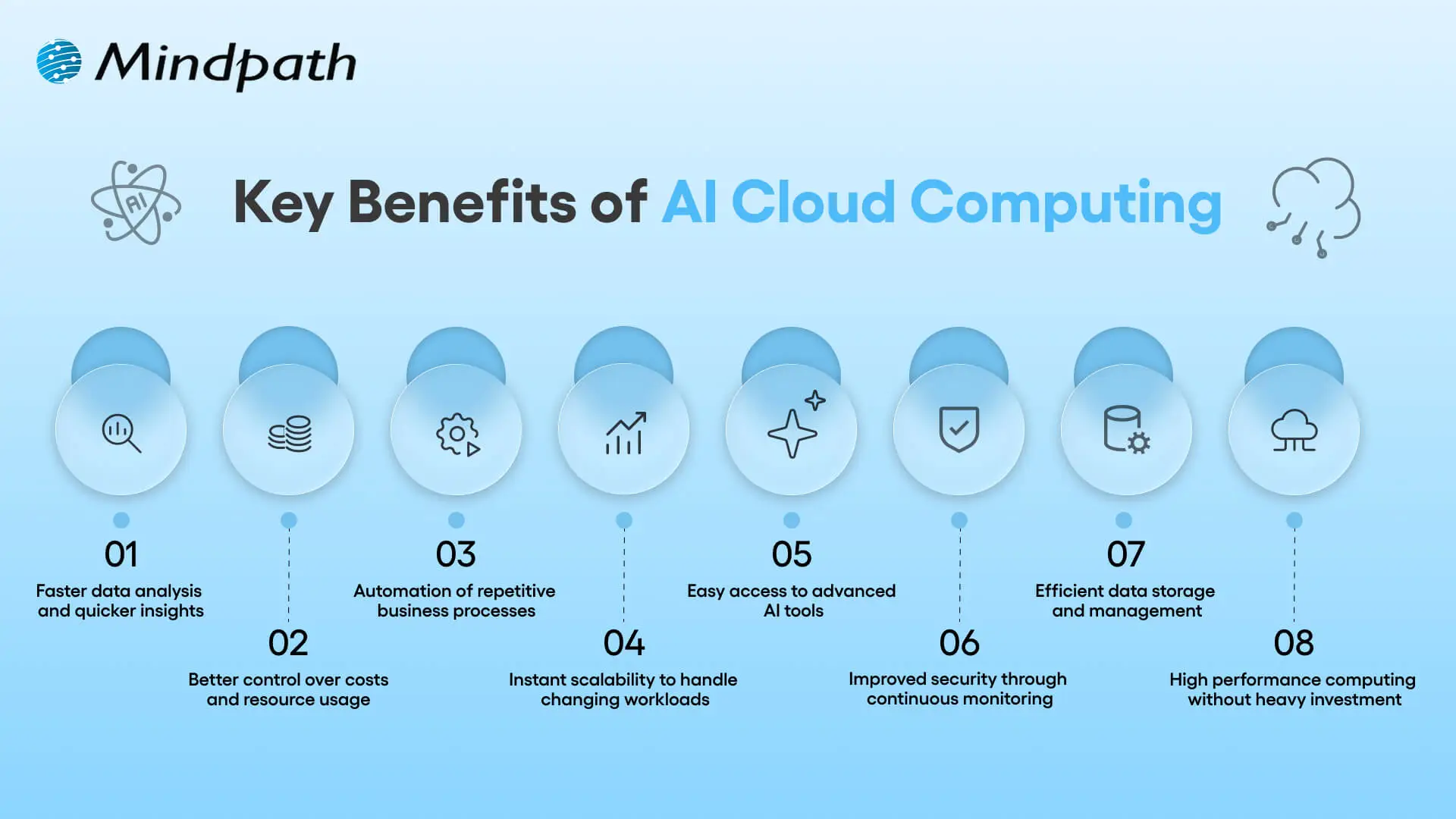
Key Benefits of AI Cloud Computing

AI and cloud computing are transforming the world of business and technologies. They open up fresh opportunities of development, productivity, and better decision making. Organizations look into how to make use of this combination. These are the best advantages that companies can embrace to remain competitive.
key benefits of AI Cloud Computing

1. Faster Data Insights

AI and cloud computing have excellent assistance in analyzing large data sets within a short period of time. Businesses bridge the data sources at ease and identify patterns that can make better decisions. This pace facilitates planning and minimizes guesswork in the operations.

2. Smarter Cost Control

AI and cloud computing minimize excessive expenditure on computers and their support. Businesses purchase resources as they consume and spend as demand increases. This strategy maintains flexible and predictable budgets.

3. Intelligent Automation

AI and cloud is used to automate repetitive workflow processes. Systems acquire knowledge and enhance processes through time. Teams are more strategic oriented as operations proceed normally.

4. Flexible Scaling Power

With AI and cloud computing, scaling up and down of resources is done on demand. Businesses either expand or contract without hesitation. This scalability helps in the development and unexpected increase in workload.

Must Read: Cloud Computing Trends

5. Easy Access to AI Tools

Cloud services provide ready-to-use AI services to business needs. Teams combine analytics, language processing, and vision tools within a short period of time. In combination, cloud computing and artificial intelligence eliminate technical restrictions.

6. Stronger Security Oversight

Cloud systems that operate based on AI keep a constant watch on activity. They identify threats at an early stage and react quicker to threats. This enhances security without retarding processes.

7. Better Data Management

Cloud services are an easy way of organizing, storing and retrieving data. AI assists in the automation of information classification and management. Companies have smarter data to analyze and report.

8. High Performance Computing

Artificial intelligence workloads require resources with high computing capabilities to operate. The cloud platforms offer on-demand GPUs and fast processors. Businesses deal with complicated activities that are not heavily capitalized.

Planning to deploy AI solutions at scale in the cloud? Explore cloud security tools to see how modern technologies secure AI pipelines and cloud infrastructure.

Best Practices for Implementing AI in Cloud Computing

AI and cloud computing need a more explicit and deliberate way of developing real value. Before adopting systems, teams need to plan, set goals and prepare systems. Technology is as important as strategy. These best practices demonstrate the way to apply AI in cloud computing in an effective and responsible manner.
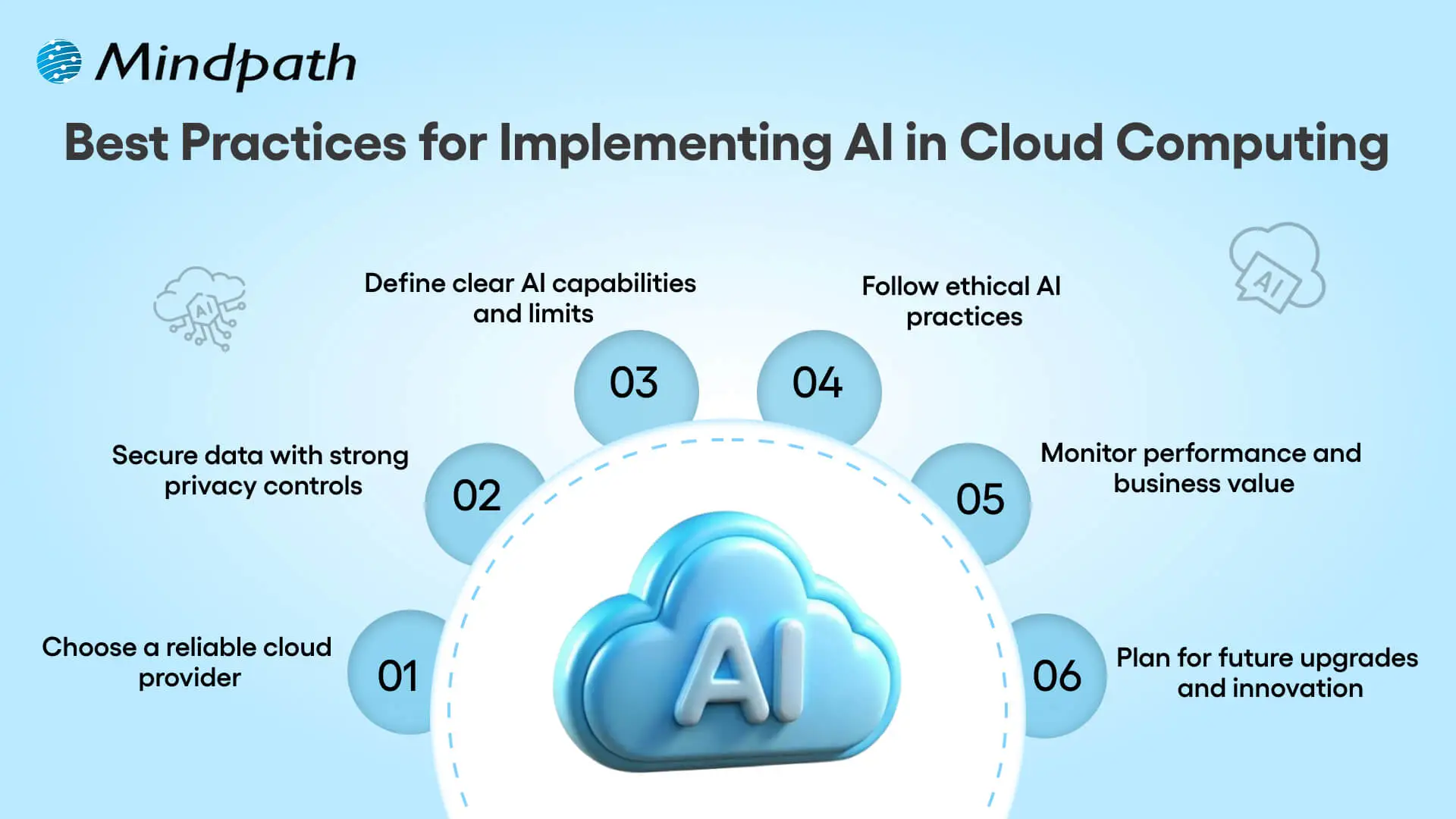
Best Practices for Implementing AI in Cloud Computing

1. Select a Trusted Cloud Provider

Select a provider with the track record of working with AI and cloud services. Assess its standards of reliability, scalability, and compliance. Powerful partner will facilitate safe expansion and stable long-term operations.

2. Prioritize Data Privacy and Security

Encrypt and implement control access to sensitive information. Review security policies on a regular basis in order to minimize risks. High level of security instills trust in cloud systems and AI.

3. Define Clear AI Capabilities and Limits

Know what AI is capable of providing under the circumstances of the quality of the data. Track models regularly in order to identify bias or performance problems. Good expectations can make teams use AI in a responsible and effective way.

Also Read: Cloud Computing Attacks

4. Establish Ethical AI Practices

Instruct employees on how to use AI fairly, transparently, and accountably. Ethical consciousness results in an improved decision-making process within teams. Conscientious operations enhance the confidence of cloud-based AI.

5. Monitor Performance and Business Impact

Monitor behavior and business performance of the track systems. Assess value through measurement of efficiency, accuracy and cost. Consistent reviews help to maintain AI and cloud investments in accordance with the objectives.

6. Prepare for Future Innovation

Anticipate changing regulations and elements of technology. Architecture Software Build scalable systems, which welcome upgrades and additional features. A visionary roadmap would guarantee success in the long term with AI and cloud computing.

Wondering how AI applications can scale efficiently in the cloud? Check out serverless architecture in cloud computing to learn how server-free designs enable faster, cost-effective, and scalable deployments.

Ready to Turn AI and Cloud Computing into Real Business Value?

Artificial intelligence and cloud computing are transforming the nature of modern business development, competition, and innovation. They allow making smarter decisions, executing them faster, and operating flexibly together. It takes proper planning, excellent data, and responsible usage in order to be successful. By linking technology to the objectives of the firms, companies mitigate risk and create value in the long term. The approach will assist teams to develop systems which are adaptable, scalable and perform well.

Mindpath AI cloud services assist companies to embrace AI clearly and confidently. Our professionals develop safe and scalable solutions which are practical to the business requirements. We put an emphasis on performance, ethics, and quantifiable results. Mindpath provides organizations with a dependable service in terms of planning, deployment, and optimization. Our strategy will make AI and cloud computing produce useful outcomes and not complications.
Related Post

Explore how neuromorphic computing is revolutionizing AI with faster, smarter, and energy-efficient systems. Learn how Mindpath can help.
How much does hiring a ReactJS developer cost? Learn about factors affecting rates, and how to find the best talent within your budget.

Related Post

Legacy modernization strategy

The technology environment that you operate in determines the rate at which your firm develops and competes. A clear legacy modernization strategy gives structure to change and turns outdated systems into growth drivers. You might feel like upgrading, but you need to know and understand. So, where do you start and how are you balancing technology objectives and business performance?

Nevertheless, modernization goes beyond updating the system. It must have a dedicated strategy that enhances scalability, security, and performance. Consequently, leaders should reason in the future and be purposeful. Innovative choices now result in robust systems in the future. In this blog, we look at how to make the correct decision that would be helpful in sustainable business growth.

Ready to turn legacy systems into growth enablers? Mindpath’s legacy modernization services guide organizations in choosing and executing strategies that unlock operational efficiency and business value.

What is a Legacy Modernization Strategy?

A legacy modernization strategy is a structured plan that transforms outdated systems into agile and scalable digital platforms. It also assists companies to minimize technical debt, enhance security, and general performance. When technology is aligned to existing objectives, businesses develop a platform that facilitates innovation and sustained development.

Legacy system modernization consists of more practical strategies, including rehosting, replacing the platform or refactoring into microservices, or replacing systems with SaaS offerings. All the methods facilitate the adoption of clouds and efficiency. Organizations will be able to modernize with the right direction and remain stable and deliver improved user experiences.

Wondering how legacy upgrades can improve security and system reliability? Explore the benefits of modernizing legacy systems to strengthen your infrastructure.

Key Strategies of Legacy System Transformation

1. Refactoring

Enhance current code to eliminate technical debt to increase the efficiency without altering the experience of users using the system.

2. Replacing

Existing system to replace the old system and install a new SaaS or commercial system.

3. Rehosting

The application can be moved to newer infrastructure such as cloud with minimal or no changes in code.

4. Encapsulation (API-enabled)

Sometimes wrap legacy code with APIs to allow them to interface well with modern applications.

5. Re-architecting

Re-design the system into a new structure, e.g. microservices, to open up new possibilities.

6. Replatforming

Change to a new platform with some slight alterations in order to enhance performance without changing the core code.

7. Rebuilding or Rewriting

Build the system with a new technology but keeping the same business logic.

Looking to improve system flexibility during your modernization journey? Learn from monolith to microservices to enable faster and easier updates.

How to Choose the Right Legacy Modernization Strategy?

To make the appropriate decision, one has to be clear, plan and well aligned with business objectives. The right legacy modernization strategy depends on your system complexity, budget, risk tolerance, and long-term growth plans.

key steps to choose the right legacy modernization strategy

1. Perform a Comprehensive Assessment

Start with an elaborate system, dependency, and technical debt audit. Trace the architecture and locate the performance bottlenecks. Isolate mission critical components and features that are old. This evaluation strengthens your legacy modernization framework and guides smart investment decisions.

2. Define Clear Business Goals

Align your Legacy modernization strategy with measurable business outcomes. Clarify the need of modernization such as cost control, agility, or improved security. Establish targets of performance and scalability. Then choose an Application modernization strategy that directly supports these goals.

3. Evaluate Risk Tolerance

Determine the extent to which your organization can cope. Few risk solutions are API encapsulation or cloud rehosting. High transformation goals may require a bold legacy modernization technique like rearchitecting. Striking a balance between innovation and operational consistency is advisable before taking the final decision.

Must Read: AI-Driven Legacy System Modernization

4. Prioritize Data Integrity and Security

Protect critical and historical data during every transition phase. Create a structured migration plan with validation checkpoints. Embed security controls while modernizing legacy systems. Adopt zero trust practices to reduce exposure to cyber threats.

5. Adopt a Phased Approach

Secure valuable and historical data at all levels of transition. Develop a systematic migration strategy that has checkpoints. Embed security controls while modernizing legacy systems. Employ the concept of zero trust in order to minimize exposure to cyber threats.

6. Assess Internal Capabilities and Partner Support

Analyze the internal knowledge of innovative tools and websites. Identify skill gaps that may delay your Legacy modernization strategy. Arrange training of the plan or external assistance where necessary. Collaborate with skilled professionals offering end to end solutions.

Looking to simplify your modernization process with a proven framework? Learn from the legacy modernization roadmap to move forward with confidence.

Ready to Build a Smarter Future with the Right Strategy?

Choosing the right legacy modernization strategy drives growth, resilience, and long-term performance. Companies that think strategically lower the risk and open other digital opportunities. Clarity, planned implementation, and good governance bring sustainable value. By combining technology with business vision, leaders enhance their agility, security, and scalability and remain competitive in a fast-changing market.

Being a reliable legacy modernization service provider, Mindpath delivers practical and growth-oriented solutions. Our specialists evaluate systems, build customized road maps, and implement contemporary modernization accurately. We assist organizations to minimize technical debt and increase innovation. Mindpath provides sustainable transformation, with immense technical know-how and strategic acumen, to strengthen operations and ensure quantifiable business success.

 FAQs

1. Why does my business need a legacy modernization strategy now?

A clear legacy modernization strategy helps your business stay competitive in a fast moving digital market. It improves agility, reduces maintenance costs, and strengthens security. Without a defined plan, outdated systems slow innovation and increase operational risk over time.

2. How do I know if my current systems require modernization?

Frequent downtime, high maintenance costs, security gaps, and difficulty integrating new tools indicate aging systems. If your technology limits growth or delays product launches, you likely need a structured modernization plan to support scalability and long term performance.

3. How can Mindpath support our modernization journey?

Mindpath’s legacy modernization services focus on assessment, roadmap creation, migration, and optimization. Our experts align technology upgrades with business goals. As an experienced partner, we help organizations modernize confidently while maintaining operational continuity and measurable growth outcomes.

4. Which technical factors influence the choice of a legacy modernization strategy?

System architecture, data complexity, integration dependencies, and cloud readiness shape your legacy modernization strategy. Teams must evaluate technical debt, scalability limits, and security posture. These factors determine if rehosting, refactoring, or rearchitecting delivers the best performance improvement.

5. How do we protect data integrity during modernization?

Technical teams must design structured migration plans with validation checkpoints and backup mechanisms. Strong encryption, access controls, and testing protocols reduce risks. Mindpath’s legacy modernization services implement secure data transition practices that protect critical business information throughout transformation.

lead generation chatbot

Have you thought about the impact that a lead generation chatbot could have on attracting and engaging customers for your business? The benefits of chatbots are clear: Because these chatbots start conversations immediately, they create a welcoming experience that encourages visitors to leave their details. They make conversation feel fluid and natural, keeping prospects looking, listening, and engaged, without breaks. They can help you seize opportunities as soon as they arrive, ensuring no lead gets away, and usually bring a steady stream of interested prospects to your business.

In addition to just collecting contact details, these chatbots can also qualify a lead, figuring out their needs and pairing those needs with the appropriate solution. They can answer questions quickly, suggest services, and schedule meetings in real time. This efficient method saves time for your sales team while keeping the customer journey uninterrupted. Chatbots are automating lead management and personalizing lead management like never before. In this blog, we will take a closer look at their use cases.

Want to build a powerful chatbot tailored to your business needs? Mindpath’s custom chatbot development services will provide expert solutions to enhance customer experience and boost lead generation.

What is a Lead Generation Chatbot?

A lead generation bot is an intelligent online marketing tool that engages with visitors on your website, captures their information, and even starts to categorize them as potential customers. The chatbot works constantly, so you will never miss another sales opportunity. It will ask some thoughtful questions and have a pleasant tone to ensure prospects feel like they were treated respectfully, while also extracting valuable contact information for your business.

A chatbot does not wait for visitors to do something like the outdated contact form. Its proactive behavior opens up the conversation and allows visitors to interact. A chatbot speaks to visitors instantly, answers questions, leads visitors to book a demo, or suggests the next step. Your chatbot can take information collected and send it directly to your marketing tools, so lead follow-up is fast and organized.

Looking to see how AI chatbots can boost your sales? Check out real-life examples of AI chatbots that increased conversions to discover strategies that truly work.

Benefits of AI Chatbots for Lead Generation

Lead bots are impacting how companies are collecting and converting potential customers through real-time interaction. Utilizing AI chatbots for lead generation allows for the quick acquisition of information while taking potential customers smoothly into the next step.

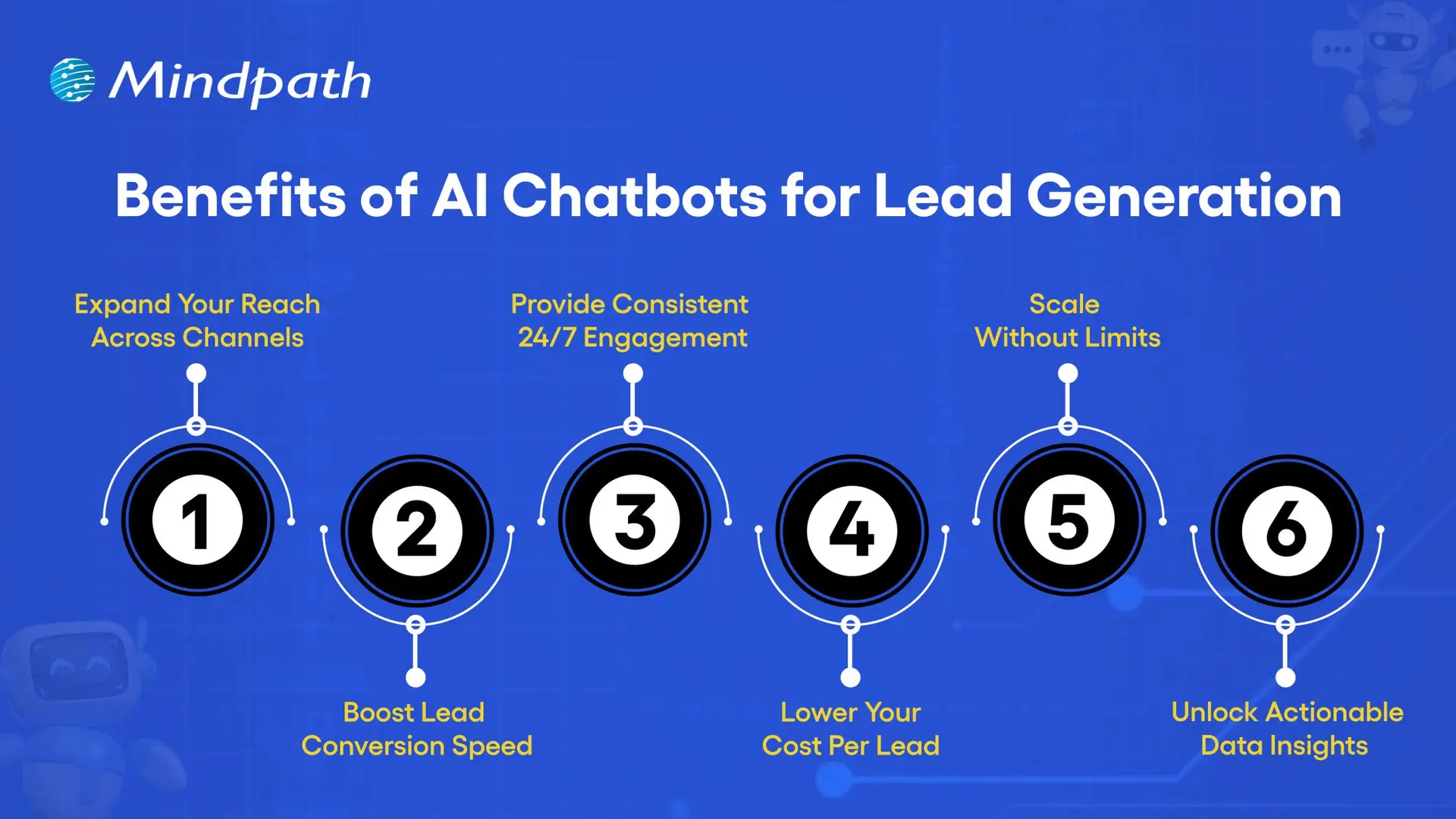
Benefits of AI Chatbots for Lead Generation

1. Expand Your Reach Across Channels

A lead generation chatbot can talk to prospects through your website, email, social media, and various messaging channels such as WhatsApp. You’re connected to customers on their most convenient platforms, and it makes it easy to have a conversation. The more dialogues you open across key communication points, the more customers will engage, putting you in a better position to convert a quality lead. When you utilize lead generation tools such as chatbots, your business remains prominent and accessible across all communications.

2. Boost Lead Conversion Speed

A sales chatbot AI can qualify prospects quickly and send them on to your sales team or follow-up system. With real-time engagement, you can respond to inquiries and gather needed information without delays. Which means that leads stay warm and are more likely to take action sooner rather than later. An AI chatbot for customer support can also help field questions that affect purchasing decisions, enhancing conversion rates even further.

3. Provide Consistent, 24/7 Engagement

A lead generation chatbot is available 24/7 and is able to engage with visitors when they show that they are serious about purchasing. Customers can get answers or help whenever they need them without waiting for store hours. This establishes trust with the customer and reduces the chances they will drop off during the purchasing process. This level of availability also strengthens connections with customers and the level of engagement overall.

Also Read: AI for Customer Services

4. Lower Your Cost Per Lead

Chatbot sales systems take away the manual and extra people that traditionally went into copy and qualifying leads, which will have a direct impact on chatbot pricing as more value is received for less money. Because of the efficiency of Conversational AI chatbot sales automation and how they scale, businesses won’t have to pay more to scale the amount of leads generated to scale resulting in every lead gained becoming progressively cheaper over time.

5. Scale Without Limits

By utilizing a chatbot for sales automation, businesses have the ability to manage hundreds of conversations simultaneously. This means you will never miss out on having a conversation with a potential customer, regardless of the demand, and your chatbot will operate seamlessly even during peak traffic and campaigns. Scalability like this means everything to growing businesses that want to take their reach to the next level.

6. Unlock Actionable Data Insights

A sales chatbot AI is able to collect in-depth insights around visitor behavior, intentions to buy, and preferences that can help improve your marketing campaigns and target customers more accurately. Captured custom chatbot analytics can inform more about which conversations converted into sales and why. Taking this data-driven approach, every single interaction, both now and in the future, improves through the method of practice.

Wondering how top businesses make smarter choices? Discover the importance of data-driven decision-making for businesses to drive growth and stay ahead.

How to Build Your Own AI Chatbot for Lead Generation?

Building a lead generation AI chatbot can help your business engage prospects, answer questions instantly, and collect valuable data automatically. With the right tools and strategy, you can create a chatbot that not only interacts with visitors but also converts them into potential customers.

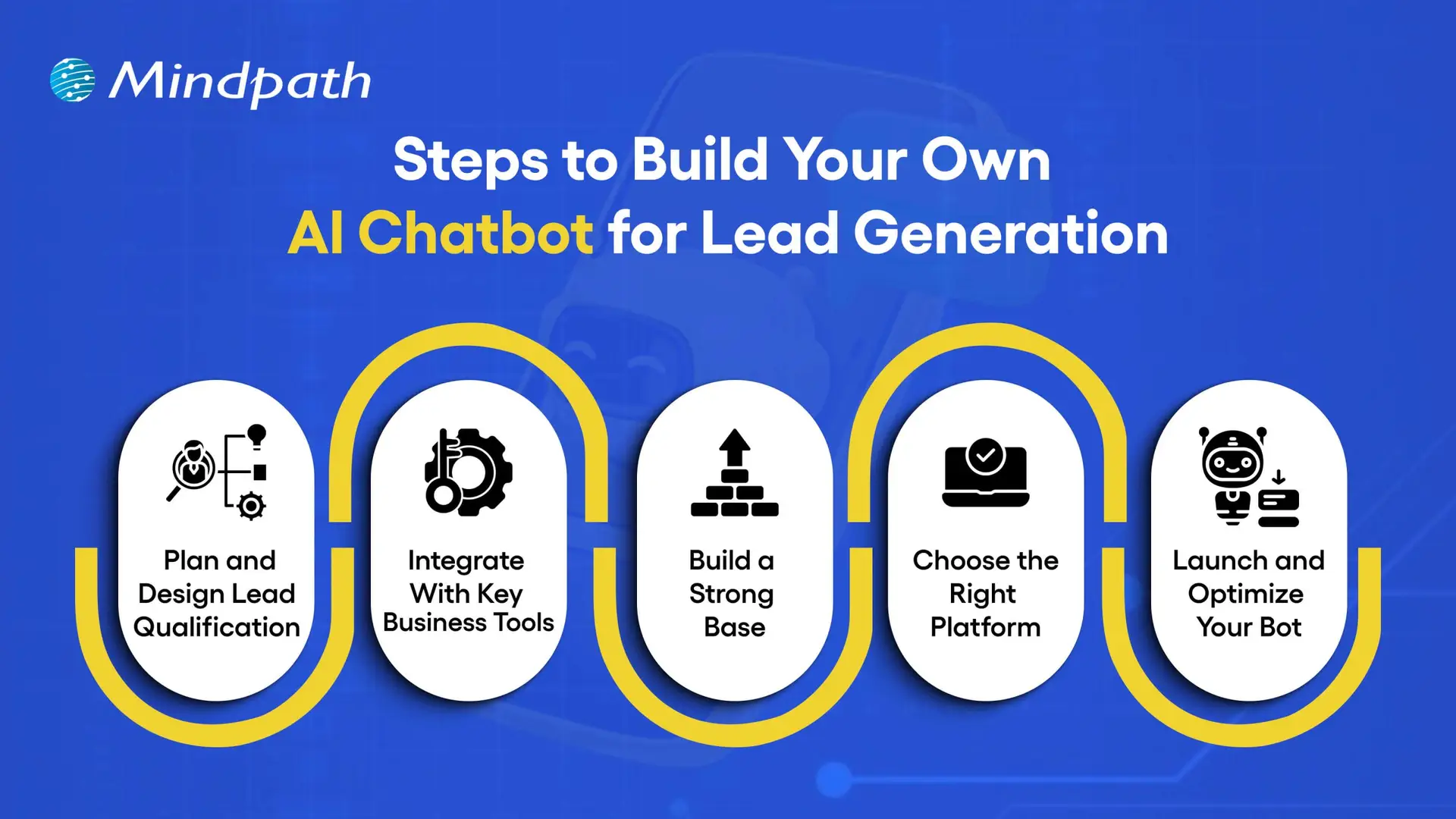
Steps to Build Your Own AI Chatbot for Lead Generation

1. Plan and Design Lead Qualification

Define what a valuable lead means for your business before creating your lead generation chatbot. Plan key questions to qualify prospects and decide the follow-up steps, such as sending them to sales or booking meetings. Choose the platforms, like your website or WhatsApp, where the chatbot can engage the most visitors.

2. Integrate With Key Business Tools

Connect your chatbot to essential tools like CRM for tracking, email platforms for follow-ups, and scheduling tools for instant bookings. Use analytics to track performance and refine your strategy. Whether through custom or pre-built options, integrations make your chatbot a powerful automated sales AI bot.

3. Build a Strong Base

Plug-in solutions offer ready-made bot structures but limit customization. AI-powered platforms can set up your chatbot quickly with features that save time. A DIY build gives full control but requires more effort to create a flexible and high-performing bot.

4. Choose the Right Platform

Pick a platform with features like lead scoring, CRM integration, and multi-channel capabilities. Decide between coding, low-code, or no-code options based on your team’s skills. The right choice will help you create a reliable lead generation chatbot template that supports your goals.

5. Launch and Optimize Your Bot

Deploy your bot where it can have the most impact, such as your website or popular messaging apps. Start with a small audience to test and refine performance. Keep updating it to ensure your lead generation chatbot consistently delivers results.

Curious how chatbots understand and respond like humans? Learn what conversational AI is to see how it powers smarter lead generation and sales.

Looking to Build a Custom Chatbot for Your Business?

A lead generation chatbot improves the way businesses connect with potential customers. It engages prospects instantly, qualifies them effectively, and guides them toward the next step. With features like multi-channel reach, scalability, and data insights, it streamlines lead capture and boosts conversion rates while ensuring a smooth and professional customer experience at every stage of the interaction.

At Mindpath, our custom chatbot development services are designed to create solutions that match your business goals and enhance lead generation. We build chatbots that engage visitors, qualify leads faster, and integrate smoothly with your existing systems. With our expertise, you can deploy a chatbot that drives conversions, strengthens relationships, and supports your business growth effectively.

AI in software engineering

Artificial intelligence is the biggest force of transformation in software development, with AI tools enhancing innovation and productivity. The applications of AI in software engineering also draw attention towards the utility of artificial intelligence in software maintenance. Artificial intelligence has been helping with automated code generation and optimizing the testing and deployment processes. Where does AI come into play in the maintenance of software applications?

AI technologies can contribute to software maintenance with automated debugging and testing to identify areas for improvement. Software engineers can also use advanced AI tools to avoid future issues with proactive maintenance strategies. Furthermore, artificial intelligence also expedites other maintenance tasks, such as resource allocation and real-time performance monitoring. As AI continues evolving, it may introduce fundamental changes in all aspects of software maintenance. 

Planning to use AI to optimise your software engineering workflows? Mindpath’s software maintenance and support services provide smart solutions that simplify maintenance and support growth.

Unraveling the Role of AI in Maintaining Software Applications

How do you ensure that software applications work exactly as you intended after launching them? Many people don’t understand how important maintenance in software applications can be, especially for critical apps. Traditional software maintenance practices involve identifying and fixing bugs, introducing updates and implementing new improvements like security patches. The other responsibilities involved in software maintenance include troubleshooting issues, understanding legacy code, analyzing logs and resolving user complaints.

Most of the work in software maintenance required manual effort, which led to many other problems. The biggest problems in traditional software maintenance approaches include the possibilities of human error, intensive resource allocation and extended response times. Artificial intelligence revolutionizes software maintenance by automating different tasks and improving overall efficiency. With the power of automation and predictive analytics, AI can provide a strong foundation for proactive software maintenance.

Want to understand what makes engineers thrive in AI-powered development environments? Check out our qualities of a good software engineer blog to discover the traits that set top professionals apart.

Why Should AI Be Your First Choice for Software Maintenance?

You can notice one of the prominent reasons to use AI for software application maintenance in how AI tools can analyze code and identify vulnerabilities. The utility of AI in software development extends beyond automated code generation or creation of test cases. Developers and engineers can rely on AI for automated bug detection for better advantages than manual code testing. Artificial intelligence also empowers developers with the capability for identifying trends and patterns that would have been impossible with manual methods. 

The primary reason to choose AI for more efficient software maintenance revolves around the assurance of multiple benefits. You can notice a significant reduction in time and effort required for software maintenance with artificial intelligence. AI-powered tools can help with automatic creation of code documentation, thereby saving the valuable time of maintenance teams. 

The applications of AI in software maintenance also help developers in focusing on the critical issues. With AI handling automatic bug detection and creation of bug reports, developers can achieve more effective software maintenance. For example, AI tools can use past instances of bug fixes to come up with solutions for similar issues. As a result, you can enjoy faster resolution along with access to knowledge that can help with future maintenance activities.

Want to better plan your project budget and avoid unexpected expenses? Discover our software development cost blog to learn the key factors that influence overall development pricing.

Understanding the Use Cases of AI for Software Maintenance

Artificial intelligence might seem like the omniscient computer systems from science fiction movies and novels. Have you ever wondered how AI is used in software development and maintenance? The use cases of AI for maintenance of software applications involve the use of machine learning, large language models, natural language processing and other AI technologies. The integration of these technologies in software maintenance services can improve accuracy and ensure seamless functionality of software applications. 

1. Predictive or Proactive Maintenance

One of the most noticeable applications of artificial intelligence in software maintenance points at predictive maintenance. It enables a proactive approach to software maintenance by identifying and resolving issues before they happen. AI tools can leverage machine learning to learn from historical data of bug repositories and version control systems. 

Artificial intelligence can predict potential areas in the code where you can find bugs and vulnerabilities. As a result, developers can rely on a proactive approach to software maintenance with artificial intelligence. Predictive analytics with AI can help with assessment of system health, prior incidents and usage patterns. Software maintenance teams can take preemptive action in situations where manual maintenance approaches would have failed.

2. Bug Detection and Resolution

Another common way in which IT software support teams can enhance maintenance with artificial intelligence is bug detection. AI algorithms can facilitate easier detection and classification of bugs in software applications. Artificial intelligence offers the power for analyzing logs, code repositories and telemetry data for faster bug detection. Machine learning algorithms in AI tools can identify recurring patterns, create bug reports and identify vulnerable aspects of the code. On top of it, AI tools can also recommend ways to resolve the bugs efficiently.

Also Read: Generative AI Tools for Content & Code Creation

3. Automatic Code Refactoring

Software developers and engineers can also leverage AI tools for automated code refactoring to achieve more efficient software maintenance. Automated code refactoring refers to the process of breaking down a code to discover potential areas for improvement. The significance of AI in software engineering is clearly evident in how AI algorithms can recommend improvements for performance, readability and ease of maintenance. As a result, developers can achieve easier code optimization alongside reducing technical complexity. 

4. Resolving Support Tickets

Internal teams also raise support tickets along with users, thereby making ticket resolution an important priority in software maintenance. NLP algorithms can help with automatic classification and prioritization of new maintenance support tickets according to urgency. You can also find some platforms with AI tools that recommend suggestions to resolve the support tickets. The use of AI in resolving maintenance support tickets reduces the burden on human support teams. 

Want to stay ahead of evolving development practices? Discover our software development trends blog to explore what’s shaping the future of software.

New Trends Expected in AI-Powered Software Maintenance

The evolution of artificial intelligence has brought many new enhancements across different industries. You can also expect the role of AI in software development and maintenance to grow bigger with the arrival of new AI capabilities. The latest developments in AI will play a major role in redefining software maintenance in the future.

1. Adoption of AI Agents in Software Maintenance

Agentic AI is one of the biggest trends that have been grabbing headlines everywhere in the domain of AI. Many businesses have embraced autonomous or semi-autonomous AI agents for software maintenance tasks, including software developers and technical support agents. AI agents can perform regular maintenance tasks, such as rolling out new updates, applying patches or restarting services without direct human intervention.

2. Using Generative AI to Improve Legacy Code

Legacy code is a formidable challenge in software maintenance as engineers have to check old codebases to identify errors and vulnerabilities. With the help of generative AI, software development teams can now analyze legacy codebases easily at a faster pace. On top of it, generative AI tools can help with detection of security issues and suggest patches. Some platforms also offer the advantage of rewriting old modules in new programming languages.

3. Reinforcement Learning in Software Maintenance

The next promising way in which AI can become a part of software maintenance involves the use of reinforcement learning. You can improve maintenance in software applications by using reinforcement learning algorithms to learn from feedback. The insights gained from feedback will help in improving performance, especially for complex software maintenance tasks. 

Ready to invest in technology built specifically around your goals? Check out our custom software development blog to learn why customization matters.

Final Thoughts

The reasons to adopt artificial intelligence in software maintenance revolve primarily around enhancing speed and efficiency. You can notice how AI improves software maintenance by facilitating automated detection and resolution of bugs. Artificial intelligence can empower software maintenance companies to adopt new trends like AI agents and generative AI for effective maintenance.

Mindpath is a trusted name for software maintenance and support services with tangible proof of expertise in artificial intelligence. Our software engineering services have been delivering excellence to all our clients with capabilities to leverage AI technologies in software maintenance. We have earned the love of clients with software maintenance and support services that deliver exactly what they want. Consult with our experts now and find the best ways to integrate artificial intelligence into your software maintenance workflows.