Home

Top ReactJS Trends to Watch in 2026: What’s Next 

Top ReactJS Trends to Watch in 2026: What’s Next 

Join our Newsletter!

ReactJS Trends 

If you have any interest in web development, you have likely seen how everything is evolving. Developers are examining better ways of implementing new interfaces that deliver a better experience to their users. As the demand for fast, reliable interfaces is continually increasing, it’s increasingly vital to keep up with the evolving ReactJS trends. By establishing these foundations within yourself, you will be able to develop and apply smarter development choices soon.

With each successive year, ReactJS continues to develop and create outcomes in how modern applications are designed. The updates, tools, and ideas that make up the ReactJS universe are forcing developers to think differently and advance the way they work. These changes aren’t just technical; they also reflect what users expect from digital experiences. Knowing what’s gaining attention and where the focus is shifting can give you an edge, right? So, in this blog, we will look at the best ReactJS trends to watch in 2026. Let’s dig in!

Want to stay ahead with the latest ReactJS trends? Our ReactJS development services can help you create modern, scalable, and future-ready applications, designed as per your business requirements.

Evolution of ReactJS

Since it was first implemented in 2013, React has changed the frontend development space through its component structure and virtual DOM. In earlier versions of React, we had JSX and rendering efficiency, which all led to building scalable user interfaces. Newer versions (React 15 and 16) further refined the usability of the library through performance improvements, error boundaries, and server rendering, and, in the process, significantly improved development stability and experience. Meanwhile, React 17 through 19 introduced further original ideas and modern development workflows.

With React 17, we saw improvements to the upgrade paths of React and compliance with the browsers, while React 18 gave us concurrent rendering, new powerful hooks, and React 19 built on React 18 with server components, action-based state management, and support for Web Components. React continues to evolve to meet the needs of web development.

Upcoming Features in ReactJS

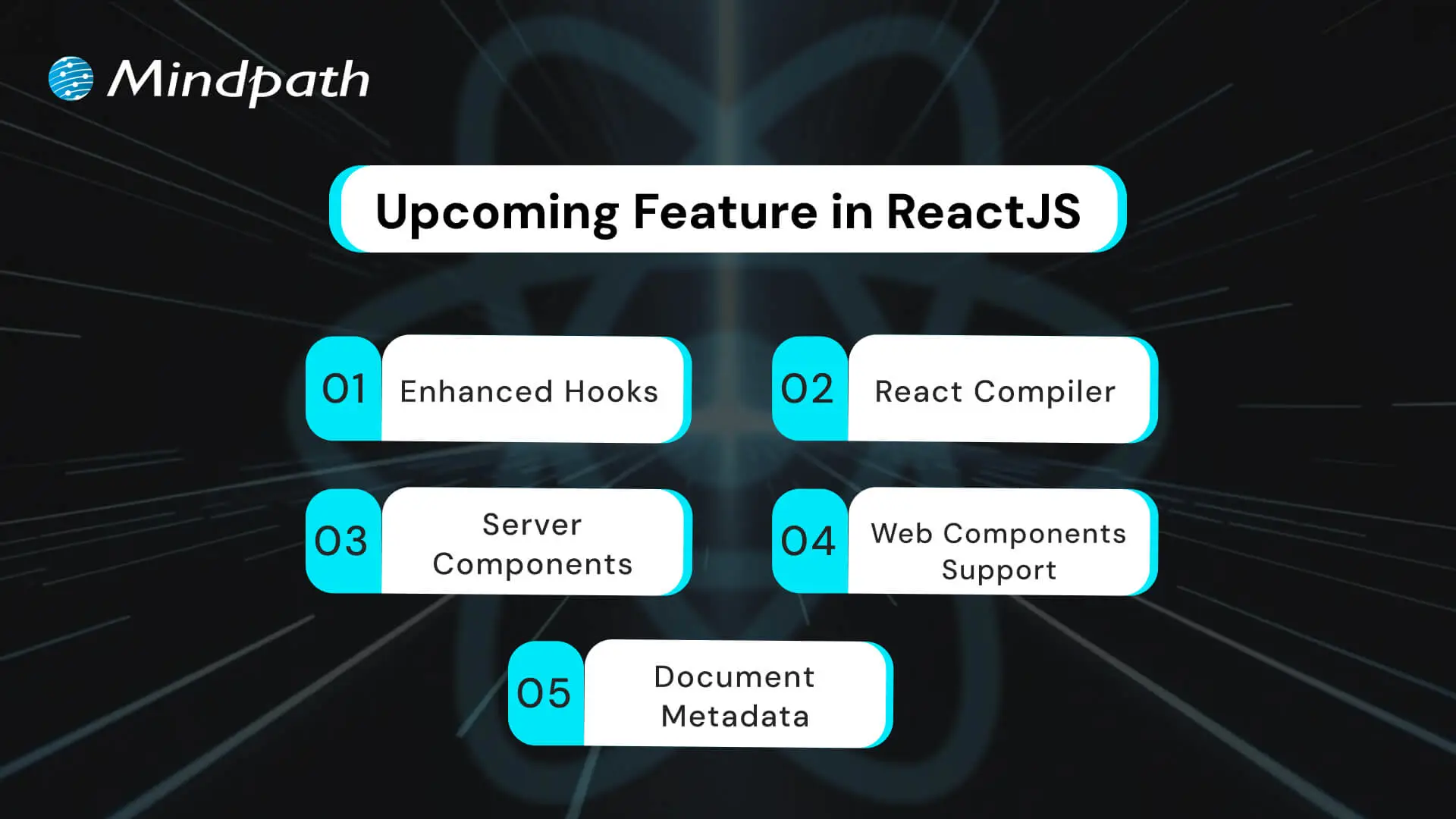
ReactJS 19 is the latest version, bringing fresh improvements to the way developers build user interfaces. With ReactJS’ upcoming features, version 19 focuses on better performance, cleaner code, and easier state handling. These updates mark a big step forward in the future of ReactJS and give a clear view of what’s new in ReactJS in 2026.

Upcoming Feature in ReactJS

1. Enhanced Hooks

One of the React 2026 updates includes powerful new hooks that will make state and effect management even smoother. These enhanced hooks aim to simplify logic and reduce repetitive code in components. They’re designed to give developers more flexibility and control in modern web development.

2. React Compiler

React is introducing a new compiler that optimizes code during build time. It helps reduce manual work by automatically improving performance behind the scenes. Instagram is already using this tool, making it one of the most promising ReactJS features.

3. Server Components

React now supports server components, allowing parts of the UI to render on the server. This feature works well with frameworks like Next.js and helps improve app performance. It reduces the JavaScript sent to the browser, making pages load faster.

4. Web Components Support

React will soon support the direct use of web components inside your code. This opens the door to combining different front-end technologies in one project. It’s a big step forward in creating flexible and reusable UI elements for modern web development.

5. Document Metadata

React 2026 updates will include better control over document metadata like titles and meta tags. This allows developers to manage SEO-related data more efficiently within their components. It saves time and keeps everything organized in one place.

Want to ensure your digital products stay competitive as new react trends shape the future of web development? Discover how the latest React roadmap helps business owners plan smarter, more future-ready tech investments.

What are the Top ReactJS Trends for 2026?

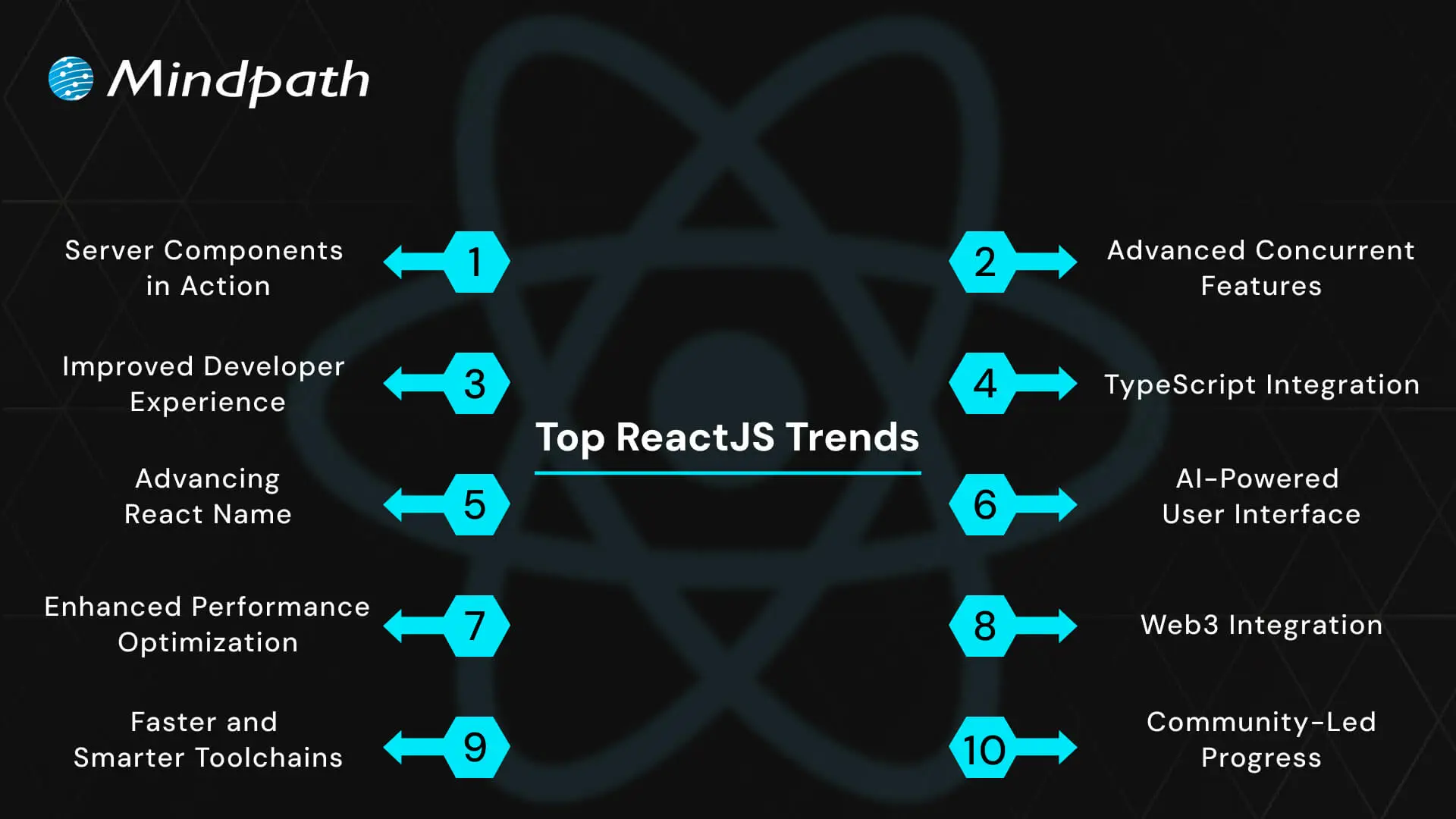
The React ecosystem is going through major improvements that are changing the way developers approach front-end development. ReactJS trends 2026 highlight a shift toward more efficient workflows, faster rendering, and cleaner architecture. With smarter tools and updated features, we can see how ReactJS is evolving in 2026 to meet the growing demands of modern web development.

ReactJS Trends 

1. Server Components in Action

React’s new server components allow parts of the UI to be rendered on the server, reducing the workload on the browser. This makes applications faster and easier to manage, aligning with the latest ReactJS trends. They also allow developers to send less JavaScript to the client, improving performance. This results in faster initial page loads and a smoother user experience.

2. Advanced Concurrent Features

React’s concurrent features, like Suspense and automatic batching, make multitasking smoother and interfaces more responsive. This update improves how React handles rendering without blocking the user experience. It helps manage large-scale applications more efficiently. Developers can build interfaces that stay fast even during heavy updates.

3. Improved Developer Experience

Tools like React DevTools are being enhanced to support more efficient debugging and testing. These improvements help streamline development workflows and reduce troubleshooting time. Developers get better visibility into component behavior and performance bottlenecks. This leads to quicker bug fixes and smoother iterations.

4. TypeScript Integration

The adoption of TypeScript continues to grow as teams seek more scalable and maintainable codebases. This is now a major trend in front-end trends 2026, supporting safer and more reliable coding. TypeScript’s static typing reduces runtime errors and improves code clarity. It also makes collaboration easier across large development teams.

5. Advancing React Native

React Native updates are making it easier to develop high-quality cross-platform apps. It remains a strong choice for teams working across both web and mobile interfaces. New libraries and tools are being introduced to improve development speed. These updates also enhance native-like performance and UI consistency.

Want to be sure that your web application delivers a fast and smooth user experience that keeps customers engaged? Discover how improving React performance can directly enhance satisfaction and boost overall business results.

6. AI-Powered User Interfaces

React is being used to build smarter, AI-driven interfaces that adapt to user behavior in real time. These features support more personalized and predictive user experiences. AI integration helps applications anticipate user actions and deliver relevant content. This enhances engagement and boosts user satisfaction.

7. Enhanced Performance Optimization

Performance remains a top focus, with React adding better support for edge computing and efficient memory handling. These updates are critical to meeting modern speed and scalability demands. They ensure faster content delivery across global networks. Optimizations also help reduce power and data usage on devices.

8. Web3 Integration

React is being adapted to work smoothly with decentralized technologies like blockchain wallets and smart contracts. This is part of the broader movement in JavaScript frameworks 2026 towards Web3-ready solutions. It simplifies the process of building secure and decentralized apps. React’s flexibility supports fast adoption in emerging blockchain-based platforms.

9. Faster and Smarter Toolchains

Modern tools like Vite and frameworks such as Next.js and Gatsby are becoming more powerful. These enhancements reflect improvements seen across React front-end development practices. They reduce build times and make testing and deployment more efficient. Developers benefit from improved hot reloading and modular workflows.

10. Community-Led Progress

The React ecosystem continues to expand thanks to open-source contributors who build tools, libraries, and new practices. These efforts keep ReactJS trends moving forward with fresh ideas and evolving standards. Active community support ensures regular updates and fast issue resolution. It also helps spread knowledge and best practices across the industry.

Want to scale your application seamlessly as your customer base grows? Learn how the benefits of ReactJS development services make large-scale, high-traffic apps easier to maintain and expand.

Are You Looking Forward to Embracing the Future of ReactJS?

ReactJS trends are reshaping the landscape of modern web development. With fresh tools, smarter architecture, and growing support for cutting-edge features, staying current is no longer optional. Developers who stay informed can build faster, smarter, and more scalable applications. Understanding these shifts puts you in control of how you approach digital solutions in 2026 and beyond.

At Mindpath, we offer expert ReactJS development services designed for growth and scalability. Our team stays aligned with the latest ReactJS trends, ensuring your product is future-ready. From concept to deployment, we develop efficient and high-performing applications tailored to your goals. Partner with us to unlock seamless, modern interfaces built with precision and care.

Frequently Asked Questions

Server components and TypeScript integration deliver the most immediate practical value. Server components reduce browser workload and improve page load speeds noticeably, while TypeScript adoption reduces runtime errors and improves long-term code maintainability. Teams that implement both together consistently report faster development cycles and significantly fewer production issues across complex applications.
Traditional client-side rendering sends all JavaScript to the browser, which then builds the interface. Server components render parts of the UI on the server before delivery, sending less code to the browser entirely. The result is faster initial page loads, reduced bandwidth consumption, and noticeably improved performance especially on lower-powered devices and slower connections.
For most teams, absolutely. TypeScript catches errors during development rather than at runtime, which prevents costly debugging sessions after deployment. Larger teams benefit especially from improved code readability and collaboration. The initial learning investment typically pays back quickly through fewer bugs, cleaner architecture, and significantly easier onboarding of new developers joining existing projects.
AI integration allows React applications to adapt dynamically to individual user behavior, delivering personalized content and anticipating actions in real time. Beyond user experience improvements, AI-powered development tools are also accelerating the coding process itself. Developers using AI assistance within React workflows report meaningful reductions in repetitive coding tasks and faster overall delivery timelines.
It is gaining momentum but remains specialized for now. Businesses in finance, gaming, and supply chain are actively exploring React-based Web3 applications involving blockchain wallets and smart contracts. For mainstream business applications, adoption will depend heavily on regulatory clarity and user familiarity with decentralized technologies. Developers building familiarity with Web3 tools today will hold a clear competitive advantage tomorrow.

Support Is One Click Away

Featured Posts

Related Post

Hire NodeJs Developers in Canada

Businesses all over Canada are always under pressure to make apps that are fast, scalable, and able to handle real-time interactions in today’s digital-first economy. Your backend technology is very important for long-term success, whether you’re a startup launching your first product or a big company updating old systems. Node.js has become one of the most powerful and widely used backend technologies available today.

This in-depth guide will help you understand Node.js and its benefits, developer skills, hiring models, costs, and best practices if you want to hire NodeJS developers in Canada. This article is set up to give you a full, useful guide to hiring the best Node.js developers in Canada.

Why You Should Hire NodeJS Developers?

Cities like Toronto, Vancouver, Montreal, and Ottawa are at the forefront of innovation in Canada, which is one of the fastest-growing tech hubs in the world.

Important Reasons to Hire in Canada

1. Highly Skilled Talent Pool

Canadian developers are known for having a lot of technical knowledge.

2. Quality Education System

The best universities make good software engineers.

3. Stable Economy

Canada is a safe place to do business.

4. Time Zone Advantage

Works well with businesses in the US.

5. Strong Work Ethics

Employees who are professional and dependable.

For North American businesses, hiring NodeJS developers in Canada guarantees high-quality work and easy communication.

Important Skills for NodeJS Developers

You need to look at both technical and interpersonal skills when hiring expert NodeJS developers.

1. Core Technical Skills

  • Strong knowledge of JavaScript (ES6+)
  • Proficiency in Node.js frameworks like Express.js or NestJS
  • Experience with REST APIs and GraphQL
  • Understanding of asynchronous programming
  • Familiarity with databases (MongoDB, MySQL, PostgreSQL)
  • Knowledge of Git and version control

2. Advanced Technical Skills

  • Microservices architecture
  • Cloud services (AWS, Azure, Google Cloud)
  • Docker and Kubernetes
  • CI/CD pipelines
  • Security best practices

3. Soft Skills

  • Problem-solving mindset
  • Communication skills
  • Ability to work in agile teams
  • Time management

A good developer should be able to write clean code and know how to make a program work for a lot of users.

Hiring Models for NodeJS Developers

The size, budget, and timeline of your project will help you choose the best hiring model.

1. In-House Developers

  • People who work full-time
  • Best for projects that will last a long time
  • Higher cost because of benefits and infrastructure

2. Freelancers

  • Cost-effective and adaptable
  • Great for small or short-term projects
  • Can be hired right away

3. Dedicated Developers

  • Only work on your project
  • Best for new businesses and teams that are growing

4. Remote NodeJS Developers

  •  Get access to talent from all over the world
  • Cut down on the costs of doing business
  • A hiring process that goes faster

Step-by-Step Process to Hire NodeJS Developers in Canada

Hiring the right Node.js developers in Canada requires a well-planned and structured approach. With a rapidly growing tech ecosystem and increasing demand for skilled professionals, businesses need a clear hiring strategy to identify the right talent, reduce risks, and ensure long-term project success.

Step 1: Identify Your Project Needs

Begin by clearly defining your project requirements in detail. This includes outlining the scope of the project, core features, and expected outcomes. Determine whether you are building a real-time application, API, SaaS platform, or enterprise solution. Additionally, establish your budget, timeline, and preferred technology stack. A well-defined project plan not only helps you communicate your vision effectively but also ensures you attract developers who are aligned with your technical and business objectives.

Step 2: Select the Appropriate Hiring Model

Choosing the right hiring model is crucial for balancing cost, flexibility, and control. Evaluate whether you need full-time developers for long-term collaboration, freelancers for short-term or specialized tasks, or remote development teams for scalability. Consider factors such as project complexity, duration, and internal resources. Making the right choice at this stage can significantly impact productivity, communication, and overall project efficiency.

Step 3: Develop a Comprehensive Job Description

Create a detailed and well-structured job description that clearly communicates your expectations. Include required technical skills such as proficiency in JavaScript, Node.js frameworks (e.g., Express.js, NestJS), API development, and database management. Define roles, responsibilities, deliverables, and the level of experience needed. A strong job description not only attracts qualified candidates but also filters out unsuitable applicants, saving time during the hiring process.

Step 4: Explore Talent Through Multiple Channels

To find the best Node.js developers in Canada, use a combination of sourcing channels. Leverage professional networks like LinkedIn, freelance platforms such as Upwork, and specialized tech job boards. You can also explore developer communities, referrals, and recruitment agencies. Using multiple channels increases your reach and improves your chances of finding experienced and reliable developers in a competitive market.

Step 5: Review and Shortlist Candidates

Carefully evaluate candidate profiles by reviewing resumes, portfolios, and past work experience. Focus on previous projects that are similar to your requirements and assess their contributions. Checking GitHub repositories can provide insights into coding standards, problem-solving approaches, and real-world experience. Shortlisting the right candidates ensures you move forward with individuals who have both the technical expertise and relevant experience.

Step 6: Conduct Technical and Practical Assessments

Assess candidates through a combination of technical interviews, coding tests, and real-world problem-solving exercises. Evaluate their understanding of Node.js concepts such as asynchronous programming, event-driven architecture, API integration, and database handling. Practical assessments help you determine how candidates approach challenges, write efficient code, and perform in real project scenarios.

Step 7: Complete Hiring and Ensure Smooth Onboarding

Once you have selected the right candidate, finalize the hiring process by offering competitive compensation and clearly defining roles, responsibilities, and expectations. Provide structured onboarding, including access to tools, documentation, and workflows. A smooth onboarding process helps developers integrate quickly into your team, improves productivity, and sets the foundation for long-term success.

Cost of Hiring NodeJS Developers in Canada

There are several factors that influence the cost of hiring a NodeJS developer in Canada, including experience level, geographic location, and the hiring model you choose.

1. Hourly Rates

(Based on Glassdoor and market salary data) 

  • Junior Developers: $30 – $50/hour
  • Mid-Level Developers: $50 – $90/hour
  • Senior Developers: $90 – $140+/hour

2. Annual Salaries

(Source: Glassdoor Canada & Payscale) 

  • Junior: ~$60,000 – $75,000/year
  • Mid-Level: ~$75,000 – $100,000/year
  • Senior: ~$100,000 – $130,000+/year

Factors Affecting Cost

1. Developer Experience

Senior developers charge significantly higher rates

2. Geographic Location

Cities like Toronto and Vancouver have higher salaries

3. Project Complexity

Advanced applications (SaaS, real-time systems) cost more

4. Engagement Model

In-house, freelance, or outsourcing impacts pricing

5. Technology Stack

Skills like cloud, DevOps, and microservices increase cost

Hiring developers who work from home can save you a lot of money while still getting good work done.

Why Hiring Dedicated NodeJS Developers in Canada is a Smart Long-Term Investment?

Hiring dedicated NodeJS developers in Canada is one of the most effective ways to build scalable, high-performance applications while maintaining quality and long-term consistency. For businesses looking to hire NodeJS developers in Canada, dedicated developers offer greater reliability, stronger collaboration, and better project control. This hiring model is especially beneficial for startups, growing businesses, and enterprises that need continuous development and long-term technical support.

Key Benefits of Hiring Dedicated NodeJS Developers in Canada

1. Full Commitment to Your Project

Dedicated developers work exclusively on your project, ensuring steady progress, faster delivery, and minimal distractions.

2. Consistent Focus and Higher Productivity

Since they are fully involved in your project, dedicated NodeJS developers in Canada can maintain momentum, meet deadlines, and deliver quality results consistently.

3. Better Understanding of Business Goals

Over time, dedicated developers gain deeper insights into your business objectives, workflows, and user needs, leading to more tailored and effective solutions.

4. Improved Code Quality and Maintainability

Continuous involvement helps maintain coding standards, improve system performance, and reduce technical debt.

5. Faster Issue Resolution and Support

Dedicated developers can quickly identify and fix bugs, performance issues, or technical challenges, reducing downtime and improving efficiency.

6. Seamless Team Integration

Dedicated NodeJS developers act as an extension of your in-house team, aligning with your processes, communication tools, and project workflows.

7. Scalability and Flexibility

This model makes it easier to scale your team up or down based on project demands without disrupting progress.

8. Long-Term Cost Efficiency

Although the initial investment may be higher, dedicated developers reduce costs related to hiring, onboarding, and managing multiple short-term resources.

9. Greater Control and Transparency

You benefit from direct communication, better visibility into progress, and more control over timelines, priorities, and deliverables.

Common Mistakes to Avoid When Hiring Dedicated NodeJS Developers in Canada

  • Not clearly defining project requirements
  • Hiring based only on cost rather than expertise
  • Ignoring communication and collaboration skills
  • Skipping technical interviews or coding tests
  • Choosing the wrong hiring model for your project

Hiring dedicated NodeJS developers in Canada can provide significant long-term value when done correctly. By choosing the right talent, setting clear expectations, and avoiding common mistakes, businesses can build stronger development teams, improve product quality, and achieve faster, more sustainable growth.

Hire Top NodeJS Experts in Canada to Accelerate Your Business

Businesses that want to make high-performance, scalable apps should hire NodeJS developers in Canada. Canada is a great place to hire both local and remote developers because it has a lot of talented people, low prices, and a growing tech ecosystem.

You can confidently hire expert NodeJS developers who will help you reach your business goals and get great results if you know what skills they need, how to hire them, how much it will cost, and what the best practices are.

FAQs

1. What is the cost of hiring a NodeJS developer in Canada?

The average salary is between $80,000 and $100,000 a year, and the hourly rate is between $70 and $140.

2. Is it possible to hire NodeJS developers in Canada who work from home?

Yes, a lot of businesses hire remote developers to save money and find more talented people.

3. What skills should I look for in a NodeJS programmer?

JavaScript, Node.js frameworks, APIs, databases, and cloud technologies are some of the most important skills.

4. How long does it take to find a NodeJS developer?

Freelancers can take a few days, while full-time hires can take a few weeks.

5. What makes Node.js a good choice for backend development?

Node.js is a great choice for making modern, real-time apps because it is fast and can handle a lot of traffic.

Digital Twin technology

Manufacturers all over the world have been under pressure to meet emerging challenges in an environment with limited resources. The prominent setbacks for the manufacturing industry include supply chain shortages and talent gaps. However, the advent of digital twin technology serves as the best example of how technological innovation can shape the future of manufacturing. Digital twins can not only enhance capacity but also ensure more efficiency and resiliency in manufacturing operations.

The growing demand for fast-paced and continuous operations in manufacturing creates various limitations. Digital twins offer virtual representations of production lines, equipment or the whole factory to help manufacturers with more effective decision-making. Manufacturers must know about the utility of digital twins and how they can unlock untapped value to prepare factories of the future.

Looking to harness digital twin technology to gain deeper insights and future-proof your business? Contact us for expert guidance and tailored solutions that help turn digital twin innovation into real-world impact.

What is Digital Twin Technology?

The foremost highlight in any introduction to digital twins will focus on their definition. The most common answers to ‘what is digital twin technology’ paint them as a live, virtual model of a physical object, system or process. Digital twins rely on sensors and IoT devices to capture real-world data, which is then fed into a computer simulation that imitates the behavior, conditions and performance of its physical counterpart.

This is what sets digital twins apart from a standard computer model, a digital twin updates constantly using live data, rather than staying static once it’s built. Digital twins help with continuous monitoring and analysis of objects, systems or products throughout their complete lifecycle. In addition, digital twins can also feature external processes and crucial variables that can influence the performance of real-world assets.

One of the significant highlights of digital twins is that they work with data flowing between the object and its virtual representation in real-time. The two-way flow of data ensures the most accurate simulations of the physical world. Businesses can also use multiple digital twins together to create models for more complex systems, aimed at a larger digital transformation strategy.

Digital twins provide a clear impression of how something works and predicts its behavior in future scenarios. As a result, they can help in accelerating innovation and improving efficiency along with making well informed decisions. You can come across use cases of digital twins in predictive maintenance, product development, supply chain optimization and process optimization.

Breaking Down the Architecture of Digital Twins

If you want to capitalize on the power of digital twins in diverse use cases, then it is important to know their architecture. You can find digital twin providers like IBM, Microsoft, General Electric and Siemens with solutions that provide a comprehensive suite of services. The digital twin examples may feature hardware layers, synchronization services, data processors and other tools to draw the most accurate simulations of real objects and processes. However, awareness of the architecture of digital twins can help you figure out exactly what you need to make the most of the innovative technology.

1. Physical Asset

The physical asset in digital twins can be any real-world object, process or system that you want to study or monitor within virtual environments.

2. Virtual Model

The virtual model in digital twins is the digital representation of the physical asset that you want to know more about.

3. Data Sources

One of the notable highlights in the answers to ‘what is a digital twin’ points at the two-way flow of data between the physical asset and the virtual model. Data sources are an integral component in digital twin architecture as they ensure accuracy in virtual representations. Internet of Things or IoT devices serve as data sources by recording relevant metrics for creating digital twins.

4. Data Pipelines

Data pipelines are used for transmitting sensor data to the virtual model in real time. They play a vital role in ensuring that the digital twin is synchronized with the physical asset.

5. Feedback Loop

The feedback loop helps in sending control signals or insights from the virtual model to the physical asset. It serves as a promising component for optimizing performance and efficiency alongside enhancing decision-making.

6. Analytics Engine

Digital twins needs an analytics engine running on AI or machine learning to detect patterns and facilitate predictive analytics. The functionalities of the analytics engine helps in drawing accurate simulations alongside offering support for effective asset tracking.

7. Visualization Dashboard

The visualization dashboard is another crucial component that completes the digital twin definition by providing access to the virtual representation. You can use the visualization dashboard to interact with the two-dimensional or 3D representation of the physical asset.

Breaking Down the Working Mechanism of Digital Twins

The uses of digital twins can vary by huge margins across different industries and applications. You must also know that digital twins follow some common steps that you will find in every example.

1. Data Collection

Organizations can start their digital twin projects by embedding sensors on a physical object to capture its performance, operating environment and condition. The digital twin meaning in case of IoT applications revolves around using smart objects that feature in-built sensors to collect and share data continuously. In the case of IT environments, teams can create digital representations of computers, applications and software with virtualization technologies. Subsequently, the teams can use software agents to collect data from the digital asset for supporting the digital twin.

2. Creation of the Virtual Model

The primary focus of digital twins aligns with the creation of digital replicas of certain objects or systems. Virtual modeling involves using the data collected from the physical asset to create a digital model. It is important to define digital twins with key attributes that help them offer realistic reactions to variables. The variables can refer to interactions with the physical asset or its environmental conditions. The attention to virtual modeling ensures that digital twins can offer reliable and accurate simulation of the responses of the physical assets in different conditions.

3. Real-Time Data Integration

You cannot think of a digital twin without live data integration as it ensures continuous communication between the digital twin and physical asset in real time. Live data integration offers a dynamic feedback loop that can help organizations with performance optimization and enhancements in system reliability. The two-way data exchange also helps in efficient predictive maintenance by anticipating issues ahead of time. Most of the organizations automate the real-time data exchange process to focus on more critical and strategic tasks.

4. Analysis and Decision-Making

Digital twins offer the most promising solutions to experiment safely within virtual environments. You find better answers to ‘how do digital twins work’ in manufacturing plants where digital twins can help in finding out how an upgrade may affect efficiency and performance. The best thing here is that manufacturers don’t have to implement the upgrade directly to measure its impact. On top of it, analytics engines used in digital twins can recommend operational changes to make the changes more cost-effective.

Variants of Digital Twins

Most of the discussions about digital twins don’t emphasize the fact that you can find different types of digital twins. Organizations can deploy different variants of digital twins in one production environment with the advantage of learning from different levels of physical assets.

1. Product Twins

Product twins refer to the virtual representations of products after the ideation stage or throughout the complete lifecycle. You can use product digital twins for design improvements, enhancing service satisfaction and manufacturing efficiency.

2. Process Twins

The variety of digital twin applications also draws attention towards the use of process twins that help in understanding how different systems work with each other. Process twins offer visualization of the interactions between systems and suggest actionable feedback to improve quality standard or process speed.

3. Part Twins

Part twins or component twins focus on the most granular level of larger systems. The primary goal of part twins revolves around measuring the insights from basic components of larger systems. Component twins serve a promising role in understanding the performance of certain components and identifying larger problems before they happen.

4. Place Twins

The largest deployment of digital twins can happen in the form of place twins. You can find examples of place twins in factory twins, which simulate a complete physical location or place. In some cases, you may assume similarities between process twins and place twins. However, place twins also include spatial data, such as climate, context and temperature of the physical location.

Unraveling the Use Cases of Digital Twins

Organizations in different industries leverage digital models to understand complex systems and promote innovation. Digital models have also proved as the most useful tools for efficient optimization and predictive equipment maintenance. You can find a digital twin use case in almost every major industry with widespread applications.

1. Construction of Physical Structures

Digital twins can prove to be the most useful tools for engineers to design durable and safe physical structures, such as buildings, bridges and dams. For example, digital twins can help engineers determine whether a specific design for a bridge can enhance its durability. As a result, engineers can identify any setbacks and make changes in the design before starting construction.

2. Healthcare

Another promising area where digital twins can offer significant advantages is in the domain of healthcare. Digital twins can come up with crucial insights from forecasts of disease progression to identify how patients will respond to different treatment options. Furthermore, healthcare professionals can use digital twins to enhance diagnosis through detailed modeling that helps in understanding how interactions between organs can affect health.

3. Urban Planning

You can also notice the benefits of digital twins in urban planning applications, especially for traffic supervision. City models use spatial data, IoT object data and AI analytics to determine how new transportation systems or infrastructure upgrades will affect the city’s environment and traffic. Digital twins serve a pivotal role in planning for smart cities and urban planning experts aim to tap into their power to enhance sustainability and quality of life.

Identifying the Advantages of Digital Twin Technology

The use cases of digital twins across different industries reveal their potential to revolutionize digital transformation. You can notice how digital twins offer more visibility into complex systems while opening doors for experimentation without real-world changes. An overview of their advantages can help you understand how they can unlock the future.

1. Faster Research and Development

How do you think a business can step into the future ahead of time? Without research and development, companies cannot experiment with new product designs, manufacturing processes or workflows. The advantages of digital twins make it easier to experiment within a virtual environment, thereby opening the doors for accelerated innovation. Digital twins offer a more cost-effective and safer approach to research and development without the need for real tests.

2. Scalability

Companies can stay competitive in the modern business landscape only by adapting to changes in product demand, customer priorities and economic conditions. Digital twins offer virtual environments where you can adjust parameters and test configurations safely before full-scale deployment. You can also connect digital twins to live systems and ensure that they can continuously transmit their scaling adjustments in real time to the physical asset.

3. Operational Efficiency

The next crucial outcome of digital twin technology is the assurance of enhanced operational efficiency. Digital twins can provide the insights required to achieve operational efficiencies throughout the value chain. Organizations can use different datasets to collect real-time data on physical asset and production performance. With more visibility into the asset or process bottlenecks, digital twins can help in crafting potential solutions.

Final Thoughts

The progressive use of digital twins is a perfect example of how the world is welcoming innovation and preparing for the future. Digital twins provide the easiest solution to multiple problems that affect efficiency, cost-effectiveness and productivity in different industries. With the help of virtual models that mimic real-world assets, companies can reinvent their manufacturing, services and internal management.

Mindpath is one of the leading destinations for digital twin app development with years of expertise in end-to-end IT solution development. We are proud to have team members who are eager to learn and specialize in new technologies, including digital twins. Our experts are familiar with the use of popular tech stacks for digital twin development in alignment with your business goals. Consult with our team and build your first digital twin right now.

Frequently Asked Questions

NodeJS Developers in London

When hiring Node.js developers in London you need to consider a variety of factors to ensure you get the best match for your project. The essential elements listed below will help you make an educated selection, ensuring that the developers you engage have the technical experience and abilities required to produce high-quality, scalable applications.

1. Strong JavaScript foundation

Node.js developers must be well-versed in JavaScript. Since Node.js is built on JavaScript, developers must understand its fundamental principles, such as closures, promises, and event loops. Their ability to integrate seamlessly with JavaScript on both the front and back ends results in more efficient code and shorter development cycles.

2. Experience with popular Node.js frameworks

Node.js developers should be familiar with frameworks such as Express.js and Koa.js, which assist speed the development process. These frameworks improve functionality while simplifying code, allowing developers to create scalable and efficient applications. Their familiarity with these tools will have a direct influence on your project’s performance and dependability.

3. Expertise in Database Management

A skilled Node.js developer should be capable of managing databases like MongoDB, MySQL, and PostgreSQL. They should understand how to construct, query, and manage databases efficiently. The ability to interact with NoSQL and SQL databases means that data can be stored, retrieved, and manipulated, resulting in improved app speed and security.

4. Problem-solving and Asynchronous Programming Skills

Node.js development sometimes involves handling complicated challenges, especially when working with asynchronous programming. Developers must be able to manage concurrent processes utilizing callbacks, promises, and async/await. This guarantees that apps stay responsive and can manage huge traffic loads effectively, which is critical for real-time web applications.

5. Collaboration and Adaptability

In any development environment, especially for large projects, collaboration is key. Node.js developers must be able to work well within teams, communicating effectively with other developers, designers, and stakeholders. Their ability to adapt to shifting project requirements and provide solutions quickly is essential for ensuring that projects stay on track and meet deadlines.

Looking for Top Node.js Developers in London?

At Mindpath. we provide highly skilled Node.js developers with a strong foundation in JavaScript, experience with popular frameworks, and expertise in database management. Our team ensures efficient, scalable, and high-performance solutions tailored to your business needs.

Get in touch with us!

Check out our blog on what skills to look for while hiring Node.js developers in London and make the best choice for your project.
Consider JavaScript expertise, Node.js framework knowledge, problem-solving abilities when hiring Node.js developers in London.