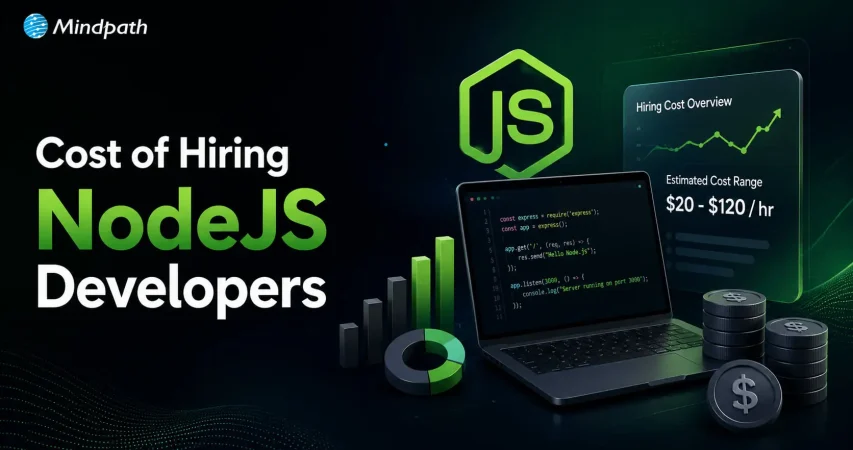
NodeJS Developer Hiring Costs: Factors That Affect the Price

Join our Newsletter!

Featured Posts

Support Is One Click Away

Home

NodeJS Developer Hiring Costs: Factors That Affect the Price

NodeJS Developer Hiring Costs

NodeJS Developer Hiring Costs: Factors That Affect the Price

When hiring a NodeJS developer, several factors influence the overall cost. Understanding these key factors helps businesses budget effectively and ensure they’re getting the right expertise for their needs. Here are the primary elements that affect hiring costs:

1. Experience Level

Junior/Entry-level Developers: These developers usually have less expertise but can complete simple tasks. They are best suited for basic tasks with less functionality and are less expensive due to reduced hourly rates. While they may need additional supervision, they provide high value for activities like developing basic APIs or working on tiny enhancements.

Mid-level developers: have many years of experience and can take on more complicated tasks, such as integrations and working with sophisticated libraries. Their hourly prices are modest, indicating their ability to handle larger projects and offer quality solutions while being more economical than senior developers.

Senior/Expert Developers: Senior developers have substantial experience with NodeJS, including knowledge of frameworks, architecture design, and complicated issue solutions. They charge the highest hourly costs because of their ability to handle high-level, intricate projects. If your project requires advanced performance optimization, system design, or complex debugging, hiring an expert ensures a top-tier result.

2. Project Scope and Complexity

Small, Basic Projects: For simple apps or projects, a junior or mid-level developer may suffice. These projects often entail basic activities such as creating simple APIs or static webpages. As a result, the cost is cheaper, as just one developer with core abilities is required.

Large, complex Projects: Developing more sophisticated applications, such as enterprise-level solutions or platforms with extensive integrations, can result in higher costs. These projects frequently need the involvement of senior engineers or entire development teams with experience in areas such as database administration, API development, and real-time application handling. The larger the team and more specialized the abilities, the higher the total cost.

3. Location

The geographical location of a NodeJS developer has a significant impact on their hourly fees. Hiring a developer is often more expensive in industrialized nations such as the United States and many areas of Europe due to higher living costs, a greater demand for competent developers, and competitive market prices. Developers in these areas typically charge extra for their expertise. In contrast, employing developers from emerging areas like India or Eastern Europe might result in considerable cost reductions. The hourly rates in these locations are often cheaper, making them an appealing alternative for firms seeking qualified developers at a lesser cost. However, while costs are lower, it’s important to consider potential differences in communication and time zones, as well as project management practices.

Looking for skilled NodeJS developers to bring your project to life? Mindpath offers experienced professionals who can help you build efficient, high-performance applications tailored to your needs.

Ready to get started? Contact Mindpath today and take your project to the next level with our expert NodeJS developers!

Related Post

Discover essential DevOps best practices to enhance efficiency, streamline processes, and boost collaboration for your business with Mindpath.

Related Post

ecommerce software development  

E-commerce is rapidly changing, and brands have to cope with it on a daily basis. Customer journeys need fast loading, effective information display, and dependable performance across all the devices. This compulsion makes e-commerce software development a fundamental business priority and not a peripheral activity. It influences product loading processes, payment processing, and growth of systems. We, as technology experts, are well aware of this change. It calls on teams to rebuild platforms in a purposeful, precise, and long-term growth perspective.

Based on this fact, attention turns to the planning and reinforcement of platforms. Intelligent e-commerce systems bridge the gap between business objectives and reality. They permit change and maintain performance. They also enhance brand confidence in an increasingly competitive environment. The connection between technology and strategy results in smarter decision-making. It initiates necessary debates in emerging businesses. So, this blog focuses on analyzing this field in detail and discussing what really makes e-commerce sites successful. Let’s dive in to know more!

Ready to transform your online store with a reliable and feature-rich platform? Mindpath’s software development services help businesses build innovative and scalable e-commerce solutions.

What Does E-commerce Software Development Mean?

To put it simply, e-commerce software development implies the development of digital systems that can assist businesses in selling online without any issues. These systems handle products, prices, orders, and activities of customers centrally. They assist e-stores in loading quickly and operating without failure. They are created by developers to suit the needs of customers and business objectives. Due to increasing online demand, powerful software assists brands to remain organized, responsive and engage in daily sales activity.

The process also facilitates growth and flexibility as business goes online. Through e-commerce development services, teams create a platform to facilitate payments, track orders, and manage users conveniently. Quality software links all the store’s functions intelligently. It makes teamwork easy and customers’ shopping straightforward. Such transparency enables businesses to win trust and provide a uniform online experience.

Also Read: Types of Software Development

Key Benefits of E-commerce Software Development

In the contemporary world, online selling requires more than a simple web site. Brands seek speed, control and growing demand platforms. The e-commerce software development services facilitate this transition with smarter digital basics. The following are some of the main advantages which make this method worth considering.

1. Built for Your Business Needs

Each business operates in its unique way, and software must be aware of that fact. E-commerce software development assists teams to mould features in accordance with actual workflow and objectives.

2. Ready to Grow with Demand

E-commerce stores evolve with the growth of products, customers, and purchase orders. E-commerce software development helps it grow without slowing down systems and disrupting normal operations.

3. Better Control Over Design and Experience

Brands desire stores that are appealing and feel right to the customers. This method offers complete ownership over layout and flow as well as shopping experience.

Must Read: Web Development vs Software Development

4. Smooth Connection with Existing Tools

Several companies are already utilizing accounting, inventory, or CRM software. All these systems are linked through a well-planned software that maintains smooth operations of the system.

5. Faster Performance for Shoppers

Speed is important when the customers are browsing or paying over the internet. Powerful development pays attention to a rapid load and seamless action in each step.

6. Stronger Protection for Customer Data

E-commerce sites deal with personal customer information on daily basis. Dedicated systems implement protection rules which secure data and establish enduring customer confidence.

Curious how businesses build platforms aligned with their exact workflows? Check out custom software development and discover how it ensures better control and security.

Features of an E-commerce Software Development

The demand of e-commerce software will keep increasing as the online firms continue to grow all over the world. Grand View Research estimated the market of e-commerce software in the world to be USD 7.12 billion in 2022. The market has the potential of reaching USD 20.90 billion in 2030 with a CAGR of 15.3 percent. This expansion is an indication that it requires functionality to handle inventory, taxation, and day-to-day operations.

1. Simple Navigation Flow

Good layouts enable the user to navigate through easily without wasting time. E-commerce software development makes categories and checkout user-friendly.

2. Smart Product Control

The stores update and sort listings effectively. This will enable customers to find products easier and also make shopping more enjoyable.

3. Secure Payment Handling

There are various payment methods, which enhances customer confidence. E-commerce software solution development assures that all dealings remain secure and intact.

4. Order Tracking System

Teams have a chance to track orders between placement and delivery. This enhances coordination, as well as minimizes errors in shipping.

5. Mobile-Ready Experience

Mobile users anticipate hassle-free browsing and purchase. Responsive design will ensure an easy experience across all gadgets.

Want to keep your online store competitive in a rapidly evolving market? Discover software development trends to learn how modern innovations are transforming e commerce platforms.

Emerging Trends in E-commerce Software Development

E-commerce environment continues to evolve along with technology and consumer demands. The trends in e-commerce software development are currently geared towards enhancing growth and user satisfaction.

1. Mobile-First Shopping

Smartphones are now taking over the online purchases. E-commerce software development achieves seamless and quick experiences across all mobile devices.

2. Smarter Recommendations

AI and ML can assist platforms in recommending the products that the users desire. This enhances interaction and marketing prospects successfully.

3. Virtual Product Experience

AR allows customers to have a virtual experience on the use of products and then purchase. It enhances confidence and decreases returns in online shopping.

4. Voice-Activated Buying

Voice commerce enables purchases by commands. It accelerates and simplifies the process of shopping among the tech-savvy customers.

5. Subscription Models

Subscription-based services provide customers with products at regular intervals. Recurring orders and automated billing are efficiently supported on platforms.

Want to plan your e commerce project without unexpected expenses? Discover software development cost to learn what factors influence budgeting and long term investment.

What to Consider While Choosing the Right E-commerce Software Development Company?

Choosing the appropriate partner determines the success of your online shop. E-commerce software development requires skills, trustworthiness and business insight.

1. Find a company that has high competence in e-commerce software development and a track record. Check on their previous works so that they could be able to cope with their business requirements.

2. Ensure that the technology stack that they are based on is reliable and up to date. Ensure that they are adept at such popular platforms such as Shopify, Magento or WooCommerce.

3. Check out their capabilities regarding the capacity to customize solutions to your business needs. A dynamic strategy assists in developing a platform that actually suits your operations.

4. Make sure that the firm is capable of developing scaled systems that increase with your business. With time, your platform is supposed to support increased traffic, products, and transactions.

5. Pay attention to effective communication and cooperation during the project. The development process is smooth and predictable due to regular updates and open discussions.

6. Consider their after-launch services such as support and maintenance. Constant support makes your online store efficient and modern.

Planning to upgrade your existing e commerce system for better performance? Discover how a skilled software development agency can modernize your platform with advanced technologies.

Ready to Take Your E-commerce to the Next Level?

E-commerce is changing at an alarming rate, and good software is one of the major factors to remain competitive. E-commerce software development assists companies to handle merchandise, finances and customer experiences effectively. It helps in growth, enhances performance, and establishes trust. Selecting suitable software and features is a guarantee of ease of operation, ease of use, and success over time. With intelligent planning and development, online stores become viable and scalable business platforms.

At Mindpath, we provide professional software development services that are specific to your business objectives. Our team is highly skilled in e-commerce software development and incorporates modern technologies in speed, security, and efficiency. They provide platforms that grow with your business, are easy to manage, and improve user experiences. Ongoing support and development means your online store will be competitive, receptive, and available to future possibilities.

full stack vs traditional web development

The dynamic digital landscape calls for new approaches to traditional tasks such as web development. Is full-stack development the ideal alternative to traditional web development? Interestingly, the answers to such questions will paint full-stack development as the right choice. However, it is important to know that a full-stack vs traditional web development comparison also highlights their individual strengths.

Experts have pointed out that web development will not rely on one specific approach replacing the other. The full-stack approach has gained popularity for its efficiency and versatility, while traditional web development is useful for specific projects. Let us learn more about the differences between full-stack and traditional web development.

Curious about how full-stack development can elevate your projects? Explore our full stack development services to get guidance and support across every layer of the application development.

Fundamental Difference between Full Stack and Traditional Development

The best way to draw predictions about the future of web development starts with an understanding of the two predominant approaches. Traditional web development has been the fortress of specialists and focuses on two distinct domains, frontend and backend development.

1. Frontend Development

The primary focus of frontend development for a web application is the visual appeal of the application. Frontend developers create aesthetically appealing designs and responsive layouts for the web application interface. The skills required to become a frontend developer include knowledge of HTML, CSS, and JavaScript. Each tool serves a distinct functionality in the web development process. For instance, HTML helps in structuring web content while CSS is useful for styling. Frontend developers must also know how to use frameworks like React and Vue.js for creating functional interfaces from design ideas.

2. Backend Development

The traditional web development process is incomplete without backend development, which deals with the server-side operations. Backend developers create the foundation for the frontend of the web applications with the help of logic and database management. Developers can write backend logic with languages like Java, Ruby, Python, PHP, and Node.js. The notable tools for database management include MongoDB, MySQL, and PostgreSQL. Some of the other notable responsibilities of backend developers include API creation, data storage, and security of web applications.

3. Full Stack Software Development

The full-stack approach to web development follows a holistic approach that combines frontend and backend development. Every full-stack development specialist can manage the complete web development process, starting from ideation to creating the server logic and deploying the application. Full-stack developers use their comprehensive set of skills to contribute value in projects that demand resource optimization. The most noticeable advantage of full-stack development is the ability to bridge the gap between functionality and design.

Also Read: Full-stack development with Node.js

Why is the Full Stack Approach Becoming Popular?

The review of differences between full-stack and traditional development can start with an impression of the advantages of full-stack development. The full-stack vs traditional development debate emphasizes how full-stack enhances efficiency, speed, versatility, and cost-efficiency. Businesses can complete full-stack projects with a single developer managing different aspects of the project. Full-stack developers can use their broad skill set to adapt to different project requirements and add value in different stages of the development process.

Another prominent highlight of the full-stack approach to web development is the holistic understanding of the project. Full-stack developers don’t view a project from distinct client-side and server-side perspectives. On the contrary, they know how the client-side and server-side work, which helps them make better architectural decisions. The holistic understanding of the project also helps full-stack developers achieve seamless integration and troubleshoot issues with ease.

The growing popularity of full-stack development in 2025 also depends on the benefit of cost-efficiency. Full-stack developers are a more economical choice than hiring different professionals for frontend and backend development. Smaller projects or startups can capitalize on this advantage and deliver desired results within a limited budget.

Is Traditional Web Development Still Relevant?

The advantages of the full-stack approach to web development may have you thinking that traditional development is not relevant. However, traditional web development is still useful in various scenarios for its distinct benefits. For instance, the full-stack vs traditional web development debate draws attention towards the effectiveness of traditional development in projects that demand deep specialization. In traditional development, developers can focus on specializing in a specific area, thereby earning the skills required to deliver high-quality output in their tasks.

Traditional web development is more suitable for use cases that involve highly complex architectures, niche performance requirements, and microservices. Larger organizations prefer to have different professionals for frontend and backend development, as it helps in establishing clear responsibilities. It is extremely helpful in situations when the organization has to scale up larger projects. Traditional web development puts multiple specialists to work on different parts of an application, thereby enabling efficient scaling.

Planning to validate your product idea quickly? Learn how hiring a full-stack developer for MVP accelerates development and increases success rates.

Unraveling the Negative Aspects of Frontend and Backend Development

Almost every discussion on the differences between full-stack and traditional web development emphasizes their advantages. However, the frontend vs backend vs full stack debate must also focus on the negative aspects to draw a balanced comparison. The following sections describe the prominent setbacks of full-stack and traditional web development.

1. Full Stack Development

The foremost setback of the full-stack approach to web development is the lack of specialized expertise in a specific area, such as complex database optimization. As a result, full-stack developers might struggle to manage different elements of a project simultaneously. The complex coding processes in the full-stack approach might require a high level of expertise for effective coordination between different stacks. Most important of all, juggling between frontend and backend development responsibilities can be a significantly challenging task.

2. Traditional Development

The disadvantages of the conventional web development approach include slower development cycles and higher costs. Businesses that choose traditional approaches to build web applications will have to hire multiple specialists, which can be expensive. The development speed also decreases in traditional web development due to the need for handoffs between teams and multiple dependencies. Furthermore, the need for seamless coordination also creates more communication overhead that may ultimately lead to potential misunderstandings and bottlenecks.

Looking for a cost-effective way to build your next web project? Explore how hiring a freelance full-stack developer benefits your business and enhances your digital presence.

Will the Future Rely on Full Stack or Traditional Web Development?

The full-stack and traditional web development comparison reveals that each approach has distinct strengths and setbacks. Many people think that full-stack will ultimately replace traditional web development for good. On the contrary, the future of web and software development is more likely to embrace a hybrid model. The hybrid model will blend the best of full-stack and traditional web development to make web development more efficient.

The web development industry will look for full-stack developers to manage end-to-end solutions, streamline development processes, and reduce overheads. On the other hand, specialization from dedicated frontend and backend developers will remain crucial for highly complex applications.

Trends in the Future of Web Application Development

The future of web application development will also embrace many other trends that will shape new avenues for developing applications. One of the most prominent additions among modern web development trends is the potential for including AI and machine learning in web development workflows. The two technologies can help in generating code automatically, integrating smart features in applications, and enhancing the UI/UX designs.

Low-code or no-code platforms can be the ideal alternative to full-stack or traditional development for simpler projects. These platforms can help professional developers reduce the need for extensive manual coding and emphasize strategic tasks such as API integration or creating custom features.

Ready to modernize your development approach for competitive advantage? Discover how full-stack development for web projects accelerates delivery and improves performance.

Final Thoughts

The insights on the differences between full-stack web development and traditional development reveal that both of them are essential for web development. Contrary to common assumptions, the future of web application development will not prefer a full-stack approach over traditional web development. As a matter of fact, businesses will choose the hybrid approach that offers the best of both web development approaches.

At Mindpath, our expertise in full-stack development has helped us serve multiple clients. We can claim to serve our clients with excellence in every stage of the web development process. Our vision to serve end-to-end IT solutions with complete transparency helps us earn the trust of our clients. Reach out to our consultants and discover the ideal solution to develop your next web project.

full-stack development for web projects 

Building a website today is about combining design, speed, and performance, all in one place. That’s where full-stack development for web projects plays a big role, as it encompasses everything from the look of a site to how it performs. As websites grow bigger and more complex, the full-stack development approach allows teams to work smarter rather than harder and deliver stronger solutions without any delay or confusion. This is why full-stack development is an increasingly popular way to develop truly distinct web projects.

By managing the front-end and back-end together, teams can react more quickly to updates and allow them to maintain their website without interruptions. In addition, it allows for greater control of the entire process, which leads to much better user experiences. Many companies are adopting this approach to develop websites that will grow and improve over time. Curious to know more? Well, in this blog, we will discuss how full-stack development is going to shape the future of web projects in detail.

Want to bring future-ready development to your business? Explore how Mindpath’s full-stack development services can help you stay ahead and provide end-to-end support.

Fundamentals of Full-Stack Development

Full-stack development means building both the front-end and the back-end of a website or app. The front part is what we interact with and see, such as buttons, images, menus, and links. The back part is what is going on behind the screen to make everything work: saving things, logging in, sending emails, etc. A full-stack developer knows how to build and manage both parts of a project, so it all works properly from beginning to end.

Companies want websites that are visually appealing, load quickly, and are easy to navigate. Most companies prefer hiring one full-stack developer rather than two separate developers (one for front-end and one for back-end) because this saves time and avoids paying for two separate developers. Full-stack developers can build complete web projects on their own. That’s why companies continue to search for strong full-stack developers that can do the full job and help make better websites quicker.

Planning to scale quickly? Learn why hiring a freelancer full-stack developer boosts your project.

Reasons Why Full-Stack Development is the Future of Web Projects

Full-stack development makes end-to-end web development more effective by combining both the visual design and the behind-the-scenes logic into one smooth process. As we move toward full-stack development in 2025, more businesses are choosing this method for its flexibility, speed, and complete control over web projects. Here are some key reasons why:

Top Reasons to choose full-stack development for web projects

1. Complete Technical Expertise

Full-stack development for web projects requires knowledge of both front-end and back-end technologies. Developers in this field work with HTML, CSS, and JavaScript for user interfaces and use tools like Node.js or Python for server-side logic. They also manage databases such as MySQL or MongoDB to store and retrieve data efficiently. This complete skill set makes full-stack development for businesses highly practical and reliable.

2. Optimized Development Efficiency

One of the key advantages of full-stack development for web projects is the ability to complete tasks faster without needing multiple specialized developers. It reduces development time, lowers project costs, and helps deliver results more quickly. Teams can avoid delays caused by handovers between front-end and back-end teams. That’s why many companies now prefer full-stack development to keep their projects on track and within budget.

3. High Project Flexibility

Developers skilled in full-stack development can switch between tasks easily based on what the project needs. They are comfortable using different tools and frameworks and can adjust to changes without slowing down progress. This flexibility is valuable when requirements evolve or when rapid updates are needed. It also supports the use of the best tech stack for web projects tailored to each client’s goals.

Also Read: Full-stack Development Benefits

4. Stronger Problem-Solving Capability

A full-stack developer understands how both the client-facing side and the server work together. This broad view helps in identifying issues quickly and finding effective solutions without back-and-forth between teams. It leads to fewer errors and a more stable final product. As a result, full-stack development for web projects brings stronger control and problem-solving to the entire build process.

5. Improved Team Communication

Fewer handoffs mean fewer communication gaps between developers and project managers. In full-stack development for web projects, one person or a small team handles most of the workflow, which keeps messaging clear and consistent. This improves team collaboration and speeds up approvals and fixes. It also supports better planning throughout the stages of full-stack web development.

6. Growing Market Demand

With digital needs growing, full-stack development has become one of the most valuable skills in the tech world. Companies are hiring developers who can handle everything from front-end to database, increasing demand across industries. It also offers room to grow in multiple areas, including project leadership and architecture, through understanding full-stack development trends. This rise is a direct result of businesses investing more in full-stack development for modern digital solutions.

Key Skills Required in a Full-Stack Web Project Team

A successful full-stack web project relies on more than just writing code. It needs the right mix of skills across the team, covering everything from design to database management for smooth and efficient web solutions. Let’s have a quick look at the skills:

1. Front-End Development

Developers need strong skills in HTML, CSS, and JavaScript to build the structure and style of web pages. Frameworks like React, Angular, or Vue.js help create dynamic and responsive user interfaces.

2. Back-End Development

Understanding server-side languages such as Node.js, Python, or Java is essential for creating logic and functionality. Frameworks like Express.js or Django support faster and more organized development.

Planning to build smarter web solutions? Discover how full-stack development with Node.js can streamline your digital growth.

3. Database Management

Developers should know how to use both SQL and NoSQL databases like MySQL, PostgreSQL, or MongoDB. Good database skills help manage, store, and retrieve data efficiently.

4. API Development

Designing RESTful APIs is important for connecting front-end and back-end systems. APIs must be secure, scalable, and easy to maintain in web projects.

5. DevOps and Deployment

Version control with Git and CI/CD tools helps automate code testing and deployment. Cloud platforms like AWS or Azure make it easier to launch and scale applications smoothly.

6. Soft Skills for Team Performance

Effective communication, adaptability, and time management help teams meet deadlines and solve problems together. These qualities support a smooth workflow in full-stack development for web projects.

Confused between full stack and traditional web development? Discover how smart businesses choose from full-stack vs traditional web development for the success of project. 

Full-Stack vs Front-End and Back-End: A Comparison Table

Understanding the difference between full-stack vs front-end and back-end roles helps in choosing the right approach for a web project. Below is a comparison table that highlights their core responsibilities and capabilities.

Full-Stack vs Front-End and Back-End A Comparison Table

Ready to Elevate Your Next Web Project with Full-Stack Development?

Full-stack development for web projects offers a balanced, future-ready approach that blends front-end creativity with back-end power. It simplifies workflows, speeds up launches, and ensures better user experiences. As digital needs continue to evolve, adopting full-stack practices gives businesses the edge to build smarter and scale faster with fewer roadblocks.

At Mindpath, we offer full-stack development services tailored to support your business growth. Our expert full-stack developers handle everything from user interface to server-side logic, ensuring smooth performance and cohesive functionality. With deep technical knowledge and a collaborative mindset, we deliver reliable, scalable, and efficient digital solutions that meet your unique project needs.