

Top Mobile App Development Tools 

Join our Newsletter!

Featured Posts

Support Is One Click Away

Home

Top Mobile App Development Tools 

Mobile app development tools

Top Mobile App Development Tools 

In today’s rapid technological environment, businesses and developers are always trying to find new ways to create apps that engage users and run efficiently. This is why understanding what is mobile application development is essential. In short, mobile application development is the creation of software applications that run on mobile devices, such as smartphones and tablets, involving both creativity and technical skill. Selecting the best mobile app development tools can greatly enhance speed, quality, and innovation. The right tools will make coding, design, testing, and deployment easier for teams of people. It fosters the idea developed into a real app more quickly and effectively.

Investigation into the mobile app development ecosystem demonstrates a rapid and reliable delivery of apps to users. Tools shape the entire process, from user interface design to backend integration. This indicates that choices of tools are critical to success. The right set of tools maximizes people’s efficiency while conserving time, minimizing mistakes, and encouraging collaboration on projects. This provides support for more modern amenities. In this blog, we will highlight some of the best mobile development tools that are leading the industry today. So, keep reading further!

With advanced knowledge and expertise, Mindpath offers mobile app development services that are designed to deliver high-performing and user-centric apps, also ensure that your mobile product stands out in performance and design.

What is a Mobile App Development Tool?

A mobile app development tool is designed to simplify the process of creating mobile applications. It offers developers tools such as integrated development environments, templates, and code-free solutions to make the app-building process faster and easier. These also enable API integration, data syncing, and analytics in the app creation process, while still aiming to build robust and user-friendly apps.

By employing mobile app development tools, developers can operate in a visual environment with hardware reliability and flow design. They also simplify the backend of features such as push notifications and cloud services. App development becomes equitable, faster, organized, and with fewer errors leading developers to be able to innovate and enhance quality.

Want to build a mobile app but don’t know which technology to use for better execution? Learn from the mobile app development technologies blog to understand what suits best for your business.

Top 10 Mobile App Development Tools

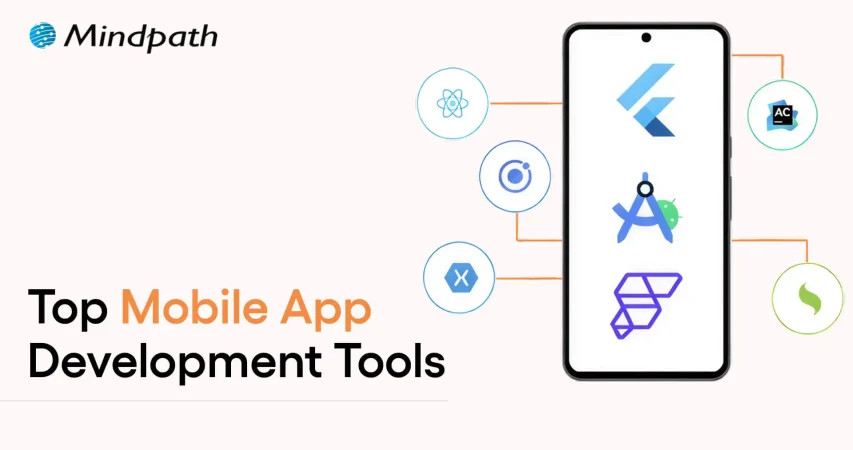
Selecting the appropriate mobile app development tools is essential for developing performant and conveniently accessible applications. The right development tool simplifies coding and design, enhances collaboration, and increases testing and deployment features. It helps developers bring their ideas to reality more effectively. Here is a list of some of the best mobile app development tools:

1. React Native

React Native is one of the best mobile application development frameworks for producing high-quality applications across platforms. It lets developers apply their existing expertise in JavaScript and React framework to develop native-like interactions for iOS, Android, and other platforms. The cross-platform features of React Native let developers build applications with a higher degree of speed, efficiency, and consistency while maintaining performance.

2. Ionic

Ionic is another notable cross-platform mobile app development tool that allows developers to create applications for iOS, Android, and the web, all using standard web technologies, such as HTML, CSS, and JavaScript. It offers a vast set of UI components that have been pre-designed to help you build engaging and visually enhancing applications. It allows developers to enhance their engagement in the applications while maintaining a consistent level of speed and efficiency for multi-platform development.

3. Xamarin

Xamarin is a powerful mobile app development software that provides developers the ability to build Android, iOS, and Windows apps using a single C# codebase. It integrates nicely with Microsoft Visual Studio, allowing developers to build apps more quickly and efficiently. Xamarin allows the development of high-performance apps that will feel and appear native-like while multiplexing and simplifying maintenance.

4. Flutter

Flutter is a widely used development framework by Google that enables developers to build native applications for iOS, Android, the web, and even desktop, all from a single codebase. Thanks to its large offering of fully customizable widgets, developing visually attractive, highly responsive applications is easy. Its cross-platform capability allows teams to develop applications rapidly while continuing to provide a level of consistency across devices.

5. Xcode

Xcode is a full-fledged development environment focused on developing applications on Apple devices (iOS, macOS, iPadOS, watchOS, tvOS). It is an integrated development environment (IDE) that has a structured interface, designed to create, debug, and manage a significant project effectively. Additionally, it provides support for a number of languages, enabling developers to produce the high quality of Apple’s native applications.

Also Read: Application Security Best Practices 

6. Swift

Swift is regarded as one of the top tools for mobile application development, specifically for creating apps on iOS, macOS, and watchOS. Its speed, security, and user-friendliness enable developers to build high-performance native applications easily and swiftly. Modern syntax and capabilities make Swift the preferred programming language for application development work on Apple.

7. Kotlin Multiplatform

Kotlin Multiplatform is considered one of the best tools in mobile app development because it allows developers to share code across platforms but still maintain native performance. That is, it allows you to build apps for Android, iOS, and more using a single codebase and reusing your business logic, while still using the native user interface libraries. With support from Google and a growing community, Kotlin Multiplatform is an excellent option for cross-platform mobile app development.

8. Firebase

Firebase is one of the top mobile application development tools. It supplies developers with a complete backend platform for constructing mobile applications and continually enhancing, updating, or developing for future use. It also provides high-level services such as, real-time databases, authentication, analytics, and cloud messaging to make managing a mobile app much easier. Firebase allows developers to solely focus on the front end of the mobile app. Developers use Firebase when they want a fully functioning backend infrastructure that allows for the mobile app to run smoothly.

9. Apache Cordova

Apache Cordova is a mobile app development tool that is popular among developers because it provides the framework to create cross-platform applications using standard web technologies (HTML, CSS, and JavaScript). It makes it easy to develop applications for an entire app by interfacing with native device features through a variety of plugins. Cordova supports faster development and an easy maintenance process while delivering applications that run effectively and efficiently across multiple platforms.

10. Titanium SDK

Titanium SDK is a widely used mobile application development tool framework that affords developers the ability to create native applications for iOS and Android using a single codebase in JavaScript. It also provides access to native device features and enables teams to test simultaneously across platforms. Titanium SDK helps teams iterate faster at development without sacrificing performance or consistency of mobile applications.

Curious how mobile apps can leverage AI to transform your business and stay ahead in 2025? Explore our blog on Mobile App Development Trends to discover how these innovations can enhance user experiences.

Ready to Choose the Right Mobile App Development Tool?

Selecting the right mobile app development tools can make a significant difference in creating high-quality, efficient, and engaging applications. The tools highlighted in this blog help streamline coding, design, testing, and deployment, enabling developers to deliver reliable and innovative apps faster. Choosing the right framework ensures better performance, consistency, and a smoother development process.

At Mindpath, we offer professional mobile app development services that help businesses turn their ideas into fully functional applications. Their team uses modern tools and frameworks to deliver scalable, secure, and high-performing apps for iOS, Android, and cross-platform projects. Mindpath focuses on quality, efficiency, and user experience, ensuring that your app stands out in today’s competitive market.


Related Post

Discover the ultimate guide to hiring Node.js developers in London. Learn about the skills, benefits, and cost factors involved in finding the right talent for your project.

Related Post

web development vs software development

You are a business owner preparing your digital strategy and have difficulty finding the ideal option for software and web development. The web development vs software development comparison might be difficult to understand for a layman without technical expertise. One of the common misconceptions about the two terms is that they both mean the same thing.

Business owners must recognize the differences between software development and web development to pick the ideal approach for their digital strategy. Web development is all about establishing the online presence of a business. On the other hand, software development deals with creating customized software solutions for different needs. A deep dive into the comparison between web development and software development can help you understand which one is right for you.

Looking for the right software development partner to bring your ideas to life? Mindpath’s software development services offer end-to-end solutions tailored to your business goals, from strategy and design to development and deployment.

Fundamental Difference between Web and Software Development

The emerging requirements of the digital landscape have had businesses thinking about the best ways to reach their target audience. As the software development vs web development debate becomes a focal point of discussion, it is important to understand how they are different from each other. With an overview of the definition of the two terms, you can find a starting point to compare them.

What is Web Development?

You will get no prizes for guessing that web development is the process of creating websites. Web development involves creating everything from the server logic and databases to the visual elements that make a website attractive. Without websites, businesses will struggle to have an online presence and showcase their brand. 

You can identify the difference between a software developer and a web developer from the primary components involved in website development. Web developers have to address the requirements of frontend and backend development alongside a content management system for websites. 

Frontend development focuses on the part of a website that users see, including the layout, design, text, images, and buttons. The significance of backend development is evident from the fact that it involves the creation of the server logic and databases. Another crucial component in web development projects points to content management systems or CMS platforms. The intuitive interface of CMS tools offers easy solutions for managing and updating the content of a website.  

What is Software Development?

The next prominent approach for your digital strategy is software development. As the name implies, software development focuses on the complete development lifecycle from ideation to the deployment and maintenance of a project. You can notice the difference between a web developer and a software developer from the fact that software developers have more responsibilities. The scope of tasks in software development is bigger as it requires the creation of custom solutions to deal with specific business needs.

Software developers can create mobile apps, complex software systems for large organizations, or custom internal software. The solutions created by software developers serve distinct goals for businesses. For instance, mobile apps serve as effective tools to reach the target audience of a business and enhance customer engagement. On the other hand, custom internal software solutions can help businesses manage different business functions with ease.

Must Read: Types of Software Development

Diving Deeper into the Web Development vs Software Development Debate

The overview of web development and software development reveals the fundamental difference between the two terms. The following sections will provide a more detailed comparison between web development and software development on the basis of different factors.

1. Objectives of the Process

One of the foremost pointers for differentiating web development from software development is the objective of the process. What do the two development approaches help you achieve? The answer will help you take the best pick from a web developer vs software developer comparison. Web development focuses primarily on establishing an online presence for your organization and showcasing your brand. It is one of the most common approaches to drive customer engagement through intuitive web apps or websites.

Software development process, on the other hand, focuses on addressing specific business problems with custom solutions. Businesses can rely on software development to create software for managing different business functions or custom internal software that can be deployed on various platforms. The primary objectives of software development revolve around enhancing productivity and streamlining operations.    

2. Complexity of the Process

The next point in the comparison between web development and software development focuses on their complexity. In the case of web development, you can rely on templates or content management systems for creating web apps. 

Software development requires the creation of fully customized solutions according to the requirements of the business. Developers can create software solutions from scratch by using the client’s requirements as their reference. 

3. Maintenance Requirements

Another prominent aspect in the software developer vs web developer comparison is their responsibility for maintenance. Web developers can address the maintenance requirements through continuous security updates and frequent modifications to content. In addition, web developers also take care of the maintenance of web apps by updating the design according to the latest trends.

The responsibilities of maintenance in software development focus on introducing new features and bug fixes. Apart from addressing the errors in the functionalities of software solutions, a software developer also takes care of performance improvements.

Want technology that truly supports your business rather than slowing it down? Discover the key custom software development benefits that help companies optimize operations and innovate faster.

4. Technology Stack

The review of differences between software and web development will also draw attention towards the technology stack required for the two approaches. It is one of the biggest factors in a web development vs software development comparison, and also determines the complexity. The technology stack for website development involves frontend and backend frameworks with CMS platforms. The notable frontend frameworks include HTML, JavaScript, React, Angular, and CSS, while backend frameworks include Python, Ruby, and PHP. Some of the popular CMS platforms for web development include Joomla, WordPress, and Drupal.

For software development, the tech stack includes programming languages, cloud platforms, and databases. The most commonly used languages in software development are Java, Python, Swift, and Ruby. Software developers can use SQL or NoSQL database management systems and one of the big cloud platforms, such as AWS, Google Cloud, or Microsoft Azure.

5. Cost of Development

The most crucial pointer in the comparison between web development and software development is the development cost. You can determine whether you need a web developer or a software developer by identifying the type of project. At the same time, you must also take your budget into account before making the final choice. Web development requires a lower initial cost, primarily due to the use of templates. You can also choose a custom design for web development, which may increase the development cost. However, you will have to invest more in continuous updates of the website or web app to adapt to user requirements.

Software development costs are generally higher than those of web development projects due to many reasons. Building a custom software solution requires a lot of development time, which will lead to the consumption of more resources. On top of it, software development projects are more complex than web development projects, thereby increasing the costs. Most important of all, the customization of software solutions according to business requirements will also add more costs to the project.

Ever wondered why some websites just feel effortless while others fall flat? Discover the hidden benefits of custom website development services that turn a simple site into a powerful, user-friendly business tool.

Here is an overview of the web development vs software development comparison in a table.

Criteria Web Development Software Development
Objectives of the Process Web development focuses on building your online presence and showcasing your brand. Software development aims to resolve specific business issues and improve productivity.
Complexity Web development is a simple process with the use of templates and CMS tools. Software development is extremely complex and requires creating custom solutions from scratch.
Maintenance Requirements Maintenance tasks in web development involve ongoing updates for security, content modifications, and changes in design. Maintenance tasks in software development focus on introducing new features, performance improvements, and fixing bugs.
Technology Stack The technology stack for web development includes frontend and backend development frameworks alongside CMS platforms. The technology stack for software development includes programming languages, cloud platforms, and database management systems.
Cost of Development The initial cost of web development is lower than software development. The cost of software development is higher due to the complexity and customization needs.

Final Thoughts

The differences between software development and web development showcase that each approach has its distinctive advantages. You might face the web developer vs software engineer dilemma while thinking about resource requirements for your next project. The final choice will ultimately depend on the requirements and scope of your project. For instance, a new e-commerce business should look for web development to establish its online presence. On the other hand, a healthcare organization will need a software developer to create an ERP system.

At Mindpath, we have been delivering trust and efficiency in our expert, world-class software development services for every client. Our focus on understanding the client’s vision and requirements empowers us to deliver competent solutions that stand out in a crowded digital landscape. We have a team of dedicated experts in web development and software development, thereby offering you a one-stop solution. Pick the best talent for your next development project from our team and gain the momentum you need in this digital world now.

affordable IT staffing

Enterprise technology leaders are under constant pressure to leverage innovations while managing operational expenses effectively. Moreover, software development, digital product engineering or AI integration needs skilled expertise. So, hiring full-time experts can sometimes go out of your budget. In such a situation, staff augmentation has emerged as a strategic workforce model. It enables your company to minimize development costs without compromising on quality.

As per the recent trends by Verified Market Research, IT staff augmentation is ready to touch USD 857.2 billion by 2032. Unlike traditional hiring models, staff augmentation allows your company to extend its in-house teams on demand. Let us further discuss how cost-effective IT staff augmentation can boost your operations.

Looking for reliable staff augmentation solutions to fill critical skill gaps in your team? At Mindpath, we offer customized staff augmentation services that connect you with highly skilled professionals for seamless project execution.

What is Cost-Effective IT Staff Augmentation?

IT staff augmentation is generally a hiring model where your business will temporarily add skilled technology professionals to your existing teams. Further, such professionals work alongside your internal staff to support your ongoing projects while filling the skill gaps. Most importantly, it is capable of easily accelerating the development timelines.

  • Cost-effective IT staff augmentation allows you to retain full control over the project management while benefiting from the external expertise.
  • This approach is viable for companies that demand specialized technical skills for short-term projects.
  • It is also essential for people who want to scale their development teams quickly.
  • So, if you are looking forward to reducing IT hiring costs, this staff augmentation can be flexible without any long-term commitments.

As per the recent reports, around 26% of cybersecurity jobs go unfilled in the U.S because of the talent gap. Further, tech skills only last for 2.5 years, which requires constant up-skilling.

Curious about how to seamlessly integrate external experts into your existing workflows without delays? Discover how effective augmentation staff onboarding can streamline collaboration and boost productivity from day one.

Why Affordable IT Staffing Can Be Your Smartest Choice in 2026?

It takes around 35 days to hire IT professionals in the US. So, here, affordable IT staffing can be a great choice for you in the current age. Let us go through the reasons why IT staffing is convenient for your business.

1. It Prevents Exceptional Budgets

Augmentation can easily reduce the recruitment charges, employee overheads and training expenses. For example, outsourcing Indian staff allows organizations in the US to optimize their staff augmentation pricing without compromising on quality aspects.

2. It Offers Faster Access to Talent

Global organizations can easily select specialists from a huge pool of worldwide talent. So, instead of waiting for months, you can achieve the talent that your company desires.

3. Flexibility

Businesses can easily scale their team up or down as per the needs of their projects. So, you don’t need to deal with long-term contracts and inefficient headcount.

4. Bridge Your Skills Gaps

To seek digital transformation, you require niche expertise in cybersecurity, AI or cloud technologies. So, IT staff augmentation ensures you can hire the needed experts quickly. This approach is also viable for short-term project requirements.

5. Achieve Collaborative Terms

With remote work setting the trends, cost-effective IT staff augmentation can enable your company to work seamlessly with professionals from all around the globe.

Planning to scale your tech team quickly while maintaining efficiency in a remote-first environment? Check out how IT staff augmentation helps businesses access global talent while ensuring seamless collaboration.

Why Traditional IT Hiring is Expensive?

To understand the true values of staff augmentation, it is necessary to look at the expensive side of traditional hiring, as mentioned below.

1. Recruitment Expenses

You need to go through a series of steps, like job postings, recruiting agencies and internal HR resources. These aspects can increase your overall hiring charges.

2. Time-Taking Hiring Process

Finding the right candidate can take a long time. So, this aspect can delay your projects and overall productivity.

3. Training Approaches

Your new employees might require thorough training sessions and onboarding guidance to understand your workplace culture and functionality.

4. Essential Add-Ons

A company needs to offer a series of benefits to its employees for a long-term partnership. All these get added to the overall cost.

5. Risk of Hiring Wrong Candidates

Hiring the wrong candidate can result in project delays and additional recruitment expenses.

For businesses that handle multiple technology initiatives, these costs can quickly escalate their budget. So, you can easily reduce IT hiring costs through staff augmentation.

Wondering whether there’s a more flexible and cost-efficient alternative to traditional hiring models? Learn the key differences in staff augmentation vs managed services to make a more informed business decision.

A Quick Comparison between IT Staff Augmentation and Traditional Hiring

Here, you can go through the individual approaches of IT staff augmentation and traditional hiring through a table.

Major Elements Traditional Hiring Affordable IT Staffing
Time to Hire Comparatively slow and takes between 3 and 6 months. You can access quick onboarding within one to two weeks.
Cost Remains High Comparatively low
Flexibility Fixed employees are hard to scale. Offers on-demand scaling.
Suitable For Long-Term Projects Dynamic and for specialized roles.

How to Successfully Implement Staff Augmentation?

To upgrade your budget effectiveness and IT workforce optimization, your team requires a proper integration approach as given below.

1. Define Clear Skill Requirements

Always make sure to understand the precise technical expertise required by your company. Whether you need cloud engineers or developers, always stay strong with your decisions.

2. Prefer a Strategic Expert

Selecting the right partner ensures your access to professionals with proven industry-grade knowledge. Experts will always streamline the staff augmentation strategies with effective transformation goals. This can help the augmented teams to integrate effortlessly with the existing ore team.

Looking to hire the right talent without long recruitment cycles or overhead costs? Discover how staff augmentation hiring can help you quickly onboard skilled professionals aligned with your project goals.

Major Challenges that Most Businesses Face in IT Staff Augmentation

While IT staff augmentation leverages a series of benefits, you should also understand the challenges related to this hiring model. Further, being aware of these factors can help your business manage the augmented teams more efficiently while maximizing the value of your investments.

1. Getting Along with the Internal Team

One of the biggest risks is ensuring the augmented experts get along with your team members effectively. Differences in workflows and time zones might give rise to coordination gaps. So, it is essential to handle them efficiently.

2. Picking the Right Talent Partner

The success of cost-effective IT staff augmentation mainly depends on the quality of professionals being hired. So, working with unreliable teams can lead to skill mismatches while delaying your productivity & project delivery.

3. Maintaining Consistent Project Communication

When your team includes both in-house teams and external professionals, maintaining consistent communication can be a bit tough for you. Moreover, without proper coordination, you might slow down the progress, and it can affect your project quality.

4. Managing Security Elements

When your external professionals access the internal systems or sensitive data, your organization must include essential security measures. Additionally, you should implement strict access controls.

Despite all these challenges, businesses that adopt the right management practices can still leverage the essentiality of affordable IT staffing to build scalable teams.

Wondering how businesses are evolving their workforce strategies while maintaining security and efficiency? Discover the latest IT staff augmentation trends that are shaping how organizations scale teams and manage distributed talent securely.

Conclusion

Your enterprise must innovate continuously in this vast technology landscape. Traditional hiring models somehow limit your agility while increasing the fixed expenses. So, cost-effective staff augmentation can work as an alternative approach by providing flexible access to specialized talent.

Organizations that want to boost their technological relevance in a cost-efficient way, such as providers like Mindpath, can make a difference. Clients from all around the world have believed in our expertise, and this has led us to become an industry expert. So, schedule an appointment with us and let our professionals handle your requirements.

Discover how IT staff augmentation can optimize costs, enhance flexibility, and access specialized talent to boost your organization’s success.
LLaMA LLM

Are you hearing a lot about the LLaMA LLM lately and wondering what it is and why it’s special? If so, you’re not alone. Buzz regarding this powerful open large language model (LLM) continues to build and spread from technology forums to developer circles and the larger AI community. It’s fundamentally reshaping how many people think about AI tools and putting the spotlight on open-source innovation that has never been seen before.

The emergence of open-source LLMs fundamentally reshapes how AI is developed, shared, and scaled. Until now, the primary focus in the industry has been on the deployment and governance of closed prompts within a closed model. Large language models with open-source options, like LLaMA, are a welcome addition that now allows access for researchers, developers, and even startups, with fewer restrictions to experiment, customize, and build. It will not only provide greater access to advanced AI but also create a larger momentum for innovation across many sectors. In this blog, we’ll explore what sets LLaMA apart and how it’s driving this change. 

Looking to harness the power of LLMs and AI for your business but don’t know where to start? Mindpath offers AI Development Services to help you build, customize, and deploy intelligent solutions that drive real results.

Before diving further, let us have an idea about open LLMs: 

Understanding Open LLMs

Open-source large language models (LLMs) are incredible power AI models that can be deployed, changed, and shared for free by anyone. Where closed or paid models like OpenAI’s GPT are restricted to only those who pay to access the models, open-source LLMs are built on being open and transparent, meaning that developers and researchers can inspect, make improvements and train on their own data. These models are often contributed as a collaborative effort by communities or organizations who believe in promoting open innovation making it possible for others to learn and create new things with AI. 

There are many benefits to using open-source LLMs. They can save researchers a lot of money, because there’s no licensing fee and they can be adapted in very precise ways to what the researcher wants. Developers can also rely on strong open-source communities from which they can freely draw robust sets of tools, tutorials, and updates. This community effort often supports not only researchers’ progress but also helps more people get involved in shaping the future of these technologies. 

Curious about the different kinds of AI and how they impact businesses? Learn about the types of AI to understand where LLMs like LLaMA fit in the broader artificial intelligence landscape.

Among these Open-source LLMs, the most popular one is LLaMA LLM. Let’s dive into that! 

large-language-models-market

What is LLaMA LLM?

LLaMA is a large language model developed by Meta that can understand and generate human-like text. It learns from a huge amount of data and uses a special design, or architecture, to figure out patterns in language. This helps it give smart and relevant answers, whether it’s writing something, translating, or answering questions. 

What makes LLaMA stand out is its strong performance and the way it is available for the tech community. Many people ask, is LLaMA open source? While it’s not fully open like some models, Meta has made it available to researchers and developers, making it easier for them to explore, test, and build new AI tools using LLaMA. 

Must Read: Low-Rank Adaption (LoRA)

Why is LLaMa LLM So Popular?

LLaMA AI has quickly gained popularity in the AI community, and it’s easy to see why. Its performance, accessibility, and flexibility make it a strong choice for developers, researchers, and businesses alike. Here are some key reasons behind its rising popularity: 

1. Scalability and Efficiency

LLaMA is scalable, which means it can run on different kinds of hardware — from powerful GPUs to everyday computers. This makes it easier for researchers and developers who may not have access to expensive systems. By making advanced AI tools more reachable, LLaMA helps more people experiment and innovate. That’s why many developers now use LLaMA in app development without needing a huge setup or high costs. 

2. Adaptability

LLaMA can be trained for specific uses, which makes it really flexible. Whether it’s a chatbot for customer service or a tool that creates content, it’s possible to fine-tune LLaMA to fit different industries and goals. This adaptability means it can work well in many real-world situations. It’s not just a one-size-fits-all model, rather it adjusts to what you need it to do. 

3. State-of-the-Art Performance

LLaMA has shown top performance in different language tasks like translation, classification, and more. These results come from how well the model is designed and trained. Meta’s AI team used smart methods and architecture to make sure LLaMA performs at a high level. Because of this, it stands out as one of the most powerful tools in the language model space today. 

4. Open-Source Initiative

Meta has taken steps to make LLaMA more open and available to the research community. By releasing the models and sharing detailed documentation, they’ve made it easier for others to use, study, and build on LLaMA. As a leading example of an open source LLM, LLaMA is helping more people explore and contribute to the future of AI in a truly collaborative way.  

Want to customize large language models to fit your specific business needs? Learn how OpenAI’s Fine-Tuning API enables developers to fine-tune AI models for more accurate and specialized applications.

Real–World Applications of LLaMA

LlaMA LLM is being used in many real-life projects today. Its open nature makes it easier for developers to build and improve solutions, and it’s often seen as a strong example of how open models can drive real innovation. Here are a few practical ways people are using LLaMA today:

1. Faster Content Creation for Marketing Teams

A digital marketing agency can use LLaMA to write content like blog posts, social media captions, or newsletters. This helps them save time and focus more on creative ideas and strategies. Since LLaMA can quickly generate useful content, the team can keep up with deadlines without stress. It’s a great LLaMA open source LLM example that shows how AI can help marketing teams work faster and smarter. 

2. Smarter Chatbots for Customer Support

A business can use a chatbot powered by LLaMA to answer customer questions. The bot gives fast, helpful replies to common queries, so human support agents can handle more complex problems. Over time, the chatbot can learn from interactions and get even better. This helps improve customer satisfaction. You can even build one yourself by following a simple LLaMA open source LLM tutorial, which makes it easier for teams to create smart support tools. 

3. Breaking Language Barriers with AI

An international company can use LLaMA to translate emails, documents, or messages into different languages. This helps their teams communicate better across regions. LLaMA can provide quick and accurate translations, making global teamwork easier. With an open-source model like this, it’s possible to build tools that support real-time communication without high costs or complex setups. 

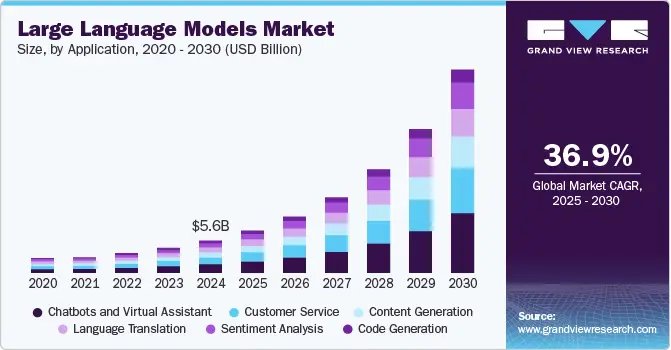
4. Understanding Customers Through Sentiment Analysis

A brand tracking tool can use LLaMA to understand how customers feel by reading reviews or social media posts. The tool can spot trends, positive feedback, or complaints. This helps companies make better decisions to improve their products or reputation. Because LLaMA is flexible and open, teams can customize it to track the right kind of feedback for their needs. 

Want to see AI in action, improving business outcomes? Explore AI chatbot examples to understand how LLM-powered chatbots are driving real-world results.

Curious about Using LLaMA for Your Business?

LLaMA LLM is changing the way people use and develop AI by making powerful language models more open and accessible. Its flexibility, strong performance, and the support of an open community allow researchers, developers, and businesses to build smarter, faster, and more customized AI solutions. As an open-source LLM example, LLaMA is helping drive innovation across many industries, breaking barriers and making advanced AI tools available to more people than ever before. 

If you want to harness the power of LLaMA in your own projects, Mindpath AI Development services can help. We specialize in building tailored AI tools using open-source models like LLaMA to meet your unique business needs. Whether you want to improve customer support, create content, or analyze data smarter, our team can guide you through every step to bring your AI vision to life efficiently and effectively. 

Frequently Asked Questions

1. How is LLaMA LLM different from other large language models available today?

LLaMA LLM stands out because of its balance between performance and accessibility. Unlike many closed models, it allows developers to explore and customize it more freely. This makes it easier to build tailored solutions while still benefiting from strong language understanding capabilities.

2. Can LLaMA LLM be used by small businesses or startups?

Yes, LLaMA LLM is suitable for startups and small businesses due to its flexibility and lower cost of access. It allows teams to build AI-powered tools without heavy investment, making advanced language technology more practical for businesses with limited resources.

3. What kind of skills are needed to work with open LLMs like LLaMA?

Working with open LLMs usually requires basic knowledge of programming, data handling, and machine learning concepts. Familiarity with tools like Python and AI frameworks can help. With strong community support, even beginners can gradually learn and build useful applications.

4. Are there any limitations when using open-source LLMs?

Open-source LLMs offer flexibility, but they may require more setup, maintenance, and technical expertise compared to managed solutions. Performance tuning, data handling, and infrastructure management are important factors to consider when planning real-world implementation.

5. How can businesses start experimenting with LLaMA without major risks?

Businesses can begin with small pilot projects to test LLaMA in real use cases like chatbots or content generation. This approach helps understand performance and value without large investment, allowing teams to scale gradually once they see positive results.