MLOps Essentials: Strategies for Automating Model Deployment

Join our Newsletter!

Featured Posts

Support Is One Click Away

Home

MLOps Essentials: Strategies for Automating Model Deployment

MLOps essentials

MLOps Essentials: Strategies for Automating Model Deployment

The global artificial intelligence market size is expected to reach USD 2480.05 billion by 2034. Yet many organisations fail to translate such huge investments in favour of their business values. Many generative AI projects are going to lose their efficiency recently due to challenges like poor data quality.

Further, inadequate risk controls have been increasing the costs. So, the major issue lies in filling the gap between predictive models and implementing them into your business workflows. This is where the relevance of MLOps essentials comes into the picture. MLOps have the capacity to align the life cycle of machine learning while incorporating continuous monitoring.

Looking to integrate AI into your existing systems without disrupting operations? At Mindpath, we offer AI development services that ensure smooth implementation and measurable results.

What is MLOps?

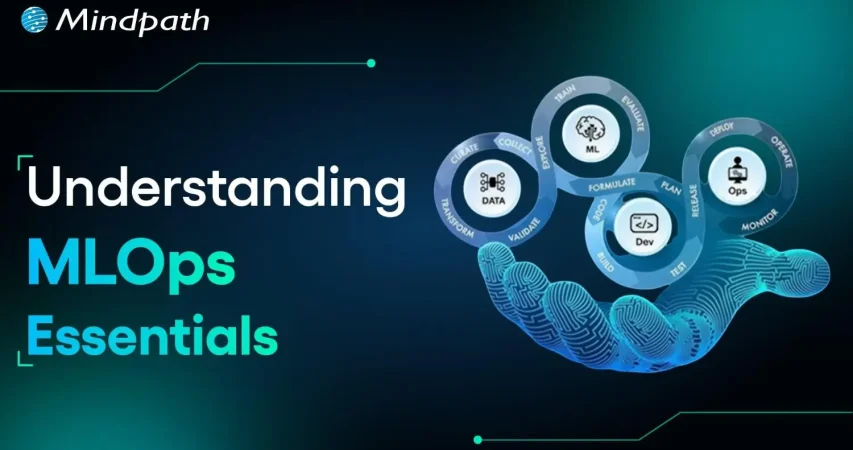
If we simply define what is MLOps, then it generally stands for Machine Learning Operations. Moreover, it’s a set of technologies and practices that bring software engineering principles into the world of machine learning. Additionally, it streamlines the way you test, deploy and maintain the models for clarity and efficient results.

Unlike traditional ML development, where models were often operated in a single system, MLOps treats the complete lifecycle of ML as a software product lifecycle. This means you can be assured of better collaboration, reproducibility, scalability and automation.

  • MLOps can help your team take ML models from experimentation to production level safely and quickly.
  • It manages the models reliably over time and collaborates across engineering, data science and operations teams.

How MLOps Essentials Overpowers the Traditional DevOps while Solving Leading ML Challenges?

MLOps and DevOps take complete responsibility for automating processes while encouraging collaboration between teams. But MLOps is capable of tackling unique challenges of machine learning that DevOps can’t necessarily address.

  • In traditional software systems, once you deploy your app, it is mandatory to work within a stable environment with minimal challenges.
  • However, ML models heavily depend on data and need continuous updates and validation when new data enters.
  • DevOps prioritises managing the software code and the infrastructure. On the other hand, MLOps essentials include handling the lifecycle of models that can degrade over time.
  • This involves addressing many major issues like data drift, model degradation, and model performance. All of these risks need periodic retraining and real-time assessment.

Planning AI initiatives but unsure where to start? Explore the complete AI roadmap guide to understand how to structure, prioritize, and scale your AI initiatives effectively.

What are Some Core Components of an MLOps Architecture?

The MLOps architecture can differ as per your organisational requirements. Some of the major components are here in this section for a complete reference.

1. Data Layer

This involves storage, data ingestion, preprocessing and versioning. As your models completely depend on data, tracking and handling their quality is necessary.

2. Development Environment

This is where the data scientists create and train models using their notebooks or integrated development environments. So, your experiments must be reproducible. This means the data, code and the environment settings are versioned.

3. Model Registry

This works as the main repository where the trained models are stored along with the metadata like deployment status. This feature can ensure you of data governance.

4. Monitoring

Once you complete the deployment process, your models must offer you accurate predictions. Moreover, precise and continuous assessment can offer you better performance while predicting potential defects. So, your model can also be relevant in the real-world usage.

5. Data Regulations

The regulatory efforts have been broadening due to major AI usage. So, your organization must prioritize relevant rules. Following the relevant practices can help your model serve trustworthiness.

Facing challenges in optimizing large models for scalable deployment? Learn how Low-Rank Adaptation streamlines fine-tuning with minimal resource overhead. 

List of Top MLOps Tools You Should Adopt in 2026

Let us further highlight some of the best MLOps tools for your model development and monitoring. All these tools have the ability to simplify and streamline the ecosystem of your machine learning.

1. LangChain

It is a versatile and effective framework developers use to initiate apps powered by language models. It leverages several components that enable you to build, deploy and monitor context-rich applications. The following framework consists of some major components like libraries, templates, LangServe and LangSmith.

2. Qdrant

This is one of the best MLOps tools in 2026 that is taking the market by storm. It is an open-source search engine that offers a production-ready service with a viable API. Moreover, it allows you to store, manage and search the vector embeddings. As it is written by Rust, it remains extremely quick and efficient even you work with it under high load.

3. MLFlow

MLFlow is an open-source tool that enables you to handle the core parts of the ML lifecycle. Developers majorly use it for experiment tracking. However, you can also utilise it for deployment, reproducibility, and model registry.

4. Prefect

When talking about MLOps essentials, this tool leads the competitive edge. This is a modern data stack, people use for coordinating and monitoring the workflows across multiple applications. It is a light-weight and open-source tool created for an end-to-end MLOps pipeline.

Must Read: Low Code Developement 

What are Some Benefits of MLOps Service?

The MLOps market size is going to extend to USD 25.93 billion by 2034. So, the adoption of MLOps has been increasing efficiently while fueling model deployment and automating monitoring. Businesses now understand that adopting MLOps can bring them a series of benefits, as given below.

1. Better ROI

As per the reports from Deloitte, organisations using MLOps technology claim an average ROI of 28% with better returns. This remains consistent with the growing demand of the market trends, where AI and ML are going to drive business value.

2. Increases Efficiency

Around 94% of companies initiate time-consuming and repetitive tasks. So, MLOps service can automate such processes while boosting your job satisfaction level. Further, this allows your team to prioritise strategic activities while improving your operational efficiency.

3. Faster Delivery

MLOps essentials allow you to lessen the deployment times by automating your CI/CD pipelines. This enables your business to adapt quickly as per the market changes and use AI-driven insights without any delays.

4. Serves Cost-Effective Results

Automating the manual tasks through MLOps architecture, you can minimise the chances of human error and high operational charges. Additionally, it allows your business to simplify the workflows while allocating the resources in a better way.

Want to make your model deployment process more environmentally responsible? Explore how energy-efficient computing drives sustainable innovation.

How to Implement MLOps Seamlessly?

You need to value a structured approach when it comes to MLOps implementation. Here, you can go through some major steps that serve efficiency.

1. Get Your Data Prepared.

Before anything else, you need to prioritise the quality of your data. Start by gathering, cleaning and organising data to make them ready for action.

2. Create Your ML Model

Now that you have the best shape for your data, it’s time for you to leverage a model. So, prefer your features, algorithms and fine-tune the hyperparameters to gather the best results.

3. Deploy Your Model

Deployment is all about leveraging your model in the real world for a service or business application.

4. Assess the Performance

ML models might differ in their performance when the conditions change. So, you need to continuously monitor its accuracy.

5. Retrain for the best Results

Retraining your model time to time can help you get accurate and relevant data that can fulfil your current customers ‘requirements.

Curious about which AI models can accelerate your machine learning workflows? Learn more about the top AI models and how they fit into effective MLOps practices.

Conclusion

Whether you are looking to automate the process or to enhance your model’s governance, MLOps essentials remain the major aspect to stay competitive in the current scenario. Further, MLOps can improve your time to market. However, you need to prefer the right approach and mindset to leverage the best of MLOps.

If you are looking for expert support that can optimise your MLOps strategy and implementation, Mindpath can be your perfect pick. This company can help your machine learning management turn into production-rich success.

FAQs

1. What is MLOps in simple terms?

MLOps is the convenient practice of applying software engineering principles to your machine learning workflows.

2. How can an MLOps pipeline uplift my model deployment?

An MLOps pipeline can streamline the steps of data validation, testing and deployment. This approach reduces manual errors while speeding up your delivery.

3. What are some common MLOps tools in the recent scenario?

Some of the efficient MLOps tools include Qdrant, LangChain and MLFlow. These tools are capable of making your models work precisely.

4. Why you should monitor consistently in MLOps?

Monitoring ensures your model is continuously performing as per the real-world data. It detects issues like degraded accuracy and data quality problems.

5. Is MLOps only reliable for large-scale organisations?

While large businesses benefit effectively, small and medium businesses can also adopt MLOps practices to upgrade their needs.
Related Post

Learn how to prevent cloud computing attacks with practical tips on security, API protection, and IAM to safeguard your business and data.

Related Post

Web development technologies

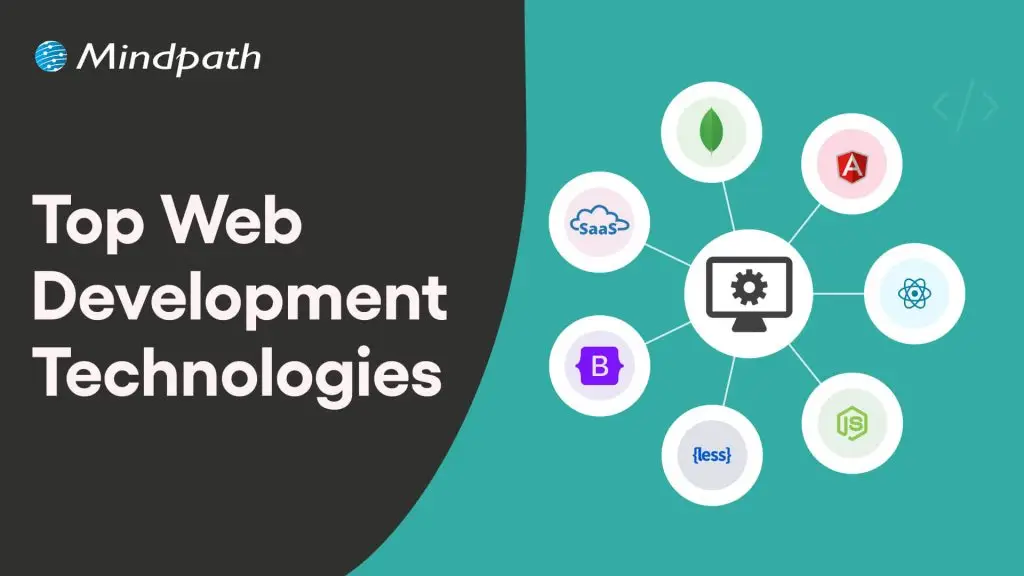
If you think that web development is all about building a website, you are wrong! Web development is more about creating a scalable, intelligent digital experience that can help businesses convert visitors into loyal customers. In 2026, new web development technologies are changing how web apps and websites are developed and scaled, unlocking more engagement, efficiency, and growth potential. 

Whether you are an enterprise or a startup, here are the top website development technologies that would play an important role in your business growth in 2026. 

Looking to unlock new possibilities by integrating the latest web development technologies into your business? Partnering with Mindpath Web development services will offer you professional expert guidance on how to implement these technologies for your business growth.

What are Web Technologies?

Before exploring the latest web development technologies, let’s understand what it means. Web technologies are the tools, protocols, languages, and frameworks used to create as well as maintain websites and web apps. They include everything like front-end and back-end technologies, Web APIs, full-stack technologies, performance optimization tools, and more. 

Leveraging the right set of web development tools and technologies is crucial to creating a fast, scalable, and secure website that can support business growth. 

Major Technological Trends to Consider in 2026

A number of overarching web development trends are significantly shaping the process of web development. These are: 

1. Technologies and web development practices that focus on efficiency and speed will be important.

2. Accessible, engaging, and intuitive interfaces are necessary to retain users and drive conversions.

3. Businesses are looking for solutions that can grow with them, easily accommodating expanding features and increasing traffic. 

4. Customizing experiences for users through machine learning and AI will become a necessity for businesses. 

5. Businesses would focus more on sustainable web development practices. 

With these key trends in mind, let’s explore the vital web development technologies that every business should consider in 2026. 

Need solutions tailored to your business requirements? Explore more about custom web application to see how personalized apps improve performance and engagement.

Key Web Development Technologies List

Staying updated with the latest web development technologies is crucial for crafting websites and web apps that are flexible, future-ready, and fast. Here is a list of pivotal technologies shaping the process of web development. 

1. Machine Learning and Artificial Intelligence

While creating the top web technologies list, it would be wrong to avoid machine learning and AI in web development. AI-powered tools are automating various web development processes, like coding and testing. Besides, these tools also help streamline content generation and boost user personalization. 

On the other hand, Machine Learning models and libraries such as Scikit-learn, TensorFlow.js, and PyTorch help make a website capable of real-time analytics and more adaptive. As a result, businesses can now make intelligent/informed decisions. 

2. Headless CMS Architecture

Headless separates the front-end from the back-end. This allows developers to utilize modern programming languages, tools, and frameworks to develop customized websites and apps that perform smoothly across different platforms. 

With the help of tools such as GraphQL and WordPress REST API, WordPress’s capabilities can be combined with advanced front-end technologies such as Next.js, Vue, and React. 

3. Progressive Web Apps

Progressive Web Apps or PWAs combine mobile and web experiences, enabling seamless performance, push notifications, and offline access to enhance user engagement as well as retention. PWAs can be installed from the browsers; users don’t need to use app stores for this. Furthermore, these apps utilize HTTPS or TLS for data exchange to keep data secure. 

4. Jamstack

Jamstack combines JavaScript, APIs, and Markup together, allowing developers to separate front-end and back-end. This web development architecture ensures quick load times, improved SEO, robust CDN distribution, and higher security. This can be used for content-heavy websites, service booking platforms, or landing pages. 

Also Read: Application Security Best Practices for Web and Mobile Apps

5. Edge Computing and Serverless Platforms

Serverless platforms such as Oracle Cloud Functions, AWS Lambda, and Microsoft Azure allow the creation and deployment of web solutions without managing infrastructure. While using these platforms, developers just need to focus on writing code, and the cloud service providers will handle tasks like server provisioning, maintenance, scaling, etc. 

Edge computing helps bring processing near to the sources, significantly reducing latency and cost while improving privacy, security, and other features for businesses. 

6. HTMX

It allows developers to create dynamic web interfaces utilizing HTML attributes, lowering the use of heavy JavaScript frameworks. HTMX simplifies the development process and makes web apps offer faster performance. It can be an excellent option while developing form-heavy web apps, admin dashboards, and internal CRMs. 

7. WebAssembly

WebAssembly, or Wasm, allows browsers to run high-performance code like Rust and C++ at high speed. This means heavy or complex computations, such as video editing, gaming, cryptography, and 3D rendering, can now be done on the web. It is an ideal option for interactive learning platforms and simulation tools. 

8. Motion UI

Using motion UI frameworks, it is possible to animate interfaces. Businesses can boost user engagement through smart navigation cues, dynamic transitions, polished visual effects, and more. In short, motion UI elevates the intuitiveness and appeal of your websites and web applications.  

Want to build faster and dynamic websites? Check out our ReactJS Web Development Guide to learn how ReactJS powers modern web apps.

Most Popular Web Development Frameworks For 2026

Here is a table of the most popular web development frameworks businesses must adopt for a successful web development process. 

Front-end Technologies (List)

Framework Key Features Ideal For
Tailwind CSS  Rapid prototyping and utility-first Landing page and modern UI
React Virtual DOM, and reusable components Interactive dashboards, SPAs
Vue.js Flexibility, reactive components, and lightweight Small to medium-sized web applications
Next.js React-based, SSR, API integration, and routing Scalable and SEO-friendly platforms
Svelte Compact code, fast, and no virtual DOM Lightweight web applications
Framer Motion, and Animation Dynamic and engaging UI
Vite A huge plugin system, TypeScript support, and CSS processing Small to large web applications

Back-end Technologies (List)

Frameworks Key Features Ideal For
Laravel MVC, PHP, and elegant syntax  APIs, CMS, and e-Commerce
Node.js JS on server, and non-blocking I/O Real-time web apps and APIs
Express.js  Minimalist Node.js, performant, and clean Microservices and APIs
Supabase Open-source, REST API, branching, and custom domain Data-driven and scalable web applications
Ruby on Rails Convention over Configuration, active record, dynamic data magic, and scaffolding Web platforms and MVPs
Go Scalable, fast, and concurrency APIs and microservices
Spring Boot Java-based, auto-configuration, command line interface, and externalized configuration Large-scale and enterprise-grade web apps

Want to boost your website’s speed and scalability? Learn about web performance with Node.js to see how it powers web applications.

Why Businesses Should Embrace New Web Development Technologies?

Modern web development plays a vital role in shaping the way businesses interact with their customers. It can influence market share, conversion rates, operational efficiency, and engagement. However, some significant advantages of using new technologies in web development are: 

1. PWAs, motion design, and voice UIs can make the digital experience for users more memorable. 

2. APIs and the use of low-code platforms mean businesses can launch new products and features quicker than ever. 

3. Fast-loading web architectures like Jamstack or AMP and semantic code lead to improved visibility, increasing the reach.

4. Blockchain and serverless platforms make it easier to handle global users as well as business compliance. 

To witness these benefits, businesses should have a solid plan regarding the adoption of these web development technologies. Check out the section below to know more. 

Planning a web app as part of your technology strategy? Check out our web app development roadmap blog to understand each stage for building scalable and efficient applications.

How to Adopt These New Web Development Technologies?

If you are considering using these new web development technologies, then here are some tips to keep in mind to make the process hassle-free.

1. Ensure that the technology you want to use can support your business growth.

2. Choose one that offers enough documentation, resources as well as community support. 

3. Check whether the new technology will work well with your existing tools. 

4. Verify whether it meets data protection and compliance needs. 

5. Ensure that the new tool can help boost speed, UX, UI, and accessibility. 

6. While choosing between proprietary and open-source technologies, consider the cost factor and capabilities of both technologies. 

Want your web applications to be user-friendly and engaging? Read our UI/UX Design Trends blog to learn design practices that enhance usability and retention.

Creating a Course for Digital Dominance

Well, it is quite clear that businesses in 2026 must consider web development not just as a functional need, but as a crucial element for growth and innovation. With the help of the web development technologies list outlined above, businesses will be able to position themselves to engage with their customers effectively, innovate, and streamline their processes while supporting substantial growth. 

This is where Mindpath comes in. With a team of experienced and certified developers and a successful track record in creating dynamic and responsive websites, Mindpath empowers organizations through its web development services to translate their visions into digital reality. Besides, we leverage cutting-edge web development technologies. We understand the latest web development trends and can help you make informed technological decisions so that you can maintain your digital dominance. 

If scaling your digital presence and attaining measurable growth is your goal, Mindpath brings a perfect combination of skills, innovation, collaboration, and strategy to convert your vision into results. Begin your journey to a successful digital transformation in this evolving digital landscape with us! 

full-stack development for web projects 

Building a website today is about combining design, speed, and performance, all in one place. That’s where full-stack development for web projects plays a big role, as it encompasses everything from the look of a site to how it performs. As websites grow bigger and more complex, the full-stack development approach allows teams to work smarter rather than harder and deliver stronger solutions without any delay or confusion. This is why full-stack development is an increasingly popular way to develop truly distinct web projects.

By managing the front-end and back-end together, teams can react more quickly to updates and allow them to maintain their website without interruptions. In addition, it allows for greater control of the entire process, which leads to much better user experiences. Many companies are adopting this approach to develop websites that will grow and improve over time. Curious to know more? Well, in this blog, we will discuss how full-stack development is going to shape the future of web projects in detail.

Want to bring future-ready development to your business? Explore how Mindpath’s full-stack development services can help you stay ahead and provide end-to-end support.

Fundamentals of Full-Stack Development

Full-stack development means building both the front-end and the back-end of a website or app. The front part is what we interact with and see, such as buttons, images, menus, and links. The back part is what is going on behind the screen to make everything work: saving things, logging in, sending emails, etc. A full-stack developer knows how to build and manage both parts of a project, so it all works properly from beginning to end.

Companies want websites that are visually appealing, load quickly, and are easy to navigate. Most companies prefer hiring one full-stack developer rather than two separate developers (one for front-end and one for back-end) because this saves time and avoids paying for two separate developers. Full-stack developers can build complete web projects on their own. That’s why companies continue to search for strong full-stack developers that can do the full job and help make better websites quicker.

Planning to scale quickly? Learn why hiring a freelancer full-stack developer boosts your project.

Reasons Why Full-Stack Development is the Future of Web Projects

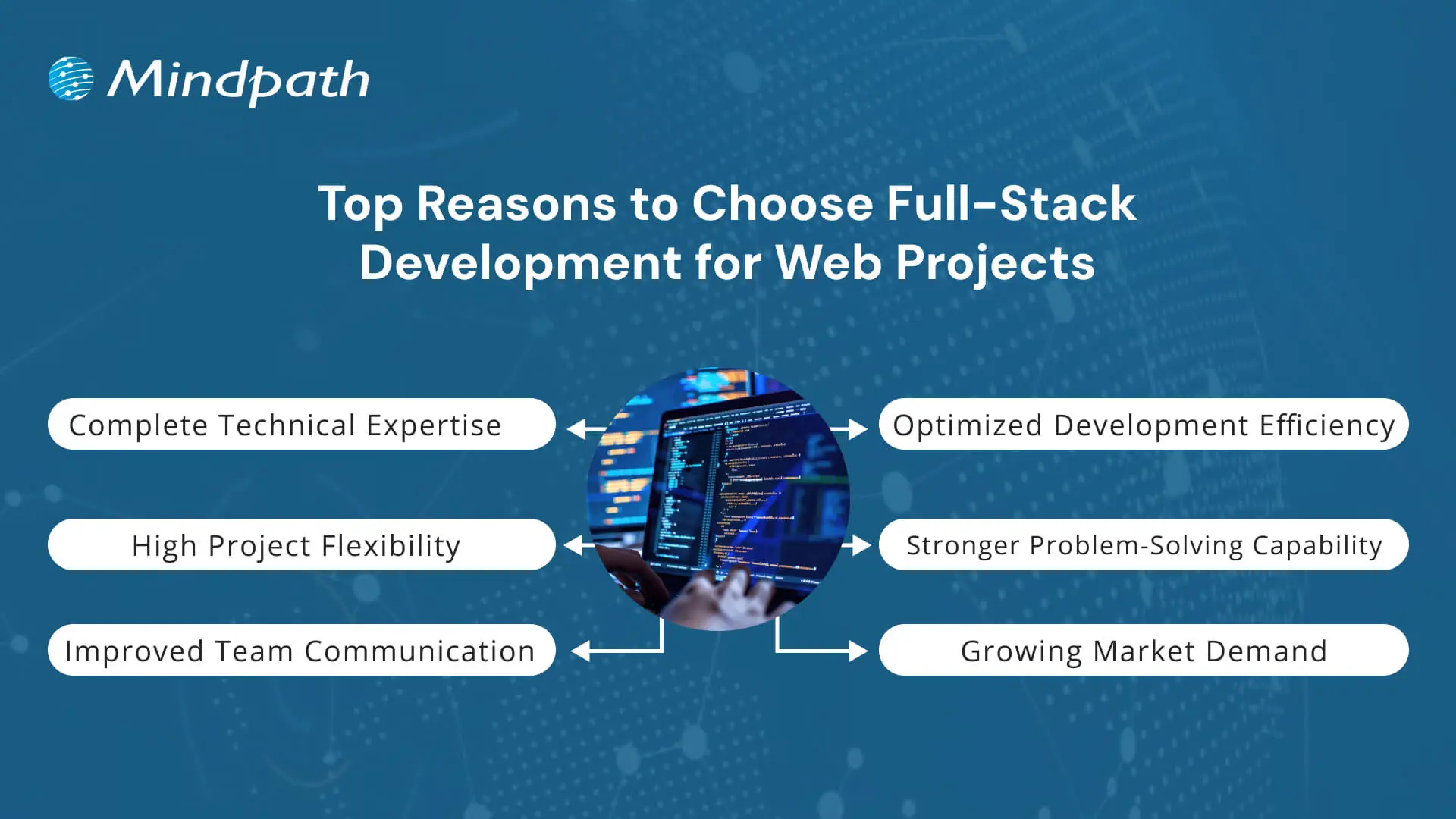
Full-stack development makes end-to-end web development more effective by combining both the visual design and the behind-the-scenes logic into one smooth process. As we move toward full-stack development in 2025, more businesses are choosing this method for its flexibility, speed, and complete control over web projects. Here are some key reasons why:

Top Reasons to choose full-stack development for web projects

1. Complete Technical Expertise

Full-stack development for web projects requires knowledge of both front-end and back-end technologies. Developers in this field work with HTML, CSS, and JavaScript for user interfaces and use tools like Node.js or Python for server-side logic. They also manage databases such as MySQL or MongoDB to store and retrieve data efficiently. This complete skill set makes full-stack development for businesses highly practical and reliable.

2. Optimized Development Efficiency

One of the key advantages of full-stack development for web projects is the ability to complete tasks faster without needing multiple specialized developers. It reduces development time, lowers project costs, and helps deliver results more quickly. Teams can avoid delays caused by handovers between front-end and back-end teams. That’s why many companies now prefer full-stack development to keep their projects on track and within budget.

3. High Project Flexibility

Developers skilled in full-stack development can switch between tasks easily based on what the project needs. They are comfortable using different tools and frameworks and can adjust to changes without slowing down progress. This flexibility is valuable when requirements evolve or when rapid updates are needed. It also supports the use of the best tech stack for web projects tailored to each client’s goals.

Also Read: Full-stack Development Benefits

4. Stronger Problem-Solving Capability

A full-stack developer understands how both the client-facing side and the server work together. This broad view helps in identifying issues quickly and finding effective solutions without back-and-forth between teams. It leads to fewer errors and a more stable final product. As a result, full-stack development for web projects brings stronger control and problem-solving to the entire build process.

5. Improved Team Communication

Fewer handoffs mean fewer communication gaps between developers and project managers. In full-stack development for web projects, one person or a small team handles most of the workflow, which keeps messaging clear and consistent. This improves team collaboration and speeds up approvals and fixes. It also supports better planning throughout the stages of full-stack web development.

6. Growing Market Demand

With digital needs growing, full-stack development has become one of the most valuable skills in the tech world. Companies are hiring developers who can handle everything from front-end to database, increasing demand across industries. It also offers room to grow in multiple areas, including project leadership and architecture, through understanding full-stack development trends. This rise is a direct result of businesses investing more in full-stack development for modern digital solutions.

Key Skills Required in a Full-Stack Web Project Team

A successful full-stack web project relies on more than just writing code. It needs the right mix of skills across the team, covering everything from design to database management for smooth and efficient web solutions. Let’s have a quick look at the skills:

1. Front-End Development

Developers need strong skills in HTML, CSS, and JavaScript to build the structure and style of web pages. Frameworks like React, Angular, or Vue.js help create dynamic and responsive user interfaces.

2. Back-End Development

Understanding server-side languages such as Node.js, Python, or Java is essential for creating logic and functionality. Frameworks like Express.js or Django support faster and more organized development.

Planning to build smarter web solutions? Discover how full-stack development with Node.js can streamline your digital growth.

3. Database Management

Developers should know how to use both SQL and NoSQL databases like MySQL, PostgreSQL, or MongoDB. Good database skills help manage, store, and retrieve data efficiently.

4. API Development

Designing RESTful APIs is important for connecting front-end and back-end systems. APIs must be secure, scalable, and easy to maintain in web projects.

5. DevOps and Deployment

Version control with Git and CI/CD tools helps automate code testing and deployment. Cloud platforms like AWS or Azure make it easier to launch and scale applications smoothly.

6. Soft Skills for Team Performance

Effective communication, adaptability, and time management help teams meet deadlines and solve problems together. These qualities support a smooth workflow in full-stack development for web projects.

Confused between full stack and traditional web development? Discover how smart businesses choose from full-stack vs traditional web development for the success of project. 

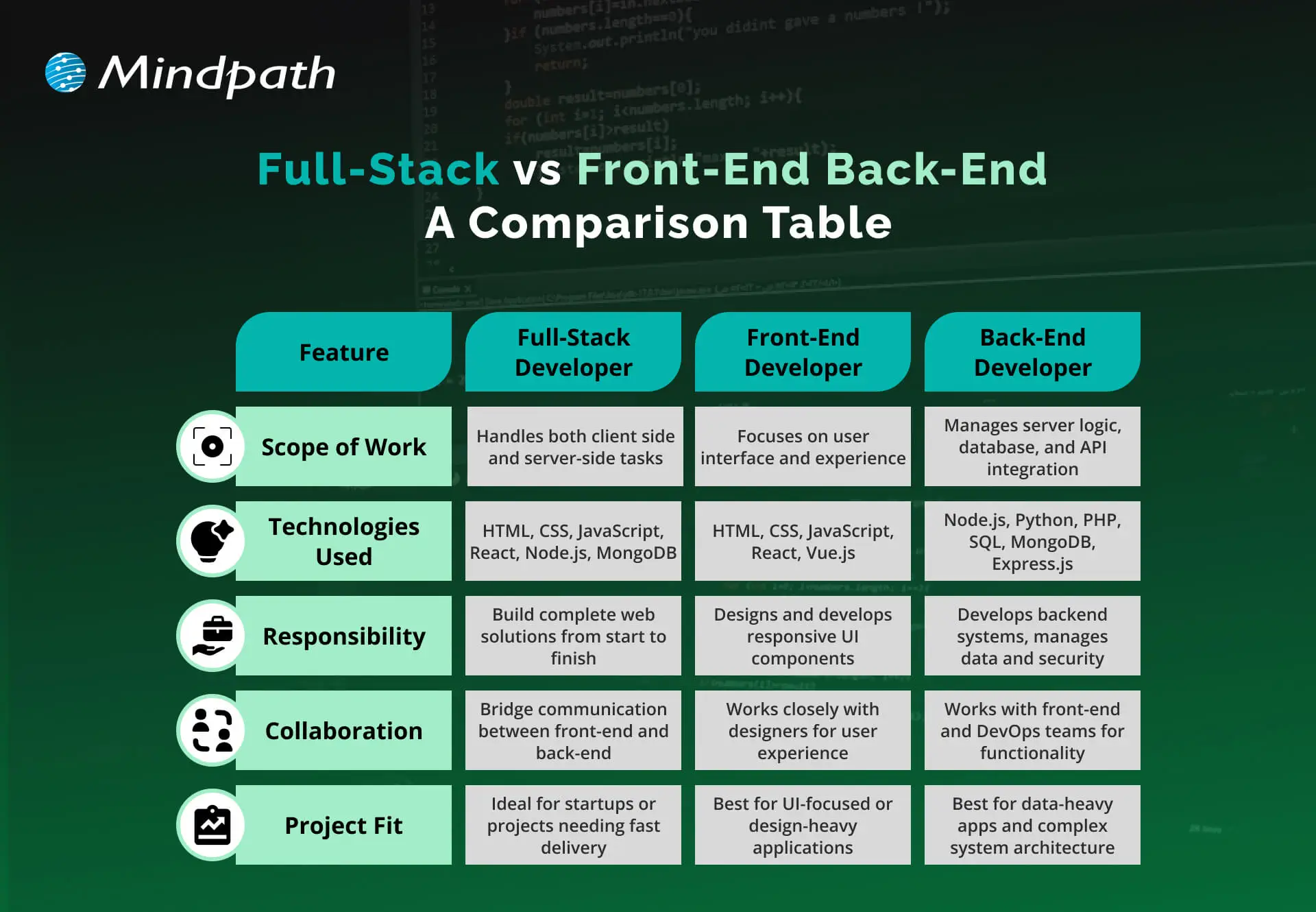
Full-Stack vs Front-End and Back-End: A Comparison Table

Understanding the difference between full-stack vs front-end and back-end roles helps in choosing the right approach for a web project. Below is a comparison table that highlights their core responsibilities and capabilities.

Full-Stack vs Front-End and Back-End A Comparison Table

Ready to Elevate Your Next Web Project with Full-Stack Development?

Full-stack development for web projects offers a balanced, future-ready approach that blends front-end creativity with back-end power. It simplifies workflows, speeds up launches, and ensures better user experiences. As digital needs continue to evolve, adopting full-stack practices gives businesses the edge to build smarter and scale faster with fewer roadblocks.

At Mindpath, we offer full-stack development services tailored to support your business growth. Our expert full-stack developers handle everything from user interface to server-side logic, ensuring smooth performance and cohesive functionality. With deep technical knowledge and a collaborative mindset, we deliver reliable, scalable, and efficient digital solutions that meet your unique project needs.

Legacy modernization roadmap 

Enterprise systems drive day to day operations but most leaders experience the burden of old platforms. You want speed, security and scale, and the legacy complexity is slowing all of your moves. A clear legacy modernization roadmap brings direction and control to this shift. It assists you in matching the technology to the business objectives and make measurable change with certainty.

Nevertheless, modernization does not only require upgrades. You require clarity, leadership focus, and effective execution at all levels. That is why the enterprise leaders need to consider modernization as one of the strategic priorities rather than a side project. The right roadmap takes vision and action through the right path and mitigates risk. In this blog, we deconstruct one of the practical structures that were established with the enterprise decision makers in mind. So, let’s dive in!

Looking to align technology upgrades with your overall business strategy? Mindpath’s legacy modernization services ensure your systems support growth and deliver better ROI.

What is Legacy Modernization Roadmap?

A legacy modernization roadmap gives enterprises a clear, structured plan to upgrade outdated IT systems. It successfully takes leaders on the path of evaluation, objective creation and strategy choice with good business fit. Consequently, organizations decrease technical debt levels, enhance their performance and develop secure, cloud-ready systems that accommodate long term development.

Legacy system transformation focuses on turning rigid, high maintenance platforms into agile and scalable architectures. Teams subdivide large systems into small stages and embrace cloud, microservices, and automation. This will enhance flexibility, enhance security, and enable the enterprises to respond more swiftly to market needs with confidence.

Want to understand how modernizing legacy systems can transform your business operations? Explore the benefits of modernizing legacy systems to drive efficiency and growth.

Why Enterprises Need a Legacy Modernization Roadmap?

Companies are faced with sluggish systems and increased maintenance expenses. A clear legacy modernization roadmap, backed by strong legacy modernization strategy, helps leaders improve performance and drive steady business growth.

1. Strong Business Alignment

Businesses require a sense of direction which links technology with expansion strategies. A clear road map converts the IT initiatives into the business goals in the long run and makes the systems growth enablers.

2. Lower Costs and Better Returns

Systems of the past are very demanding in terms of maintenance and repair. New platforms lower the operating expenses and provide more potent returns by being efficient and using smart resources.

3. Better Security and Compliance

Obsolete software exposes the businesses to security risks and compliance lapses. The modern systems enhance the security of data and assist companies in complying with the industry requirements with ease.

Must Read: Application Security Best Practices

4. Greater Agility and Scalability

Companies have to react fast to market changes, shifts and customer needs. A legacy modernization roadmap builds flexible architectures that support faster releases and seamless scaling.

5. Smarter Technology Adoption

Businesses would prefer to exploit innovation without conflict in the system. The application of AI in legacy modernization enables the incorporation of smart tools that enhance insights, automation, and decision making.

6. Reduced Operational Risk

Changing fundamental systems without a strategy brings about discontinuity and chaos. A transformational roadmap keeps transition risks under control and makes the business survive in the process of transformation.

Looking to modernize your systems with the help of advanced AI technologies? Learn from AI-driven legacy system modernization to accelerate your transformation journey.

A Step-by-Step Guide for Legacy Modernization Roadmap

A good plan makes modernization objectives measurable. This step-by-step method can assist Intrapreneurship leaders of an enterprise to progress with organization, management, and certainty.

1. System Discovery and Assessment

Teams draw out existing systems and find out the dependencies. They check-up technical health and flag bottlenecks in the performance. They also use legacy modernization tools to uncover hidden risks and code issues.

2. Strategy and Value Definition

Leaders establish the future architecture and business results. They select the appropriate modernization strategy depending on objectives and complexity of the system. A legacy modernization roadmap helps align technical decisions with measurable ROI targets.

3. Planning and Risk Readiness

Work teams develop a clear plan of execution using milestones. They describe the process of data migration, compliance processes, and security controls. The legacy application modernization roadmap ensures teams reduce risk before execution begins.

Must Read: Monolith to Microservices

4. Phased Execution and Deployment

Professionals upgrade the systems through stages that are manageable. They do not disrupt and update in controlled cycles. A legacy modernization roadmap keeps teams focused on stability and steady progress.

5. Testing and Quality Validation

Automated and performance tests are done on teams at each stage. They measure functionality to stipulated KPIs and business objectives. The step will guarantee reliable performance of the new system with real workloads.

6. Optimization and Continuous Monitoring

Post-deployment, the leaders observe health of the system. Teams monitor the performance metrics and feedback. They streamline procedures that facilitate scaling and expansion in the long run.

Wondering how SaaS can reduce the complexity of legacy systems? Explore SaaS trends to streamline your transformation process.

Ready to Build a Future Ready Enterprise with a Clear Roadmap?

A strong legacy modernization roadmap gives enterprise leaders clarity and control. It relates business objectives and technology action systematically. Phased execution helps organizations to reduce risk, cut costs, and improve performance. Teams empower long term digital growth and invest in it with the certainty of the proper planning and governance.

At Mindpath, we provide legacy modernization services that help you achieve outcomes using a successful legacy modernization framework, adaptable to your enterprise-specific needs. Our specialists evaluate systems, establish strategy, and make modernization accurate. Our priorities are on security, scalability, and quantifiable value at all levels. Collaborate with Mindpath to modernize key systems and speed up sustainable business change.

FAQs

1. Why should enterprise leaders prioritize a legacy modernization roadmap now?

Competitive pressure and rising maintenance costs demand faster innovation. A legacy modernization roadmap helps leaders align technology with strategic growth goals. It creates clarity, reduces operational risk, and strengthens long term scalability in an increasingly digital business environment.

2. How long does a legacy modernization roadmap typically take?

Timelines depend on system complexity, data volume, and business readiness. Some initiatives move quickly with focused scope, while large transformations require phased execution. A well structured legacy modernization roadmap defines milestones early and keeps teams aligned with realistic delivery targets.

3. How do we measure success during modernization?

Enterprises should measure improvements in performance, cost efficiency, uptime, and user experience. Business impact should guide every technical decision. A clear legacy modernization roadmap establishes KPIs at the start and tracks measurable outcomes throughout the transformation journey.

4. Which architecture approach suits complex legacy systems?

Enterprises often evaluate cloud native, microservices, or hybrid models based on workload demands. Technical audits help identify system dependencies and scalability limits. A legacy modernization roadmap supports informed architecture decisions that balance innovation, risk control, and operational stability.

5. How can we manage data and compliance risks during modernization?

Data migration requires strong governance and phased validation. Teams should conduct security reviews and compliance checks before execution. A structured Legacy modernization roadmap reduces exposure to data loss and regulatory gaps. Mindpath’s legacy modernization services provide expert guidance for secure and compliant transitions.