How DevOps Drives Cost Efficiency in Business Operations

Join our Newsletter!

Featured Posts

Support Is One Click Away

Home

How DevOps Drives Cost Efficiency in Business Operations

DevOps

How DevOps Drives Cost Efficiency in Business Operations

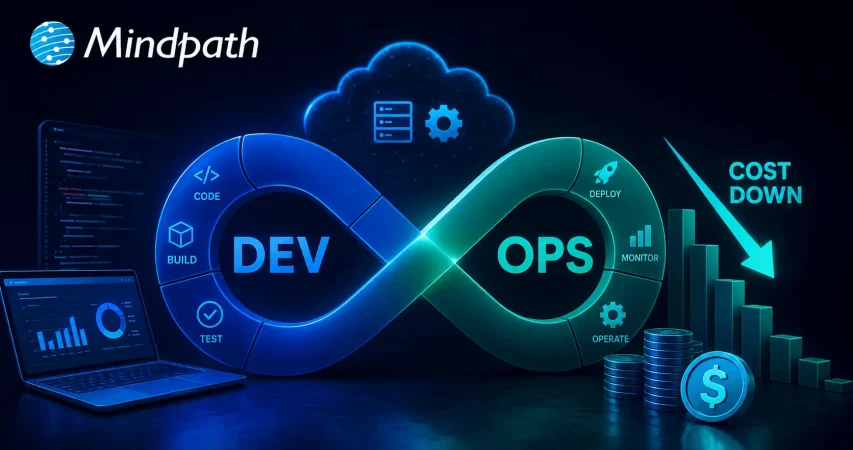
Are you looking for a way to lower your business costs while boosting efficiency? What if you could achieve both by simply improving how your teams collaborate and work together? DevOps offers a powerful approach to streamline operations, automate processes, and eliminate waste—all of which can lead to significant savings. Curious about how DevOps can impact your bottom line? In this blog, we will explore the ways this methodology can transform your business and help you save money in the process.  DevOps is a method that brings together the development (Dev) and IT operations (Ops) teams to collaborate closely and effectively. It entails automating and improving the software development, testing, and deployment processes via the use of methods and tools. The purpose of DevOps is to make the entire process quicker, easier, and more dependable by increasing collaboration and communication among developers and IT workers. DevOps began in 2007 when individuals realized that the conventional style of working, in which developers and IT teams worked independently, was holding down progress. DevOps enables enterprises to produce software faster and with fewer issues by merging the work of both teams. It’s all about working together, automating tasks, and optimizing processes.  So, let’s dive in to explore how DevOps can help save business costs! 

How DevOps Can Help Saving Business Costs

1. Using Cloud Infrastructure

Cloud infrastructure is an effective means to reduce IT expenditures while increasing flexibility and efficiency. Cloud services enable enterprises to scale their resources up or down in real time. Additional resources can be allocated during peak demand periods, while they can be lowered during quieter periods. This guarantees that you only pay for what you use, reducing needless costs and optimizing your budget. Cloud platforms also make processes more efficient by providing automation tools. Tasks like resource management, monitoring, and upgrades can be automated, minimizing the need for human intervention and saving both time and money. Furthermore, the cloud eliminates the need for expensive on-premises infrastructure, resulting in lower maintenance and hardware costs. Businesses that integrate cloud infrastructure into DevOps techniques can save money while also improving efficiency, flexibility, and overall performance. This establishes a solid platform for providing dependable and scalable solutions. 

2. Automating with Infrastructure-as-Code (IaC)

Infrastructure-as-Code (IaC) is a method of managing your IT infrastructure that involves writing it as code, similar to providing precise instructions. Instead of manually configuring servers, databases, or networks, you describe the configurations and dependencies in code, and tools like Terraform or AWS CloudFormation do the rest. This strategy saves time, assures consistency, and allows you to easily replicate or upgrade your infrastructure. With IaC, you can make changes fast, scale resources, and maintain a dependable environment without having to do repeated manual tasks. It also lowers the need for additional documentation, as the code itself is the most accurate and up-to-date reference. To ensure success with IaC, it’s essential to securely configure resources, automate tests to validate the code, and continuously monitor the infrastructure. By adopting IaC as part of your DevOps practices, businesses can simplify infrastructure management, minimize errors, and cut costs through better efficiency and automation. 

3. Optimizing with Containers

Container orchestration makes it easier to manage a large number of containers running on many computers or servers. Containers are self-contained containers that include everything an application needs to function, such as code, libraries, and dependencies. Managing a few containers manually may be possible, but as the number of containers increases, the process gets more complicated. Container orchestration automates this process, ensuring that containers are deployed, scaled, and managed efficiently. It also enables containers to communicate and collaborate easily, eliminating human effort and minimizing mistakes. Kubernetes is a popular container orchestration tool that provides enterprises with a dependable approach to manage large-scale applications. Businesses that use container orchestration may achieve easier operations, improved resource utilization, and cost reductions while preserving application performance. 

4. Streamlining with CI/CD Pipelines

Implementing a Continuous Integration and Continuous Delivery (CI/CD) pipeline is an important DevOps approach that allows firms to save money by automating software development and delivery operations. During the Continuous Integration (CI) phase, developers routinely communicate and integrate code updates into a common repository. Automated systems then test and compile the code to guarantee that everything works properly. This avoids costly complications by identifying problems early in the development phase. CI also saves time on manual integration activities, freeing up resources for other important work. Continuous Delivery (CD) follows CI by automating the deployment of tested code to production or other environments. With solutions like Kubernetes or Docker, the process becomes more frictionless, minimizing delays and the need for manual labor. Automated testing guarantees that only stable and dependable updates are delivered, reducing downtime and mistakes that might result in increased costs. 

DevOps Development Services at Mindpath

At Mindpath, we provide DevOps services that streamline software development and reduce costs. Our team uses cloud infrastructure, automation, and container management to help your business scale efficiently. We automate IT processes with Infrastructure-as-Code (IaC) and manage container orchestration using Kubernetes. Our Continuous Integration and Continuous Delivery (CI/CD) pipelines ensure faster, error-free software delivery. With our DevOps expertise, businesses can improve efficiency, cut costs, and achieve high-quality results with minimal manual effort. 

Final Thought!

Incorporating DevOps into your business processes is a strong method to save costs and increase efficiency. Businesses can reduce operating costs by using cloud infrastructure, automating with Infrastructure-as-Code, optimizing with containers, and simplifying processes with CI/CD pipelines. DevOps not only reduces human work and mistakes, but it also speeds up software delivery and improves team cooperation. Mindpath’s DevOps services are meant to help organizations realise these benefits, allowing them to prosper in a fast-paced, competitive market. By implementing DevOps, you can improve productivity, cut expenses, and provide higher-quality outcomes with less work. 

Ready to optimize your business operations with DevOps?

Partner with Mindpath today to streamline your processes, reduce costs, and achieve high-quality results effortlessly!
Related Post

Discover the top 8 benefits of Node.js for web development, from seamless scalability to cost reduction. Elevate your web app performance with Node.js today!
Learn the key differences between multi-cloud and hybrid cloud strategies and discover how Mindpath’s cloud services can help.

Related Post

Are you looking to build a fast and scalable web application? Do you need expert NodeJS developers in New York to bring your ideas to life? Finding the right developers can be challenging, but with the right team, you can create high-performance applications that drive business success. But where can you find the best talent? Hiring Node.js developers in New York is essential for businesses seeking scalable and high-performance applications. With its event-driven architecture and non-blocking I/O, Node.js enables fast and efficient development, making it a preferred choice for real-time applications, APIs, and enterprise solutions. New York’s dynamic tech ecosystem offers access to highly skilled Node.js developers with expertise in modern frameworks and development best practices. Whether you’re building a startup or expanding an existing platform, choosing the right developers ensures seamless execution, optimized performance, and long-term success. Let’s explore how you can hire top NodeJS developers to take your project to the next level!

Steps to Hire Node.js Developers in New York

1. Define the Role

Begin by writing a comprehensive job description that outlines the responsibilities, requisite abilities, and credentials for the Node.js developer position. Indicate your proficiency in JavaScript, Express.js, databases (MongoDB, PostgreSQL), and cloud services. Mention your experience with API development, real-time data management, and performance optimization. Clearly identify soft skills such as problem-solving, teamwork, and communication to ensure alignment with the business culture. To attract the best candidates, mention if the position is onsite, remote, or hybrid, as well as the project requirements. A clearly defined position guarantees that only the most qualified and relevant Node.js engineers in New York apply.

2. Build a Hiring Process

Create a systematic hiring funnel to evaluate prospects efficiently. Begin with scanning resumes to identify competent individuals, followed by technical examinations to evaluate coding abilities. Next, conduct behavioral and cultural fit interviews to evaluate collaborative abilities. Include a test project to evaluate real-world problem-solving ability. Ensure that the process is in accordance with the business’s needs, timetables, and project scope. A well-planned recruitment strategy makes recruitment easier, allowing firms to find the top Node.js developers in New York who meet both technical and cultural requirements.

3. Find Candidates

Finding the appropriate Node.js developers are essential. Post job openings on LinkedIn, Indeed, Glassdoor, and the local NYC tech employment boards. Use networking events, hackathons, and developer meetings to connect with talent. Alternatively, work with a Node.js development agency in New York to have access to pre-vetted professionals. Agencies manage the vetting process, saving time while assuring high-quality personnel. Whether you’re recruiting freelancers, in-house developers, or outsourcing to an agency, using different sourcing channels will help you identify the most competent and experienced Node.js individuals for your project.

4. Assess Candidates

Review portfolios and GitHub repositories to assess technical and problem-solving skills. Check past projects to see experience in Node.js frameworks, databases, and cloud deployment. Ask candidates about coding methodologies, debugging strategies, and security best practices. Consider administering a practical coding test to determine efficiency in handling real-world scenarios. Pay attention to soft skills such as communication, adaptability, and teamwork to ensure compatibility with your current team. A thorough examination assures you choose professional and skilled Node.js developers in New York who can produce high-quality apps.

5. Interview Candidates

Prepare an organized interview procedure that includes technical and behavioral questions. Begin with a screening interview to examine experience, previous projects, and technical expertise. Follow up with a detailed code interview that covers Node.js architecture, performance optimization, and database administration. Include a live coding session or case study to put your real-time problem-solving abilities to the test. Conduct team interviews to evaluate collaboration and cultural fit. In New York’s competitive tech industry, a rigorous but fast interview process is required to obtain top personnel while assuring alignment with your company’s vision and goals.

6. Hire candidates

After conducting interviews, choose the finest Node.js engineers based on technical knowledge, problem-solving skills, and cultural fit. Check references to confirm previous performance and professionalism. To recruit excellent people, provide competitive compensation that is in line with New York’s technology market requirements. Prior to onboarding, clearly describe job expectations, team structure, and project goals. Integrating new personnel into your development workflow and introducing them to the team can help to ensure a pleasant onboarding experience. Hiring the best Node.js engineers in New York guarantees the success of your online and software development projects.

Ready to Hire the Best Node.js Developers in New York?

At Mindpath we provide top-tier Node.js development services to help businesses build scalable, high-performance applications. Whether you need a dedicated developer or a full-scale development team, our experts are ready to bring your vision to life.
Contact Mindpath today and get the right Node.js developers for your project.

Discover the ultimate guide to hiring Node.js developers in London. Learn about the skills, benefits, and cost factors involved in finding the right talent for your project.
cloud computing trends

Have you been following the newest cloud computing trends? It seems that every day, there is something new to change how we store, share, and secure data. Perhaps you’ve been wondering if your business is missing out on smarter ways of working, or worried about staying ahead of the game in this digital world. Whatever your thoughts are, there is one thing for sure: cloud technology is not just for tech giants anymore; it is shaping the way we all connect, create, and grow.

As we move to 2026, these cloud trends will continue to open bigger opportunities for businesses, no matter how big or small. With faster, many times AI-driven services, greener cloud solutions, a flexible and secure future is more promising than ever. Being aware of what is next will enable you to make an informed decision about the future and give you a competitive edge. If you’re wanting to find out more about where the cloud is headed, continue reading. In this blog, you will learn what’s coming next.

Looking to build scalable, secure cloud applications that drive business growth? Mindpath offers expert cloud development services to help you design and optimize cloud solutions tailored to your needs

Understanding Cloud Computing

Cloud computing is simply the storing and accessing of data and programs over the internet instead of your computer’s hard drive. It is considered internet-based computing, allowing businesses and individuals to use servers, storage, and software that is also provided by cloud providers. One of the benefits is that maintenance is limited, which means there are lower costs associated with users storing files, documents, images, etc. Cloud computing offers flexibility in keeping important data secure and available.

It works through remote servers hosted online that store, manage, and process data rather than relying on local hardware. Users can access these resources whenever they need and scale them up or down as their needs change. This makes it easy to save money on physical infrastructure, increase efficiency, and keep operations running smoothly with more reliability and speed.

The market for this technology keeps expanding rapidly as more businesses adopt cloud solutions. According to Grand View Research, the global cloud computing market size was around USD 752.44 billion in 2024 and is projected to reach USD 2,390.18 billion by 2030. This growth is mainly driven by the rise of big data, artificial intelligence, and machine learning, which all depend on powerful and scalable cloud infrastructure.

Curious how modern cloud apps run without servers? Explore our blog on Serverless Architecture in Cloud Computing to see how serverless solutions are shaping the future of cloud trends.

What are the Latest Trends in Cloud Computing?

Staying updated with cloud computing trends 2026 can help your business stay competitive and ready for what’s next. Companies everywhere are paying close attention to the current trends in cloud computing to boost efficiency and security. Here are some key developments you should watch for in the coming year.

Cloud computing trends

1. Rise of Multi & Hybrid Cloud

Many companies now use a multi-cloud strategy and hybrid cloud approach to run workloads across different cloud providers and their own data centers. This setup lets them combine the strengths of public and private clouds while keeping sensitive data secure. Using multi and hybrid cloud solutions also gives businesses more flexibility and better control over risks.

2. Automation

One of the latest trends in cloud computing is using automation to make systems work faster and more efficiently. Good automation helps teams deliver better results, reduce downtime, and improve overall quality. With better AI tools and user-friendly platforms, cloud providers are making automation easier for everyone to use.

3. AI/ML Capabilities

Better AI and machine learning are becoming the next big thing in cloud computing. Many providers now offer smart tools that help businesses use advanced analytics and automation. These cloud computing trends make it easier to build intelligent applications and boost efficiency without needing deep technical skills.

4. Cloud Cost Management

Managing expenses is a big part of the future of cloud computing as more businesses move to the cloud. New tools and services help companies track and control their spending more easily. These cost management features make it simple to budget, monitor usage, and find ways to save money.

5. Edge Computing

Edge computing is one of the cloud latest trends bringing data processing closer to where it’s created. This helps reduce delays and cuts down on the amount of data that needs to travel long distances. By doing this, businesses can work faster and use their networks more efficiently.

6. Low-Code and No-Code Services

One of the growing cloud services trends is using low-code and no-code tools to build apps faster. These solutions help people create software without needing advanced programming skills. Such cloud computing trends save time and lower development costs for businesses.

7. Open-Source Cloud Solutions

One of the growing cloud computing trends is the move toward open-source cloud solutions. These solutions give businesses more control and flexibility to adjust their cloud setup as needed. Open-source options can also help companies save money compared to traditional cloud providers.

8. Cloud-Native Applications

Building cloud-native applications is an important part of the future of cloud computing. These apps are made to run smoothly on cloud systems and use all the benefits the cloud offers. More tools are now available to help businesses create and launch these apps quickly and easily.

9. Focus on DevSecOps

DevSecOps brings security into every step of software development instead of adding it later. This approach helps teams find and fix issues early, keeping systems safe. Many cloud providers now offer tools that make it easier for businesses to build secure applications from the start.

10. Green Computing Initiatives

One of the important cloud computing trends is the push for greener solutions. Providers are using renewable energy and building energy-efficient systems to cut down on carbon emissions. These efforts help businesses meet their sustainability goals while using cloud services.

Struggling with speed, collaboration, or automation in DevOps? Our DevOps Challenges and Solutions blog explains how modern businesses address these issues.

Which Industries are Adopting Cloud the Fastest?

Many industries are moving to the cloud to work faster and serve their customers better. Companies see cloud solutions as a way to cut costs and stay flexible in a changing market. Let’s look at which sectors are adopting cloud the fastest right now.

Top Industries Accelerating Cloud Adoption

1. Retail: Real-Time Data Control

Retailers use the cloud to manage sales, stock, and customer data in one system. Real-time updates improve supply chains and marketing campaigns. This boosts profits and keeps work going smoothly.

2. Financial: Stronger Data Security

Banks and financial firms trust the cloud for secure data storage and better protection. They can handle tasks like billing and client help more easily. Better security helps them grow safely.

3. Media: Better Content Delivery

Media companies use the cloud to create, store, and share content worldwide. Teams can work together from different places and finish faster. They handle big audiences without spending more.

4. Telecom: Scalable Network Support

Telecom companies use cloud solutions to manage networks and huge data. This helps them handle changing demands and roll out 5G and IoT services. Cloud computing trends keep people connected and ready for new tech.

5. Insurance: Smarter Risk Insights

Insurance companies use the cloud for flexible data and cost savings. They analyze big data to predict risks and detect fraud early. This helps them stay competitive with better customer service.

6. Education: Better Learning Tools

Schools adopt the cloud to manage tight budgets and get new technology. Teachers and students can share lessons and resources in one secure place. This makes learning flexible and improves teamwork.

Looking for ways to optimize your cloud strategy? Explore our Multi-Cloud Strategy blog to see why businesses are spreading workloads across multiple clouds.

Is Your Business Cloud Ready for 2026?

Staying on top of cloud computing trends can help any business unlock new opportunities, save money, and stay secure. As you’ve seen, trends like automation, AI, green computing, and smart cost management are shaping the way companies grow and compete. Keeping an eye on what’s next means you’re always ready to adapt and make smarter technology decisions.

At Mindpath, we help you stay ahead with trusted cloud computing services designed to match your goals. Our team can support your move to the cloud, help manage costs, and keep your data secure. We focus on delivering solutions that fit your business needs today and tomorrow. Connect with us and see how we can make your cloud journey easier.

Frequently Asked Questions

1. How can a business choose the right cloud model for its needs?

Choosing the right cloud model depends on factors like data sensitivity, budget, and scalability needs. Businesses should evaluate whether public, private, or hybrid cloud fits their operations best. A clear understanding of workloads and long-term goals helps in making a practical and cost-effective decision.

2. What are the biggest risks businesses should consider when moving to the cloud?

Common risks include data security concerns, vendor dependency, and unexpected costs. Without proper planning, businesses may face compliance issues or performance challenges. Implementing strong security practices, monitoring usage, and choosing reliable providers can help reduce these risks effectively.

3. How does cloud computing support business growth in competitive markets?

Cloud computing allows businesses to scale resources quickly, launch services faster, and respond to market changes efficiently. It supports innovation by enabling access to advanced tools like analytics and AI, helping companies stay competitive and deliver better customer experiences.

4. Is it expensive to maintain cloud infrastructure over time?

Cloud costs vary based on usage and management. While it reduces upfront investment in hardware, ongoing costs can increase without proper monitoring. Using cost management tools and optimizing resources ensures businesses maintain efficiency while keeping expenses under control over time.

5. How can businesses ensure data security in cloud environments?

Data security requires a combination of strong encryption, access controls, and regular monitoring. Businesses should follow best practices like multi-factor authentication and compliance standards. Working with trusted cloud providers and maintaining clear security policies helps protect sensitive information effectively.

full stack vs traditional web development

The dynamic digital landscape calls for new approaches to traditional tasks such as web development. Is full-stack development the ideal alternative to traditional web development? Interestingly, the answers to such questions will paint full-stack development as the right choice. However, it is important to know that a full-stack vs traditional web development comparison also highlights their individual strengths.

Experts have pointed out that web development will not rely on one specific approach replacing the other. The full-stack approach has gained popularity for its efficiency and versatility, while traditional web development is useful for specific projects. Let us learn more about the differences between full-stack and traditional web development.

Curious about how full-stack development can elevate your projects? Explore our full stack development services to get guidance and support across every layer of the application development.

Fundamental Difference between Full Stack and Traditional Development

The best way to draw predictions about the future of web development starts with an understanding of the two predominant approaches. Traditional web development has been the fortress of specialists and focuses on two distinct domains, frontend and backend development.

1. Frontend Development

The primary focus of frontend development for a web application is the visual appeal of the application. Frontend developers create aesthetically appealing designs and responsive layouts for the web application interface. The skills required to become a frontend developer include knowledge of HTML, CSS, and JavaScript. Each tool serves a distinct functionality in the web development process. For instance, HTML helps in structuring web content while CSS is useful for styling. Frontend developers must also know how to use frameworks like React and Vue.js for creating functional interfaces from design ideas.

2. Backend Development

The traditional web development process is incomplete without backend development, which deals with the server-side operations. Backend developers create the foundation for the frontend of the web applications with the help of logic and database management. Developers can write backend logic with languages like Java, Ruby, Python, PHP, and Node.js. The notable tools for database management include MongoDB, MySQL, and PostgreSQL. Some of the other notable responsibilities of backend developers include API creation, data storage, and security of web applications.

3. Full Stack Software Development

The full-stack approach to web development follows a holistic approach that combines frontend and backend development. Every full-stack development specialist can manage the complete web development process, starting from ideation to creating the server logic and deploying the application. Full-stack developers use their comprehensive set of skills to contribute value in projects that demand resource optimization. The most noticeable advantage of full-stack development is the ability to bridge the gap between functionality and design.

Also Read: Full-stack development with Node.js

Why is the Full Stack Approach Becoming Popular?

The review of differences between full-stack and traditional development can start with an impression of the advantages of full-stack development. The full-stack vs traditional development debate emphasizes how full-stack enhances efficiency, speed, versatility, and cost-efficiency. Businesses can complete full-stack projects with a single developer managing different aspects of the project. Full-stack developers can use their broad skill set to adapt to different project requirements and add value in different stages of the development process.

Another prominent highlight of the full-stack approach to web development is the holistic understanding of the project. Full-stack developers don’t view a project from distinct client-side and server-side perspectives. On the contrary, they know how the client-side and server-side work, which helps them make better architectural decisions. The holistic understanding of the project also helps full-stack developers achieve seamless integration and troubleshoot issues with ease.

The growing popularity of full-stack development in 2025 also depends on the benefit of cost-efficiency. Full-stack developers are a more economical choice than hiring different professionals for frontend and backend development. Smaller projects or startups can capitalize on this advantage and deliver desired results within a limited budget.

Is Traditional Web Development Still Relevant?

The advantages of the full-stack approach to web development may have you thinking that traditional development is not relevant. However, traditional web development is still useful in various scenarios for its distinct benefits. For instance, the full-stack vs traditional web development debate draws attention towards the effectiveness of traditional development in projects that demand deep specialization. In traditional development, developers can focus on specializing in a specific area, thereby earning the skills required to deliver high-quality output in their tasks.

Traditional web development is more suitable for use cases that involve highly complex architectures, niche performance requirements, and microservices. Larger organizations prefer to have different professionals for frontend and backend development, as it helps in establishing clear responsibilities. It is extremely helpful in situations when the organization has to scale up larger projects. Traditional web development puts multiple specialists to work on different parts of an application, thereby enabling efficient scaling.

Planning to validate your product idea quickly? Learn how hiring a full-stack developer for MVP accelerates development and increases success rates.

Unraveling the Negative Aspects of Frontend and Backend Development

Almost every discussion on the differences between full-stack and traditional web development emphasizes their advantages. However, the frontend vs backend vs full stack debate must also focus on the negative aspects to draw a balanced comparison. The following sections describe the prominent setbacks of full-stack and traditional web development.

1. Full Stack Development

The foremost setback of the full-stack approach to web development is the lack of specialized expertise in a specific area, such as complex database optimization. As a result, full-stack developers might struggle to manage different elements of a project simultaneously. The complex coding processes in the full-stack approach might require a high level of expertise for effective coordination between different stacks. Most important of all, juggling between frontend and backend development responsibilities can be a significantly challenging task.

2. Traditional Development

The disadvantages of the conventional web development approach include slower development cycles and higher costs. Businesses that choose traditional approaches to build web applications will have to hire multiple specialists, which can be expensive. The development speed also decreases in traditional web development due to the need for handoffs between teams and multiple dependencies. Furthermore, the need for seamless coordination also creates more communication overhead that may ultimately lead to potential misunderstandings and bottlenecks.

Looking for a cost-effective way to build your next web project? Explore how hiring a freelance full-stack developer benefits your business and enhances your digital presence.

Will the Future Rely on Full Stack or Traditional Web Development?

The full-stack and traditional web development comparison reveals that each approach has distinct strengths and setbacks. Many people think that full-stack will ultimately replace traditional web development for good. On the contrary, the future of web and software development is more likely to embrace a hybrid model. The hybrid model will blend the best of full-stack and traditional web development to make web development more efficient.

The web development industry will look for full-stack developers to manage end-to-end solutions, streamline development processes, and reduce overheads. On the other hand, specialization from dedicated frontend and backend developers will remain crucial for highly complex applications.

Trends in the Future of Web Application Development

The future of web application development will also embrace many other trends that will shape new avenues for developing applications. One of the most prominent additions among modern web development trends is the potential for including AI and machine learning in web development workflows. The two technologies can help in generating code automatically, integrating smart features in applications, and enhancing the UI/UX designs.

Low-code or no-code platforms can be the ideal alternative to full-stack or traditional development for simpler projects. These platforms can help professional developers reduce the need for extensive manual coding and emphasize strategic tasks such as API integration or creating custom features.

Ready to modernize your development approach for competitive advantage? Discover how full-stack development for web projects accelerates delivery and improves performance.

Which Web Development Approach Is Right for Your Next Project?

The insights on the differences between full-stack web development and traditional development reveal that both of them are essential for web development. Contrary to common assumptions, the future of web application development will not prefer a full-stack approach over traditional web development. As a matter of fact, businesses will choose the hybrid approach that offers the best of both web development approaches.

At Mindpath, our expertise in full-stack development has helped us serve multiple clients. We can claim to serve our clients with excellence in every stage of the web development process. Our vision to serve end-to-end IT solutions with complete transparency helps us earn the trust of our clients. Reach out to our consultants and discover the ideal solution to develop your next web project.

Frequently Asked Questions

1. How do you decide which approach suits your web project best?

Start by evaluating project complexity, budget, and timeline. Smaller projects with limited resources work well with full-stack development. Larger, performance-critical applications benefit from traditional specialist teams. Understanding your long-term maintenance needs and scalability goals before committing to either approach saves significant time, cost, and technical debt later.

2. Is full-stack vs traditional web development a debate worth having in 2026?

Yes, because businesses still make hiring and architecture decisions based on this choice daily. The answer is rarely black and white. Most successful projects in 2026 blend both approaches strategically. Understanding the strengths of each helps businesses make informed decisions rather than following trends without proper technical context.

3. Can a business switch from traditional web development to full-stack mid-project?

Switching approaches mid-project is risky and usually not recommended. It disrupts workflows, creates knowledge gaps, and increases costs significantly. The better approach is to evaluate project requirements thoroughly before development begins. If a transition is necessary, it works best at a natural project milestone rather than during active development phases.

4. How does team size influence the choice between full-stack and traditional development?

Smaller teams naturally lean toward full-stack development because one developer covering both sides reduces coordination overhead. Larger teams with clear departmental structures benefit more from traditional specialization. Team size, communication dynamics, and project complexity together determine which development approach delivers the most consistent and efficient results.

5. Will AI tools eventually make the full-stack vs traditional debate irrelevant?

AI is already automating parts of both frontend and backend development. However, strategic decision-making, architecture planning, and quality assurance still require human expertise. Rather than making the debate irrelevant, AI is reshaping both approaches simultaneously, making skilled developers in either path more productive and valuable than ever before.