
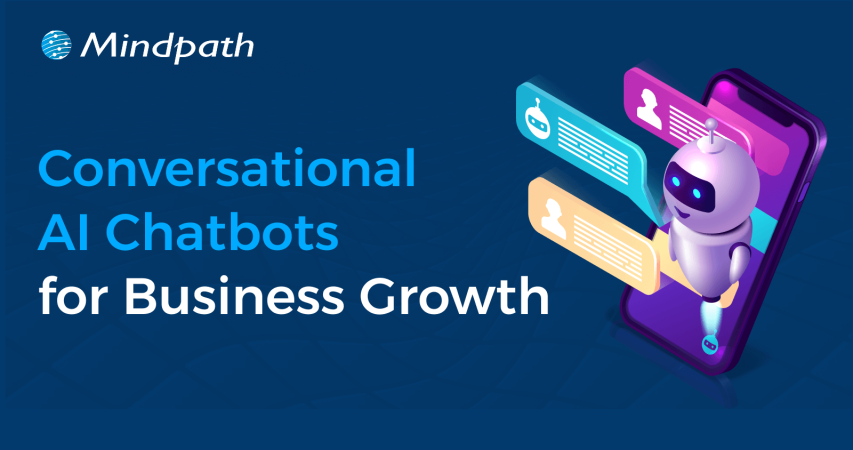
How Conversational AI Chatbots Transform Business Operations?

Join our Newsletter!

Featured Posts

Support Is One Click Away

Home

How Conversational AI Chatbots Transform Business Operations?

conversational AI chatbots

How Conversational AI Chatbots Transform Business Operations?

Ever thought about how firms can respond to thousands of customer requests every day? Or how can they give customers 24/7 support without interruption? The answer is conversational AI chatbots. These smart virtual assistants change how organizations handle customer inquiries, as well as starting a new trend to assist with sales, without downtime or human effort. The way vendor chatbots can integrate with pre-existing systems is quickly making Chatbots an efficient driver for the future of business. 

These AI chatbots are fast becoming a staple in today’s business toolset. Many organizations are beginning to use them, supplementing their customer interaction and task management processes. Chatbots can fit conveniently into many different areas of an organization. As usage continues to expand, understanding their value is important. This blog will detail how these AI chatbots are increasing the effectiveness of business operations in simple ways. 

Looking to enhance customer engagement with a personalized AI solution? Our custom chatbot development services specialize in building conversational AI chatbots tailored to your business needs and goals.

What is a Conversational AI Chatbot?

A conversational AI chatbot is an intelligent computer program that interacts with individuals using natural language. It understands an accurate interpretation of what its users are saying/writing, processes that input, and responds accordingly in the way a real human would.

Conversational bots are found in websites, applications, and messaging interfaces to assist users who have questions, information, support, or simple tasks and processes. They can exist on a 24/7 basis with no waiting and provide instant and consistent information without the need for the user experience to include human staff.

Conversational chatbots use advanced technologies like natural language processing (NLP), machine learning (ML), and large language models (LLM) to understand and improve conversations. They don’t just follow pre-written scripts but can learn and adapt based on new information.

From helping customers with online shopping to guiding employees through internal systems, these chatbots are becoming a useful part of modern business communication. 

Curious to know how AI can enhance your e-commerce strategy and give your business a competitive edge? Read our detailed blog on how AI in e-commerce is transforming the future.

Types of Conversational AI Chatbots?

Conversational chatbots come in different types, each designed to handle specific kinds of interactions. Understanding these types helps in choosing the right chatbot for your business needs.

1. NLP Chatbots

Natural Language Processing (NLP) chatbots can understand user intent and context, making them capable of handling complex or varied language inputs. Unlike rule-based bots, they interpret full sentences to deliver more relevant and precise answers.

2. Menu-Based Chatbots

Menu-based chatbots use decision tree-type logic and offer users a set of predefined buttons or options to choose from, guiding them through a structured conversation. These bots are ideal for handling simple FAQs like tracking orders or checking pricing but can be limited in handling complex queries.

3. Machine Learning Bots

Machine learning chatbots learn from past user interactions and improve over time, allowing for highly personalized and context-aware conversations. They can remember user preferences and reuse information in future chats, enhancing the customer experience.

4. Hybrid Chatbots

Hybrid chatbots combine rule-based systems with AI capabilities to deliver both structured and intelligent responses. They can escalate complex issues to human agents, allowing seamless integration between automation and live support.

5. Rule-Based Chatbots

Rule-based chatbots operate using if-then logic and keyword recognition, providing answers based on specific triggers set by the developer. They work best when queries are predictable and can be mapped to predefined responses using keywords or phrases.

All these chatbot types can be integrated into a powerful conversational AI platform to provide comprehensive and intelligent customer support solutions.

According to a study by Tidio, the conversation rate of chatbots in some industries has been observed to reach up to 70%.

Also Read: Benefits of AI

Benefits of Conversational AI Chatbots For Business Growth

Conversational AI chatbots are becoming a powerful tool for businesses looking to improve how they work and grow faster. Here are some of the key benefits they offer for driving business growth:

1. Get Useful Customer Feedback Easily

Chatbots can ask for feedback right after a chat session by sending a quick question or rating option. To encourage responses, they can offer discounts or small rewards. Businesses can then check feedback and chat logs to discover common issues and improve services. It’s a smart way to collect insights without bothering the customer.

2. Understand Customer Needs

AI chatbots can figure out what the customer wants and how they feel by reading their words and tone. They understand if a message is urgent or if a customer is upset. When needed, they pass this helpful info to an agent. This gives the agent better context to respond more personally and calmly. 

3. Support Your Sales Team with Smart Help

AI chatbots help with sales by chatting with website visitors, gathering lead details, and booking demos. They answer common product questions and encourage customers to stay longer and learn more. This reduces cart abandonment, increases conversion rates, and supports upselling, all with minimal effort. 

4. Handle Repetitive Questions Automatically

One of the best AI chatbot features is the ability to answer common questions instantly. They manage simple tasks like order tracking, returns, and payment issues without needing a support agent. This saves time for both the customer and your team. It also reduces the number of tickets and keeps agents free from more serious problems.

If you’re exploring smarter ways to deliver customer support. Read our blog on AI for Customer Service, where we highlight how chatbots and virtual assistants can improve customer satisfaction and drive measurable business growth.

5. Increase Lead Generation

Instead of filling out forms, customers can chat naturally with AI bots to share their needs. Chatbots collect useful data like preferred products, location, and language. This data is shared with the marketing team, helping them create personalized campaigns and understand customer behavior better.

6. Keep Customers Engaged with Timely Updates

Chatbots can send helpful messages like order updates, appointment reminders, or payment alerts. They also follow up with feedback requests and help continue conversations across different platforms. With custom branding and fun elements like emojis or images, they make every interaction feel friendly and engaging. 

7. Lower Business Costs

Every business wants to reduce costs while improving service quality. Chatbots help by managing simple tasks, answering frequent questions, and routing chats to the right place. This reduces the need to hire additional agents. Some chatbot platforms are easy to set up without coding, saving time and helping businesses see value faster.

8. Scaling Customer Support Efficiently

Chatbots act like additional support agents by handling many customer questions at once. They manage simple requests efficiently, which helps your team focus on more complex issues. This makes it easier to serve a growing number of customers without increasing staff size, saving time, and reducing pressure on your support team. 

Wondering how to turn AI concepts into actionable business solutions? Check out our AI Consulting Services guide for insights on planning, deploying, and scaling AI effectively.

Want to Transform Your Business with Conversational AI Chatbots?

Conversational AI chatbots are changing how businesses talk to customers, manage support, and grow. From smart replies to handling repetitive tasks, these chatbots are now a valuable part of any modern business setup. They simplify operations, improve customer experience, and help teams work more efficiently without adding extra load. 

We at Mindpath are custom chatbot development company, we help businesses build custom conversational chatbots that fit their goals. Whether it’s for customer support, lead generation, or sales, our expert solutions make chatbot integration easy and impactful. Let us help you scale faster and connect better with your customers using the best AI chatbot tools.  

Related Post

Discover the ultimate guide to hiring Node.js developers in London. Learn about the skills, benefits, and cost factors involved in finding the right talent for your project.
Discover the power of Conversational AI! Learn its benefits, features, and how Mindpath can help transform your customer interactions.

Related Post

Saas trends

The landscape of Software as a Service (SaaS) is changing faster than ever. As all businesses are now adopting the cloud-first approach, SaaS tech leaders should stay ahead of SaaS trends to remain innovative and competitive.

Current market trends can help service providers to know about the challenges and come up with feasible solutions to tackle them. Whether you are investing in a SaaS technology, scaling your development strategy, or leading SaaS projects, these 14 SaaS trends will help you understand the market and what approaches you should consider to remain competitive.

Want to stay ahead of your competitors by using the latest Saas technologies in your business? Mindpath offer SaaS devlopment services to receive customized solutions that help you innovate faster and smarter.

The Rising Popularity of SaaS Technologies

SaaS has emerged as a dominant force in today’s digital landscape. It is transforming the way businesses deploy, access, and scale their software programs. With time, the popularity of SaaS platforms continues to rise across all industries. And some major reasons behind this are:

  • Businesses don’t have to worry about local installations and get instant access to solutions.
  • SaaS is scalable, and businesses can adjust usage without investing in the IT infrastructure.
  • Subscription models lower expenditure, making it accessible to all, including startups and SMBs.
  • Deployment, upgrades, and maintenance are handled by the service providers.
  • SaaS is highly beneficial to support the remote teams and provides access to necessary resources in real time.
  • SaaS platforms have the ability to integrate with existing workflows and systems.

SaaS service providers enable businesses to be customer-centric and agile. However, to remain competitive, these service providers have to keep up with innovation and adapt their platforms to the changing market demands.

The optimal way to attain that is by adhering to the trends arising in the SaaS market. Read to explore those trends.

14 SaaS Trends Driving the Future of SaaS

Now that we have unpacked SaaS’s impressive benefits, let’s uncover the SaaS trends that are redefining the landscape of SaaS technologies. Here is what is driving the next big wave of SaaS innovation.

1. API-First Architecture – The New Standard

Most modern SaaS projects now opt for API-first design since it can integrate third-party services and tools without any difficulty. It can assist in increasing flexibility and scalability as well as developer experience. Besides, this approach will simplify the process of creating custom workflows.

2. Edge Computing and SaaS

With the help of edge computing, the SaaS platforms can process data closer to the source. This, in turn, reduces latency while enhancing performance. It is quite helpful in real-time analytics, logistics, and IoT.

Through edge capability integration, SaaS solution providers can enhance security, offline functionality, and responsiveness.

3. AI-Powered SaaS Solutions

Artificial Intelligence has become a necessity. Most SaaS platforms are now embedding AI to personalize user experiences, automate workflows, and offer predictive insights. It has also enabled accurate fraud or risk detection.

SaaS platforms that are lacking intelligence are losing relevance. After all, customers want more than just task automation. They want tools that can anticipate requirements and support their decision-making.

4. Changes in Subscription Models

SaaS pricing is now shifting from the monthly packages to hybrid, freemium, and usage-based models. Some are also available with outcome-based pricing models. Such flexible pricing structures have helped service providers to improve retention and customer value.

As these platforms evolve, businesses significantly benefit from personalized pricing. On the other hand, providers get deep insight into product engagement and user behaviour.

5. Enhanced Privacy, Compliance, and Security

Trust is an important asset. The customers believe that service providers are safe and in compliance. But that trust can be hampered with just a single instance of data breach or GDPR conflict. Thus, SaaS providers should focus on the use of zero-trust frameworks and advanced encryption.

Besides, the deployment of automated compliance tools can help a lot here. Furthermore, they should keep themselves updated about evolving regulations such as DORA, HIPAA, GDPR, and PDPL.

6. Vertical SaaS

SaaS development companies are now going niche. Why? Well, generic SaaS tools may not help users with industry-specific needs, workflows, or regulations. They are launching SaaS technologies for specific industries like finance, education, or healthcare.

Vertical SaaS platforms are significantly influencing the future of SaaS by offering tailored compliance, deep domain expertise, and flexibility. The vertical SaaS market is expanding, and it is forecast to reach USD 263420 million by 2031 (Source: Market Monitor Global)

7. Micro-SaaS Solutions

Micro-SaaS businesses typically have a narrow focus on use cases and develop add-ons for big SaaS platforms. They are agile, quick to launch, and lean. Micro-SaaS businesses offer highly targeted solutions, with their flexibility supporting rapid adaptation to changes. They are best suited to deal with overlooked issues in various saturated SaaS markets.

8. Conversational UX Will Be a Game Changer

The interface of SaaS platforms is evolving rapidly, with chat-based navigation, natural language processing, and voice assistants. These features increase accessibility and user engagement.

This is one of the vital SaaS trends that most SaaS providers have adopted, making their software interaction feel more human-centric. This trend has become a core component of SaaS development.

9. RevOps

Speaking of the most significant trends in SaaS, we cannot omit the emergence of Revenue Operations (RevOps). It unifies marketing, customer success, and sales into an AI-powered platform. These tools provide SaaS companies with end-to-end visibility.

This means that the retention, forecasting and profitability can be easily enhanced. For instance, the advanced lead scoring system in the RevOps tool can help sales teams focus on prospects who are more likely to convert.

10. Blockchain Integration in SaaS

It is undeniable that blockchain is quickly changing the SaaS market by introducing decentralized, secure, and transparent data management. Other use cases that we may take as an example are encrypted transactions, smart contracts, and identity verification.

The adoption of blockchain in SaaS applications provides better trust, compliance, and traceability. This is essential for legal, healthcare, and finance SaaS providers who aim to have better data integrity.

11. Low-Code/No-Code Platforms

The low-code and no-code approach is one of the most popular trends in 2025, as it can support easy and fast development. SaaS providers are also supporting this move. In fact, they are also integrating this into their platforms.

Why? In a world where speed matters, allowing non-technical teams to create their own tools can help unlock a new level of productivity. The workflow of finance, operations, and HR teams can be automated with a couple of clicks.

12. Business Intelligence and Predictive Analytics

SaaS platforms are now using predictive analytics to predict market trends, customer behavior, operational risks, and more. This helps businesses to make data-driven decisions faster than before.

Service providers have realized that business intelligence has become a crucial asset. They are optimizing it to enable businesses to enhance performance.

13. Sustainability-Focused Solutions

Sustainability-focused SaaS, or green SaaS, is now gaining traction as organizations are prioritizing eco-friendly options. Carbon tracking, cloud efficiency, and sustainable hosting are leading this transformation.

These trends in the SaaS industry reveal growth in the demand for ethical solutions. And the future of SaaS will be based on how it is aligned with long-term business sustainability and environmental responsibilities.

14. Localization and Globalization of SaaS Tech

It has been seen that SaaS service providers are now expanding globally, and they are also localizing compliance, customer support, and content. By offering region-specific features and multilingual interfaces, they are enjoying continuous international growth.

SaaS companies are evolving and scaling their platforms across multiple geographies while offering all the necessary elements.

The Next Chapter in SaaS Innovation and Growth

Well, the current trends are looking really impressive, establishing a solid foundation for SaaS market growth. But what will happen after 2025? Well, predicting the future of SaaS technologies is a little difficult. However, the direction of the journey is clear: SaaS is becoming more intelligent, ambient, and embedded.

New technologies like quantum computing, Zero-UI, blockchain, etc., will bring massive changes in this landscape. For instance, quantum computing will force developers to rethink SaaS security models. On the other hand, Zero UI will lead to enhanced user engagement by offering interfaces powered by context, voice, and predictive behavior.

What’s more? There will be an increasing focus on regulation, privacy, and sustainability. SaaS leaders who thrive will not be the ones who just predict the future, but those who design for resilience and volatility.

SaaS is More Than Just a Trend- It’s the Future

If SaaS has taught us anything in 2025, it’s that change is not just constant, it’s compounding. If you are still wondering is SaaS the future, the answer is definitely yes. SaaS solutions are becoming popular across different industries. After all, these solutions help them to establish a solid digital presence and save money.

Besides, it is highly customizable, and you can configure it for your specific needs. If you want to stay ahead of the competition, then you must embrace Software-as-a-Service. This is where Mindpath can help. We can help businesses leverage advanced SaaS platforms and the latest SaaS trends that prioritize continuous innovation, seamless integration, and security.

We also ensure your SaaS projects align with the changing customer needs. Let us guide you in this evolving landscape of SaaS and capitalize on every SaaS opportunity.

full stack development trends

The full-stack development landscape is changing rapidly, and 2026 is already showing great possibilities for new ideas and better tools. Getting familiar with the newest full-stack development trends can help developers, startups, and businesses create smarter solutions. User needs are increasing, along with the requirement for flexible and efficient development solutions, which means teams are taking a fresh look at how they build, test, and scale applications. Knowing how to navigate these changes can have a significant impact next time whenever you develop a new item or launch a new product.

With speed, scalability, and seamless user experience as the new focus, developers are integrating advanced front-end technologies with back-end solutions to develop modern digital products. With cloud platforms available everywhere and low-code solutions evolving more rapidly, full-stack development is moving to a whole new level.  These solutions are transforming processes that not only save time but also improve quality and naturally foster greater teamwork. In this blog, we will provide further insight into the most important trends shaping full-stack development in 2026.

Looking to implement the advantages of full-stack development in your next project? Take a look at our full-stack development services, where our team will support and guide you to bring those benefits to the real world.

Understanding Full-Stack Development

Full-stack development refers to building both the front-end and back-end of a software application. Let’s dive in to understand! Every application has two main sections. The front-end is what users see and interact with, like buttons, images, and forms. The backend encompasses all the activities that take place in the background – saving data, running logic, interacting with other systems, etc.

Each side requires different skill sets and tool sets. Full-stack development combines both sides into one process. Full-stack development enables developers to create complete applications and allows us to develop the application seamlessly from the user interface through the server and database. This means that the application includes both of those components as one shared system, which makes development more efficient and organized.

Some advantages of full-stack development include:

  1. A full-stack developer saves money by doing both front-end and back-end work, minimizing the need for multiple specialists.
  2. They speed-up the development process by working across the entire tech stack, ensuring faster delivery and smooth collaboration.
  3. With strong knowledge of current tools and trends, they support modern full-stack development by integrating advanced features like AI and responsive design.
  4. Full-stack developers take full ownership of the codebase, simplifying responsibility and streamlining debugging.
  5. They deliver well-rounded, quality solutions by working across the UI, backend logic and business processes, database activities and data expansion, and testing.
  6. They even provide ongoing support and maintenance, which ensures long-term stability, security, and enhancement.

Read in detail: Full-stack development benefits.

Full-Stack Development Trends 2026

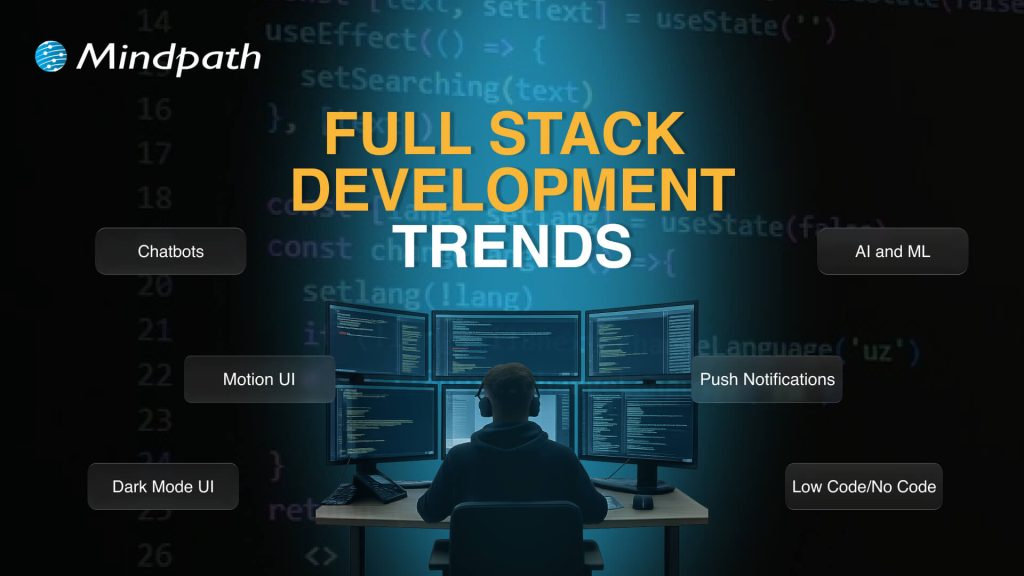
As technology continues to grow, developers are embracing smarter tools and faster methods to build complete applications. The emerging trends in full-stack development are shaping how teams work, improve performance, and deliver better user experiences in 2026. Here are the top trends to watch:

full-stack development trends


1. Artificial Intelligence

Artificial Intelligence is one of the key full-stack development trends shaping how modern applications are built. It helps solve complex problems faster and allows systems to work without human interruption. Full-stack developers are well-suited for AI roles because they understand both design and logic, making it easier to build intelligent solutions. As the future of full-stack development evolves, AI will play a major role in improving performance and user experience.

2. Cloud Computing

Cloud computing is a fast-growing technology that allows access to data storage, processing power, and other resources over the internet. It supports the future tech stack for developers by offering flexibility, easy scaling, and pay-as-you-go pricing. Full-stack cloud developers are in demand to build and manage cloud-based applications that support collaboration and performance. To grow in this area, developers should understand IaaS, PaaS, SaaS and gain hands-on experience with platforms like AWS, Azure, and Google Cloud.

Also Read: Cloud Computing Trends

3. DevOps

DevOps is a practice that combines development and operations to improve how software is built, tested, and deployed. It helps teams work better together and use tools like continuous integration and delivery to release updates faster. DevOps plays an important role in improving application speed, quality, and reliability. As part of full-stack development trends, it supports the demand for efficient workflows and strong collaboration in building modern applications.

4. Progressive Web Apps

Progressive Web Apps (PWAs) are web applications that offer an app-like experience using modern browser features. They work offline, load quickly, send push notifications, and can be installed on devices without using much storage. As part of web development trends 2026, PWAs help businesses reach more users, especially on mobile, while keeping development simple and cost-effective. Their flexibility and performance make them a smart choice for companies looking to improve user experience.

5. Blockchain

Blockchain is a secure and transparent technology that stores data across a network of computers, making it difficult to change or hack. It is widely used in industries like finance and healthcare to protect transactions and manage decentralized systems. As part of full-stack development trends and the latest trends in web development, blockchain allows developers to build safer and more reliable applications. To work in this area, full-stack developers need skills in decentralized tools, enterprise systems, and Web3 architecture.

Must Read: AI in Cybersecurity

6. Cybersecurity

Cybersecurity is the practice of protecting systems, networks, and applications from online threats like malware, phishing, and DDoS attacks. It has become a key part of full-stack development trends as developers need to build secure applications from the ground up. Companies are now including cybersecurity in their future tech stack for developers to keep data and systems safe. Full-stack developers aiming to work in this field should learn network security, web application security, cryptography, and secure coding practices.

7. Low-Code and No-Code Development

Low-code and no-code development platforms allow users to build websites and apps with minimal or no programming skills. These tools are growing as part of full-stack development trends because they save time, reduce costs, and make development accessible to more people. While they are great for simple projects, they may not be suitable for complex or large-scale solutions. As part of the trends in software development, LCNC tools offer fast results and full-stack capabilities for quick product launches.

Looking for the best way to scale your digital growth? Discover why full stack development for web projects is becoming the smart choice for businesses.

Ready to Leverage Full-Stack Development Trends for Your Next Project?

Full-stack development trends are shaping how modern applications are built, improved, and maintained. With advancements like AI, cloud, DevOps, and PWAs, developers and businesses can achieve faster, smarter, and more secure results. Staying updated with these trends will help you build stronger digital products that meet the growing demands of users in 2026 and beyond.

At Mindpath, we offer expert full-stack development services tailored to your business goals. Our skilled developers handle everything from front-end design to back-end logic, delivering complete, scalable solutions. If you’re looking to hire full-stack developers who understand the latest tools and technologies, our team is here to help you build your web and mobile applications with confidence and efficiency.

Devops vs devsecops

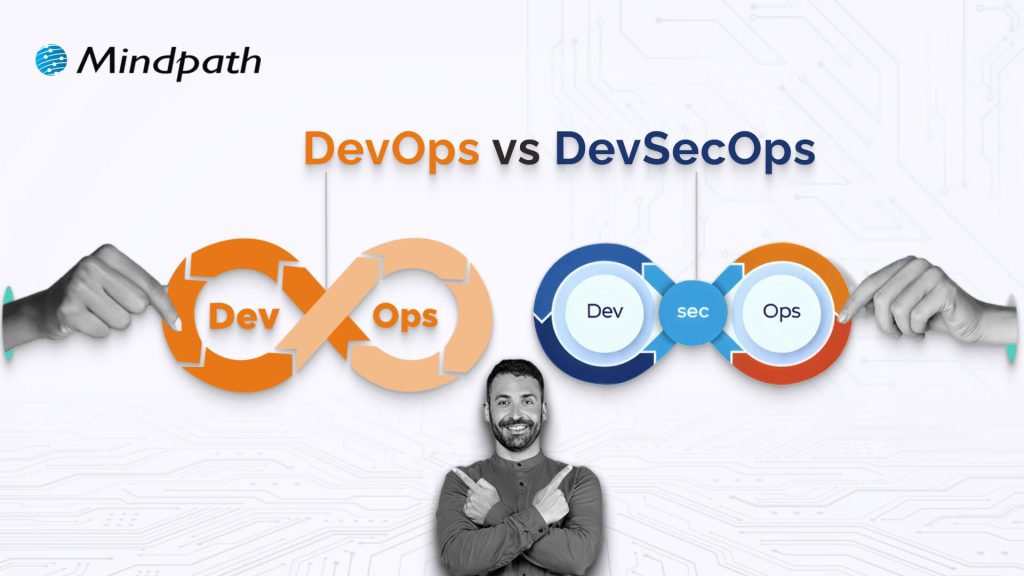
DevOps vs. DevSecOps is a topic that will often arise when companies look for better and faster software delivery. Businesses are looking to release applications and software faster than ever, but they are also mindful of the growing sophistication of security threats. So where can businesses find the balance of speed and safety? This is where the transition from DevOps to DevSecOps comes into play; the need for speed is balanced with more stringent security requirements.

In today’s fast-moving digital age, the speed of development plays an important role, but it’s hardly enough. In addition to wanting systems that develop software quickly, organizations want systems that will also withstand vulnerabilities at each stage. That is why there’s so much interest in DevSecOps. DevSecOps does not replace DevOps; it enhances it by using continuous security assessments and ongoing protection. A clear understanding of these differences allows businesses to make better choices that can balance innovation with resilience. So, keep reading further to know the difference between DevOps and DevSecOps in this blog.

Still unaware of how DevOps benefits your business? Get in touch with us to gain full insight into adopting DevOps services that makes your operations seamless.

What is DevOps?

DevOps brings together development and operations to deliver software faster and better-quality software. Its foundation is collaboration, automation, and continuous delivery. DevOps can help break down silos in an organization and execute on shared goals while realizing common objectives and reducing risk. It can also simplify processes, enable teams to become more efficient, and fulfill the goals of the technology department while keeping the goals of their customers and their company in mind.

Furthermore, it drives a cultural change that values accountability, empathy, and shared responsibility. With automation, fast iterations, and rapid feedback, businesses are able to deliver secure and reliable software. In addition to this, not only does the process encourage innovation and creativity, but it also gives businesses flexibility and resilience in a competitive marketplace.

Must Read: DevOps for Business

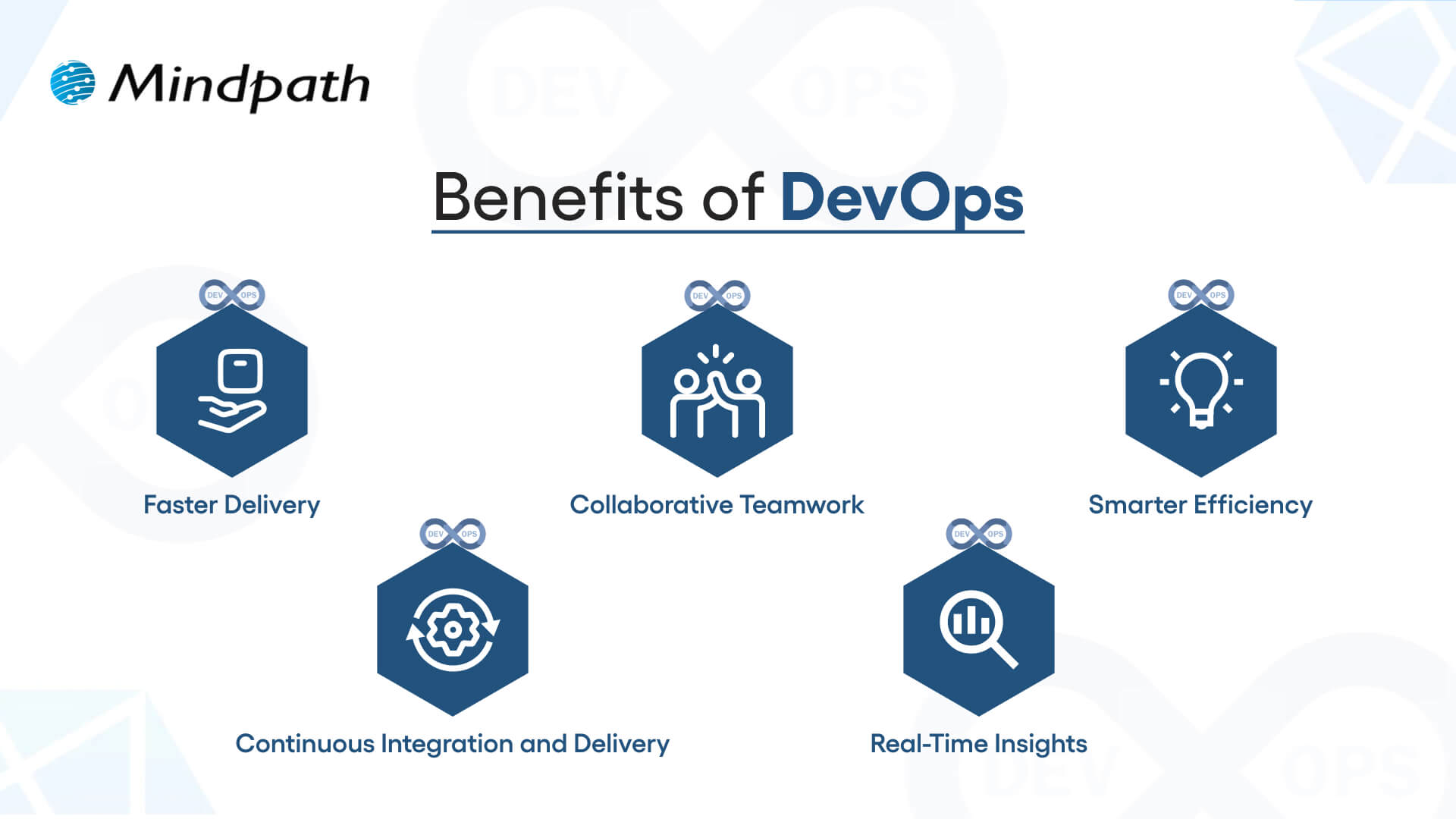
Here are some of the benefits of DevOps: 

1. Faster Delivery

Development cycles can go a lot quicker with automation and simplified processes. This enhanced delivery allows more frequent releases and decreases time to market.

2. Collaborative Teamwork

Development teams, operations, and other teams are all working toward common goals. Good team collaboration eliminates silos and improves project quality.

3. Smarter Efficiency

Automation eliminates repetitive tasks and optimizes workflows. Teams have the ability to save time and focus on activity that produces value, instead of spending time on manual processes.

4. Continuous Integration and Delivery (CI/CD)

Continuous integration and continuous delivery allow for reliable and consistent deployments. Your users can get new features and fixes fast and seamlessly.

5. Real-Time Insights

Monitoring tools enable instant visibility across the ecosystem. Teams can identify problems early, troubleshoot quickly, and improve performance.

These points explain how DevOps speeds up collaboration and delivery when comparing DevOps vs. DevSecOps, while DevSecOps extends an approach that has been inherently faster approach by adding stronger security practices.

Curious how automation and modern practices can improve your DevOps pipeline? Visit our blog on DevOps Trends to discover actionable insights and emerging innovations.

What is DevSecOps?

DevSecOps is the process of integrating security into every single aspect of software development. It unites development, security, and operations teams so they can plan, build, test, and release applications together. In return, DevSecOps allows for faster, more reliable processes, ensuring that the software has security built in from the beginning of development.

To better understand the three pillars of DevSecOps, simply think of collaboration, automation, and continuous security. Collaboration ensures that everyone is sharing the responsibility, automation introduces automated security checks into CI/CD pipelines, and continuous security ensures that monitoring is continuous. With the three pillars of DevSecOps, organizations are able to create dependable applications while implementing continuous security measures to defend them against constantly evolving threats.

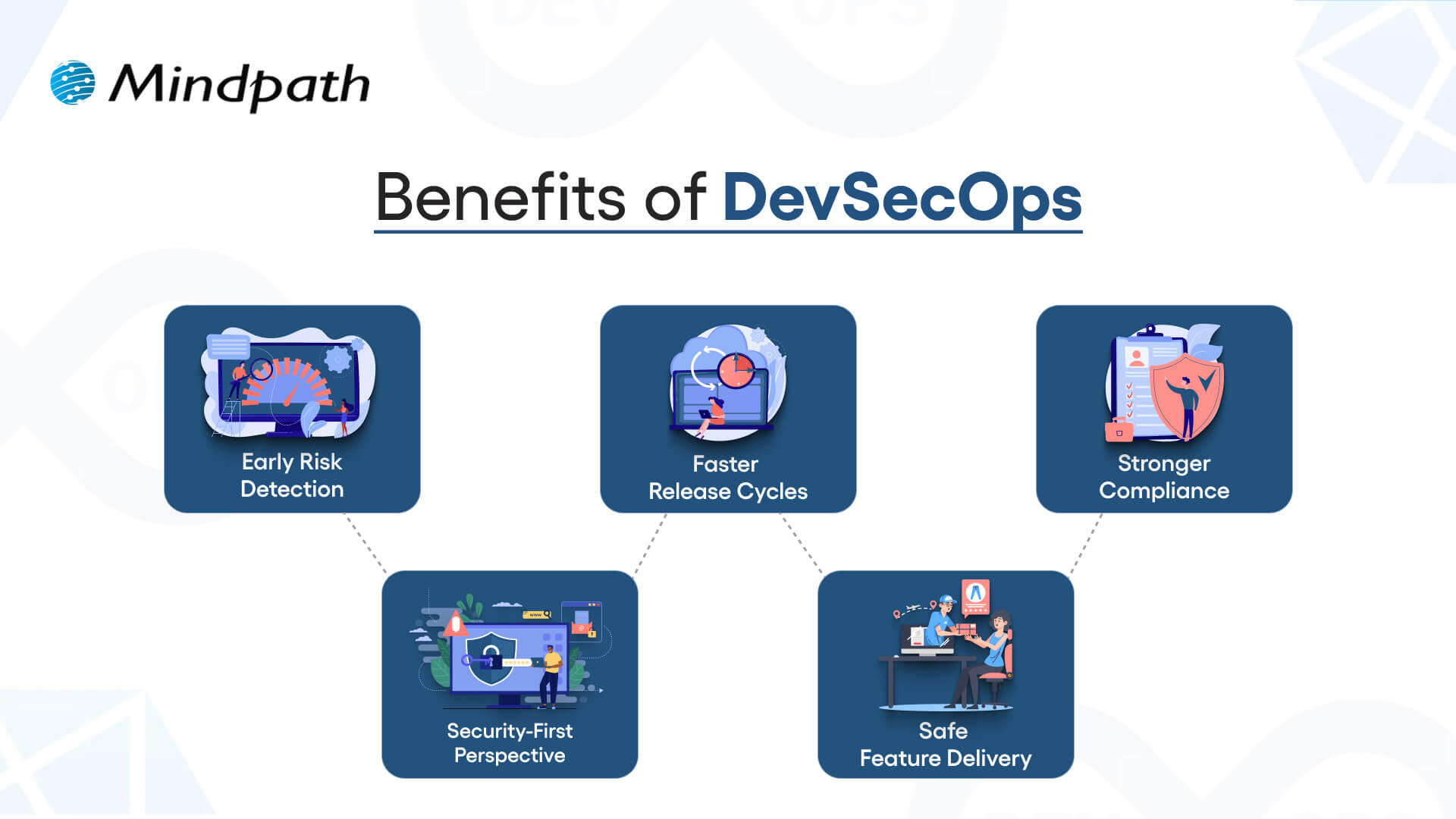
Here are the benefits of DevSecOps:

Benefits of DevSecOps

1. Early Risk Detection

DevSecOps allows for the identification of vulnerabilities during the development phase rather than at the end of the development process. Finding and remediating risk early in this way saves time and expense and means that users receive secure applications.

2. Faster Release Cycles

As teams can impact security testing in their workflow, delays are prevented, human error is removed, and developers get new features into the hands of users sooner.

3. Stronger Compliance

DevSecOps processing can assist software teams in meeting compliance obligations with strict regulatory guidelines. Automated checks and secure development practices ensure that data continues to be protected, while developers can be assured that they meet industry standards.

4. Security-First Perspective

Treating security as a shared responsibility, teams practicing DevSecOps have developers, security professionals, and operations staff collaborating to manage risks actively and ensure they minimize incidents throughout the development period.

5. Safe Feature Delivery

With DevSecOps, teams can deliver new functionality faster while also guaranteeing that security practices are undertaken throughout the development period. This can be one of the key differences in terms of DevOps vs. DevSecOps: how features are delivered.

Aiming to enhance operational efficiency and reduce development risks? Check out our blog on DevOps Challenges and Solutions to discover proven approaches that improve performance, stability, and cross-team cooperation.

DevSecOps vs. DevOps: Key Differences

DevOps vs. DevSecOps reveals how software teams value speed, teamwork, and security. While DevOps emphasizes faster delivery, DevSecOps enhances that process, making security a priority at every step of the development process.

1. Security Focus

The primary distinction between DevOps vs DevSecOps is security. DevOps puts movement between development and operations to speed up the delivery of software, but its security processes are usually significant afterthoughts. DevSecOps has security processes established from start to finish and considers them a core capability. By treating security as a core capability, vulnerabilities are eliminated upstream, so they are remedied before deployment.

2. Collaboration Culture

DevOps emphasizes collaboration between development teams and operations teams to promote continuous integration and delivery. Security is often treated as an independent effort, which creates holes in the development process. DevSecOps emphasizes the work of the security team interacting directly with developers and operations teams in every phase of development. This develops a culture of security being everyone’s responsibility.

3. Timing of Security

Conventional DevOps teams often include security at the final phase of the development cycle. If bugs occur towards the end of the process, they can delay the project significantly. DevSecOps reinforces timing by introducing a shift-left strategy with security at the beginning of the development process to build secure and reliable applications.

4. Tools and Automation

In contrast, when discussing DevOps vs. DevSecOps tools, the distinction is clear. DevOps follows automated processes for build, test, and deploy; however, normally, the security tools are still standalone. With DevSecOps, you use drive-by automated security scans, code analysis, and continuous monitoring in the CI/CD pipeline. It allows teams to detect threats in real-time without having to slow their delivery pace.

5. Salary Comparison

There is a notable salary gap when looking at DevOps vs. DevSecOps salaries in the UK. DevOps Engineers generally earn from £65,000 to £92,500+ with a difference based on skills and location, while DevSecOps Engineers receive a greater salary, with salaries for senior roles exceeding £130,000+ a year, particularly for positions based in London.

Looking to optimize your CI/CD pipeline with smarter automation and streamlined processes? Visit our blog on DevOps Best Practices to discover the strategies high-performing teams use to achieve consistent, stable releases.

DevOps vs. DevSecOps: A Comparison Table

When exploring DevOps vs. DevSecOps, it’s clear that both approaches aim to improve software delivery but take different routes to get there. This table highlights the main distinctions, making it easier to see how DevSecOps builds on DevOps with an added focus on security.

Aspect DevOps DevSecOps
Core Goal Focused on speeding up development and deployment cycles. Balances speed with security to deliver safe, reliable software.
Team Culture Collaboration between development and operations teams. Shared responsibility among development, operations, and security teams.
Security Approach Security checks are introduced late in the release pipeline. Security is integrated into every stage of the development lifecycle.
Automation Uses CI/CD pipelines to automate builds, tests, and deployments. Extends CI/CD with automated security scanning and compliance checks.
Risk Handling Issues are often fixed after vulnerabilities are found in production. Risks are identified and mitigated early to prevent breaches.
Compliance Handled towards the end of development, often as a final step. Built into processes from the beginning, ensuring continuous compliance.
Toolset Relies on monitoring, deployment, and collaboration tools. Adds tools for code analysis, threat detection, and policy enforcement.
End Result Delivers applications quickly but may leave gaps in security. Produces faster releases that are also secure, compliant, and resilient.

Which approach will drive your business forward?

The comparison of DevOps vs. DevSecOps shows that while DevOps accelerates delivery, DevSecOps ensures that speed is not achieved at the cost of security. Businesses gain the ability to innovate quickly while reducing vulnerabilities. Choosing the right model depends on priorities, but integrating security early always results in stronger, more resilient software outcomes.

At Mindpath, we offer tailored DevOps services designed to improve speed, collaboration, and reliability across your software delivery cycle. By helping teams embrace automation, modern practices, and security-focused strategies, Mindpath ensures that businesses not only accelerate development but also deliver secure, high-performing applications that stand out in today’s competitive digital market.

Explore the key comparison between DevOps vs DevSecOps to find out which approach best enhances your development pipeline.