Home

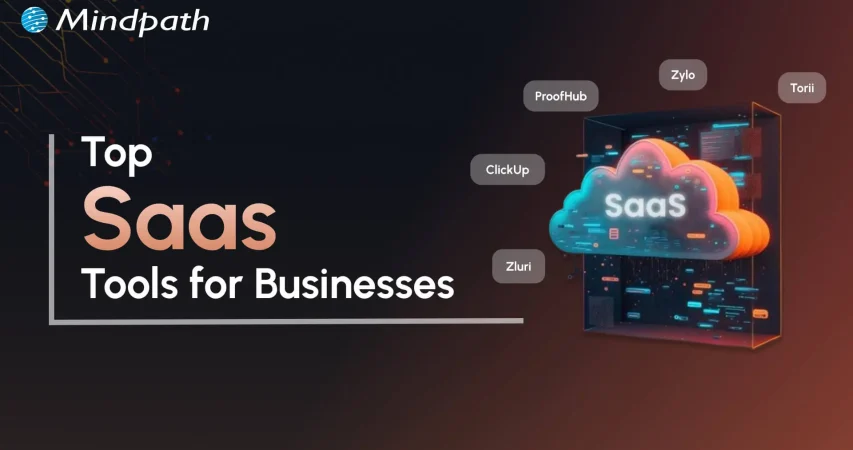
30 Best SaaS Tools Every Business Should Use

30 Best SaaS Tools Every Business Should Use

Join our Newsletter!

Saas tools

SaaS tools (Software as a Service tools) have become the backbone of modern businesses. These tools are empowering teams to achieve more with less and streamlining multiple operations. In fact, around 90 percent of companies believe SaaS solutions play a major role in assisting them to adopt new technologies more efficiently (Source: Artios)

But with thousands of tools available, how do you select the best SaaS tool for your business? Well, this comprehensive guide can help you simplify your search. In this guide, we have covered the 30 best SaaS tools that businesses can use to build a robust digital arsenal. Let’s have a look.

Want to offer seamless software experiences to your customers while optimizing internal processes? Mindpath’s SaaS development services deliver customized and robust applications to support your business goals.

What are SaaS Tools?

Before exploring the tools, let’s first understand the SaaS tools meaning. These tools are designed for flexibility and speed. You can use these tools through your browsers. That means you don’t have to worry about the download and configuration process. Just sign up, and you can start enjoying the benefits of these tools.

As everything is stored securely online, your team can effortlessly collaborate from anywhere. The best thing is that SaaS tools can scale easily as your organization grows. Check out the section below to explore the advantages these tools offer.

Want to stay ahead in a rapidly evolving digital landscape? Discover SaaS trends to learn how emerging innovations are reshaping the way businesses operate and scale.

Impressive Benefits of SaaS Tools

The strategic implementation of these tools can significantly transform your organization. With these tools, you will witness the following benefits:

1. Affordable Solutions

SaaS tools for small businesses offer scalable and affordable solutions to simplify operations, supporting growth.

2. Boost Productivity

A SaaS tool can automate repetitive processes, increasing the productivity of your team.

3. Scale Efficiently

These tools can adapt quickly based on your business requirements.

4. Enhance Custom Experience

They offer personalized and quick interaction through intuitive platforms.

Planning to invest in SaaS development but unsure where to start? Check out how to choose the right SaaS development services and learn the key factors that impact quality and scalability.

SaaS Development Process- A Quick Overview

Before we start exploring the SaaS tools list, it would be better to have knowledge of what is  SaaS development and how the process unfolds. In simple words, it is a comprehensive process of designing, developing, and employing a software solution in the cloud. The development process generally follows below mentioned stages:

1. Idea Generation

This is the initial phase of the process. It involves analyzing the business issues and market needs that can be fixed through a SaaS solution. It can be said that ideation creates a foundation for a successful development process.

2. Design

UX designers and developers work together to create user-friendly, intuitive interfaces that can enhance engagement and usability. They also prioritize responsiveness and accessibility of the solution.

3. Development

Next is development, the stage where developers create the actual SaaS tool using secure and scalable APIs and frameworks. This process includes database integration, frontend functionality, and backend logic.

4. Testing

This is a crucial stage as it ensures the tool functions smoothly, reliably, and securely. Developers validate the performance of the tool under different conditions through manual as well as automated tests.

5. Deployment

After thorough testing and necessary optimization, the product is then launched on platforms such as Google Cloud, Azure, and AWS. Once done, users can access the new product from anywhere.

6. Maintenance

The process doesn’t stop after the deployment. Ongoing maintenance of the tool is critical. Developers continuously monitor the tool and roll out bug fixes, updates, and new features regularly to keep the tool aligned with user requirements.

This development lifecycle ensures SaaS tools remain secure, flexible, user-centric, and scalable, offering a seamless experience.

Looking to improve productivity across your software ecosystem? Check out SaaS challenges for business and learn how to tackle adoption and integration problems.

Best SaaS Tools for Businesses

With countless SaaS tools available today, selecting the best SaaS tool can be challenging. Well, if you are in search of top tools that can help your business, then here is a curated list of the 30 best SaaS tools or  SaaS tools examples to consider.

For your convenience, we divided all these tools into different categories, such as sales, communication, HR, and more. Have a look.

Category 1: Communication and Collaboration

We all know that effective external and internal communication is crucial for constant business growth. These SaaS tools can be used to ensure seamless interaction.

While some consider this as a chat app, Slack is a robust team collaboration tool. It supports file sharing, real-time communication, and organizes multiple conversations into various channels. Besides, it seamlessly integrates with other SaaS platforms. Whether you have a remote or hybrid team, Slack can help you ensure seamless collaboration across departments as well as projects.

This is a comprehensive platform that combines conferencing, video calls, chat, Office 365 integration, and file sharing. Furthermore, this top SaaS platform also supports document co-editing and project collaboration. If your business is already using Microsoft products, this can be an ideal choice for you.

It offers an all-in-one platform for documents, databases, notes, and task management. Notion is highly customizable. It also comes with various AI features such as AI search, chatbot, writing assistant, research, and more to boost productivity. Notion is an excellent option for teams seeking knowledge sharing, streamlined workflows, and flexible collaboration.

It is a comprehensive suite that includes Docs, Slides, Sheets, Derive, and Gmail. Startups, small businesses, and large organization teams can use it to enable cloud-based productivity and collaboration.

It is a perfect option for quick video messages. You can also use it as a screen recording tool. Besides, it can help in giving quick updates and tutorials, lowering the frequency of live meetings.

Category 2: CRM or Customer Relationship Management SaaS Platforms

CRM tools are designed to help organizations to manage customer activities, track sales progress, and get detailed insight into customer needs and behavioral patterns. Some popular CRM SaaS tools you can opt for are:

This cloud-based CRM tool leverages AI to provide users with automated customer services, marketing, and sales automation solutions. Furthermore, it has many amazing features, like time awareness, flexible customization options, and powerful cloud infrastructure.

It provides businesses with a powerful free CRM option and also paid suites for marketing, sales, and customer service. If you are searching for the best SaaS tools for startups, this would be a perfect choice due to its integrated approach and user-friendly interface.

Well, Salesforce is a leader in CRM, offering powerful tools for managing sales pipelines, marketing, customer relationships, and support. This tool is ideal for growing and established businesses seeking enterprise-grade solutions.

This simple CRM SaaS tool focuses on building and improving customer relationships. With features like built-in SMS, emailing, and calling, Close ensures efficient and quick communication. Apart from these, you will find other useful features like task automation, reporting tools, sales insights, and more in this tool.

Category 3: Task and Project Tools

No matter the size, all businesses run on multiple projects, for example, running a marketing campaign or launching a new product. Managing numerous projects efficiently means keeping timelines clear, teams on track, and tasks organized.

This is where SaaS project management tools can help you ensure smooth management of projects.

It is a versatile project management tool designed to boost team collaboration and productivity. It provides users with built-in communication tools, a customizable dashboard, and Gnatt charts, simplifying resource planning and task tracking.

When talking about popular project management tools, we can’t ignore Trello. It utilizes visual boards and cards to efficiently organize multiple tasks, track progress, and assign responsibilities. It is an excellent option for creative projects, small businesses, and agile teams.

This SaaS project management tool comes with multiple useful tools like risk management, time sheets, Gantt charts, project dashboards, and time sheets. It can help businesses with resource allocation, project tracking, task management as well as financial management.

Asana assists teams in planning, organizing, and executing multiple projects with ease. It provides them with automation, reporting, dependencies, and timeline features to increase accountability and boost productivity.

This flexible work management tool streamlines team collaboration, project planning as well as team collaboration. With powerful integrations, ready-made templates, and interactive visual boards, it can support workflows for diverse industries.

Category 4: SaaS Sales Tools

Robust marketing and sales SaaS tools help organizations solidify their online presence and stay ahead of competitors. Whether you are managing leads or running multiple email campaigns, these tools can help you achieve desired results.

This CRM primarily focuses on sales pipelines. Using this platform, you can easily schedule follow-ups, track deals, automate tasks, and centralize sales data. It supports more than 500 integrations and comes with powerful built-in AI features.

ActiveCampaign facilitates marketing automation with accurate customer segmentation. It helps organizations create personalized customer journeys and optimize their campaigns through advanced analytics. ActiveCampaign is ideal for driving conversions and scaling engagement.

This platform combines all the functionalities of a CRM with built-in email, phone, and lead scoring. Using this, teams can streamline outreach, accurately track interactions, and close sales deals faster.

When it comes to choosing popular email marketing tools for your business, you can confidently go to Mailchimp. The platform offers features like audience segmentation, automation, analytics, and more. You can craft targeted campaigns, track performance, and automate emails, enhancing your customer relationships.

This all-in-one reporting automation tool can pull the latest data from multiple apps such as Google Analytics, Facebook Ads, and HubSpot. You can then access the data through spreadsheets or dashboards. Coupler.io is a perfect tool for marketing, sales performance analysis, campaign tracking, and detailed reporting.

Category 5: IT and Security Management

In this cloud-driven world, managing IT infrastructure and protecting digital assets is something that you can’t consider as optional. Whether you are an enterprise or a startup, these SaaS tools can help you safeguard data and streamline access control.

It is designed to provide users with a highly encrypted password storage system. Besides, it supports two-factor authentication and secure file sharing. With this, IT security teams enjoy centralized control and better visibility in access management. 1Password eliminates the “Access-Trust Gap”.

This password manager stores business and employee credentials, protects access, and enables encrypted file sharing across all devices. Businesses prioritizing user authentication, cybersecurity, and compliance can give it a try.

It is created for teams that need maximum visibility and quick fixes without any hassle. The tool offers compliance assistance, continuous vulnerability monitoring, manual pentest, and CI/CD integrations.

Cloudflare functions as a robust shield for the modern internet, creating a layer of security between the web and your application. It offers DDoS protection, advanced encryption, and a web application firewall.

Vicarius focuses on the vulnerability remediation process, making it quick and efficient. It can analyze assets, rank threats based on their exploitability, and protect applications while patching. Besides, you can integrate this with collaboration and ticketing platforms to automate task ownership and statuses.

Category 6: Design, Productivity, and Analytics Tools

Whether you are streamlining workflows, creating striking visuals, or tracking performance, this category covers some useful SaaS tools that can help your team work faster and smarter.

Using this, your team can get a complete picture of how visitors use your website. Besides, it helps to understand the source of traffic, what pages they visit, and the actions they take.

It is a drag-and-drop design platform that allows you to create everything from presentations, social media posts, to videos and logo creation. It is easy to use, fast, and offers AI-powered design functionalities.

Grammarly is popular for helping users write professionally and clearly. It can rewrite your sentences, resolve grammar issues, and keep the tone consistent. Furthermore, it helps you track time spent on a document.

Category 7: HR SaaS Tools

Undoubtedly, employees are the most important resource for every organization. If you can manage them effectively, ensuring long-term success will not be that challenging. And if you are looking for some powerful HR SaaS tools, here are some options to consider.

It is a simple-to-use, yet powerful HR platform for small to medium-sized organizations. It offers the necessary tools for hiring, onboarding, performance management, data management, and time tracking.

This modern HR tool is designed for fast-growing and dynamic companies. Using this, you can efficiently streamline core HR processes. It comes with a built-in recruitment module and robust reporting features.

This comprehensive HR suite offers payroll, talent management, benefits administration, compliance tools, and more. It also has robust integration and analytics capabilities.

The Future of SaaS Platforms

As SaaS development and adoption grow, we can expect to see:

1. Greater focus on responsive design for smooth remote access.

2. More ML and AI features in automation and analytics.

3. Enhanced compliance and security, especially for industries dealing with sensitive data.

4. Seamless integration with all SaaS tools.

Closing Thoughts

SaaS tools have become crucial for modern businesses as they can simplify multiple processes. With a top SaaS platform, it will be easier for you to boost collaboration, streamline operations, propel sales, and automate repetitive tasks. These SaaS tools are trusted and popular among industries.

If you want to create or harness the maximum potential of a cloud-based tool, then partner with Mindpath. We offer custom SaaS development services for small businesses and enterprises. Furthermore, our team ensures seamless integration of SaaS tools with your existing systems and other third-party tools. Let us help you unlock the true power of SaaS and transform your business’s efficiency and workflow.


Support Is One Click Away

Featured Posts

Related Post

emerging technologies for small businesses

Did you notice how quickly the business environment is shifting for small enterprises? Business owners are seeking better ways to operate their business, acquire customers, and outpace the competition. That is where the role of emerging technology for small businesses becomes crucial. These technologies are no longer considered unattainable, but they are important considerations in your daily routine. If you’re trying to understand how to keep up with the pace, you’re already on the right path.

This transition isn’t merely an upgrade of tools. It’s a change in how small businesses think, plan, and grow. Through artificial intelligence, automation, and cloud services, these technologies are evolving the way companies can more efficiently make the moves toward enhanced workflows, laterally engage new markets, and leverage a better use of resources. What once seemed complex or expensive is now easier to adopt and use. In this blog, we’ll look at how these emerging technologies are shaping a stronger and smarter future for small businesses.

Adopting the right technologies can be challenging for small businesses. At Mindpath, we help small and growing businesses harness emerging technologies, from AI and automation to custom web and app development, to drive sustainable growth.

Importance of Emerging Technologies for Small Businesses

Emerging technologies in business are becoming very important for small businesses that want to grow and stay competitive. These tools help small teams work faster, reduce costs, and serve customers better. These technologies make everyday tasks easier and help businesses manage more with less effort. For small businesses, this means saving time, avoiding manual errors, and focusing more on customer needs and business goals.

As the market keeps changing, small businesses must keep up with new trends and tools. Using the right technology helps improve service, increase profits, and make smarter decisions. It also helps small businesses compete with larger companies by giving them the same tools to operate smoothly and efficiently. In today’s fast-moving world, using the right technologies is a good idea and important for growing and staying successful.

Want to stay ahead in a rapidly evolving business landscape? Discover how digital transformation for businesses enables small businesses to adopt emerging technologies and unlock new growth opportunities.

Impact of Emerging Technologies on Small Businesses

The future of small businesses is being shaped by constant changes in technology. As digital tools become more advanced, the impact of emerging tech on local businesses is becoming harder to ignore. Here are some key areas where this shift is starting to make a difference.

Impact of emerging technologies on small business

1. Enhanced Customer Engagement

Emerging technologies for small businesses are changing how they talk to their customers. Tools like live chat, easy websites, and chatbots help give quick answers. These tools also help businesses know what their customers like or need. This builds stronger trust and long-term relationships.

2. Seamless Remote Collaboration

Digital transformation for small businesses makes it simple for teams to work from different places. Online tools help people talk, share work, and stay connected. This solves the problem of working across locations. It keeps everyone on the same page and helps the business run better.

3. Efficient Operations

New technology helps small businesses work better every day. Tools like AI and cloud systems reduce the time spent on manual tasks. This means fewer errors and quicker results. Emerging technologies for small businesses help manage operations smoothly and save time.

4. Higher Productivity

How technology is changing small businesses can be seen in faster and more efficient work. New tools help track inventory, manage customers, and understand buying habits. This improves decision-making and cuts down on mistakes. Businesses save time and get better results.

5. Lower Operational Costs

New tech helps small businesses save money and stay efficient. Automation tools reduce extra work and help finish tasks quickly. Online platforms for sales and support are more affordable now. This helps businesses grow while using fewer resources.

6. Stronger Data Security

Small businesses worry about keeping customer data safe. With new tech tools like secure cloud storage, that’s easier to do. These tools help prevent online threats and protect payment details and private information. This keeps the business and its customers safe and confident.

Curious how AI can give your small business a competitive edge? Learn about the Future of AI and how emerging technologies are reshaping growth, efficiency, and innovation for businesses like yours.

Top Emerging Technologies for Small Businesses

Emerging technologies in business are opening new opportunities for small companies to grow, compete, and serve their customers better. Here are some of the top technologies that are helping small businesses work smarter and achieve more:

Top Emerging Technologies for Small Businesses

1. Growing Use of AI

AI for small businesses is becoming easier to use and more helpful. It’s already improving customer service, reducing errors, and saving time in industries like retail and insurance. Businesses are seeing a quick return on their AI investments through features like chatbots and fraud detection. This highlights how AI for customer services and other emerging technologies are making small business operations more affordable and practical.

2. Big Data in Decision Making

Big data is helping small businesses understand their market and make better decisions. Many companies are already seeing increased profits through the use of data tools. This shows that data is not just for large enterprises anymore. Small businesses can now use insights to improve planning and stay ahead.

3. Faster Connectivity with 5G

5G brings faster data, less delay, and better connections for devices. It helps small businesses use more smart tools and supports the growing number of IoT devices. As 5G becomes more available, small businesses can expect smoother communication and faster service. This will push emerging technologies for small businesses into more areas of daily work.

4. Rise in Employee Monitoring

As hybrid work grows, more companies are using employee monitoring software. It helps track productivity and improve communication between remote teams. With higher demand since the pandemic, businesses now rely on these tools to manage their teams better. These systems are becoming a core part of small business technology trends.

5. Power of Superapps

Superapps combine many tools into one, helping businesses manage tasks more easily. They solve problems like software not syncing and reduce wasted time. Small businesses can benefit from apps that handle messaging, scheduling, and customer data all in one place. This kind of smart unification improves efficiency and teamwork.

6. Focus on Cybersecurity

Many small businesses still believe they won’t face cyberattacks, but the risk is growing fast. New threats require better protection for data and systems. By leveraging AI in cybersecurity, businesses can detect threats faster, respond more effectively, and strengthen their overall security posture. More businesses are now focusing on backup plans and stronger security tools. Acting early helps avoid major problems later.

7. Automation in Daily Tasks

More businesses are turning to automation to reduce workload and save money. It helps with tasks like pricing, inventory, and customer service. Even with fewer workers, companies can still run smoothly and meet their goals. Automation is becoming a must-have for efficiency and smart growth.

8. Smarter Remote Onboarding

Remote onboarding is now a key step for hiring and welcoming new team members. Businesses are using technology to make new hires feel connected and supported. Software helps introduce the company culture and build the right relationships. This helps companies keep talent and improve their team experience from day one.

Looking to scale your tech capabilities without breaking the budget? Learn about the key benefits of hiring remote developers and how they can help small businesses adopt emerging technologies faster and smarter.

Power Your Business Growth with Smart Tech

The future belongs to small businesses that move with change. By adopting emerging technologies for small businesses, you work smarter, cut waste, and serve customers better. These tools help you compete, make faster decisions, and grow with confidence. What once felt out of reach is now practical, scalable, and ready for you to use as you plan the next step.

Mindpath helps you turn tech goals into real progress. Our team guides your choices, sets up the right tools, and trains your people to use them well. We focus on clear steps, measurable results, and support that grows with you. Let’s map your priorities and launch changes that deliver value fast for lasting growth and stronger customer results in practice.

Frequently Asked Questions

1. What are the most practical emerging technologies for small businesses to adopt first?

Start with tools that solve immediate problems. AI-powered customer service, cloud storage, and automation for repetitive tasks deliver quick, measurable results. Emerging technologies for small businesses work best when adopted gradually with clear goals. Trying to implement everything at once often leads to confusion, wasted budget, and low team adoption rates.

2. How much budget should a small business set aside for adopting new technologies?

There is no fixed number, but starting small is always smarter. Many cloud and AI tools offer affordable subscription models specifically designed for smaller teams. Focus on technologies that directly reduce costs or increase revenue first. As returns become visible, reinvesting those gains into further technology adoption becomes a natural and sustainable progression.

3. How do small businesses protect customer data when adopting new digital tools?

Always choose platforms with strong encryption, compliance certifications, and regular security updates. Train staff on basic cybersecurity practices from day one. Many modern tools now include built-in security features that require minimal technical knowledge to activate. Prevention is significantly cheaper than recovering from a data breach after damage has already occurred.

4. Can small businesses realistically compete with larger companies using emerging technologies?

Yes, and this is one of the most exciting shifts happening right now. Many emerging technologies level the playing field by giving small teams access to enterprise-grade tools affordably. Speed and agility are natural advantages small businesses already have. The right technology amplifies those strengths rather than creating an entirely new competitive dynamic.

5. How do small business owners know when they are ready to adopt a new technology?

Readiness comes down to three things: a clear problem to solve, a willing team, and a realistic budget. If a technology addresses a genuine operational gap and your team can support it, the timing is right. Adopting tools out of trend pressure rather than business need almost always leads to poor outcomes.

Discover how emerging technologies like AI, social media, and data analytics are transforming small businesses, helping them grow, innovate, and stay competitive.
Frontend and Backend

Creating a strong business application depends on an important understanding of how you connect the frontend and backend to develop a consistent experience for the user. Picture a user on a platform that is fast, responsive, and intuitive. At every click, scroll, and keyboard input, there are systems running in the background to simulate that experience, all while interacting with a framework and keeping the user interface interesting. Technology, in turn, must be aligned with user experience and growth expectations to ensure a platform operates without flaws while keeping users satisfied.

As businesses grow, the proportion of back-end and front-end becomes more important than ever. The front-end dictates the manner in which users experience your platform, while the back-end powers the processes that allow everything to run smoothly. Ensuring that the two work closely together enhances performance, increases efficiencies, and guarantees a consistent user experience. This blog outlines the ways that both frontend and backend can be used to build a scalable business application.

Ready to build an application that provides your business with a unique and secure digital presence from front end to back end? Mindpath offers expert full-stack development services to help you design and develop scalable web application.

What are Backend and Frontend?

The frontend is the client-side layer of an application, everything a user sees and directly interacts with, including page layouts, buttons, text, and graphics. It runs in the user’s browser or app and is responsible for visual presentation, navigation, and responsiveness across screen sizes. Frontend developers use technologies such as HTML, CSS, or JavaScript, and frameworks such as React, Angular, or Vue.js to create interactive designs and usability of the platform.

The backend is the server-side infrastructure that powers the frontend. It processes user requests, runs business logic, manages server security, and stores or retrieves data from databases. Whenever a user submits a form, logs in, or makes a purchase, the frontend sends a request to the backend, which handles it and returns the appropriate response. Backend developers use programming languages such as Python, Java, PHP, Node.js, and Ruby, along with databases such as PostgreSQL, MySQL, or MongoDB, which store user accounts, posts, product catalogs, and other persistent data. The backend layer ensures that the application functions reliably and efficiently, delivering the information the frontend needs.

How Frontend and Backend Work Together for Building Scalable Applications?

The front-end and back-end collaborate appropriately to manage both user actions and the appropriate background processes that will occur. This collaboration will promote the applications’ responsiveness and scalable properties for more users and maintain the performance expected by the user.

1. API Communication

One of the main methods by which the frontend and backend cooperate is through APIs such as REST or GraphQL. The backend thus offers the frontend certain endpoints from which it can get data or to which it can send data.

The frontend on its part, performs HTTP requests like GET, POST, and PUT to communicate with these endpoints. Such a division provides a possibility for different teams to develop the UI and business logic separately and thus more efficiently.

2. Microservices Structure

In order to handle the complexity of huge applications, an option is to split the backend into several small units referred to as microservices. Each microservice is responsible for one specific area of the application, for example, payments, user accounts, or products.

The front-end and back-end interact with each other through APIs for every service, thus being able to work on different parts at the same time. This organizational pattern allows applications to become scalable and the process of development to be more efficient.

3. Asynchronous Communication

The frontend and backend have the ability to interact asynchronously, which contributes to a better performance. In a situation where a user makes a request that takes a long time, the front end is able to give an immediate response to the user.

The backend is handling the request silently and when it is done, it sends a message to the frontend. This method is free from the problem of users having to wait for a long time and their experience is thus made better.

4. Efficient Data Handling

The data that is being transferred from the frontend to the backend and vice versa must be of the highest standard in terms of speed and efficiency. The backend is to send only the necessary data to the frontend, thus lessening the network or bandwidth usage.

One of the ways through which it is possible to load large datasets of records into small pieces is pagination. The use of JSON or some other lightweight formats is the way to shorten the response times.

5. Independent Scaling

Apps work better when the frontend and backend are allowed to scale separately as per their requirements. In such a case, the front-end servers will be able to deal with the increased traffic without inhibiting the backend services.

On the other hand, the backend can scale its database or processing power as per its needs without any intervention from the frontend. It is, therefore, a great way to ensure that performance remains steady, even at times of user activity spikes.

Ready to leverage frontend and backend roles to build scalable applications? Discover how full-stack development works together to unlock growth potential.

6. Secure Interaction

Front-end and back-end security are the basis of their cooperation. The frontend securely sends user credentials and handles authentication requests. The backend, on the other hand, is the one that verifies credentials, keeps sessions safe, and stops attacks such as SQL injection and XSS. Therefore, both sides must be in sync to keep data and users safe.

7. Centralized Data Management

Centralized state management keeps data consistent between frontend and backend. The frontend keeps API responses in a state that is shared by all components and thus accessible to them. This makes redundant API calls impossible, and all application parts having the same information and show it. Centralized data refresh the application faster and make it easier to update.

8. Performance Optimization

On the performance side, the frontend and backend teams are exerting a joint effort. Frontend developers minimize the sizes of assets, introduce lazy loading, and apply client-side caching. Backend developers optimize database queries and set up server-side caching for quicker API responses. Frequent coordination keeps the application fast and responsive.

9. Load Balancing

Load balancers are instrumental in making the frontend and backend capable of handling increased traffic efficiently. To users, the frontend with the help of the load balancer offers a single-entry point, thus giving the impression of an application that is seamless.

The backend, through the load balancer, is able to spread the incoming requests to different servers, thus sending the traffic to those servers which are the healthiest. This step not only avoids the overload of the servers but also keeps the performance at a good level and, hence, the application is able to handle sudden spikes in the number of users without crashing.

10. Centralized Logging and Monitoring

Frontends and backends through a centralized logging system can immensely improve their performance. Frontend logs are able to capture the situations of pages that take a long time to load, API calls that fail, or UI errors.

Backend logs monitor server health, API response time, and database queries. By uniting these logs, developers get the opportunity to quickly locate the problems, understand their source, and have a chance to optimize the application in terms of both reliability and speed.

Want to make sure that your applications are not only functional but also secure, compliant, and trustworthy for your users? Discover our blog on application security best practices to explore essential techniques for protecting your software and building trust.

Looking to Build Scalable Business Applications?

Understanding the role of frontend and backend is essential for building scalable, efficient, and user-friendly business applications. When the front-end and back-end work together seamlessly, applications run smoothly, respond quickly, and deliver a consistent experience. Focusing on clear communication, performance optimization, and security, ensure that your platform meets both user expectations and business growth needs effectively.

At Mindpath, we offer professional full-stack development services that ensure your application performs reliably and scales efficiently. Our team focuses on the role of frontend and backend, creating intuitive user interfaces supported by powerful backend processes. By combining technical expertise and best practices, we help businesses deliver high-quality applications that are fast, secure, and easy to manage.

Frequently Asked Questions

Multimodal Generative AI

Artificial intelligence is changing faster than ever before, and multimodal generative AI is one of the most important new technologies that is making this happen. Unlike traditional AI systems, multimodal AI can work with more than one type of data at the same time. It can put together text, pictures, sound, and video into one structure. This change is making machines talk to people in a different way and speeding up the future of AI.

Being able to process and understand data in different formats is no longer a choice; it’s a must. Businesses and technologies are becoming more reliant on data. We can understand things better, automate things more intelligently, and talk to people more like people do with multimodal systems.

Want to automate complex processes and improve efficiency using smart technologies? Mindpath offers generative AI development services that enable seamless automation and innovation.

What is Multimodal Generative AI?

Multimodal generative AI is a kind of AI that can work with more than one type of data at the same time to make outputs. These systems take in text, pictures, and sound and mix them together to make results that are more detailed and aware of the situation.

Single-modal AI only looks at one kind of data. Multimodal generative AI models, on the other hand, use advanced architectures like transformers and neural networks to combine different data streams. They can do things like make pictures from words, talk about pictures, or look at videos and written content at the same time.

This skill is similar to how people naturally use sight, sound, and language to understand the world.

Wondering how real-world companies are applying generative AI to solve complex challenges? Discover generative AI use cases that showcase practical applications across industries.

Evolution of Multimodal Generative AI Models

Multimodal generative AI models are now possible thanks to improvements in machine learning, natural language processing, and computer vision. Old AI systems could only process a few inputs at a time. Now, though, modern models can easily handle many at once.

With the help of technologies like transformer-based architectures and diffusion models, AI can now quickly process a wide range of datasets. These models take different types of data and turn them into shared representations. This lets you make outputs in different ways.

This change fits with what is happening in AI right now, which is moving toward AI systems that can handle complicated, real-world situations.

Multimodal AI Examples in Action

There are already many powerful multimodal AI examples that are changing the way we work and live.

  • AI systems that can turn written instructions into pictures
  • Programs that write about pictures they see
  • Voice assistants that can understand what you say and respond with pictures that make sense in the situation
  • Platforms that let you mix video, audio, and text to make content

These examples show how multimodal AI tools are making it easier and faster to talk to people.

Planning to scale your content strategy using generative AI-powered tools? Check out generative AI tools for content creation to streamline and automate your workflows.

Multimodal AI Applications Across Industries

Multimodal AI apps are changing industries by making workflows smarter and helping people make better choices.

1. Health Care

Multimodal AI uses medical imaging, patient records, and clinical data to improve the accuracy of diagnoses and treatments.

2. Retail and E-commerce

With visual search tools, users can upload photos and get suggestions for products. This makes things better for users and boosts sales.

3. Education

Text, video, and audio are all used together on interactive learning platforms to help people understand and stay interested.

4. Customer Service

AI-powered assistants use Generative AI Applications to quickly and personally answer both text and voice questions.

Planning to leverage generative AI to transform your business operations and customer experiences? Explore generative AI for business to understand how intelligent automation can drive real growth.

Multimodal AI Use Cases Driving Innovation

More and more companies are using Multimodal AI Use Cases to get ahead of their competitors. Here are some important examples of use cases:

  • Automatically making content like text, pictures, and videos
  • Processing documents smartly
  • Finding fraud by reading and looking at pictures
  • Plans for marketing that are unique to each person
  • Smart virtual assistants

These examples show how multimodal AI can help you get things done faster and give you useful information in the real world.

Planning to transform your enterprise operations with advanced AI solutions? Explore generative AI applications for enterprises to discover how businesses are driving efficiency and innovation.

Multimodal Generative AI Advantages

There are many reasons why more and more people are using this technology. Some of the benefits of multimodal generative AI are:

1. Enhanced Contextual Understanding

AI can make better sense of information when it has access to more than one kind of data.

2. Improved User Experience

People can talk to, type to, or send pictures to AI systems, which makes them easier to use.

3. Increased Efficiency

It saves time and money to automate hard tasks that come in different formats.

4. Better Decision-Making

Multimodal systems give us more information by looking at different kinds of data.

5. Innovation Enablement

There are now new apps that let you have immersive experiences and use AI to help you be more creative.

Looking to stay updated with the fast-changing world of generative AI? Discover generative AI trends that are redefining business and technology landscapes

Multimodal AI Agents and Tools

AI has come a long way since the rise of multimodal AI agents. These agents can see, think about, and act on a wide range of data, which makes them very adaptable.

At the same time, the ecosystem of generative AI tools is also growing. These tools are being added to different platforms, which helps businesses automate tasks, get more done, and get customers more involved.

Today’s multimodal AI tools can do things like:

  • Content creation
  • Data analysis
  • Software development assistance
  • Real-time communication

Challenges and Key AI Trends

There are a lot of good things about multimodal AI, but there are also a lot of bad things:

  • High computational requirements
  • Need for large, high-quality datasets
  • Data privacy and ethical concerns
  • Risk of bias and misinformation

But new trends in AI show that these problems are being fixed quickly. Multimodal systems are getting easier to use and more efficient thanks to better hardware, model optimization, and data generation.

Looking to understand how generative AI will impact your industry in the coming years? Explore generative AI predictions for insights into what lies ahead in the AI landscape.

The Future of AI with Multimodal Intelligence

Using a lot of different kinds of data is changing the future of AI. As multimodal systems get better, they will allow for:

  • More human-like interactions
  • Fully autonomous AI systems
  • Seamless integration into everyday technologies
  • Enhanced decision-making across industries

To summerize, multimodal generative AI will be the foundation for the next generation of smart systems. It will change how we use technology and give us new chances to come up with new ideas.

FAQs:

1. What does “multimodal generative AI” mean?

It is an AI system that can read and write different kinds of data, like text, pictures, sound, and video.

2. What are some multimodal AI examples?

AI image generators, voice assistants that show you pictures, and tools that look at both text and pictures are some examples.

3. What are multimodal generative AI advantages?

Some of them are better understanding, a better user experience, more efficiency, and making better choices.

4. What are multimodal AI applications?

Multimodal AI applications refer to how AI systems use multiple types of data (such as text, images, audio, and video) to perform tasks. These are applied across various industries, including healthcare, education, retail, customer service, and content creation.

5. How does multimodal AI impact the future of AI?

It makes AI systems that are more advanced and human-like, and it encourages new ideas in many areas.