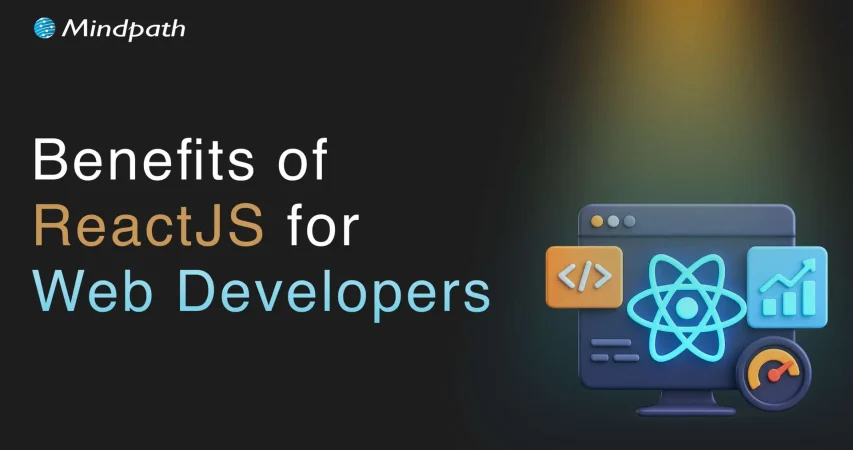
Top Benefits of React JS Development Services for Business-Ready Web Projects

Home

Top Benefits of React JS Development Services for Business-Ready Web Projects

Top Benefits of React JS Development Services for Business-Ready Web Projects

Explore the 5 benefits of React JS for web development, including performance, SEO, and scalability, with insights, case studies, and best practices for your projects.

Join our Newsletter!

Benefits of ReactJS for web development

The extreme levels of competition in the digital landscape call for robust online presence that aligns with user expectations. Every business wants to serve the best user experience, thereby calling for special attention to their technology stack. Therefore, discussions about the benefits of React JS have gained more traction among businesses that aspire to create high-performance web projects, packed with features that make them business-ready. React JS is an open-source JavaScript library that was created by Meta as a front-end development tool.

The special features of React JS, such as virtual DOM and component-based architecture, make it a trusted choice to build business-ready web projects. With more companies striving for a competitive edge in the digital market, tools like React JS can be your trump card. Let us learn more about the ways in which React JS revolutionizes web project development for businesses.

Want to adopt ReactJS in your next project? Mindpath’s ReactJS development services will provide expertise that will help you in building interactive web applications according to your business requirements.

Exploring the Utility of React JS in Business-Ready Web Projects

The answers to “What is React JS?” explain that it is a front-end development tool. You can build dynamic and intuitive user interfaces with React JS to enhance user experience. At the same time, businesses must also know the following advantages of choosing React for customer-facing solutions and enterprise-level applications.

1. Assurance of Speed and Performance

Websites can stand out from the competition only with better performance. Complicated interfaces and slow loading times can lead to frustration among users, thereby causing revenue loss and high bounce rates. You can find the ideal solution to questions like “Why use React JS for web development?” in the innovative features of the JavaScript library.

The most unique feature of ReactJS is the Virtual Document Object Model or DOM. Traditional web development involved direct manipulation of the real DOM of the browser, which was a slow process that consumed a lot of resources, especially for complex applications.

The list of React advantages showcases that React develops a lightweight representation of the DOM as the virtual DOM. During data changes, React updates the virtual DOM and compares it with its previous state, recognizing only the essential changes. Subsequently, it combines all the minimal updates and applies them to the actual DOM of the browser.

The primary benefit of the virtual DOM is the reduction of rendering overhead, which ensures faster updates and highly responsive user experience. For example, ecommerce websites showcase thousands of products and have to introduce real-time stock updates. Virtual DOM ensures instantaneous visual response when users add items to their cart or filters for the products.

2. Adaptability to SEO

Businesses that want a strong online presence cannot undermine the importance of search engine optimization or SEO. Among the many benefits of React JS for web development, SEO compatibility will be the most valuable. Conventional client-side rendered applications based on JavaScript presented challenges for search engine crawlers. The crawlers might experience problems in fully indexing dynamically loaded content.

Businesses should know the answers to “What is React used for?” in the modern practices of web development to understand its impact on SEO. React offers the benefit of server-side rendering, in which the initial HTML content of the application is rendered on the server before sending to the client. As a result, the crawler can receive a completed rendered HTML page that ensures easier crawling, indexing and comprehension of the content.

The ease of crawling offers a significant boost to search engine rankings of web projects, thereby attracting more organic traffic. For instance, a news website powered by React JS with server-side rendering will be more visible on the first page of search results as compared to a client-side rendered version.

Looking to future-proof your web applications with a technology that scales as your business grows? Discover the strategic top reasons to choose ReactJS for Progressive Web App development for business owners.

3. Component-Based Architecture and Scalability

The biggest reason for any business to choose React web development services is the component-based architecture of React. It is a distinctive feature that helps developers in breaking the user interface into smaller, reusable and independent components. Every component has its own user interface, logic and state, thereby introducing a modular and organized approach to web development.

The advantages of React JS for web projects due to the component-based architecture include faster development, better scalability and consistent user experience. Reusable components ensure that common UI elements can be created one time and reused for different parts of the project. The modular architecture of React also helps in adding new functionalities without changing the complete codebase.

With the help of isolated components in the modular architecture, React ensures that changes in one component do not affect other components. As a result, React reduces the risks of introducing new bugs during maintenance alongside simplifying the debugging process.

On top of it, React development also offers a consistent feel and visual appeal in web projects due to the component-based architecture. Since React allows you to use the same components across the entire project, it offers the ideal ground to offer an intuitive user experience alongside strengthening brand identity.

Want to ensure your React apps run smoothly even under heavy traffic and complex operations? Learn the best techniques to optimize ReactJS performance for scalable and efficient development.

4. Benefits of ReactJS for Cross-Platform Development

The prevalent use of React for web development also draws attention towards the use of React Native. Did you know that you can capitalize on the advantages of React for developing mobile applications with React Native? React Native allows you to reuse code across different platforms with the same skills you use to implement React JS in frontend development.

React Native also offers a consistent user experience, as you can use the same development paradigm as React JS. Airbnb is one of the biggest examples of businesses using React Native to develop mobile applications. The globally recognized startup showcases resourceful React use by capitalizing on its existing expertise in React frontend web development. Cross-platform development opens new doors for taking web projects of a business to a wider audience.

5. Cost-Effectiveness

The decision to invest in React JS development services can offer promising returns in the long run for every business. You may feel that the initial investment in a company for React development might cause losses. On the other hand, the benefits of React can help you understand why it is an attractive option for businesses. For instance, the assurance of reduced development time with component reusability can ensure lower resource costs.

The overview of React JS advantages also sheds light on how lower maintenance costs and cross-platform development can enhance the cost-effectiveness of web projects. The continuous evolution and community support of React also ensure that your web projects can adapt to future trends and technological advancements without an overhaul of your codebase.

Want to understand how much your business should invest in skilled ReactJS talent? Learn the real cost of hiring ReactJS developers to make informed financial decisions.

Reasons to Pick Professional React JS Development Services

The advantages of using React JS for web projects showcase that you should not look any further for frontend development. While front-end development with React has become an industry standard, it is important to understand how outsourcing can save you from a lot of trouble. The services of a trusted development company to create React web projects help you obtain access to expert services, diverse talent pool and cost-efficiency.

The services of a React JS development company can help you have some peace of mind. Professionals working on web projects for your business with React will allow you to focus on core business activities. However, it is important to learn how to pick the right company that will deliver the best results in web development with ReactJS.

Ready to Build High-Performance Web Projects with ReactJS?

React JS is a powerful open-source library for frontend development in web applications. The value of React JS for businesses extends beyond creating intuitive and dynamic user interfaces. You can find distinctive features in React JS, such as virtual DOM and component-based architecture, redefining the web development experience. Professional ReactJS development service providers can help you capitalize on diverse React JS benefits for creating business-ready web projects. Discover the best guides on how to pick a company for React JS web development now.

At Mindpath, our expert ReactJS development services are designed to help businesses build feature-rich and future-ready web applications. We focus on delivering scalable solutions, smooth user experiences, and flexible architectures tailored to your business goals. Partner with Mindpath to transform your ideas into powerful digital products that drive real business value.

Frequently Asked Questions

1. Is ReactJS suitable for small business websites or only large applications?

ReactJS works well for both small and large projects. Small businesses can use it to create fast and interactive websites, while larger companies benefit from its scalability and flexibility. It adapts easily as business needs grow over time.

2. How easy is it to update or expand a ReactJS application later?

ReactJS makes updates easier because of its component-based structure. Developers can modify specific parts of the application without rebuilding the entire project. This helps businesses add new features faster while keeping the application stable and consistent.

3. Does ReactJS support integration with other business tools and APIs?

Yes, ReactJS integrates smoothly with third-party APIs, payment gateways, CRM platforms, and business software. This flexibility helps businesses connect different systems and create a more connected digital experience for users and internal teams.

4. What industries commonly use ReactJS for web development?

Many industries use ReactJS, including ecommerce, healthcare, finance, education, and entertainment. Businesses choose it because it supports fast performance, interactive interfaces, and scalable applications that handle growing customer and operational demands effectively.

5. How do businesses maintain security in ReactJS applications?

Security depends on proper development practices and regular updates. Developers use secure coding methods, data validation, and authentication systems to protect applications. Keeping libraries updated and following security standards helps reduce risks and improve application reliability.
Related Post

custom software development

Custom software development is becoming the primary driver for businesses to get ahead of the curve in 2026. Businesses no longer rely on ready-made tools as existing tools fall short of meeting unique requirements. More recently, there is a higher need for tailored solutions that incorporate an organization’s goals and can scale as the firm grows. So, how will businesses ensure their software not just helps with their operations, but ultimately provides a legitimate competitive advantage?

In today’s fast-paced digital landscape, the right software is not only technology but also a strategy in practice. With custom software, businesses foster solutions that face specific challenges and ignite innovation. This guide walks through the core aspects of custom software development, including its definition, different types, benefits, key factors, and process. With a successful approach, adequately designed custom-built systems will enable progress and lead to long-term success.

At Mindpath, our custom software development services deliver secure and scalable services that  meet your business goals and enhance your business performance.

What is Custom Software Development?

Custom software development builds software solutions designed for a business’s specific needs. Instead of using generic tools developed for all businesses, many companies are developing their own custom software applications to support their unique company goals, internal workflows, and their customers. The custom software process includes planning, designing, developing custom software, and then ongoing software updates. This proactive approach might help a business increase efficiency, allow the business to expand, and create a steady stream of revenue.

The basis of this method is personalization. Developers create each feature with intention, supporting groups like marketing or sales, and enhancing customer brand participation through apps and platforms. These tailored solutions align and integrate smoothly into existing processes, improving productivity. When businesses select the right design and functionality, they receive a competitive advantage and increase their ability to outgrow the competition in a rapidly evolving digital landscape.

Must Read: Software Development Cost

Types of Custom Software Solutions

Businesses face unique challenges, so they will need specific solutions to meet their goals. When used effectively, there are many kinds of custom software development solutions that can take advantage of that to drive efficiency and growth.

Types of Custom Software Solutions

1. E-commerce and Online Platforms

Online businesses require more than a basic website. Custom platforms take care of payment, inventory, and customers quickly and accurately.

2. Data Management and Analytics Tools

Companies generate a never-ending amount of data every day. Analytics tools provide actionable insights from that data, which decision-makers can invest in, as there is confidence in the analytics.

3. Compliance and Regulatory Tools

The industries with strict rules continue to change at a breakneck speed. Compliance software can help you track, report, and reduce risks.

4. Customer-Facing Applications

Customers expect a seamless digital experience, and mobile apps, portals, or self-service tools can provide a simple and engaging interaction.

5. Integration and Middleware Solutions

It’s not very common for systems to connect themselves. Middleware acts as a bridge between those systems and allows for the free flow of information across platforms.

6. Enterprise Grade Solutions

Large organizations need powerful systems to maintain efficiency. ERP, CRM, and BI software all gather data into one controllable system.

7. Internal Software Systems

Day-to-day operations require intelligent systems. HR management platforms, scheduling software, and inventory solutions help maintain workflow efficiency.

8. Business Process Automation (BPA)

Manual tasks challenge the organization as a whole. Custom software development will provide a BPA solution that reduces repetitive, verifiably redundant work and frees up time.

Want to know the method behind building scalable and maintainable software? Learn how the software development life cycle helps you streamline development by providing a structured approach that improves efficiency and overall project outcomes.

Benefits of Custom Software Development

Each organization operates differently, so that’s why software customizations are very important. When you choose custom solutions, companies will have the tools that meet their needs and bring value over the long term.

Benefits of Custom Software Development

1. Strong Security Measures

Every day, businesses deal with the threat of crime, and good protection is necessary. With custom solutions, businesses can create the security features that fit their unique needs.

2. Smarter Automation

Repetitive work that wastes time is unnecessary. Automated workflows make everything more efficient, giving teams more time to focus on innovative opportunities.

3. Future-Ready Upgrades

Technology will continue to change, and existing systems are often outdated. A custom solution is easy to upgrade, so businesses can stay up to date.

4. Cost Savings Over Time

It’s common to think of generic tools as the less costly option, but they come with hidden costs. A custom-built system can expand with the business and reduce your long-term costs.

5. Tailored to Your Business

Every company has its own workflows, and off-the-shelf, one-size-fits-all tools rarely truly fit. Custom software design considers workflows and goals to create solutions tailored to specific needs.

6. Full Control and Flexibility

Companies have the decision on how their software evolves. From additional feature requests to maintenance, a company is in control of all aspects of software.

7. Edge Over Competitors

To be different, you need unique solutions. Custom software development allows companies to create custom tools that enhance their efficiency and develop stronger customer relationships.

Curious how businesses are building world-class software teams without geographical limits? Explore how our offshore software development can deliver skilled talent and cost-effective solutions.

Step-by-Step Custom Software Development Process

Custom software development has a well-defined process to deliver the best quality product. Using the proper methodology, a custom software development process business makes certain that everything is completed to specific objectives for each project. Here is the process:

1. Requirements and Planning

The process begins with identifying and researching the client’s needs to lay the right framework. The team documents goals, scope, and technology decisions in order to have a clear foundation. During this clarity stage, teams quickly put together custom-made software with a common understanding.

2. UX/UI & System Design

Once they define the requirements, designers and architects start creating wireframes, prototypes, and system architecture for the solution. They start defining the database structure, user experience (UX), and technical workflow in order to ensure everything flows and goes according to plan. Designers create all custom software to be easy to use, scalable, and low-risk.

3. Development Execution

Developers write code based on the approved design and requirements. They develop using agile and best practices and build the functional modules incrementally. Organizations will receive reliable solutions designed to promote their long-term success.

4. Testing & Quality Assurance

Testing validates both functional and performance on devices, platforms, and use cases. Testers perform unit, integration, and regression tests to detect any issues as soon as possible. This step guarantees quality standards in custom software development solutions before delivery.

5. Deployment & Continuous Support

Once testing verifies quality, the team deploys the software on-premises or in cloud environments. The team will continually provide updates, fixes, and improvements to help maintain the effectiveness of the system. We will perform a continuous improvement process to generate value and to prolong the entire application lifecycle.

Concerned about risks that could slow down your custom software build? Explore the major custom software development mistakes that can disrupt progress and find out how to avoid them.

Key Factors to Consider When Building Custom Software

When it comes to building a custom piece of software, it’s more than just writing the code. It’s important to pay attention to the factors that drive the success and make sure your software aligns with your vision of the future in your business.

1. Build vs Buy Decision

Evaluate if building from scratch or buying ready-made solutions best supports your custom software development goals.

2. In-House Team or Outsourcing

Choose between in-house development and outsourcing based on expertise, resources, and project scope.

3. Right Development Methodology

Select the right approach, like Agile or Waterfall, to match your project’s complexity and goals.

4. Focus on User Experience

Design software with intuitive navigation, usability, and efficiency to boost adoption

5. Scalability and Future Growth

Plan for growth by ensuring the custom software development solution can scale easily as your business expands and technology evolves.

Trying to understand the common pitfalls in creating custom software? Check out our blog to learn the essential custom software development dos and don’ts that every business should follow for a smooth process.

Ready to Transform Your Business with Custom Software?

Custom software development continues to be the core driver of innovation, growth, and competitive advantage. By focusing on tailored solutions, businesses overcome unique challenges, streamline operations, and stay prepared for the future. With the right approach, companies build systems that scale seamlessly, improve efficiency, and deliver long-term results in today’s fast-moving digital world.

Partnering with a trusted custom software development company gives you access to expert guidance, advanced technologies, and proven strategies. At Mindpath, our custom software development services empower businesses to create secure, scalable, and future-ready solutions. From strategy to execution, we ensure every step adds measurable value, helping organizations achieve their vision with confidence and clarity.

Frequently Asked Questions

1. How long does it usually take to develop custom software?

The timeline depends on the project size, features, and complexity. Small solutions may take a few months, while enterprise-level systems can take longer. Proper planning and regular communication help keep development on schedule and reduce unexpected delays.

2. Can custom software work with existing business systems?

Yes, custom software is designed to integrate with existing tools, databases, and platforms. This helps businesses avoid replacing everything at once while improving workflow efficiency and keeping operations connected across departments.

3. What happens if business requirements change during development?

Custom software projects are flexible, especially when using Agile development methods. Features and priorities can be adjusted during the process to match changing business needs without starting the project from scratch.

4. How do businesses maintain custom software after launch?

After deployment, businesses usually receive ongoing support, updates, bug fixes, and performance improvements. Regular maintenance keeps the software secure, efficient, and compatible with new technologies as the business grows.

5. Is custom software a good option for startups?

Yes, startups can benefit from custom software because it supports unique business ideas and future scalability. It helps create personalized customer experiences and gives startups more flexibility to adapt quickly in competitive markets.

Legacy modernization roadmap 

Enterprise systems drive day to day operations but most leaders experience the burden of old platforms. You want speed, security and scale, and the legacy complexity is slowing all of your moves. A clear legacy modernization roadmap brings direction and control to this shift. It assists you in matching the technology to the business objectives and make measurable change with certainty.

Nevertheless, modernization does not only require upgrades. You require clarity, leadership focus, and effective execution at all levels. That is why the enterprise leaders need to consider modernization as one of the strategic priorities rather than a side project. The right roadmap takes vision and action through the right path and mitigates risk. In this blog, we deconstruct one of the practical structures that were established with the enterprise decision makers in mind. So, let’s dive in!

Looking to align technology upgrades with your overall business strategy? Mindpath’s legacy modernization services ensure your systems support growth and deliver better ROI.

What is Legacy Modernization Roadmap?

A legacy modernization roadmap gives enterprises a clear, structured plan to upgrade outdated IT systems. It successfully takes leaders on the path of evaluation, objective creation and strategy choice with good business fit. Consequently, organizations decrease technical debt levels, enhance their performance and develop secure, cloud-ready systems that accommodate long term development.

Legacy system transformation focuses on turning rigid, high maintenance platforms into agile and scalable architectures. Teams subdivide large systems into small stages and embrace cloud, microservices, and automation. This will enhance flexibility, enhance security, and enable the enterprises to respond more swiftly to market needs with confidence.

Want to understand how modernizing legacy systems can transform your business operations? Explore the benefits of modernizing legacy systems to drive efficiency and growth.

Why Enterprises Need a Legacy Modernization Roadmap?

Companies are faced with sluggish systems and increased maintenance expenses. A clear legacy modernization roadmap, backed by strong legacy modernization strategy, helps leaders improve performance and drive steady business growth.

1. Strong Business Alignment

Businesses require a sense of direction which links technology with expansion strategies. A clear road map converts the IT initiatives into the business goals in the long run and makes the systems growth enablers.

2. Lower Costs and Better Returns

Systems of the past are very demanding in terms of maintenance and repair. New platforms lower the operating expenses and provide more potent returns by being efficient and using smart resources.

3. Better Security and Compliance

Obsolete software exposes the businesses to security risks and compliance lapses. The modern systems enhance the security of data and assist companies in complying with the industry requirements with ease.

Must Read: Application Security Best Practices

4. Greater Agility and Scalability

Companies have to react fast to market changes, shifts and customer needs. A legacy modernization roadmap builds flexible architectures that support faster releases and seamless scaling.

5. Smarter Technology Adoption

Businesses would prefer to exploit innovation without conflict in the system. The application of AI in legacy modernization enables the incorporation of smart tools that enhance insights, automation, and decision making.

6. Reduced Operational Risk

Changing fundamental systems without a strategy brings about discontinuity and chaos. A transformational roadmap keeps transition risks under control and makes the business survive in the process of transformation.

Looking to modernize your systems with the help of advanced AI technologies? Learn from AI-driven legacy system modernization to accelerate your transformation journey.

A Step-by-Step Guide for Legacy Modernization Roadmap

A good plan makes modernization objectives measurable. This step-by-step method can assist Intrapreneurship leaders of an enterprise to progress with organization, management, and certainty.

1. System Discovery and Assessment

Teams draw out existing systems and find out the dependencies. They check-up technical health and flag bottlenecks in the performance. They also use legacy modernization tools to uncover hidden risks and code issues.

2. Strategy and Value Definition

Leaders establish the future architecture and business results. They select the appropriate modernization strategy depending on objectives and complexity of the system. A legacy modernization roadmap helps align technical decisions with measurable ROI targets.

3. Planning and Risk Readiness

Work teams develop a clear plan of execution using milestones. They describe the process of data migration, compliance processes, and security controls. The legacy application modernization roadmap ensures teams reduce risk before execution begins.

Must Read: Monolith to Microservices

4. Phased Execution and Deployment

Professionals upgrade the systems through stages that are manageable. They do not disrupt and update in controlled cycles. A legacy modernization roadmap keeps teams focused on stability and steady progress.

5. Testing and Quality Validation

Automated and performance tests are done on teams at each stage. They measure functionality to stipulated KPIs and business objectives. The step will guarantee reliable performance of the new system with real workloads.

6. Optimization and Continuous Monitoring

Post-deployment, the leaders observe health of the system. Teams monitor the performance metrics and feedback. They streamline procedures that facilitate scaling and expansion in the long run.

Wondering how SaaS can reduce the complexity of legacy systems? Explore SaaS trends to streamline your transformation process.

Ready to Build a Future Ready Enterprise with a Clear Roadmap?

A strong legacy modernization roadmap gives enterprise leaders clarity and control. It relates business objectives and technology action systematically. Phased execution helps organizations to reduce risk, cut costs, and improve performance. Teams empower long term digital growth and invest in it with the certainty of the proper planning and governance.

At Mindpath, we provide legacy modernization services that help you achieve outcomes using a successful legacy modernization framework, adaptable to your enterprise-specific needs. Our specialists evaluate systems, establish strategy, and make modernization accurate. Our priorities are on security, scalability, and quantifiable value at all levels. Collaborate with Mindpath to modernize key systems and speed up sustainable business change.

FAQs

1. Why should enterprise leaders prioritize a legacy modernization roadmap now?

Competitive pressure and rising maintenance costs demand faster innovation. A legacy modernization roadmap helps leaders align technology with strategic growth goals. It creates clarity, reduces operational risk, and strengthens long term scalability in an increasingly digital business environment.

2. How long does a legacy modernization roadmap typically take?

Timelines depend on system complexity, data volume, and business readiness. Some initiatives move quickly with focused scope, while large transformations require phased execution. A well structured legacy modernization roadmap defines milestones early and keeps teams aligned with realistic delivery targets.

3. How do we measure success during modernization?

Enterprises should measure improvements in performance, cost efficiency, uptime, and user experience. Business impact should guide every technical decision. A clear legacy modernization roadmap establishes KPIs at the start and tracks measurable outcomes throughout the transformation journey.

4. Which architecture approach suits complex legacy systems?

Enterprises often evaluate cloud native, microservices, or hybrid models based on workload demands. Technical audits help identify system dependencies and scalability limits. A legacy modernization roadmap supports informed architecture decisions that balance innovation, risk control, and operational stability.

5. How can we manage data and compliance risks during modernization?

Data migration requires strong governance and phased validation. Teams should conduct security reviews and compliance checks before execution. A structured Legacy modernization roadmap reduces exposure to data loss and regulatory gaps. Mindpath’s legacy modernization services provide expert guidance for secure and compliant transitions.

Support Is One Click Away

Featured Posts

Related Post

Discover why ReactJS is perfect for Progressive Web App (PWA) development. Learn how Mindpath can help you build high-quality PWAs.