Top ReactJS Trends to Watch in 2026: What’s Next 

Home

Top ReactJS Trends to Watch in 2026: What’s Next 

Top ReactJS Trends to Watch in 2026: What’s Next 

Join our Newsletter!

ReactJS Trends 

If you have any interest in web development, you have likely seen how everything is evolving. Developers are examining better ways of implementing new interfaces that deliver a better experience to their users. As the demand for fast, reliable interfaces is continually increasing, it’s increasingly vital to keep up with the evolving ReactJS trends. By establishing these foundations within yourself, you will be able to develop and apply smarter development choices soon.

With each successive year, ReactJS continues to develop and create outcomes in how modern applications are designed. The updates, tools, and ideas that make up the ReactJS universe are forcing developers to think differently and advance the way they work. These changes aren’t just technical; they also reflect what users expect from digital experiences. Knowing what’s gaining attention and where the focus is shifting can give you an edge, right? So, in this blog, we will look at the best ReactJS trends to watch in 2026. Let’s dig in!

Want to stay ahead with the latest ReactJS trends? Our ReactJS development services can help you create modern, scalable, and future-ready applications, designed as per your business requirements.

Evolution of ReactJS

Since it was first implemented in 2013, React has changed the frontend development space through its component structure and virtual DOM. In earlier versions of React, we had JSX and rendering efficiency, which all led to building scalable user interfaces. Newer versions (React 15 and 16) further refined the usability of the library through performance improvements, error boundaries, and server rendering, and in the process, significantly improved development stability and experience. Meanwhile, React 17 through 19 introduced further original ideas and modern development workflows.

With React 17, we saw improvements to the upgrade paths of React and compliance with the browsers, while React 18 gave us concurrent rendering, new powerful hooks, and React 19 built on React 18 with server components, action-based state management, and support for Web Components. React continues to evolve to meet the needs of web development.

Must Read: ReactJS Web Development 

Upcoming Features in ReactJS

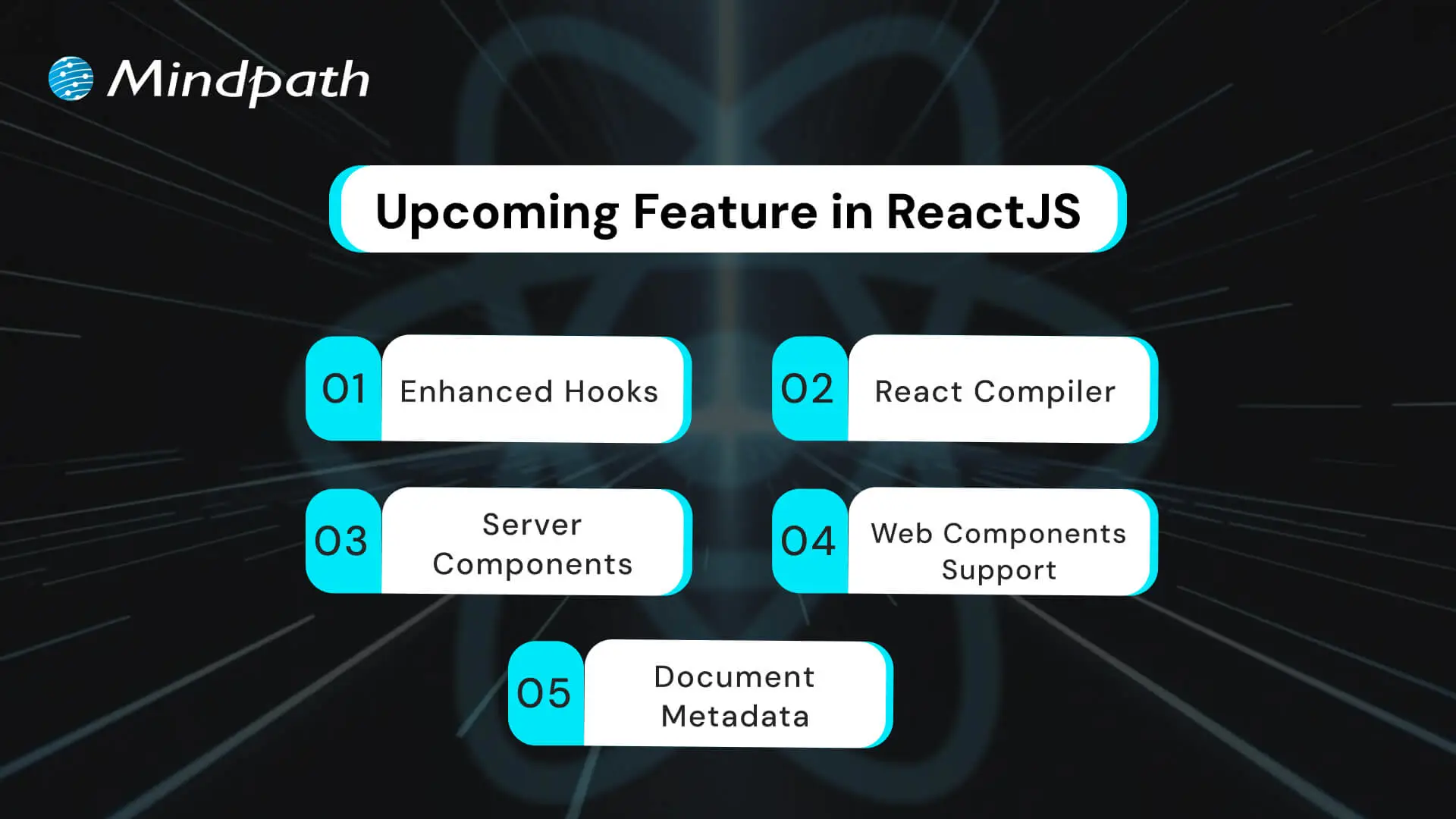
ReactJS 19 is the latest version, bringing fresh improvements to the way developers build user interfaces. With ReactJS’ upcoming features, version 19 focuses on better performance, cleaner code, and easier state handling. These updates mark a big step forward in the future of ReactJS and give a clear view of what’s new in ReactJS in 2026.
Upcoming Feature in ReactJS

1. Enhanced Hooks

One of the React 2026 updates includes powerful new hooks that will make state and effect management even smoother. These enhanced hooks aim to simplify logic and reduce repetitive code in components. They’re designed to give developers more flexibility and control in modern web development.

2. React Compiler

React is introducing a new compiler that optimizes code during build time. It helps reduce manual work by automatically improving performance behind the scenes. Instagram is already using this tool, making it one of the most promising ReactJS features.

3. Server Components

React now supports server components, allowing parts of the UI to render on the server. This feature works well with frameworks like Next.js and helps improve app performance. It reduces the JavaScript sent to the browser, making pages load faster.

4. Web Components Support

React will soon support the direct use of web components inside your code. This opens the door to combining different front-end technologies in one project. It’s a big step forward in creating flexible and reusable UI elements for modern web development.

5. Document Metadata

React 2026 updates will include better control over document metadata like titles and meta tags. This allows developers to manage SEO-related data more efficiently within their components. It saves time and keeps everything organized in one place.

Want to ensure your digital products stay competitive as new react trends shape the future of web development? Discover how the latest React roadmap helps business owners plan smarter, more future-ready tech investments.

What are the Top ReactJS Trends for 2026?

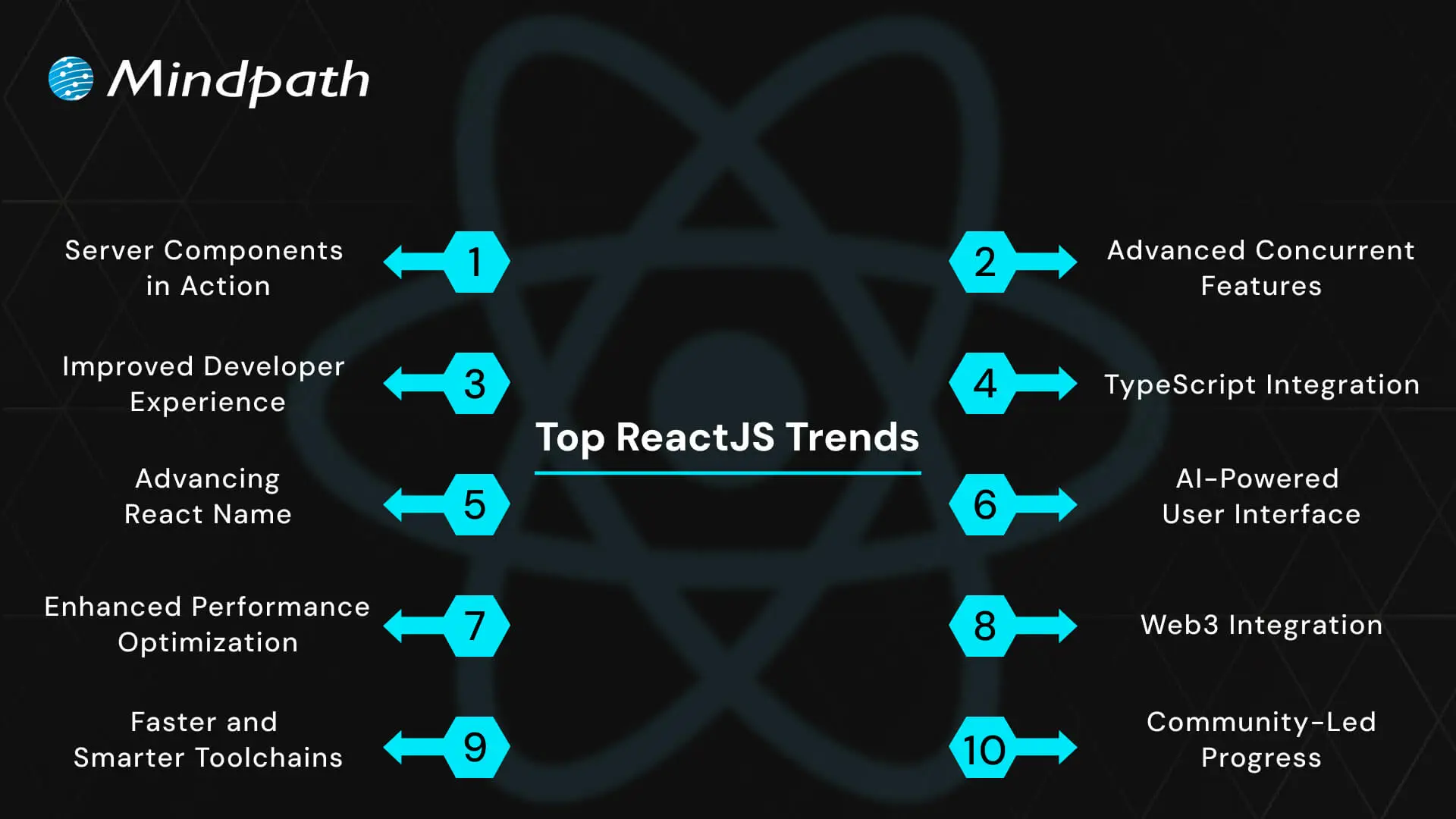
The React ecosystem is going through major improvements that are changing the way developers approach front-end development. ReactJS trends 2026 highlight a shift toward more efficient workflows, faster rendering, and cleaner architecture. With smarter tools and updated features, we can see how ReactJS is evolving in 2026 to meet the growing demands of modern web development.
ReactJS Trends 

1. Server Components in Action

React’s new server components allow parts of the UI to be rendered on the server, reducing the workload on the browser. This makes applications faster and easier to manage, aligning with the latest ReactJS trends. They also allow developers to send less JavaScript to the client, improving performance. This results in faster initial page loads and a smoother user experience.

2. Advanced Concurrent Features

React’s concurrent features, like Suspense and automatic batching, make multitasking smoother and interfaces more responsive. This update improves how React handles rendering without blocking the user experience. It helps manage large-scale applications more efficiently. Developers can build interfaces that stay fast even during heavy updates.

3. Improved Developer Experience

Tools like React DevTools are being enhanced to support more efficient debugging and testing. These improvements help streamline development workflows and reduce troubleshooting time. Developers get better visibility into component behavior and performance bottlenecks. This leads to quicker bug fixes and smoother iterations.

4. TypeScript Integration

The adoption of TypeScript continues to grow as teams seek more scalable and maintainable codebases. This is now a major trend in front-end trends 2026, supporting safer and more reliable coding. TypeScript’s static typing reduces runtime errors and improves code clarity. It also makes collaboration easier across large development teams.

5. Advancing React Native

React Native updates are making it easier to develop high-quality cross-platform apps. It remains a strong choice for teams working across both web and mobile interfaces. New libraries and tools are being introduced to improve development speed. These updates also enhance native-like performance and UI consistency.

Want to be sure that your web application delivers a fast and smooth user experience that keeps customers engaged? Discover how improving React performance can directly enhance satisfaction and boost overall business results.

6. AI-Powered User Interfaces

React is being used to build smarter, AI-driven interfaces that adapt to user behavior in real time. These features support more personalized and predictive user experiences. AI integration helps applications anticipate user actions and deliver relevant content. This enhances engagement and boosts user satisfaction.

7. Enhanced Performance Optimization

Performance remains a top focus, with React adding better support for edge computing and efficient memory handling. These updates are critical to meeting modern speed and scalability demands. They ensure faster content delivery across global networks. Optimizations also help reduce power and data usage on devices.

8. Web3 Integration

React is being adapted to work smoothly with decentralized technologies like blockchain wallets and smart contracts. This is part of the broader movement in JavaScript frameworks 2026 towards Web3-ready solutions. It simplifies the process of building secure and decentralized apps. React’s flexibility supports fast adoption in emerging blockchain-based platforms.

9. Faster and Smarter Toolchains

Modern tools like Vite and frameworks such as Next.js and Gatsby are becoming more powerful. These enhancements reflect improvements seen across React front-end development practices. They reduce build times and make testing and deployment more efficient. Developers benefit from improved hot reloading and modular workflows.

10. Community-Led Progress

The React ecosystem continues to expand thanks to open-source contributors who build tools, libraries, and new practices. These efforts keep ReactJS trends moving forward with fresh ideas and evolving standards. Active community support ensures regular updates and fast issue resolution. It also helps spread knowledge and best practices across the industry.

Want to scale your application seamlessly as your customer base grows? Learn how the benefits of ReactJS development services make large-scale, high-traffic apps easier to maintain and expand.

Are You Looking Forward to Embracing the Future of ReactJS?

ReactJS trends are reshaping the landscape of modern web development. With fresh tools, smarter architecture, and growing support for cutting-edge features, staying current is no longer optional. Developers who stay informed can build faster, smarter, and more scalable applications. Understanding these shifts puts you in control of how you approach digital solutions in 2026 and beyond.

At Mindpath, we offer expert ReactJS development services designed for growth and scalability. Our team stays aligned with the latest ReactJS trends, ensuring your product is future-ready. From concept to deployment, we develop efficient and high-performing applications tailored to your goals. Partner with us to unlock seamless, modern interfaces built with precision and care.

Frequently Asked Questions

1. Which ReactJS trends in 2026 should development teams prioritize for immediate implementation?

Server components and TypeScript integration deliver the most immediate practical value. Server components reduce browser workload and improve page load speeds noticeably, while TypeScript adoption reduces runtime errors and improves long-term code maintainability. Teams that implement both together consistently report faster development cycles and significantly fewer production issues across complex applications.

2. How do React server components actually differ from traditional client-side rendering?

Traditional client-side rendering sends all JavaScript to the browser, which then builds the interface. Server components render parts of the UI on the server before delivery, sending less code to the browser entirely. The result is faster initial page loads, reduced bandwidth consumption, and noticeably improved performance especially on lower-powered devices and slower connections.

3. Is TypeScript adoption in ReactJS projects worth the additional learning curve for teams?

For most teams, absolutely. TypeScript catches errors during development rather than at runtime, which prevents costly debugging sessions after deployment. Larger teams benefit especially from improved code readability and collaboration. The initial learning investment typically pays back quickly through fewer bugs, cleaner architecture, and significantly easier onboarding of new developers joining existing projects.

4. How is AI integration changing the way ReactJS applications are actually built and experienced?

AI integration allows React applications to adapt dynamically to individual user behavior, delivering personalized content and anticipating actions in real time. Beyond user experience improvements, AI-powered development tools are also accelerating the coding process itself. Developers using AI assistance within React workflows report meaningful reductions in repetitive coding tasks and faster overall delivery timelines.

5. Will Web3 integration in ReactJS become mainstream for standard business applications anytime soon?

It is gaining momentum but remains specialized for now. Businesses in finance, gaming, and supply chain are actively exploring React-based Web3 applications involving blockchain wallets and smart contracts. For mainstream business applications, adoption will depend heavily on regulatory clarity and user familiarity with decentralized technologies. Developers building familiarity with Web3 tools today will hold a clear competitive advantage tomorrow.


Related Post

devops best practices

Does your team prepare itself well enough to handle the fast pace of software development in 2026? As there are so many changes happening in the way businesses build and deliver products, it is very important to pause and think about what’s working and what’s not, isn’t it? The perfect solution for this lies in following DevOps best practices, so that you can keep your software development processes smooth and your teams connected.  

Well, DevOps can help your business improve teamwork, speed up release, and even reduce errors. Its goal is to create a robust process supporting development and operations. If you are asking what the best practices for DevOps are, and how they may help your business improve on delivery, performance, and collaborate between teams, then this blog can serve you better. 

Before delving into the main topic, let us first understand the fundamentals of DevOps. 

Want to reduce downtime and accelerate software delivery? Mindpath offers expert DevOps services, which help streamline your workflows, automate deployments, and improve overall efficiency.

What is DevOps?

DevOps is a proactive approach to linking development and IT operations teams to collaboratively work in a way that transforms the software development process. With DevOps, both teams can share responsibilities in building, testing, and releasing software. The main purpose of it is to improve speed, reduce errors, and deliver better results.

DevOps also improves communication across teams, which reduces delays and results in fewer disruptions. Automating repetitive tasks gives teams more time to focus on solving problems. It also allows for faster feedback loops, meaning teams can address problems quickly and improve product quality over time. This approach allows teams to adapt to change more easily while also scaling systems and keeping up with customer demand. 

Looking to elevate your business with smarter workflows? Check out our Benefits of DevOps blog to learn how it accelerates innovation while fostering collaboration across teams.

What are the 7 Key Principles of DevOps?

There are several main principles that define how teams work and deliver software. These principles provide an underpinning to enhance collaboration, automation, and improvement across a work ecosystem. Now, let’s explore the 7 key principles of DevOps: 

1. Strong Team Collaboration

DevOps brings developers and operations teams together to work as one. This helps solve problems faster and build better software. 

2. Customer-Centric Approach

Every decision is made by keeping the customer in mind. Teams collect feedback and use real-time tools to improve the user experience. 

3. Data-Driven Decisions

DevOps teams rely on real data-driven decisions before making changes. This helps them choose the right tools and improve their results with confidence. 

4. Automation Across the Workflow

Tasks like testing, deployment, and setup are automated to save time. This lets teams focus on planning, solving problems, and improving the product. 

5. Continuous Improvement

DevOps supports small and frequent updates instead of waiting for one big release. This helps teams meet user needs quickly and make steady progress. 

6. Embracing Failure as Learning

If something goes wrong, teams treat it as a chance to learn. This mindset helps them improve and make smarter decisions in the future. 

7. Shared Responsibility

In DevOps, the entire team takes responsibility for the software from beginning to end. Developers and operations work closely at every stage to build, test, and fix issues together. 

Struggling with speed, collaboration, or automation in DevOps? Our DevOps Challenges and Solutions blog explains how modern businesses address these issues.

What are the DevOps Best Practices?

To get the most out of DevOps, teams follow a set of proven methods that support faster delivery, better quality, and stronger teamwork. These top DevOps practices help create smooth workflows and make it easier to manage changes and fix problems quickly. Let’s explore the most effective DevOps methods that can drive real results. 

1. Continuous Integration/Continuous Deployment (CI/CD)

One helpful way to speed up your CI/CD pipeline is by using a smart testing platform that runs tests faster and more efficiently. It allows teams to run large sets of tests in parallel, get faster feedback, and use resources wisely to lower costs. A key benefit is that it keeps your tests stable across different environments, which helps improve software quality and delivery speed. 

2. Use Infrastructure as Code (IaC) for Better Control

Infrastructure as Code lets teams manage and set up their infrastructure using code instead of doing it manually. This makes deployments faster and keeps environments consistent across all stages of software delivery. Using IaC also helps track changes easily and improves teamwork by allowing developers to handle infrastructure in a clear and organized way. 

3. Integrate Security into Your DevOps Process

Adding security checks early in the development pipeline helps find and fix vulnerabilities before they cause problems. This approach keeps your software safe and ensures it meets important security rules. Using automated security tools makes it easier for teams to maintain strong protection without slowing down delivery. 

4. Leverage Configuration Management Tools

Configuration Management tools help automate system setup and updates to keep environments consistent across teams. They work well with CI/CD pipelines to speed up deployments and make collaboration easier. By using these tools, teams can also enforce security rules and track changes to meet compliance requirements. 

5. Adopt Shift-Left Testing for Faster Issue Detection

Starting to test early in the development process helps find problems before they grow bigger. Using automated and AI-driven testing tools makes it easier to catch errors quickly and improve the quality of the code. This approach also speeds up delivery by reducing the time spent fixing issues later on. 

Must Read: DevOps Trends

6. Automate Testing for Reliable Software

Automated testing is a key DevOps best practice that helps check code quality quickly and consistently. By using automated test tools in your DevOps pipeline, teams can find and fix problems early. This ensures every change is tested before going live, making software more reliable and ready for continuous delivery.  

7. Use Cloud Services for Flexibility and Speed

Cloud services make it easy to quickly set up and scale resources as needed while automating many tasks. They support key DevOps practices like automated pipelines, security integration, and managing infrastructure with code. Using cloud platforms helps teams deliver software faster and maintain smooth, reliable operations. 

8. Adopt Containerization

Using containerization is a smart DevOps best practice that helps keep software running the same way in development, testing, and production. Containers make it easier to scale applications and use resources more efficiently. This approach reduces errors and speeds up delivery by ensuring consistency across all stages. 

9. Implement Microservices Architecture

Microservices break down applications into smaller, independent parts that can be updated and scaled down on their own. This makes it easier for teams to manage and improve specific services without affecting the whole system. To make this work well, strong monitoring, testing, and automation are important to keep everything running smoothly. 

10. Focus on Continuous Improvement

Continuous improvement means always looking for ways to do things better by learning from past experiences. Teams can use the Plan-Do-Check-Act cycle to test small changes, check results, and keep improving. This helps them build better software faster and fix issues more quickly. 

Wondering how DevOps can accelerate growth and efficiency in your organization? Read our blog on DevOps for Businesses to discover strategies that streamline operations, enhance collaboration, and improve software delivery.

Want to Transform Your Software Delivery with DevOps Best Practices?

Following DevOps best practices helps teams build software faster, reduce errors, and work better together. By using automation, cloud tools, and early testing, your team can improve software quality and speed up delivery. These practices make workflows smoother and help your business keep up with fast-changing demands with time. 

At Mindpath, we apply proven DevOps practices like CI/CD, containerization, and infrastructure as code to streamline software delivery. Our expert teams focus on collaboration, automation, and continuous improvement to ensure secure, high-quality releases. With our DevOps-centric approach, your business can achieve better performance and faster results. 

Frequently Asked Questions

1. What are the main benefits of following DevOps best practices for a business?

Implementing DevOps best practices improves collaboration between development and operations teams, speeds up software delivery, reduces errors, and enhances system reliability. It also allows businesses to respond faster to market changes while maintaining consistent quality and security across applications.

2. How can DevOps best practices improve software delivery speed?

By automating repetitive tasks, integrating CI/CD pipelines, and using containerization and infrastructure as code, DevOps practices streamline workflows. Early testing and continuous feedback loops help teams detect and fix issues faster, reducing bottlenecks and enabling quicker, reliable releases.

3. Why is security integration important in DevOps workflows?

Integrating security early in the DevOps pipeline ensures vulnerabilities are identified and resolved before software goes live. Automated security checks maintain compliance, prevent data breaches, and protect user information without slowing down development or delivery processes.

4. How do microservices and containerization contribute to DevOps efficiency?

Microservices break applications into independent modules, allowing updates or scaling without affecting the entire system. Containerization ensures consistent environments across development, testing, and production. Together, they reduce errors, improve scalability, and make deployment faster and more reliable.

5. Can small businesses adopt DevOps best practices effectively?

Yes, DevOps practices are scalable for businesses of all sizes. Even small teams can leverage automation, cloud infrastructure, and CI/CD pipelines to improve collaboration, speed up releases, and maintain software quality. Early adoption supports growth while keeping operational costs efficient.

Discover essential DevOps best practices to enhance efficiency, streamline processes, and boost collaboration for your business with Mindpath.
staff augmentation trends

The digital revolution has been empowering itself rapidly, and this is leading to a need for complex tech in business management. This is why organisations are dealing with hiring issues while keeping the prices minimal. Staff augmentation has turned out to be a strategic approach to deal with such risks.

The IT staff augmentation service is growing drastically and is ready to touch USD 857.2 billion by the year 2032. Further, it is growing at a rate of 13.2%. So, instead of being a niche workforce strategy, staff augmentation has become a mainstream model. In this blog, we will go through some reliable IT staff augmentation trends and why your business should acknowledge them.

Looking for a reliable partner to power your IT initiatives? Mindpath delivers premium IT staff augmentation services tailored to help you scale with confidence and drive project success.

What is the Meaning of Staff Augmentation?

Staff augmentation meaning is simple and viable for everyone. It is a flexible outsourcing strategy that allows your company to elevate their in-house with external professionals on a temporary or specific-period project basis. Traditional hiring can be time-consuming and rigid for many professionals. On the other hand, staff augmentation enables your business to quickly bring on experts with specific skills as per your requirements.

This is just like empowering your existing workforce with in-time talent. This approach can help you fill in the expertise gaps while managing seasonal demands. Most importantly, it can accelerate your strategic initiative.

  • Staff augmentation allows you to add or reduce team members as per the needs of your projects.
  • It can reduce the overhead charges of full-time hiring like taxes, benefits and long onboarding cycles.
  • You can be assured of skill-specific resourcing like cloud computing, AI and cybersecurity.

What are Some Top IT Staff Augmentation Trends to Leverage in 2026?

Let us go through some leading and meaningful IT staff augmentation trends that can make your hiring process viable in the current competitive landscape.

1. Hybrid Workforce Models

As per the recent research of ISACA, around 75% percent of employees prefer hybrid work practices. This has made many organisations leverage hybrid models. This is not only a smart recruitment approach, but a cost-efficient deal. Such Staff augmentation models can improve your team’s collaborative mediums.

Further, hybrid setups are essentially beneficial for companies that handle complicated development cycles. Around 25% of employers in the US are delivering a hybrid work culture to their workers.

2. AI and Modern Tech Implementation

AI-rich recruitment is no longer an option. It has become a mainstream necessity for employers. With the integration of AI-led tools, you can give rise to a faster and better screening assessment. Further, you can recruit skill sets that match your project requirements.

Such tools can also predict your future workforce needs. Additionally, automation and chatbots can enrich your team’s communication.

3. Adoption of Offshore and Nearshore Professionals

One of the incredible IT staff augmentation trends in the recent scenario is the hiring of offshore and nearshore experts. Nowadays, organisations are prioritising balancing factors like time zone compatibility, risks and cultural efficiency. Many organisations have claimed a reduction in operational charges due to such a viable option.

4. Cybersecurity Staff Augmentation

The trends and patterns of cyber threats have been increasing drastically. So, staff augmentation should be your foremost priority. Companies are willing to hire specialised compliance experts or security engineers through staff augmentation models to protect their infrastructure. This is becoming possible without even creating large in-house teams. Further, this approach can help you work within a regulated environment.

Must Read: AI in Cybersecurity

5. Communication-Oriented Hiring

No doubt, technical skills are important. But along with this, it is important for you to prioritise skills like collaboration and better communication. Staying in sync can help your team work towards a better goal without any mishaps.

With the rise in remote work, soft collaboration skills can facilitate better operations across multiple nations.

6. Changing Skill Advancement

As per the recent IT staff augmentation trends, organisations are valuing systems to facilitate continuous upliftment. So, IT teams are generally going through multiple training programs. Manpower is getting updated with the development of modern technologies. So, your preparation of future-rich teams can diminish your dependency on outside hiring.

7. Cloud Infrastructure Staffing

With the growth of cloud adoption, cloud infrastructure staffing is becoming prominent. Businesses are majorly augmenting teams with DevOps engineers, cloud architects and platform specialists. Such a trend can align seamlessly with DevOps staffing and cloud-centric strategies.

Wondering how companies stay flexible while scaling their teams quickly? Learn more about what is staff augmentation and why it’s a game-changer for modern businesses.

What are the Major Types of Staff Augmentation Models?

Understanding the different types of staff augmentation models can help you choose the right approach while keeping your decisions intact. Here, you can go through some main models that work potentially.

1. Short-term Augmentation

This type of process is appealing for quick turnarounds and urgent technical fixes. It generally lasts from a few weeks to several months.

2. Long-term Augmentation

When your company requires ongoing support for extensive projects, long-term augmentation can offer you continuity. Such types of staff augmentation can help you with deeper integration with your internal teams.

3. On-demand Augmentation

This model values hiring talent when your business requires it. The process remains flexible and mainly adopted in agile development criteria.

4. Team Augmentation

Instead of hiring individual talent, you can hire an entire team that can match your internal workflows.

Every types of staff augmentation vary in commitment and integration approaches. The choice completely depends on your project needs and workforce maturity.

Not sure which AI advancements are shaping staff augmentation trends? Explore the top AI models helping businesses stay competitive.

What are the Potential Benefits of IT Staff Augmentation?

The benefits of IT staff augmentation generally remain unmatched. Starting from saving your costs to hiring top talent, it can help your workflow remain streamlined. Let us discover some of the most essential benefits of staff augmentation in this section.

1. Minimal Hiring Uncertainty

With the help of staff augmentation, your company can approach top talent when you require it instead of being worried about long-term commitments. Moreover, there will be fewer chances of hiring inefficient profiles, as you are going for specialised individuals for specific tasks or projects.

2. Manageable Administrative Workloads

If your organisation is considering the help of staff augmentation providers, you can remain unburdened about the extra administrative work. Further, the providers can handle your payroll and other HR centric works. This approach can prevent you from extreme charges while saving your resources.

3. Adoption of New Technologies

With the usage of staff augmentation models, businesses can explore and experiment with advanced technologies without being tense about investing in large-scale solutions. As a result, you can hire experts to try out technologies when you require them.

Want to know how AI can enhance recruitment efficiency and strengthen your extended workforce strategy? Read our insights on Generative AI in HR to see how HR teams are leveraging intelligent automation.

What are Some Challenges of Adopting Staff Augmentation?

While staff augmentation can make you aware of many benefits, it also highlights certain challenges, as given below.

  • Your augmented teams might struggle to understand your internal work culture.
  • Misalignment can occur when the external workers are not completely informed. So, use structured communication channels.
  • External access to systems can give rise to compliance risks.
  • Your team might prioritise their skill development.

Conclusion

As IT staff augmentation trends have been shifting rapidly, your business needs a strategic augmentation partner to fulfill the hiring requirements. Starting from your remote workforces to data scientists, your augmented teams can help your companies navigate complicated digital transformations.

Partnering with professional providers ensures your organisation can pick the right expertise at the right time without compromising quality or alignment. Here, Midpath can be your ultimate preference. Experts in this company can understand your changing needs while helping you leverage the right talent solutions.

FAQs

1. What is technology staffing?

Technology staffing generally refers to the hiring of skilled IT professionals with the help of flexible models to meet project-specific requirements.

2. How is staff augmentation different from outsourcing?

Staff augmentation mainly supplements the internal team with external talent as per your company’s directions. On the other hand, outsourcing transfers responsibility for entire functions.

3. What are some eminent models of staff augmentation?

Some of the common staff augmentation models include long-term, short-term, and on-demand team augmentation.

4. How can IT staff augmentation be beneficial for you?

Through IT staff augmentation, you can have faster access to expertise while reducing the hiring team. Further, it can support your strategic initiatives without any long-term commitments.

5. Which roles are majorly augmented in businesses?

Frequently augmented roles include software developers and cloud engineers. Business also augments data scientists and cybersecurity experts for better alignment.

Explore how IT staff augmentation trends are reshaping the tech industry, from cybersecurity to AI, and discover Mindpath’s expert solutions.

Support Is One Click Away

Featured Posts

Related Post

Look for JavaScript skills, Node.js frameworks, database knowledge (SQL/NoSQL), API expertise, security practices, and Git proficiency.